
Chef Lupita
Salsa de Tomate Cocido para Corundas
Michoacán's Pátzcuaro table salsa for corundas, built from cooked jitomate, chile perón, garlic, and broth, then finished with crema and queso fresco.

Recipe Archive
Sauces and condiments carry a surprising amount of technique. Find dressings, marinades, stocks, gravies, relishes, and finishing sauces with clear purpose.
965 recipes
A cooking platform built around craft, culture, and the stories behind what we eat.
Chef Lupita
Michoacán's Pátzcuaro table salsa for corundas, built from cooked jitomate, chile perón, garlic, and broth, then finished with crema and queso fresco.

Chef Lupita
Michoacán's Meseta P'urhépecha salsa, built from boiled tomate verde and floral chile perón, martajada in a molcajete until it tastes like Pátzcuaro, Uruapan, and a wood-fire kitchen.
Chef Lupita
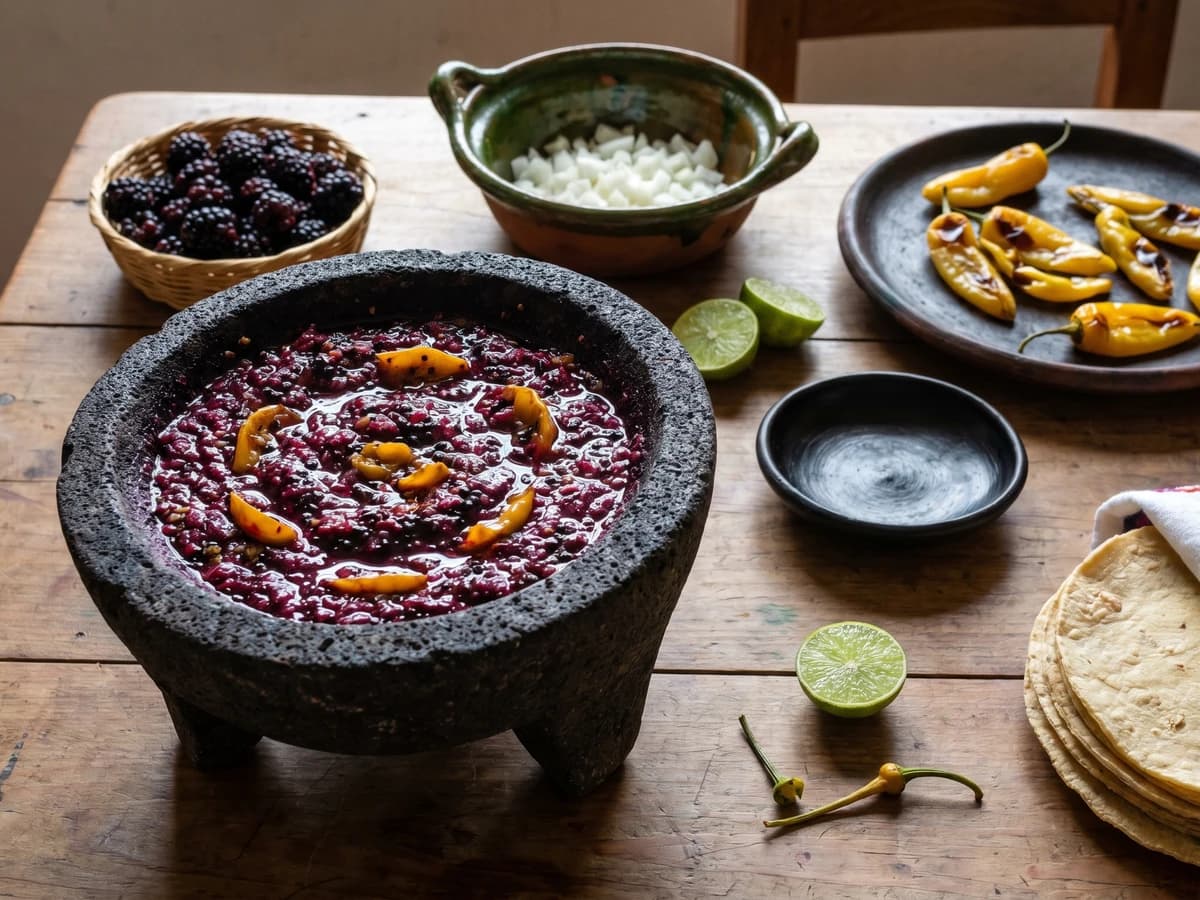
Michoacán's Lake Pátzcuaro salsa, zarzamoras crushed in a molcajete with roasted chile manzano or chile perón until sweet fruit and floral fire hold the same spoon.

Chef Graziella
The ancient walnut sauce of the Ligurian hills, where walnuts are pounded with soaked bread and a whisper of garlic into a cream that clings to pasta like nothing else can.
Chef Dean
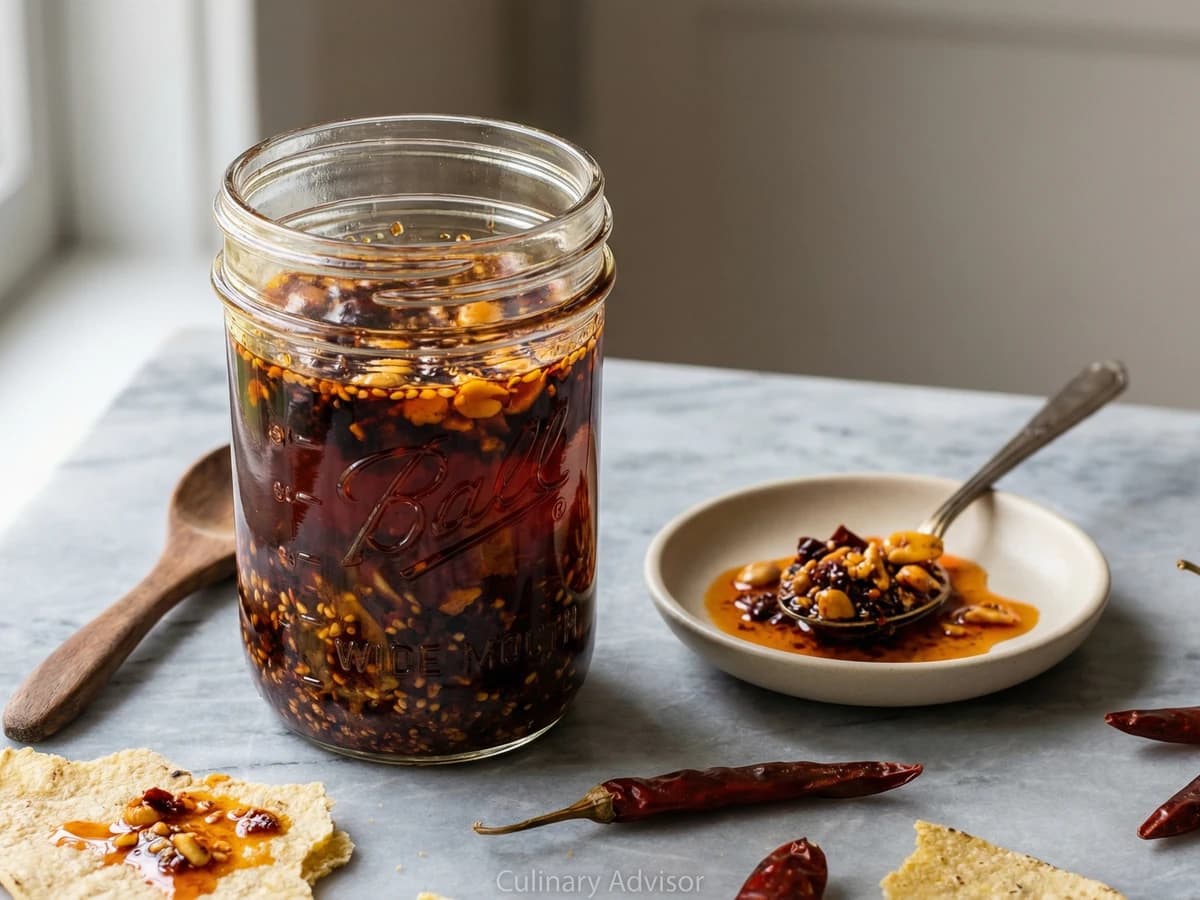
A gutsy Veracruz oil-based salsa packed with fried árbol chiles, shattered peanuts, and golden garlic slivers. One jar transforms everything it touches, from morning eggs to midnight tacos.

Chef Lupita
Veracruz's Sotavento salsa macha is chile de árbol, garlic, cacahuate, and ajonjolí fried low in oil, a jar condiment for beans, grilled fish, eggs, and anything off the comal.
Chef Lupita
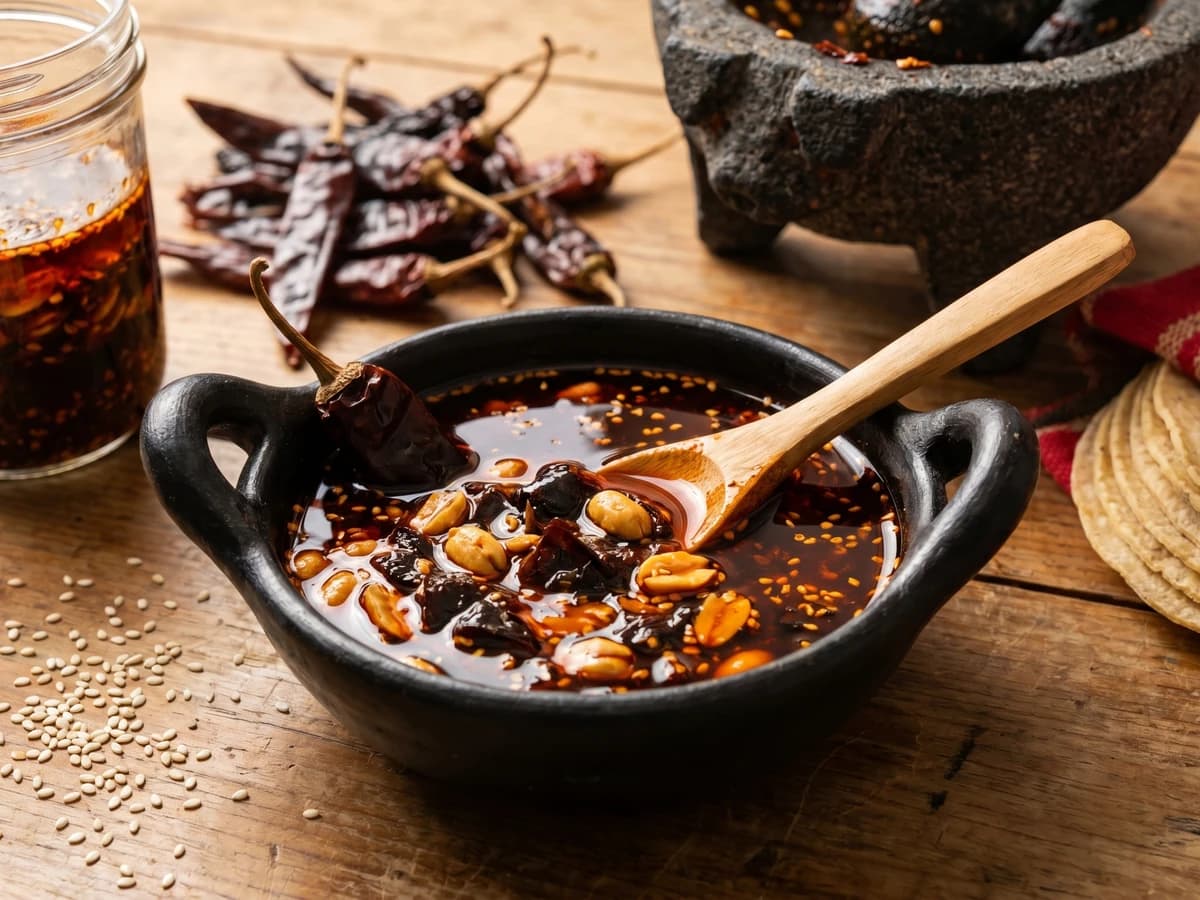
Oaxaca's shelf-stable chile oil, cascabel and pasilla oaxaqueño steeped in warm oil with toasted garlic, sesame, and peanut. A jar that earns its place on the table for weeks.

Chef Lupita
Sonora's chiltepín-driven salsa macha, a glass jar of wild desert chile, peanuts, sesame, and garlic slow-fried in oil until everything turns mahogany. Spoon it over anything that came off the parrilla.
Chef Lupita
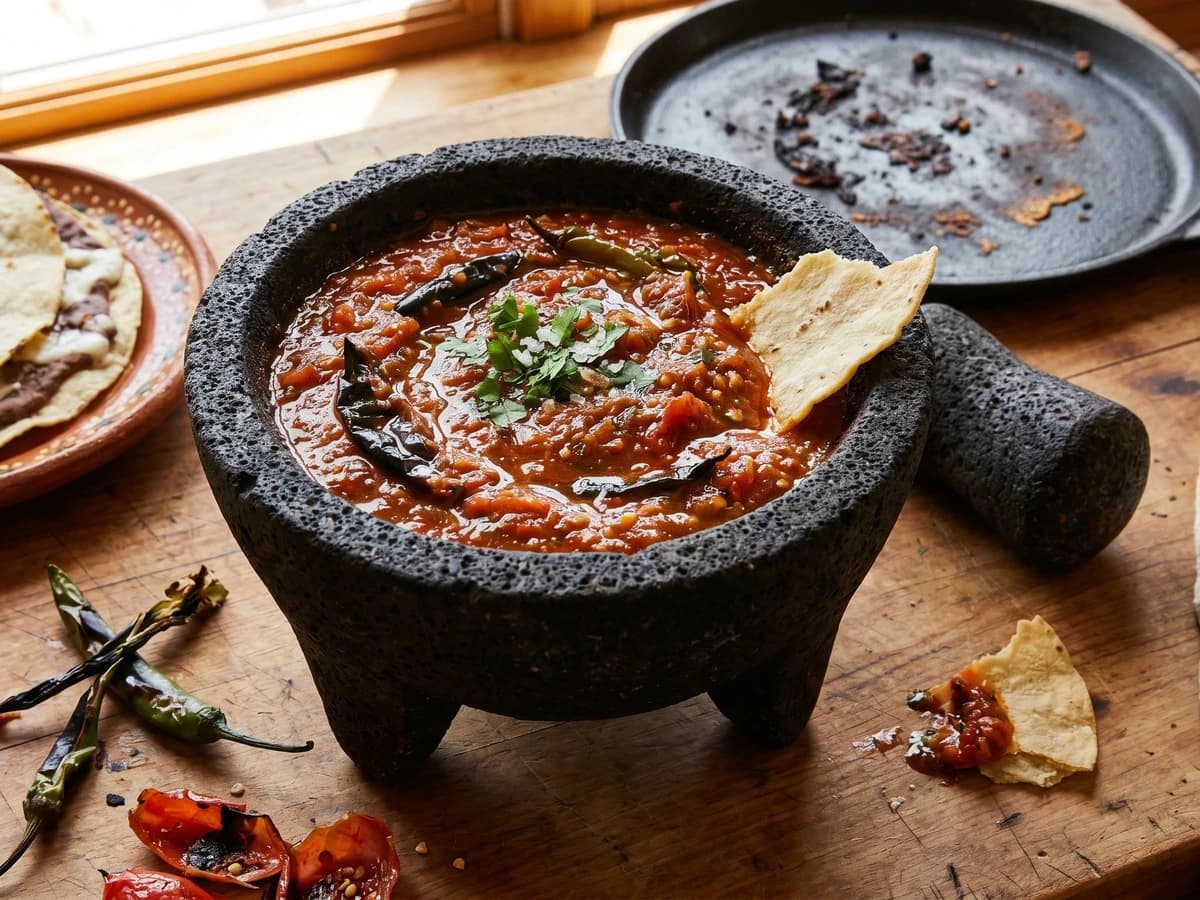
The Valles Centrales table salsa for tlayudas, charred tomate and chile serrano ground by hand in the volcanic stone molcajete, chunky and smoky, the way the senoras at Mercado 20 de Noviembre have made it for generations.

Chef Lupita
Michoacán's Meseta table salsa, built from comal-tatemado jitomate and chile perón, crushed martajada in volcanic stone so the thick skins, black seeds, and fire-char stay visible.

Chef Lupita
Sinaloa's black salsa for the marisqueria table, chile de arbol and morita burned past dark, ground with charred garlic, soy, and vinegar. Smoky, brittle-edged, made for raw oysters and aguachile.

Chef Lupita
Guanajuato's guajillo salsa for enchiladas mineras, thin enough to coat a tortilla and deep enough from manteca to taste like the Bajio mining towns that built it.
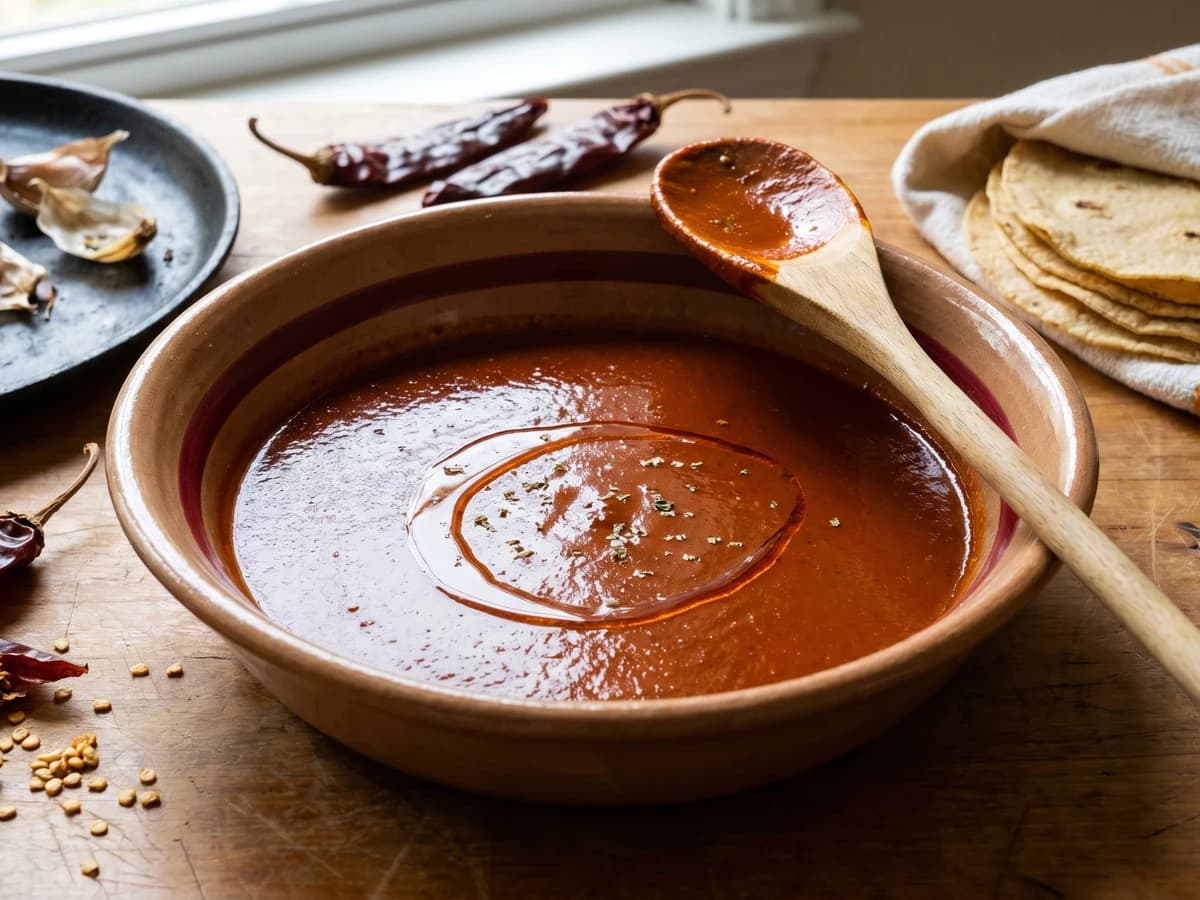
Chef Lupita
Queretaro's lighter red enchilada sauce, built from toasted chile guajillo, roasted garlic, comino, and Mexican oregano, then fried until the color turns brick-red and the oil shines at the edge.
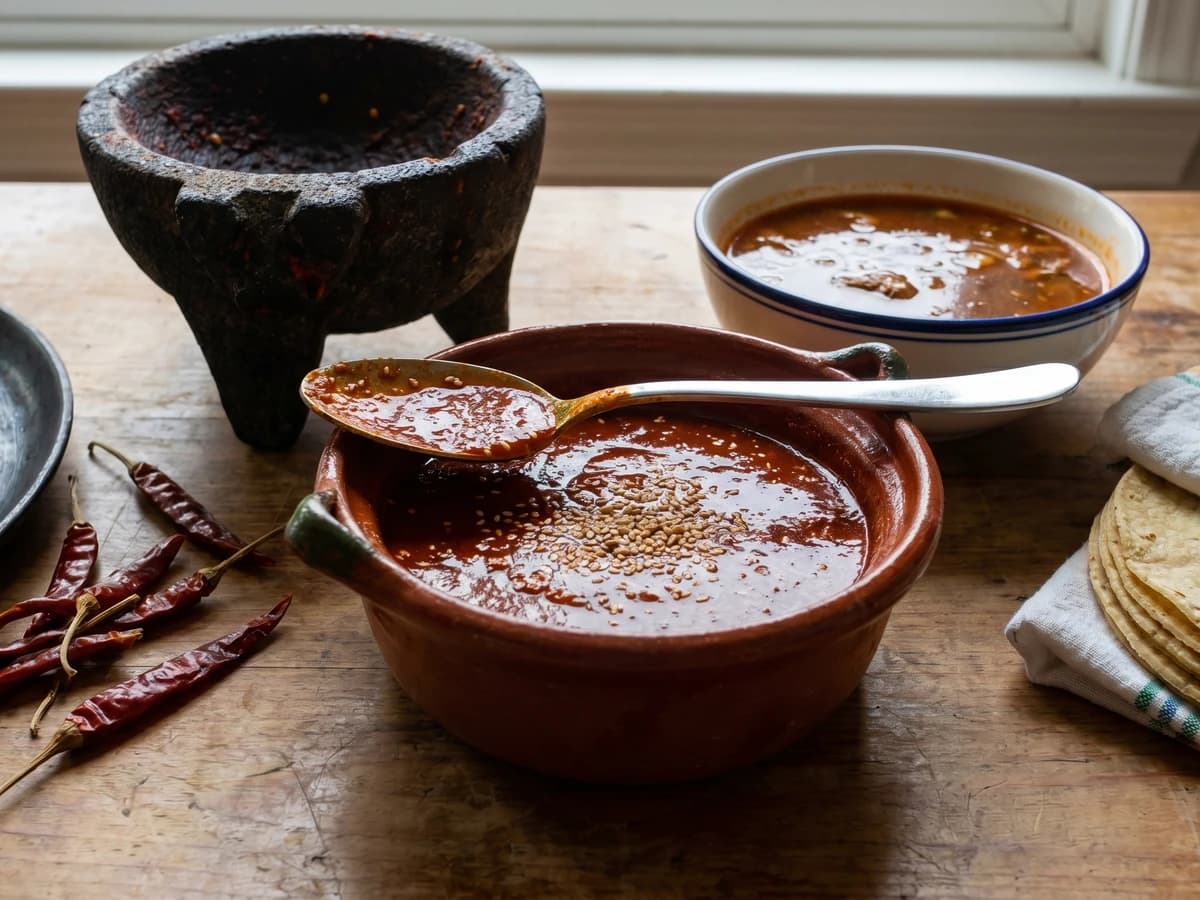
Chef Lupita
Jalisco's table salsa for birria de chivo, made with toasted chile de arbol, golden sesame, garlic, and enough consomé to make it pourable without making it timid.

Chef Lupita
Sinaloa's salsa rosa for camaron, built fast at every marisqueria from Mazatlan to Los Mochis. Catsup, orange juice, lime, salsa Huichol, salsa Maggi, garlic, salt. The chiltepin is the cook's signature.
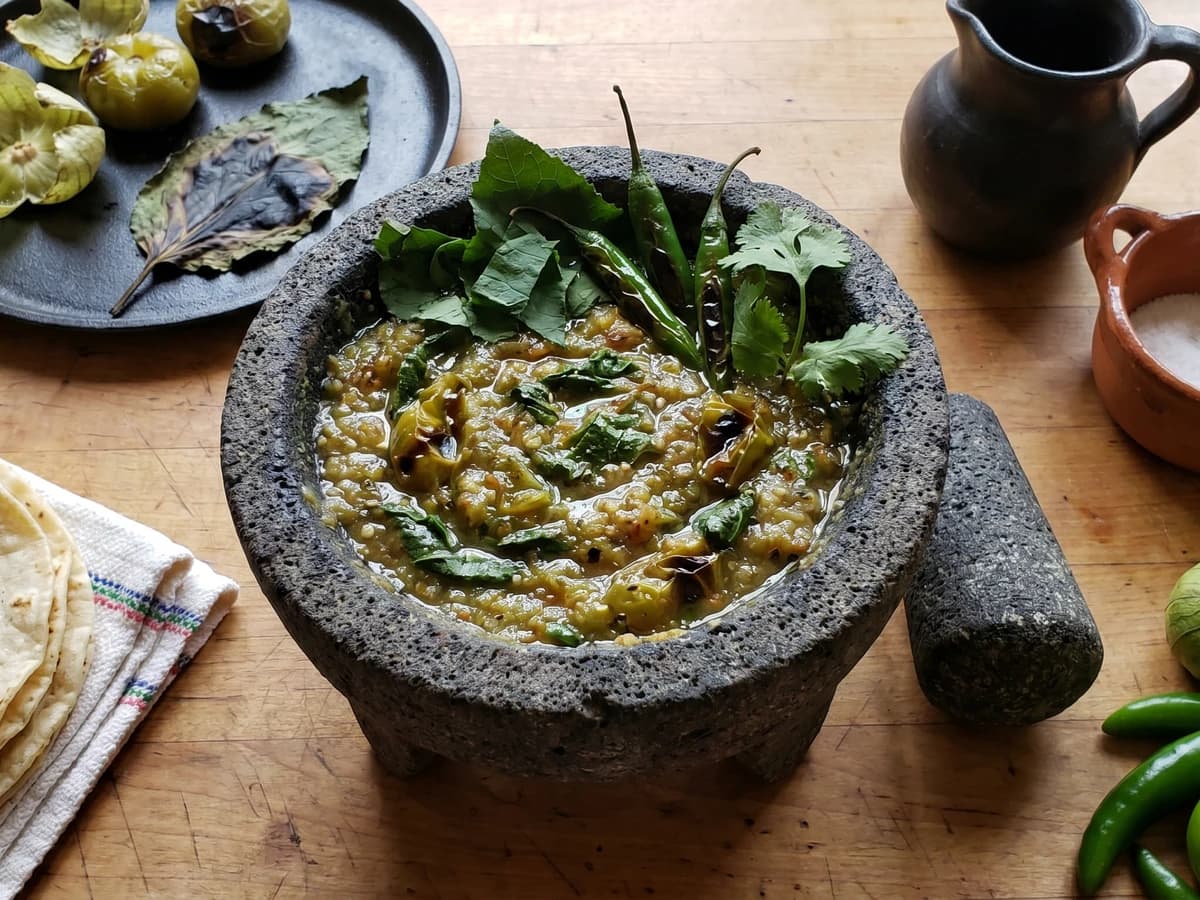
Chef Lupita
Oaxaca's molcajete-ground salsa verde, built on charred tomate verde, serrano, and the fresh hoja santa leaf that makes it unmistakably oaxaqueña. For memelas, enmoladas, and grilled fish.

Chef Lupita
The Yucatan's green habanero salsa, sharp and grassy and immediate, blended with sour orange and garlic. The salsa that lives on the table at every cochinita stand from Merida to Valladolid.

Chef Lupita
Nayarit and Sonora's chiltepín-driven table salsa, built on toasted chiltepín seco, charred chile cola de rata, and tatemado tomato, ground rough in a molcajete and spooned over grilled fish straight off the parrilla.

Chef Takumi
Hakusai no shiozuke is winter cabbage made quiet and useful: salt, weight, and time collapse the leaves into a crisp-tender pickle that tastes sweet beside a bowl of rice.

Chef Klaus
The eastern salt cucumber that sours itself in the jar: small summer cucumbers under a measured brine, dill and garlic beside them, time doing the work.

Chef Joost
This is the sambal that learned patience in the pan: fried until the raw fire softens, the shallots sweeten, and the rijsttafel finds its red punctuation.
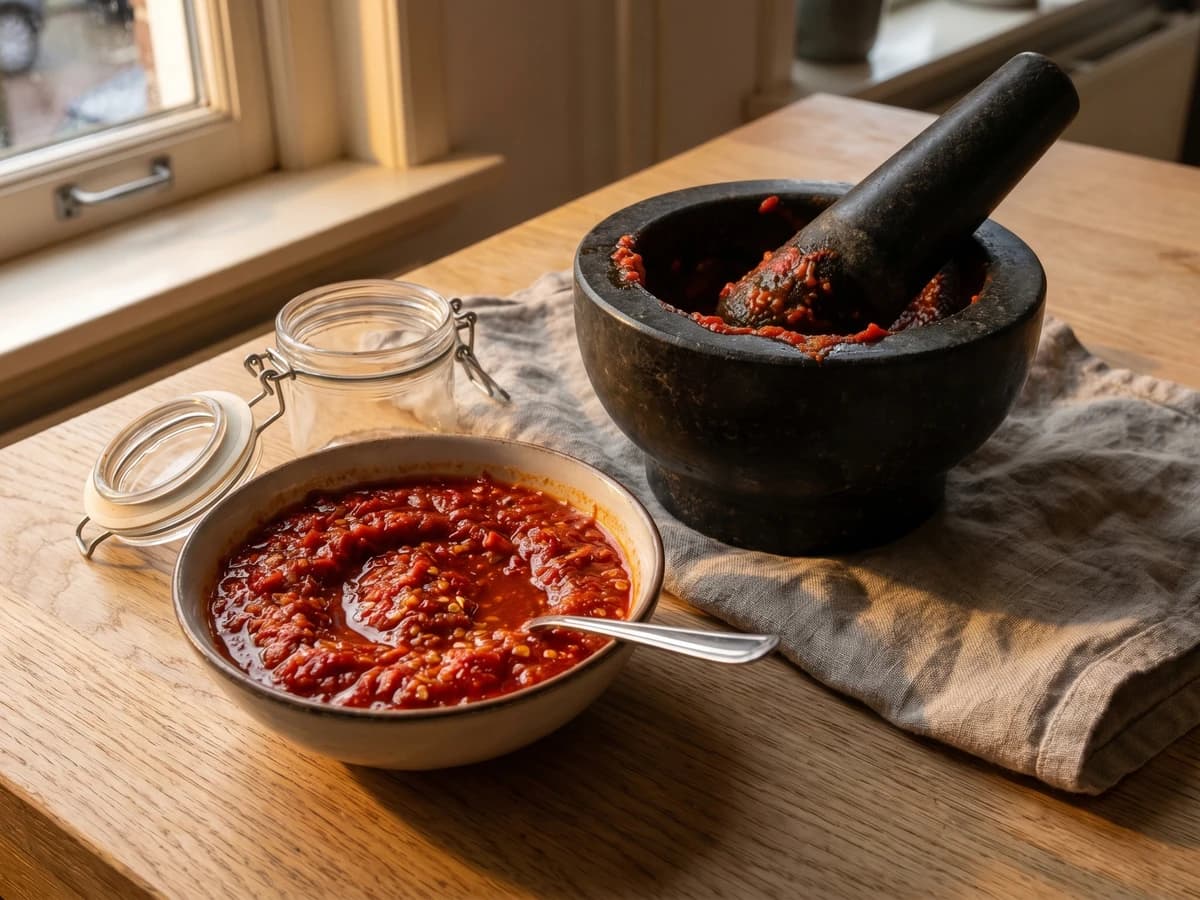
Chef Joost
Before rijsttafel becomes a table of plenty, it begins here: red chilies, salt, and the stone-mortar logic that taught Dutch kitchens a sharper language.

Chef Joost
Pungent in the jar, necessary on the plate: sambal trassi is the small red spoonful that makes the Indo-Dutch table speak plainly.
Chef Takumi
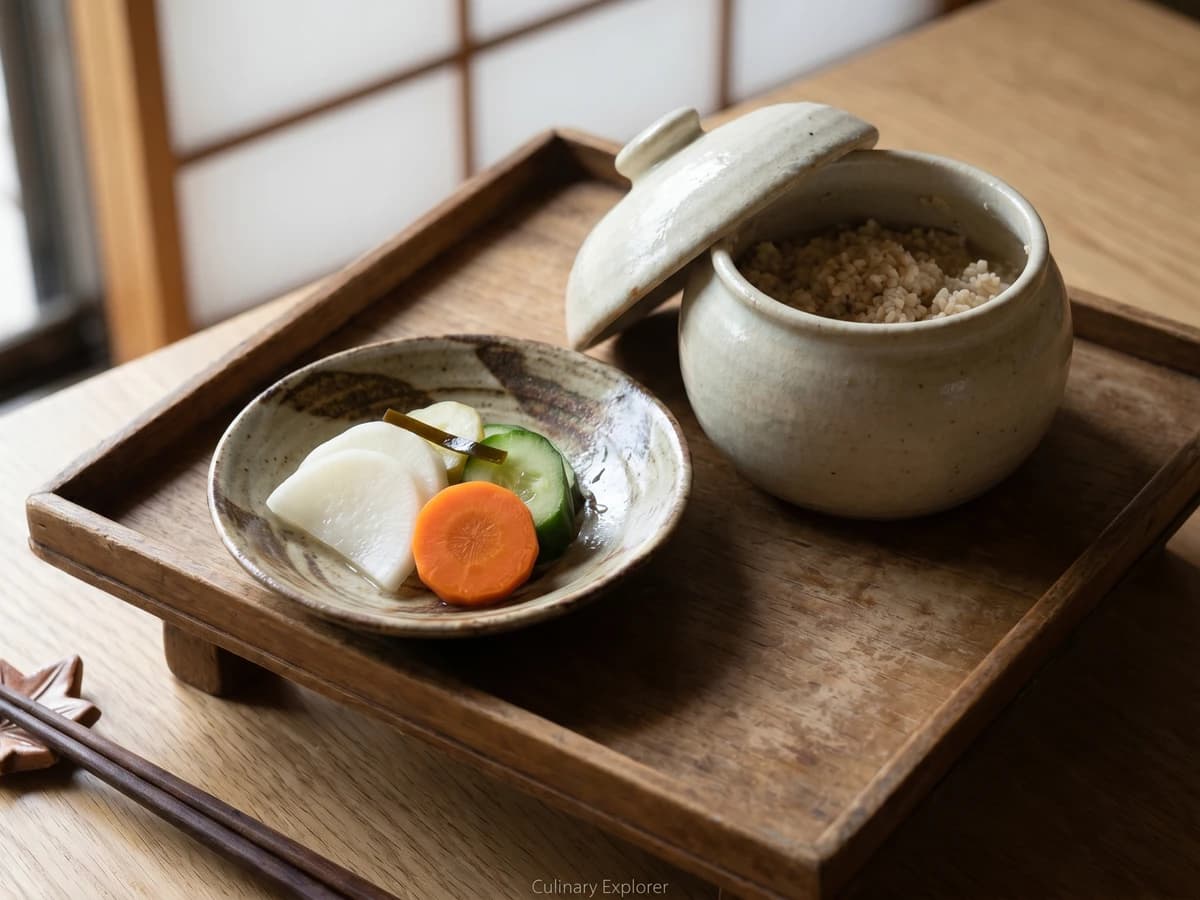
A pickle bed doesn't ask for mystery. Salt steadies it, koji sweetens it, rice feeds it, and the vegetables you bury inside come out seasoned all the way through.
Culinary guides, cultural storytelling, and the editorial depth that makes cooking meaningful.
Discover Culinary Explorer