Chef Lupita
Aceite de Chiltepin Bajacaliforniano
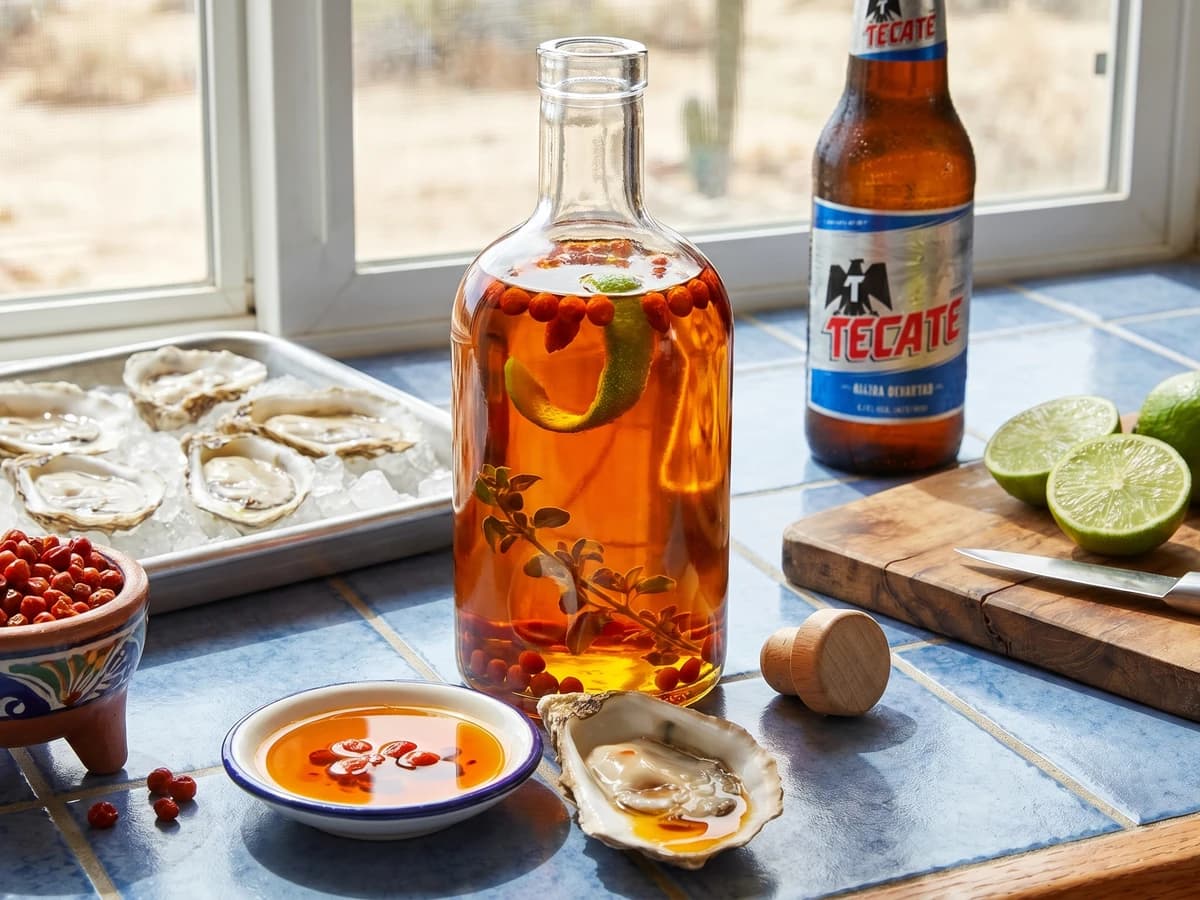
Baja California's wild chiltepin steeped in olive oil with garlic, orejon, and lime peel, until the oil turns ruby-amber and carries the slow, sneaky burn of the desert coast.
A cooking platform built around craft, culture, and the stories behind what we eat.
Created by
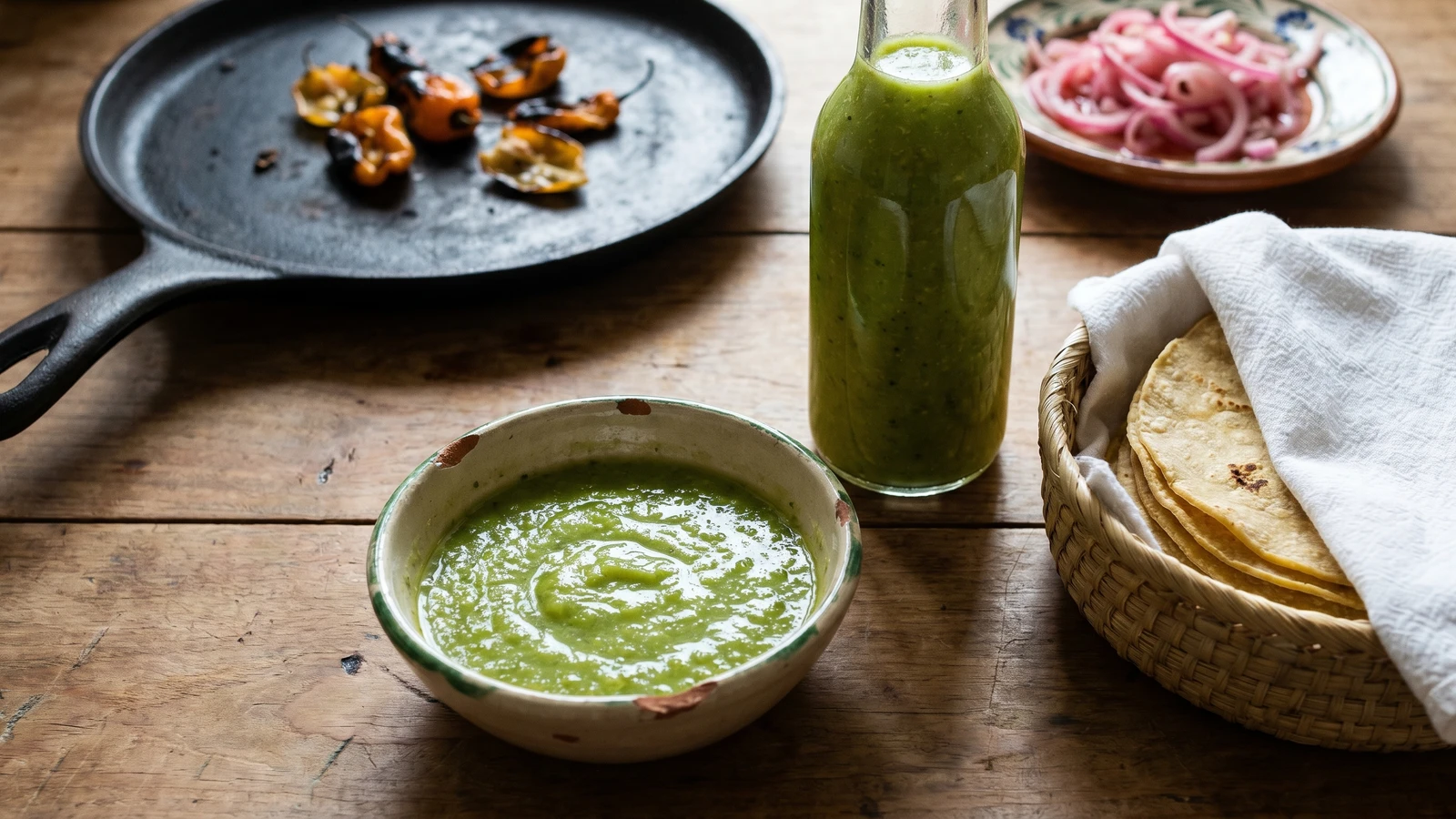
The Yucatan's green habanero salsa, sharp and grassy and immediate, blended with sour orange and garlic. The salsa that lives on the table at every cochinita stand from Merida to Valladolid.
This is from the Yucatan Peninsula. Not from central Mexico. Not from anywhere with tomatillos. When a yucateco says salsa verde, they do not mean what a defeno means, and they do not mean what a Tex-Mex menu means. They mean green habaneros, garlic, salt, naranja agria, and water. That is the whole list.
The color comes from the chile itself, picked while it is still unripe, before it ripens into the orange habanero that everyone in the United States knows. Green habaneros are sharper, more vegetal, and they hit faster. The salsa is loose, almost pourable, the way El Yucateco bottles it and ships it across the world. If you have only known the bottle, you should know that the bottle is a faithful copy of what abuelas in Merida have been making in molcajetes and now blenders for generations.
It lives on the table next to the cochinita pibil, the panuchos, the salbutes, the huevos motulenos. You spoon a few drops, not a flood. This salsa does not negotiate. My notebook has a single line from a senora in Valladolid who taught me her version in 2014: 'No mas chile, ajo, sal, naranja agria. Si le pones mas, ya no es de aqui.' Nothing more than chile, garlic, salt, sour orange. If you add more, it is not from here anymore. Asi se hace y punto.
The habanero, despite its name (which translates as 'from Havana'), was domesticated in the Amazon basin and traveled through the Caribbean before settling permanently on the Yucatan Peninsula, where it found the limestone soil and humid climate that suited it best. In 2010 the Mexican government granted the Habanero Chile of the Yucatan Peninsula a Denomination of Origin, recognizing the region's exclusive claim to the variety in the same legal framework that protects tequila and mezcal. The El Yucateco brand, founded in Merida in 1968 by Don Priamo Gamboa Patron, was the first to bottle this salsa for export and remains the most successful Yucatecan condiment in the world, though every Peninsula home cook will tell you the bottled version is a baseline, not a ceiling.
Quantity
10 to 12
stemmed
Quantity
3
peeled
Quantity
1/2 cup, plus more as needed
Quantity
2 tablespoons
Quantity
1 1/4 teaspoons, plus more to taste
Quantity
1 tablespoon
| Ingredient | Quantity |
|---|---|
| fresh green habanero chilesstemmed | 10 to 12 |
| garlic clovespeeled | 3 |
| water | 1/2 cup, plus more as needed |
| naranja agria juice (sour orange) | 2 tablespoons |
| sea salt | 1 1/4 teaspoons, plus more to taste |
| white vinegar | 1 tablespoon |
Pick over your habaneros and use only the ones that are still firm and green, with no yellow or orange blush. The green ones are the youngest, the grassiest, the sharpest. The minute they ripen toward yellow and orange, the flavor turns fruity and floral, which is the cochinita salsa, not this one. Salsa verde yucateca is built on unripe heat. Cada estado, su propia cocina, and the Peninsula picks them green on purpose.
Heat a dry comal or small heavy skillet over medium-low. Lay the whole habaneros and the peeled garlic cloves on the surface. Turn them every minute or so until the skins blister in a few spots and the garlic just begins to color, about four to five minutes total. Do not blacken them. This is not the toasted-chile-for-mole technique. You want the chiles softened and warmed, the raw edge taken off, the garlic mellowed. Burn them and the salsa will taste like ash and the grassy note that defines it disappears.
Drop the warmed habaneros and garlic into the blender. Add the water, the naranja agria juice, the salt, and the vinegar. Blend in short pulses, ten or fifteen seconds at a time, until you have a loose, vivid green liquid with the texture of thin cream. Not a paste. Not a smoothie. The El Yucateco bottle is the reference: pourable, slightly cloudy, bright green. If it looks pale, you over-blended and trapped air. Let it settle and the color returns.
Taste with the tip of a spoon, not a finger. The salsa should hit immediately, sharp and grassy, then bloom into heat that climbs and stays. Adjust salt by quarter teaspoons. If it tastes flat, the salt is low. If the heat feels muddy, add another tablespoon of vinegar to brighten it. The acid in the naranja agria and vinegar is not optional. It cuts the burn and lets the green flavor speak. No me vengas con atajos: real sour orange or the substitute below. Plain lime alone is wrong here.
Pour the salsa into a clean glass jar and let it sit at room temperature for at least thirty minutes before serving. The flavors marry, the heat settles into the liquid, the color deepens. Refrigerate what you do not use immediately. It keeps for two weeks in the fridge and the flavor only sharpens. On the Peninsula, this salsa lives on the table the way a salt shaker lives on yours. Recetas probadas y garantizadas.
1 serving (about 30g)
Culinary guides, cultural storytelling, and the editorial depth that makes cooking meaningful.
Discover Culinary ExplorerChef Lupita
Baja California's wild chiltepin steeped in olive oil with garlic, orejon, and lime peel, until the oil turns ruby-amber and carries the slow, sneaky burn of the desert coast.

Chef Lupita
Puebla's Lenten convent adobo, a brick-red vinegar chile paste of ancho, guajillo, garlic, oregano, and comino made to dress fish for the meatless calendar.
Chef Lupita
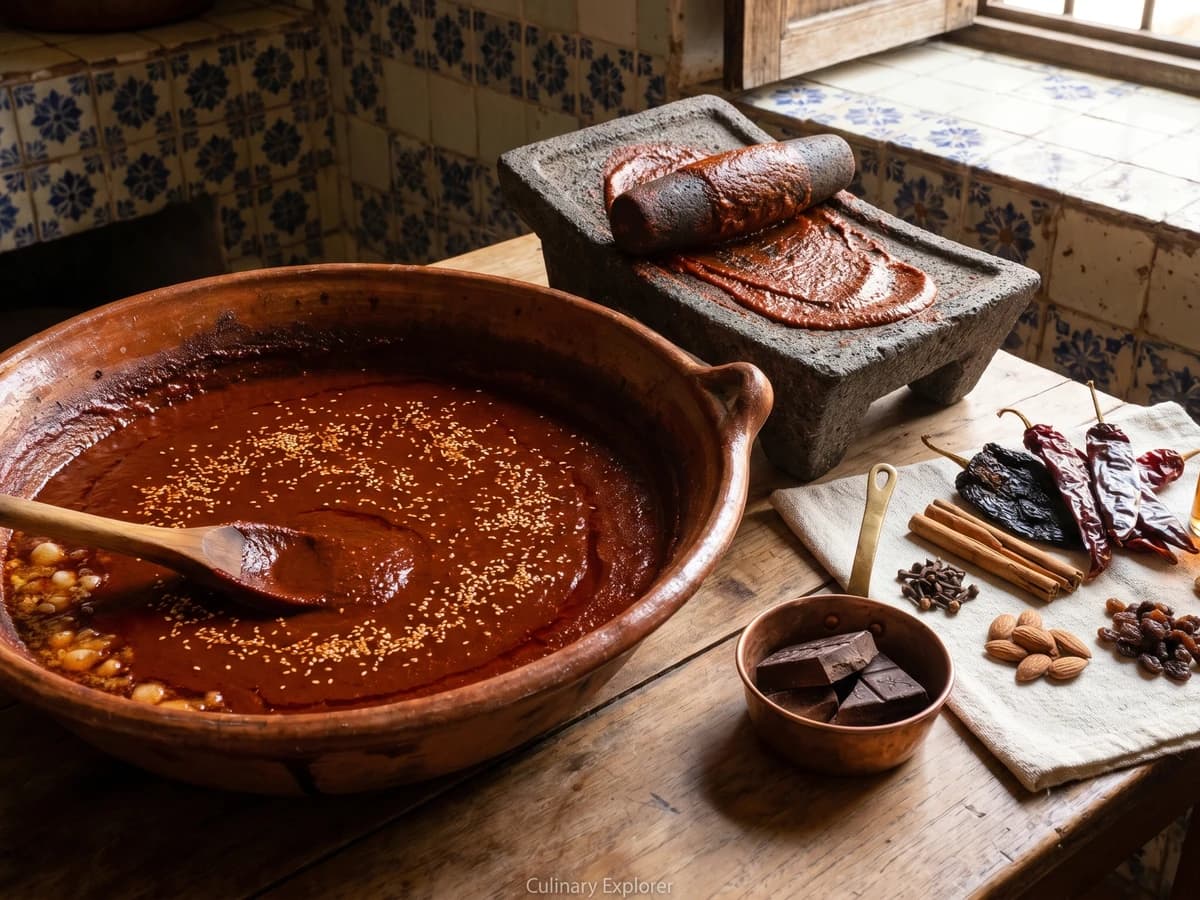
Zacatecas' wedding-table adobo, built from toasted guajillo and ancho, piloncillo, sour orange, chocolate, canela, clavo, almonds, sesame, and lard.

Chef Lupita
Puebla's convent kitchens built this adobo with ancho, guajillo, jerez, almonds, raisins, clove, and lard, a baroque marinade that stains pork loin and finishes as the sauce.