Culinary Explorer
A cooking platform built around craft, culture, and the stories behind what we eat.
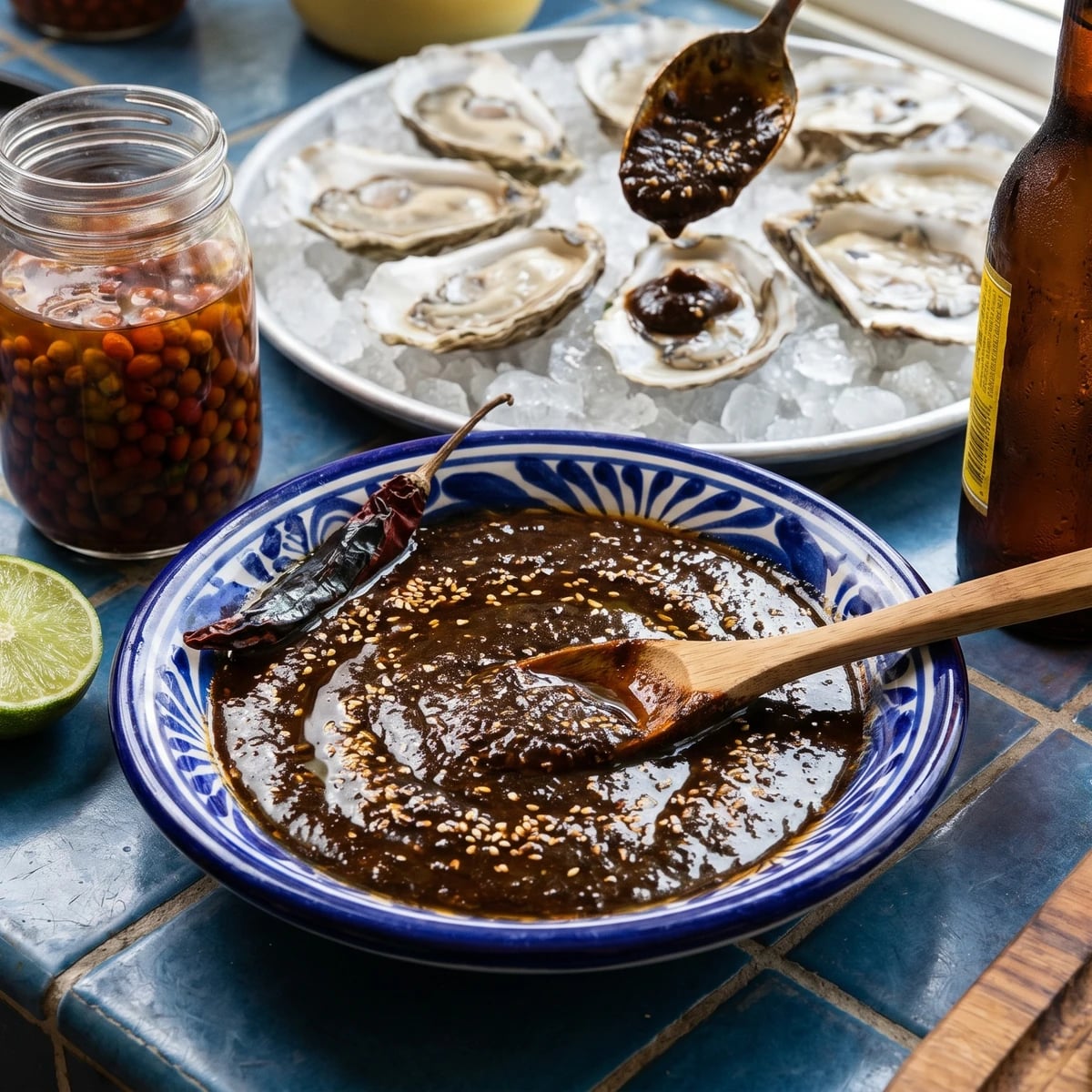
Salsa Negra Sinaloense para Mariscos
Created by Chef Lupita
Sinaloa's black salsa for the marisqueria table, chile de arbol and morita burned past dark, ground with charred garlic, soy, and vinegar. Smoky, brittle-edged, made for raw oysters and aguachile.
This is from Sinaloa. The Pacific coast, the marisquerias of Mazatlan and Culiacan, the plastic-tablecloth seafood stands where the shrimp boats unload in the morning and the oysters get shucked at the counter. Salsa negra is what sits on that table, in a squeeze bottle or a small clay dish, next to the limes and the saltines and the cold Pacifico.
The color is the work. You do not toast the chiles here. You burn them. Chile de arbol thin and brittle, chile morita smoky and stubborn, both pressed onto a screaming comal until they smoke and turn black. People raised on the Mexico City pantry get nervous at this step. Burning a chile sounds like a mistake. In Sinaloa it is the recipe. The burn is what gives the salsa its name and its character: smoke, bitterness held in check by vinegar, heat that arrives late and stays.
The soy sauce is not a foreign visitor. The Sinaloa and Baja coast has cooked with soy for a hundred years, the inheritance of Chinese-Mexican kitchens in Mexicali and the trading routes through Mazatlan. Anyone who calls it fusion has not eaten at a real marisqueria. La cocina no es decoracion, es trabajo. Spoon it onto a raw oyster direct from the shell. You will not need anything else.
Ingredients
dried chile de arbol
Quantity
30
stemmed
dried chile morita
Quantity
8
stemmed
garlic cloves
Quantity
6
unpeeled
| Ingredient | Quantity |
|---|---|
| dried chile de arbolstemmed | 30 |
| dried chile moritastemmed | 8 |
| garlic clovesunpeeled | 6 |
Where cooking meets culture.
Culinary guides, cultural storytelling, and the editorial depth that makes cooking meaningful.
Discover Culinary Explorer