Chef Lupita
Aceite de Chiltepin Bajacaliforniano
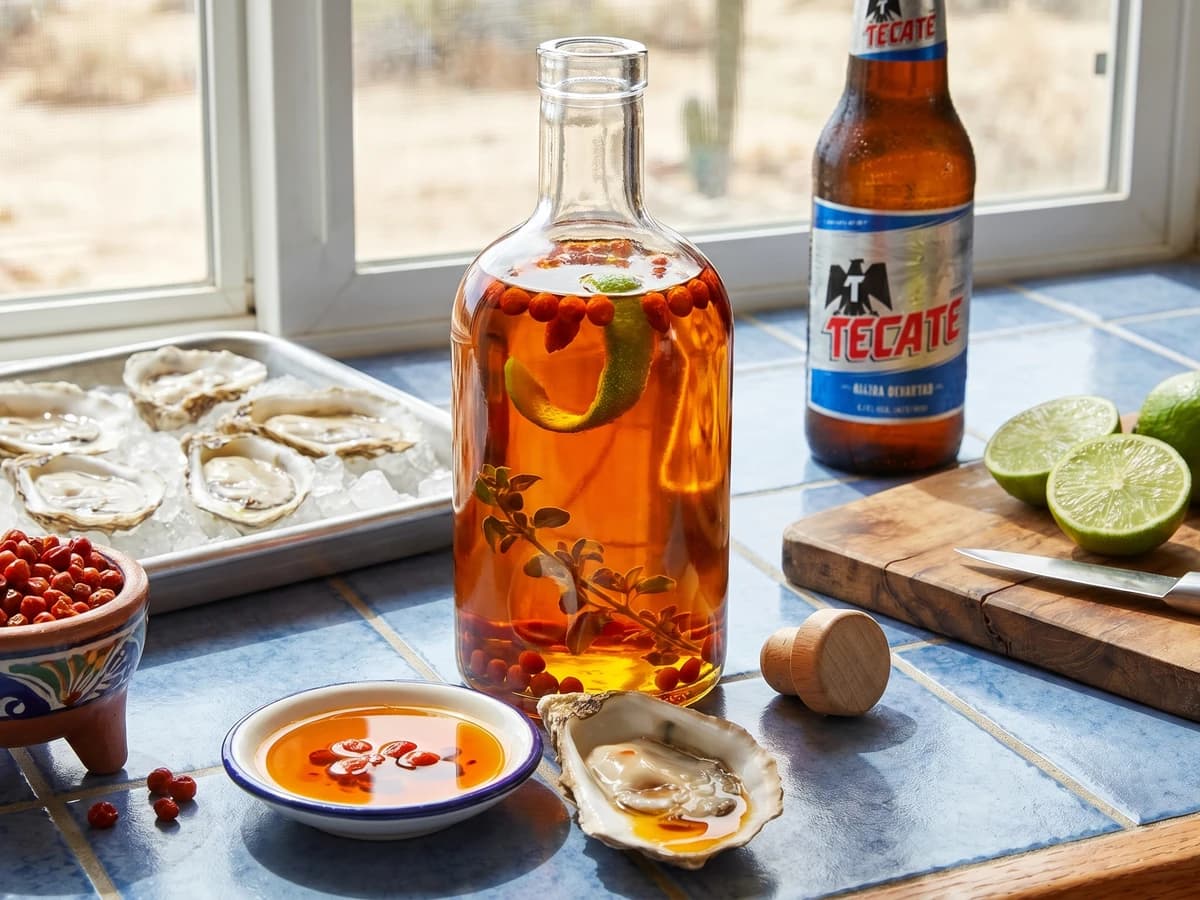
Baja California's wild chiltepin steeped in olive oil with garlic, orejon, and lime peel, until the oil turns ruby-amber and carries the slow, sneaky burn of the desert coast.
A cooking platform built around craft, culture, and the stories behind what we eat.
Created by
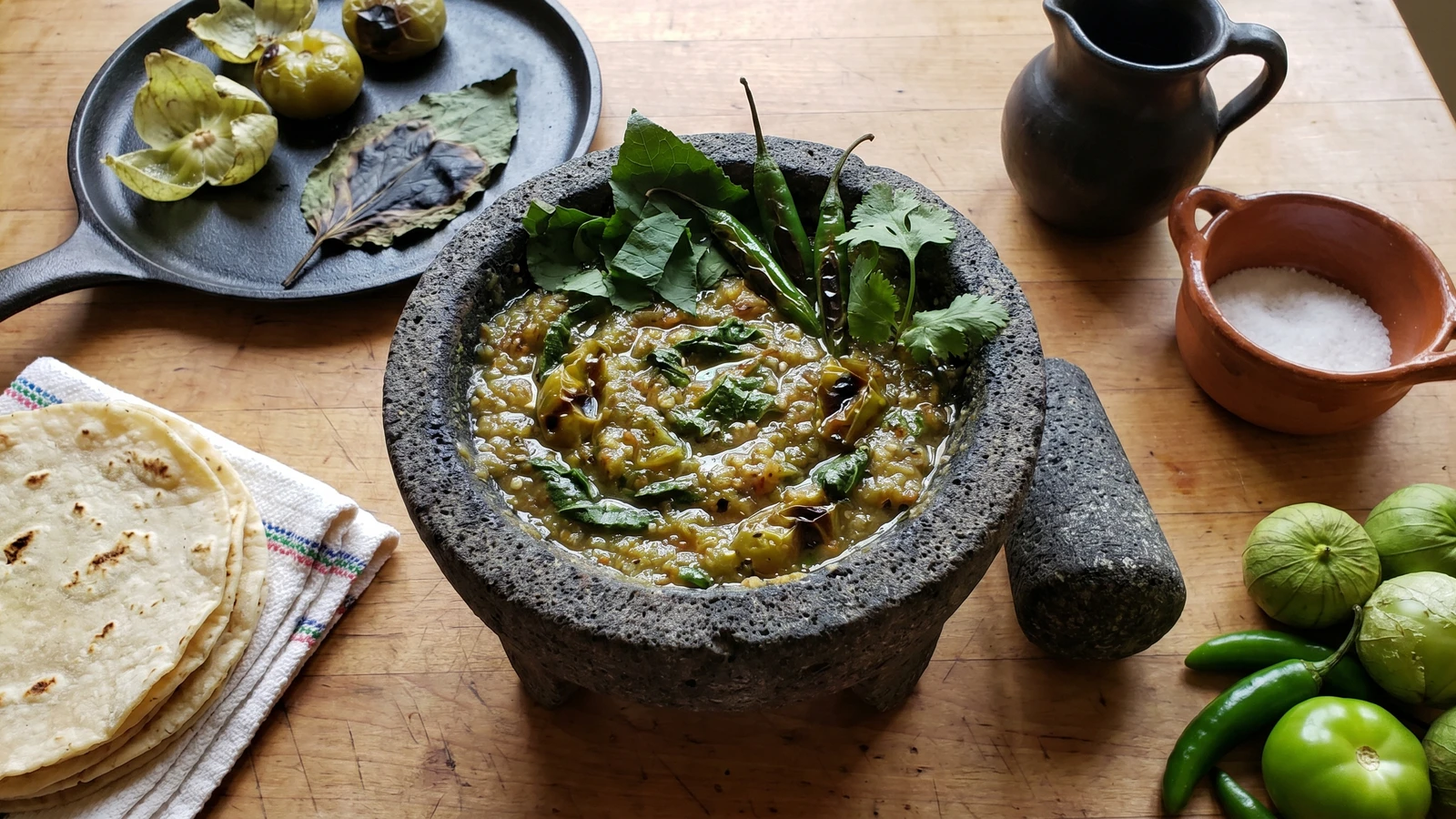
Oaxaca's molcajete-ground salsa verde, built on charred tomate verde, serrano, and the fresh hoja santa leaf that makes it unmistakably oaxaqueña. For memelas, enmoladas, and grilled fish.
This is a Oaxacan salsa. The hoja santa makes it Oaxacan. Without it, you have a perfectly good salsa verde from somewhere else: Mexico City, Puebla, the Bajio. With it, you have the green salsa that lives on the table at a comedor in Etla, beside a stack of memelas and a plate of grilled robalo from the coast. Cada estado, su propia cocina, and this one belongs to Oaxaca.
Hoja santa is the leaf the rest of the world does not understand. The Mixtecos and the Zapotecos have cooked with it for centuries. It tastes like sassafras, anise, and black pepper folded into one big heart-shaped leaf, and it grows wild across the Sierra Norte and the Valles Centrales. The senoras at Mercado de la Merced in Oaxaca de Juárez sell it in fat green stacks for a few pesos. If you cannot find it fresh, do not make this salsa today. Make a different salsa. Mexican grandmothers cook with what the mercado is selling, not what they wish they had.
The technique is the molcajete. No me vengas con atajos, the blender is not the same tool. The volcanic stone bruises the herbs and crushes the chile and the tomate verde against itself, and the salsa that comes out the other end is textured, fragrant, and alive. A blender shears everything into pulp and gives you a smooth green liquid that tastes thinner than it should. If you do not own a molcajete and you cook Mexican food, you are working with one hand tied behind your back.
My mother did not make this salsa. She was from Jalisco and her salsa verde was a different animal: tomatillos and serrano and cilantro, no hoja santa, fried in lard until it darkened. I learned this Oaxacan version from a woman named Doña Rosa at a comedor in Tlacolula, who watched me grind it the first time and told me, plainly, that I was going too fast. She was right. The molcajete teaches patience. Saber cocinar es saber vivir.
Hoja santa (Piper auritum) is native to Mesoamerica and was used by the Olmecs, Maya, and Zapotecs in both medicinal and culinary preparations centuries before contact, with its leaves wrapping fish, masa, and tamales across the southern half of what is now Mexico. The plant's Nahuatl name, 'tlanepaquelite,' translates roughly as 'fragrant medicine,' a reference to the aromatic safrole compounds that give the leaf its distinctive flavor. Oaxaca's seven moles tradition draws on hoja santa as the defining herb of mole verde, and the leaf appears across the state's salsas, broths, and tamales in a way it does not in central or northern Mexican cooking, marking it as a regional cultural signature as specific as chilhuacle negro or chapulines.
Quantity
1 pound
husked and rinsed
Quantity
3 to 4
stemmed
Quantity
2
unpeeled
Quantity
2 large
thick central stem removed, torn into rough pieces
Quantity
1/4 medium
roughly chopped
Quantity
1/2 cup, packed
Quantity
1 teaspoon, plus more to taste
Quantity
1 tablespoon
Quantity
2 to 3 tablespoons, as needed
| Ingredient | Quantity |
|---|---|
| tomate verde (fresh tomatillos)husked and rinsed | 1 pound |
| fresh chile serranostemmed | 3 to 4 |
| garlic clovesunpeeled | 2 |
| fresh hoja santa leavesthick central stem removed, torn into rough pieces | 2 large |
| white onionroughly chopped | 1/4 medium |
| fresh cilantro leaves and tender stems | 1/2 cup, packed |
| kosher salt | 1 teaspoon, plus more to taste |
| manteca de cerdo (pork lard) | 1 tablespoon |
| cold water | 2 to 3 tablespoons, as needed |
Heat a dry comal or heavy cast iron skillet over medium-high. Lay the husked tomate verde, the serranos, and the unpeeled garlic directly on the dry surface. No oil. Turn them with tongs every couple of minutes. The tomate verde should blister, blacken in patches, and slump. The serranos should char in spots and soften. The garlic skins should darken and the cloves inside should turn golden and tender. This takes eight to ten minutes. The char is the salsa. Skip it and you have a raw, flat sauce.
Once the tomate verde is off the comal, lay the torn hoja santa leaves on the hot surface for about ten seconds per side. Just long enough to wake up the oils. The leaves will release a perfume of root beer, anise, and black pepper all at once. That is the smell of Oaxaca. Pull them off before they crisp. They should still be pliable.
Peel the garlic. Drop the cloves into the molcajete with the salt and the stemmed serranos. Grind in slow circles with the tejolote until you have a rough green paste. Add the white onion and grind again. Now tear in the hoja santa and the cilantro and keep working the stone. The herbs should bruise and release their oils into the paste. This is the foundation. A blender cannot do this. The molcajete crushes; a blender cuts. Two different salsas come out the other end.
Add the charred tomate verde a few at a time, crushing each one against the wall of the molcajete. The skins, the seeds, the blackened patches, all of it goes in. Work it until the salsa has the texture of a coarse green puree with visible flecks of chile and herb. If the molcajete struggles to move, add a tablespoon of cold water at a time. You want a salsa that holds its shape on a memela, not one that runs off the side.
Heat the manteca in a small skillet over medium until it shimmers. Pour the hot lard over the salsa in the molcajete and stir it through with a wooden spoon. The fat carries the chile and the hoja santa to every bite and gives the salsa the gloss and depth that water alone cannot. La manteca es el sabor. Taste for salt. The hoja santa fades over a few hours, so this salsa is best within the first day. Serve in the molcajete it was made in.
1 serving (about 30g)
Culinary guides, cultural storytelling, and the editorial depth that makes cooking meaningful.
Discover Culinary ExplorerChef Lupita
Baja California's wild chiltepin steeped in olive oil with garlic, orejon, and lime peel, until the oil turns ruby-amber and carries the slow, sneaky burn of the desert coast.

Chef Lupita
Puebla's Lenten convent adobo, a brick-red vinegar chile paste of ancho, guajillo, garlic, oregano, and comino made to dress fish for the meatless calendar.
Chef Lupita
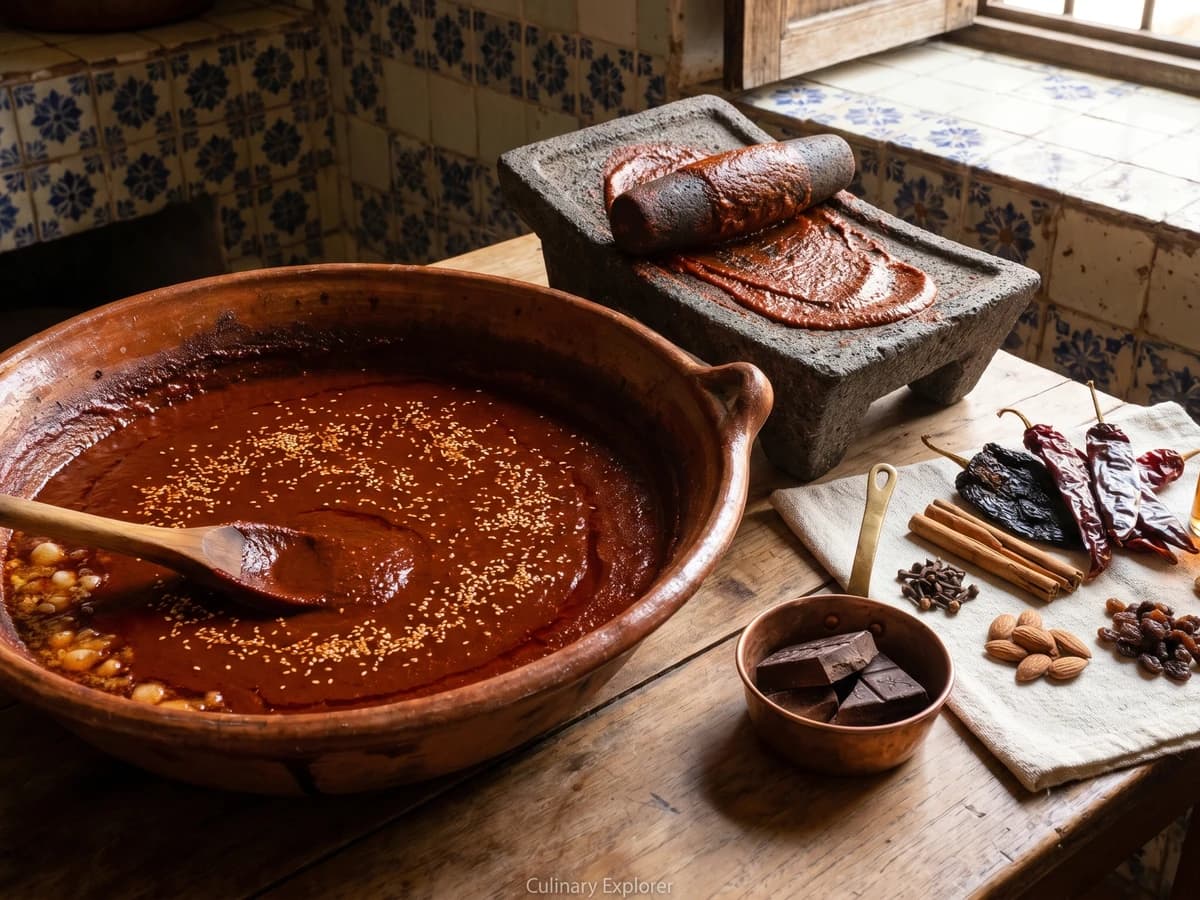
Zacatecas' wedding-table adobo, built from toasted guajillo and ancho, piloncillo, sour orange, chocolate, canela, clavo, almonds, sesame, and lard.

Chef Lupita
Puebla's convent kitchens built this adobo with ancho, guajillo, jerez, almonds, raisins, clove, and lard, a baroque marinade that stains pork loin and finishes as the sauce.