
Chef Joost
Acar Ketimun (Indo-Dutch Cucumber Pickle)
Acar means pickle, ketimun means cucumber, and this little bowl of sweet vinegar, chilli, and crunch is the cool note that lets an Indo-Dutch rijsttafel keep its balance.
A cooking platform built around craft, culture, and the stories behind what we eat.
Created by
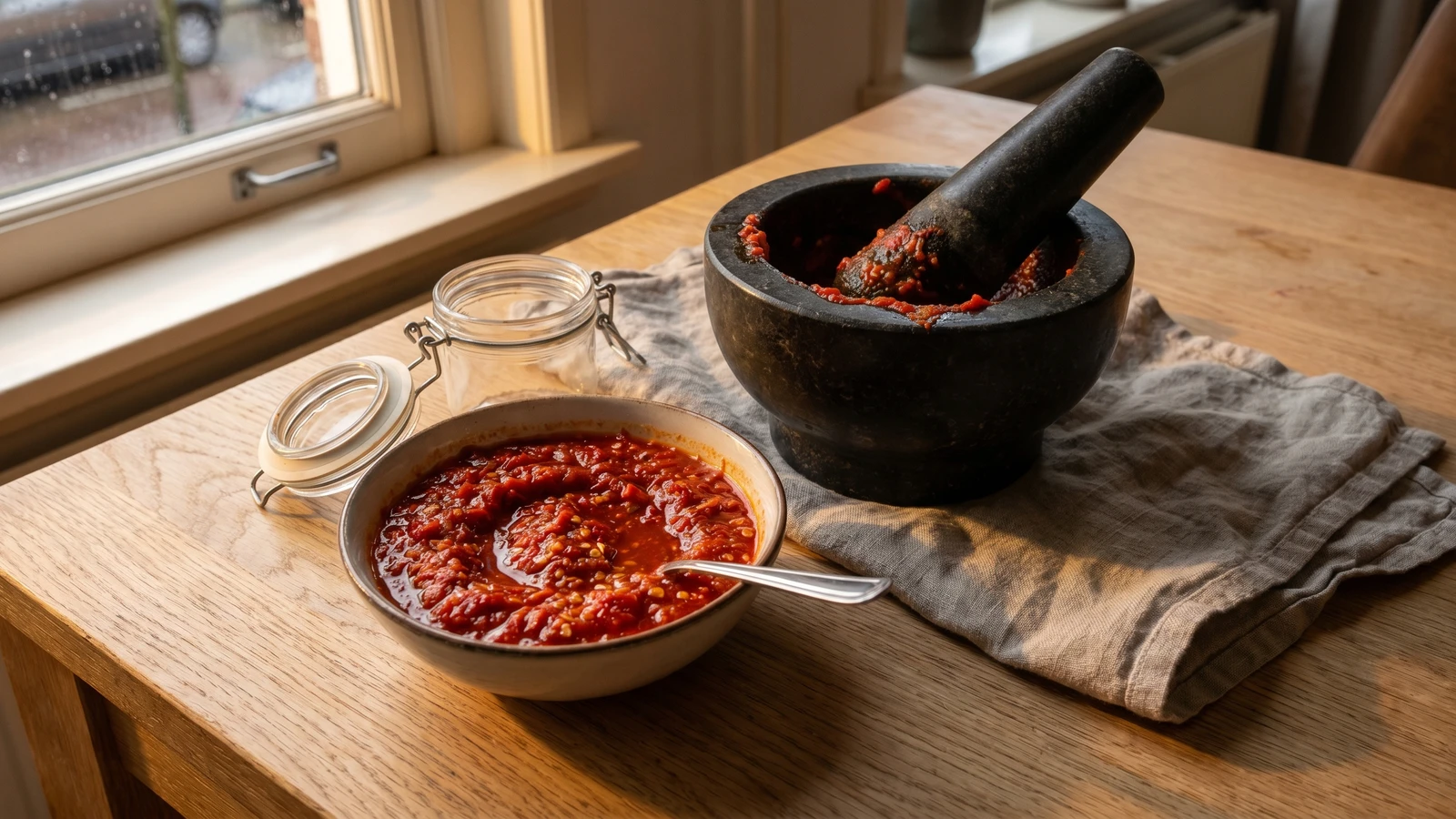
Before rijsttafel becomes a table of plenty, it begins here: red chilies, salt, and the stone-mortar logic that taught Dutch kitchens a sharper language.
In my grandmother's second notebook there are recipes written in the neat hand of Zeeland, and then, suddenly, one word from another sea: sambal. Not much of a recipe, really. Red peppers. Salt. Pound. For obvious reasons, this is exactly the sort of instruction that frightens people who own too many measuring spoons.
But let me tell you a secret. Sambal oelek is not a sauce trying to impress you. It is the base note of the Indo-Dutch table, the sharp red paste that sits beside nasi, bami, eggs, soup, leftover potatoes, and anything else a practical household decides needs waking up. The name already tells you the method: oelek is the old Dutch spelling of Indonesian ulek, to grind or pound in a stone mortar, the cobek. History and cookery, they cannot be separated, especially when the word itself is the tool in motion.
So keep it honest. Fresh red chilies, salt, a little vinegar only if you want it to keep longer, and enough patience to crush rather than merely chop. A blender makes it smooth, but a mortar leaves small bruised pieces, seeds, skin, juice, and sting together. That texture is the point. Hou het altijd simpel, always keep it simple, but simple is not the same as careless.
Sambal oelek entered Dutch home cooking through the colonial and postcolonial Indo-Dutch table, especially after Indonesian independence when Indo-European families and Dutch repatriates brought everyday Indies cooking into kitchens across the Netherlands. The spelling oelek preserves older Dutch colonial orthography for Indonesian ulek, to grind or pound, while modern Indonesian usually writes the dish as sambal ulek. In the Netherlands it became the plain base sambal: less sweet than sambal badjak, less dressed than sambal manis, and useful precisely because it begins with chilies and salt.
Quantity
200g
stems removed
Quantity
1 teaspoon
Quantity
1 tablespoon
Quantity
1/2 teaspoon
| Ingredient | Quantity |
|---|---|
| fresh red chiliesstems removed | 200g |
| fine sea salt | 1 teaspoon |
| rice vinegar or white vinegar (optional) | 1 tablespoon |
| sugar (optional) | 1/2 teaspoon |
Wash the chilies, dry them well, and remove the stems. Leave the seeds in unless you want a gentler sambal; the seeds are not the whole heat, but they carry enough fire to deserve respect. Cut the chilies into rough pieces so the mortar has a fair fight.
Put the chilies and salt into a stone mortar and pound, scrape, and grind until the skins break down into a coarse red paste. Do not chase perfect smoothness. Sambal oelek should still show its working: flecks of skin, pale seeds, and bright juice held together by salt.
Taste with the tip of a spoon. Add the vinegar if you want a sharper sambal that keeps a little longer, and add the sugar only if the chilies taste harsh rather than fruity. The sambal should taste fresh, salty, fierce, and direct, not sweet.
Spoon the sambal into a clean small jar, press it down to remove air pockets, and cover tightly. Refrigerate it at once. It is ready immediately, but after a few hours the salt draws out more chili juice and the paste settles into itself.
1 serving (about 16g)
Culinary guides, cultural storytelling, and the editorial depth that makes cooking meaningful.
Discover Culinary ExplorerChef Joost
Acar means pickle, ketimun means cucumber, and this little bowl of sweet vinegar, chilli, and crunch is the cool note that lets an Indo-Dutch rijsttafel keep its balance.

Chef Joost
Appelcompote is the apple left with its dignity: soft enough to spoon beside pork or potatoes, still chunky enough to remind you autumn did the real work.
Chef Joost
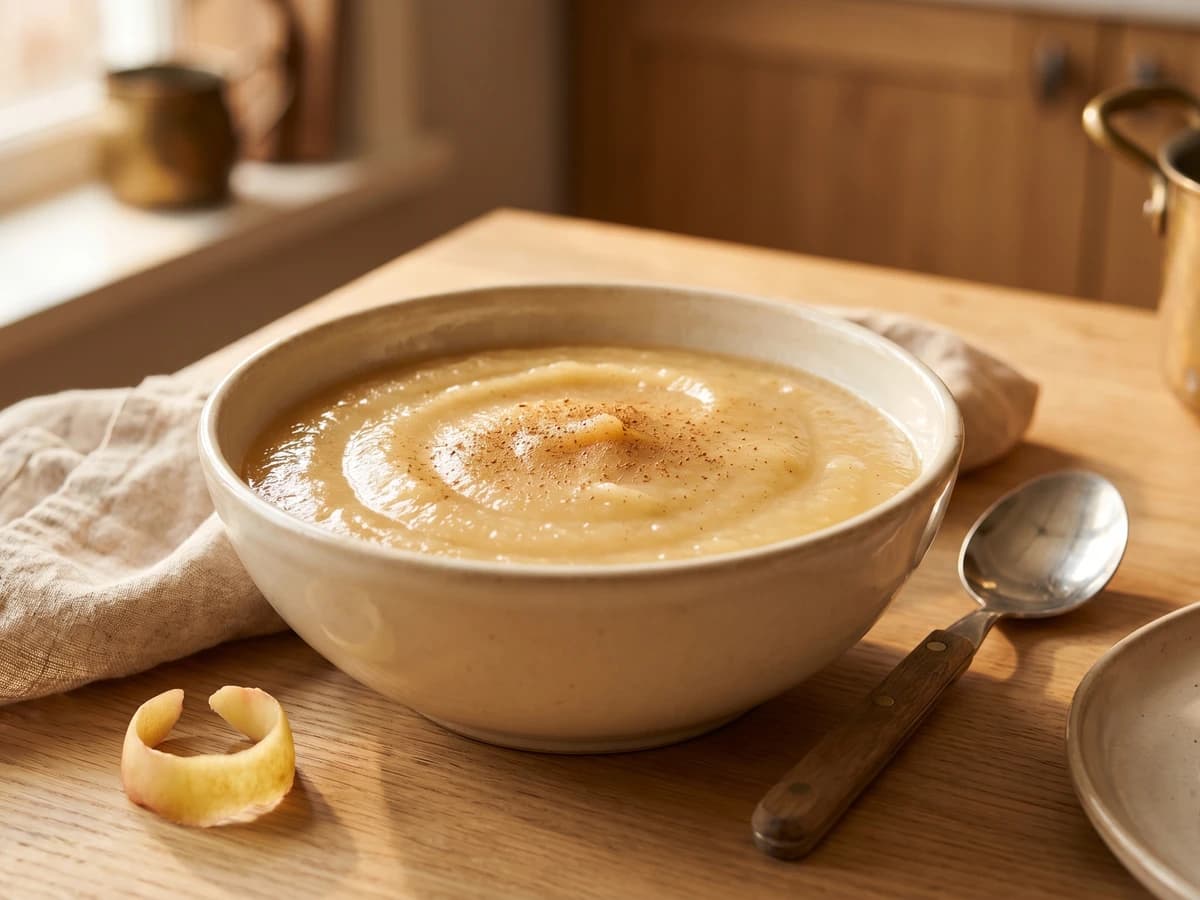
The little bowl beside the plate is never decoration: appelmoes is the Dutch treaty between sweet and savoury, spooned beside sausage, potatoes, pancakes, and childhood itself.

Chef Joost
Appelstroop is the orchard made patient: apples, pears, and beet syrup boiled down until morning bread, farmhouse cheese, and zuurvlees taste of Limburg in autumn.