
Chef Dean
Bourbon Peach Smash
Ripe summer peaches crushed with fragrant mint and Kentucky bourbon, shaken until frost forms on the glass, then crowned with fiery ginger beer. This is Southern porch culture in a tumbler.

Recipe Archive
Beverages include bright refreshers, hot drinks, smoothies, cocktails, and alcohol-free options where balance and garnish matter as much as the base.
602 recipes
A cooking platform built around craft, culture, and the stories behind what we eat.
Chef Dean
Ripe summer peaches crushed with fragrant mint and Kentucky bourbon, shaken until frost forms on the glass, then crowned with fiery ginger beer. This is Southern porch culture in a tumbler.

Chef Remy
The drink that launched a thousand New Orleans brunches: smooth brandy and cold whole milk shaken until frothy, kissed with vanilla, and crowned with a snowfall of fresh nutmeg that perfumes every sip.

Chef Takumi
Brandy umeshu asks for patience, not skill: firm green ume, slow-dissolving rock sugar, and 1.8 liters of brandy left alone until the fruit gives up its perfume.

Chef Dean
Glossy tapioca pearls glazed in molten brown sugar create dramatic tiger stripes down a frosty glass, the dark syrup mingling with cold, creamy milk tea in every long, satisfying pull through the wide straw.

Chef Lupita
The Zapotec ceremonial cacao drink of the Istmo de Tehuantepec, hand-foamed cold with toasted cacao, rice, canela, and the fragrant white petals of cacalosuchitl. The wedding cup of Juchitan and Tehuantepec.

Chef Lesia
Raw beets turn water into something dark, sour, and alive: a crimson drink for the glass, and the old quiet souring for borshch when vinegar has no business there.

Chef Lupita
Tabasco's cacao harvest drink, made with the white mucilage around fresh cacao beans, cold water, and piloncillo. Bright, lightly acidic, and only honest when the pod is in season.

Chef Juliana
You don't need a machine to make coffee that smells like a Brazilian kitchen. Hot water, fresh grounds, a clean coador de pano, and the patience to pour like you mean it.

Chef Juliana
The first coffee a lot of us drank wasn't fancy: strong coado coffee softened with hot milk, sweet if you want, made for a piece of bread and a morning that needs mercy.

Chef Juliana
You don't need a machine or a barista voice. Brew strong coffee, heat the milk without scalding it, and you've solved the São Paulo breakfast counter at home.

Chef Lupita
Sonora's ranch-country coffee, hot black brew steeped with a single wild chiltepín. Smoky immediate heat that builds with each sip, served the way the vaqueros take it.

Chef Lupita
Colima's café de Comala is dark coffee from the volcanic highlands, brewed in an olla de barro with piloncillo and canela, the kind served in the plaza when the afternoon turns cool.

Chef Lupita
Veracruz's afromestiza morning coffee, brewed the way the Sotavento has always brewed it: highland coffee steeped in a clay olla with piloncillo, canela de Ceilán, and a wide strip of orange peel. Sweet, spiced, slowly earthy.

Chef Lupita
Guanajuato's Bajio morning coffee, brewed in a clay olla with piloncillo, Mexican canela, clove, and anise until the kitchen smells like a dairy hacienda waking up.

Chef Lupita
Chiapas coffee from the Soconusco highlands, brewed in clay with piloncillo and canela until the cup tastes dark, rounded, and built for a cold morning in Los Altos.

Chef Lupita
Sonora's clay-pot coffee, simmered with piloncillo, canela, clove, and a wide strip of orange peel that cuts the sweetness and tells you you're north of the Bajio.
Chef Lupita
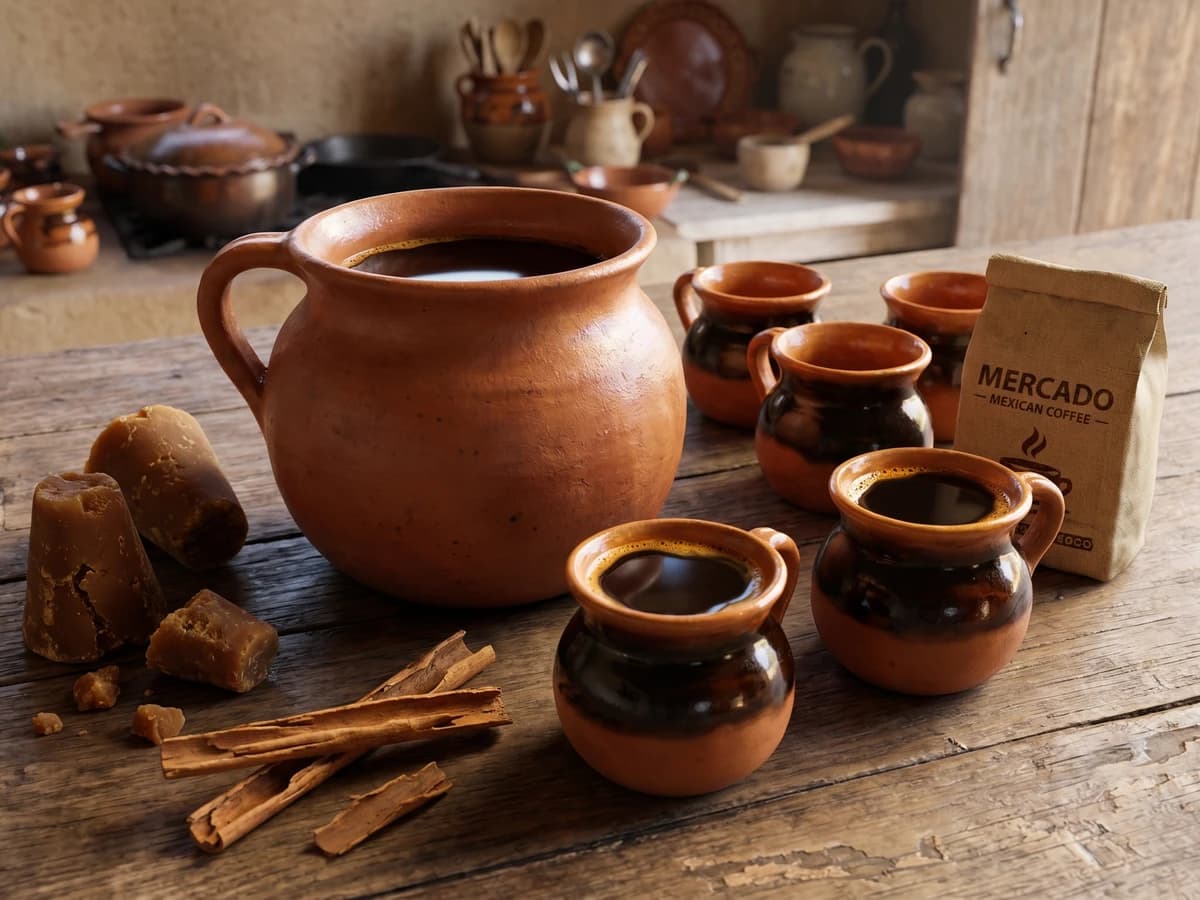
Puebla's central highland café de olla, brewed in barro with coarse coffee, canela de Ceilán, piloncillo, and orange peel until the clay gives the cup its quiet earth.

Chef Lupita
Yucatán's café de olla, brewed slowly in clay with piloncillo, true canela, and the Peninsula's pimienta gorda. The allspice is the signature. Earthy, warm, and unmistakably from the Mayab.

Chef Lupita
Chiapas coffee from Soconusco, brewed clean with filtered water and a cloth filter so the cup tastes like volcanic soil, shade trees, and careful highland picking.

Chef Lupita
Mérida's two-pitcher coffee ritual: strong black coffee in one hand, piloncillo-sweetened hot milk in the other, poured side by side at the table the way the cafeterías of the Yucatán centro have done it for a hundred years.
Chef Lupita
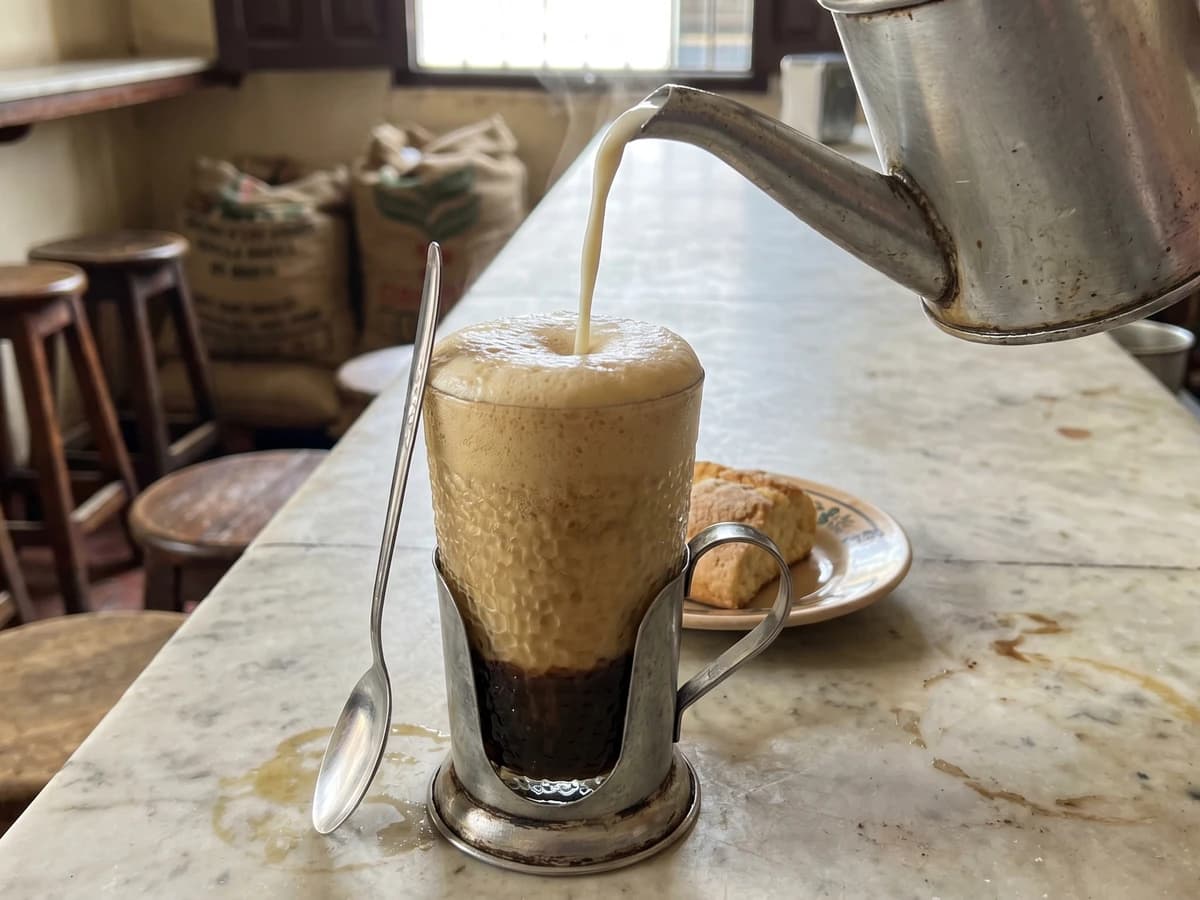
Veracruz's port ritual in a tall glass: a couple of fingers of dark coffee concentrate, then scalded whole milk poured from a height the moment you tap your spoon. The signature of La Parroquia, made at home.

Chef Lupita
Mérida's tableside ritual. Hot café de olla spiked with Xtabentún and Kahlúa, set alight in front of the guests, finished with a scoop of vanilla ice cream that melts the flame away.

Chef Zohra
The plain daily cup of the Moroccan café: short, dark, and unsweetened unless your hand reaches for sugar, served with water and enough time for talk.

Chef Lupita
Pluma Hidalgo, the Zapotec coffee of Oaxaca's Sierra Sur, hand-roasted on a clay comal until the sugars caramelize and the bean smells of chocolate and citrus. Single-origin, single-method, single-state.
Culinary guides, cultural storytelling, and the editorial depth that makes cooking meaningful.
Discover Culinary Explorer