
Chef Lupita
Agua de Alfalfa
Ciudad de México's highland market agua fresca, fresh alfalfa blended with pineapple and lime until bright green, strained clean, and poured cold from the vitrolero.
A cooking platform built around craft, culture, and the stories behind what we eat.
Created by
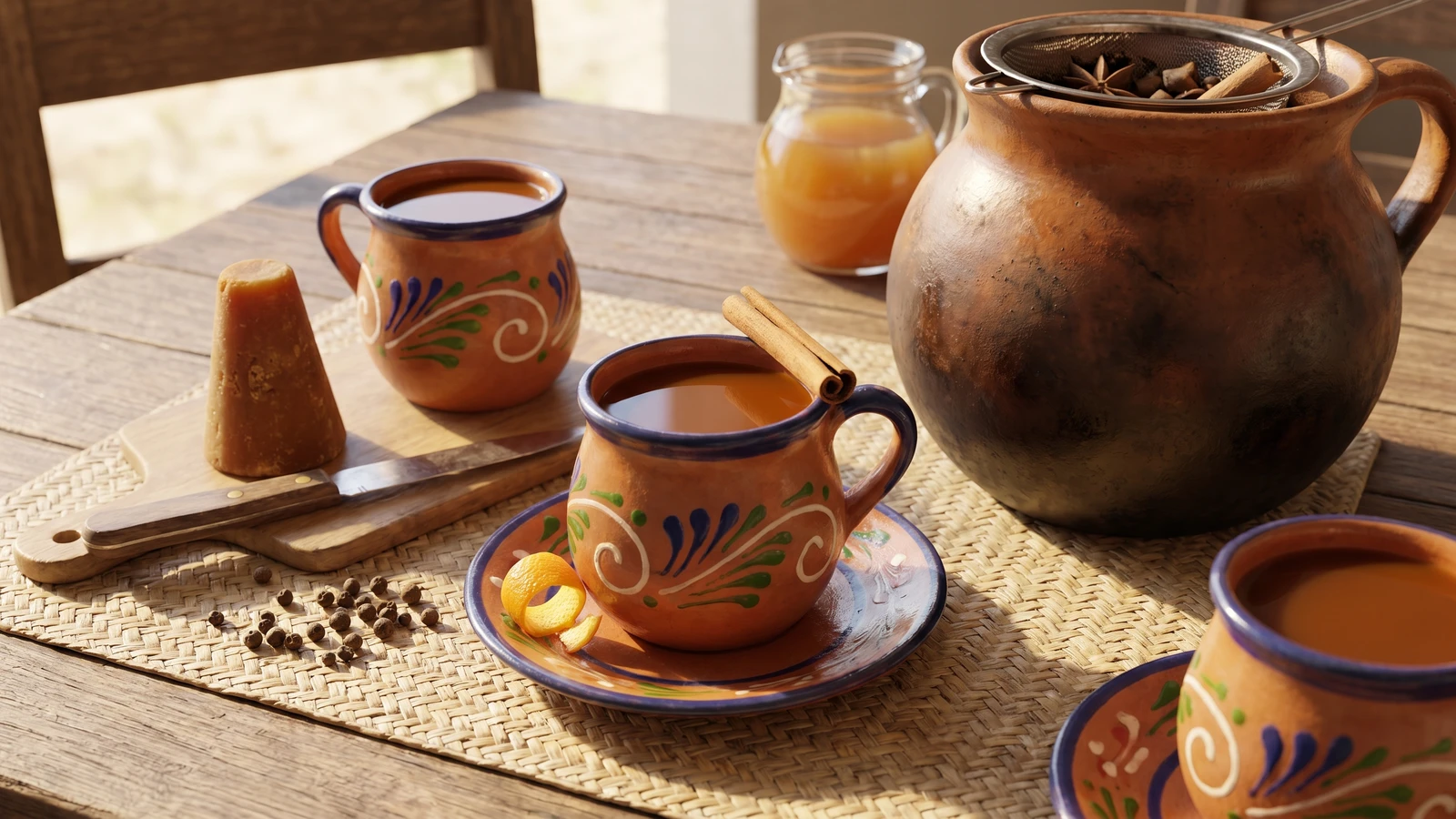
Yucatán's café de olla, brewed slowly in clay with piloncillo, true canela, and the Peninsula's pimienta gorda. The allspice is the signature. Earthy, warm, and unmistakably from the Mayab.
This is café de olla from Yucatán, not from Oaxaca, not from Puebla, not from the generic central-Mexico version that has crossed the border into every brunch menu in the United States. Café de olla exists in many states. The Yucatecan version has one ingredient that places it on the Peninsula and nowhere else: pimienta gorda. Allspice. The native spice of the Mayab.
Pimienta gorda grows wild across the Yucatán Peninsula. The Maya were using it centuries before the Spanish arrived, in cooking, in chocolate, in remedies. When coffee came to Mexico in the 18th century and the country built its own way of brewing it, the cooks of Yucatán did what Yucatecan cooks always do: they made it theirs. They added the allspice. The result is darker, warmer, and more complex than the central-Mexico café de olla. Canela carries the sweetness. Pimienta gorda carries the depth.
The pot matters. A clay olla, seasoned by use, gives this coffee a mineral roundness that no metal pot can match. If you do not have one yet, buy one. They cost less than a coffee maker and they will outlast every appliance in your kitchen. The coffee should be from Chiapas or Veracruz, dark roasted, coarsely ground. Not espresso, not Colombian, not whatever was on sale. Mexican coffee for a Mexican drink. Cada estado, su propia cocina, and this one is yucateco. Así se hace y punto.
Coffee arrived in Mexico in the late 18th century through Veracruz, but the practice of brewing it in a clay olla with piloncillo and spice is generally attributed to the women who cooked for soldiers during the Mexican Revolution (1910 to 1920), the soldaderas, who needed a portable, fortifying drink that could be made over a campfire in a single pot. Pimienta gorda (Pimenta dioica), the spice that distinguishes the Yucatecan version, is native to the Mexican Gulf and Caribbean coasts and was used by the Maya in ceremonial chocolate beverages long before contact with Europe. The Peninsula's incorporation of allspice into its café de olla reflects the broader yucateco culinary pattern of preserving pre-Columbian flavor signatures, achiote, sour orange, allspice, habanero, in dishes adopted from later traditions.
Quantity
6 cups
Quantity
4 ounces (about 1 cone)
chopped
Quantity
1 stick, about 4 inches
Quantity
8 whole
lightly cracked
Quantity
3
Quantity
1 strip, about 2 inches
pith removed
Quantity
1/2 cup
Quantity
pinch
| Ingredient | Quantity |
|---|---|
| cold water | 6 cups |
| piloncillochopped | 4 ounces (about 1 cone) |
| true Mexican canela (Ceylon cinnamon) | 1 stick, about 4 inches |
| pimienta gorda (allspice berries)lightly cracked | 8 whole |
| whole cloves | 3 |
| fresh orange peelpith removed | 1 strip, about 2 inches |
| coarsely ground dark-roast coffee, preferably from Chiapas or Veracruz | 1/2 cup |
| kosher salt | pinch |
Place the pimienta gorda on a cutting board and press down on each berry with the flat of a heavy knife until it cracks open. You are not pulverizing them, just breaking the shell so the oils can move into the water. Pimienta gorda is the Peninsula's signature. In central Mexico, café de olla rides on canela alone. In Yucatán, the allspice is what tells you where you are.
Pour the cold water into a clay olla or a heavy non-reactive pot. Add the piloncillo, canela, cracked pimienta gorda, cloves, orange peel, and the pinch of salt. Bring to a gentle simmer over medium heat, stirring once or twice with a wooden spoon to help the piloncillo dissolve. Do not let it boil hard. A hard boil pulls bitterness out of the spices and burns the sugar against the bottom of the pot.
Once the piloncillo has dissolved completely and the water has turned a deep amber, reduce the heat to low. Let the spices steep for 10 minutes. The kitchen will smell like a Mérida market in the early morning, warm sugar, allspice, and the green ghost of fresh orange. This step is the foundation. Rush it and the coffee carries the bitterness instead of the spice.
Pull the pot off the heat. Add the coarsely ground coffee and stir once. Cover the pot and let it steep, off the burner, for 5 to 6 minutes. The coffee should be coarse, the kind of grind you would use for a French press. Fine grind turns to mud and clogs the strainer. Off-heat steeping pulls the flavor without scalding the grounds. Scalded coffee tastes burned and no amount of piloncillo can hide it.
Strain the café de olla through a fine-mesh sieve directly into hand-painted ceramic jarritos or thick clay mugs. Discard the grounds and spices. Serve immediately, while the surface still carries the faint sheen of the spiced oils. In Yucatán, this coffee is what carries a cook through the heat of the afternoon and what closes a long Sunday lunch. Saber cocinar es saber vivir.
1 serving (about 240g)
Culinary guides, cultural storytelling, and the editorial depth that makes cooking meaningful.
Discover Culinary ExplorerChef Lupita
Ciudad de México's highland market agua fresca, fresh alfalfa blended with pineapple and lime until bright green, strained clean, and poured cold from the vitrolero.
Chef Lupita
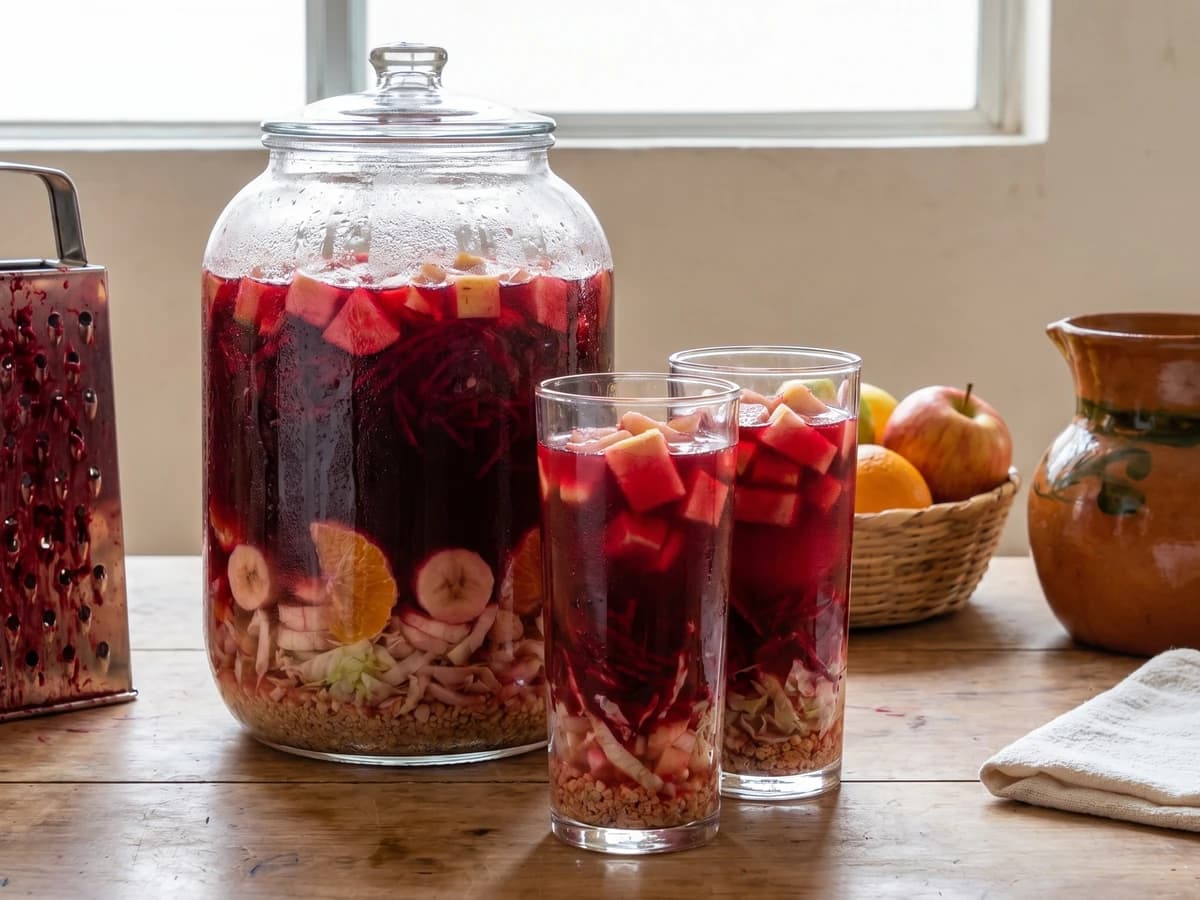
Aguascalientes' Lenten agua fresca, jewel-red from cooked beet and full of apple, banana, orange, lettuce, and ground peanuts, served cold when Holy Week meets the Feria de San Marcos.

Chef Lupita
Sonora and Sinaloa's creamy malted barley water, built on toasted cebada perla, Mexican canela, vanilla from Papantla, and evaporated milk. Pink-beige, rich, and served cold over heavy ice in a heavy glass tumbler. Liquid cookie comfort the northwest way.

Chef Lupita
Yucatán's everyday tonic of boiled chaya leaves blended with lima agria, sugar, and ice. The bright green jarra that sits on every Peninsula table from Mérida to Valladolid.