Culinary Explorer
A cooking platform built around craft, culture, and the stories behind what we eat.
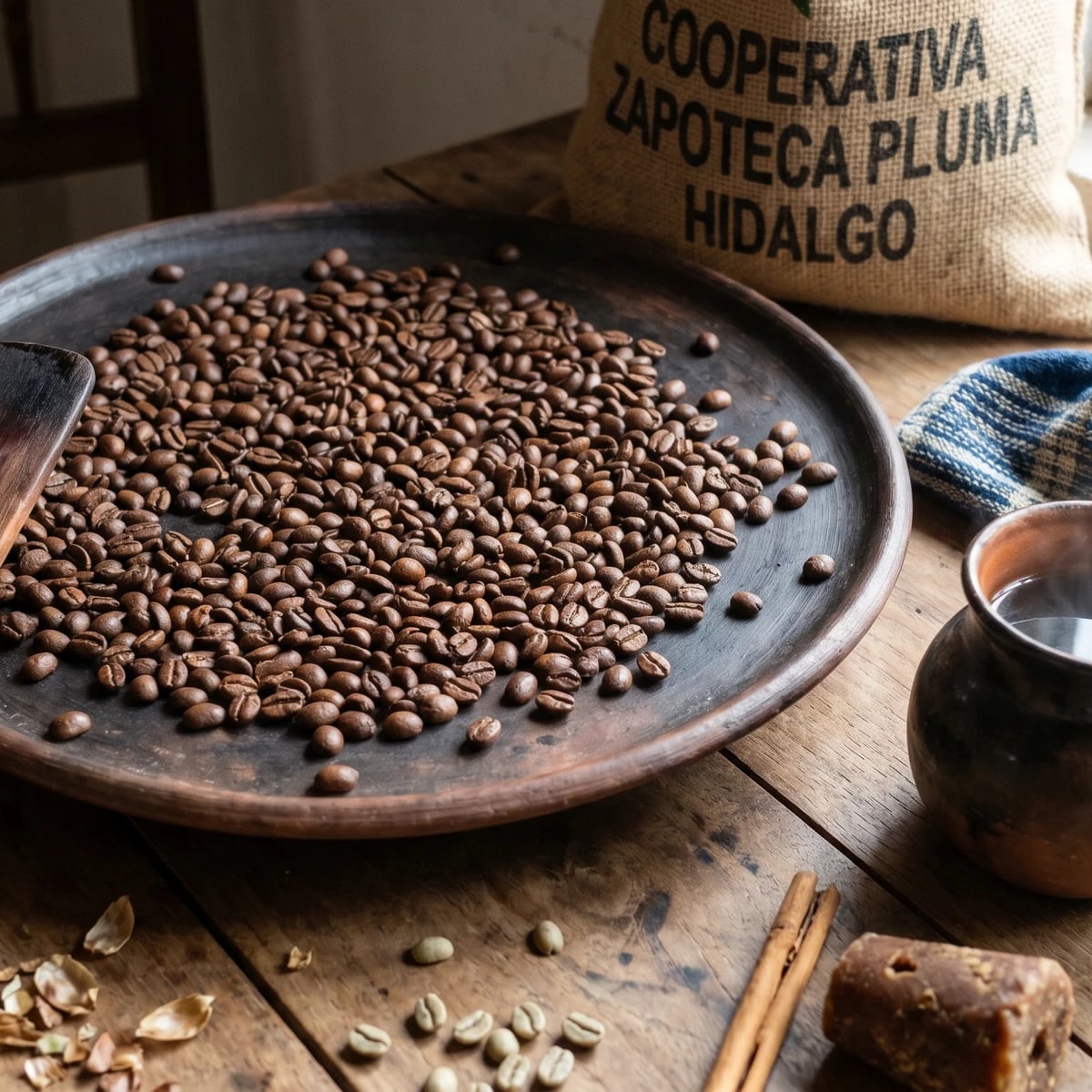
Café Pluma Tostado en Comal
Created by Chef Lupita
Pluma Hidalgo, the Zapotec coffee of Oaxaca's Sierra Sur, hand-roasted on a clay comal until the sugars caramelize and the bean smells of chocolate and citrus. Single-origin, single-method, single-state.
Pluma Hidalgo is a town in the Sierra Sur of Oaxaca, two hours up a switchback road from Pochutla, sitting at around 1,300 meters on the Pacific-facing slope. The bean takes its name from the town. The coffee is grown almost entirely by Zapotec families on small plots of one or two hectares, shaded under banana and guarumbo trees, picked by hand, depulped at the beneficio behind the house. This is not industrial coffee. This is mountain coffee from a region that has been growing it since the late 1800s.
The bean is a typica varietal, dense and slow to develop because of the altitude, with a flavor profile the cuppers describe as chocolate, citrus, and clean caramel. The Zapotec growers have always roasted it on a comal de barro over a wood fire, in small batches, by hand, paddling the beans constantly so the heat from the clay caramelizes the sugars without burning them. A comal does what a drum roaster does, slower and softer, and the cup it produces tastes like the place the bean came from. That is what Pluma is supposed to taste like.
My mother did not know Oaxacan coffee. She drank Cordoba coffee from Veracruz, dark and sweet, made in the olla with piloncillo. The first time I tasted properly roasted Pluma was in San Agustin Loxicha, in the kitchen of a Zapotec woman named Dona Maria, who roasted a kilo every Sunday on a clay comal that had been her grandmother's. She let me paddle the beans for the last five minutes. She told me to pull them when they smelled like chocolate, not when they looked dark. I have roasted Pluma the same way ever since. Esto no es comida de un solo Mexico, and Pluma is not coffee from a single Mexico either. It belongs to Oaxaca, to the Sierra Sur, to the Zapotec families who have kept it alive.
Ingredients
green Pluma Hidalgo coffee beans, unroasted
Quantity
1 pound (450 grams)
filtered water
Quantity
for brewing
piloncillo (optional)
Quantity
for serving
| Ingredient | Quantity |
|---|---|
| green Pluma Hidalgo coffee beans, unroasted | 1 pound (450 grams) |
| filtered water | for brewing |
| piloncillo (optional) | for serving |
Where cooking meets culture.
Culinary guides, cultural storytelling, and the editorial depth that makes cooking meaningful.
Discover Culinary Explorer