
Chef Lupita
Agua de Alfalfa
Ciudad de México's highland market agua fresca, fresh alfalfa blended with pineapple and lime until bright green, strained clean, and poured cold from the vitrolero.
A cooking platform built around craft, culture, and the stories behind what we eat.
Created by
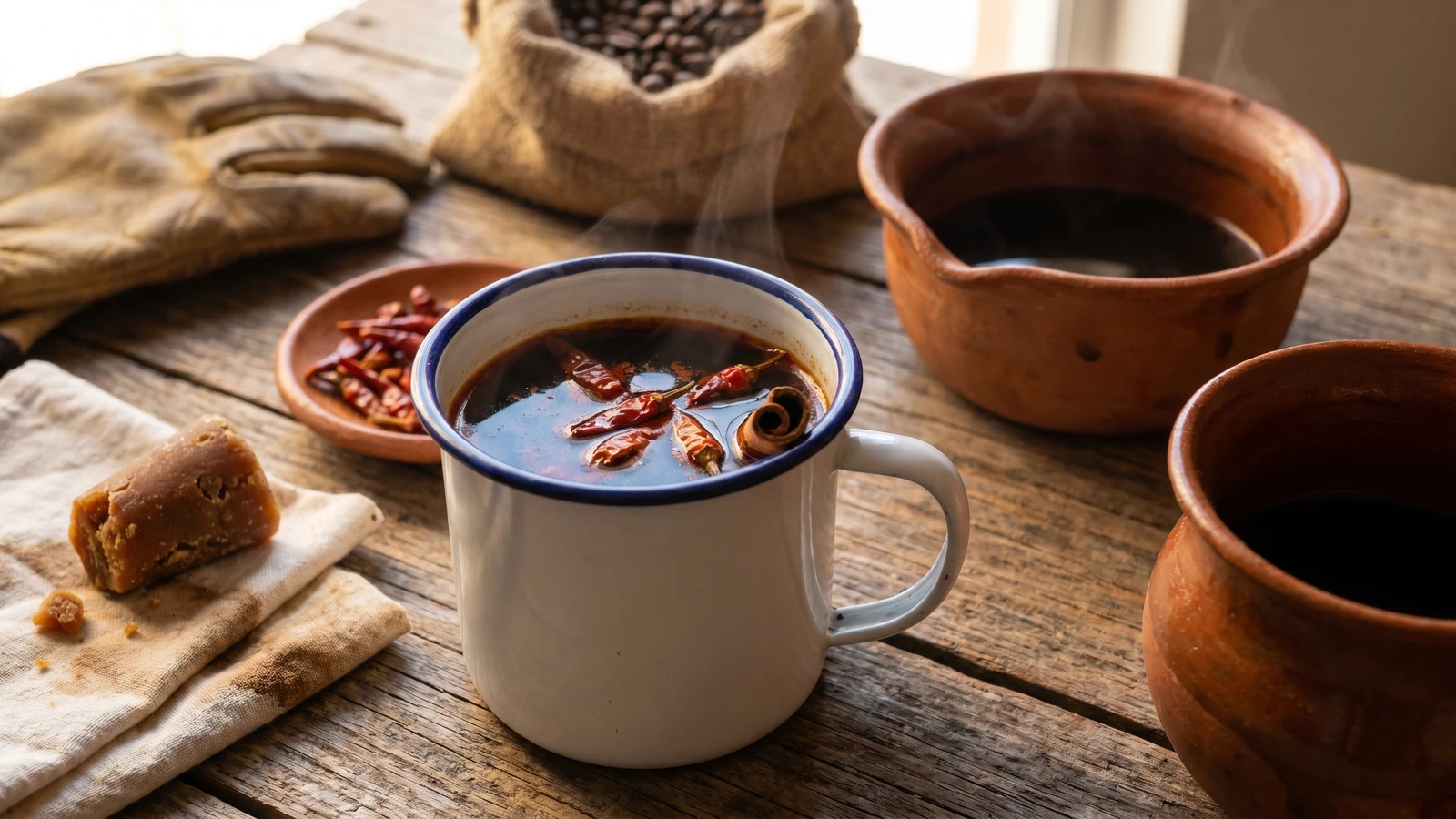
Sonora's ranch-country coffee, hot black brew steeped with a single wild chiltepín. Smoky immediate heat that builds with each sip, served the way the vaqueros take it.
This is Sonora. Specifically the sierra and the ranches of the northeast, where the chiltepín grows wild in the foothills and where vaqueros have dropped one of these tiny wild peppers into a tin cup of black coffee for as long as anyone can remember.
The chiltepín is not a generic chile. It is Capsicum annuum var. glabriusculum, the wild ancestor of every domesticated chile in the Americas. The Comcáac, the Yaqui, and the Mayo peoples of the northwest have harvested it from the desert for centuries. It grows only where birds drop the seeds, almost always under the shade of a mesquite or a palo verde, and it cannot be commercially farmed at any meaningful scale. The families in the sierra walk the bushes in late summer after the monsoon, picking the small red berries one by one. A kilo of dried chiltepín costs more than a kilo of beef. There is a reason.
The heat is different from a serrano or a habanero. It hits immediately, smokes through your sinuses, and then disappears in about a minute. No lingering burn. That is what makes it right for coffee. You taste the brew, you taste the chile, then both are gone and you take another sip. Esto no es comida de un solo Mexico. This is northwest Mexico in a cup: desert, ranch, mesquite smoke, the wild chile that pre-dates everything. La cocina no es decoracion, es trabajo. Even the coffee tells you so.
The chiltepín is considered the mother of all chiles, the wild progenitor from which the domesticated Capsicum annuum varieties of Mesoamerica descended over thousands of years. The Comcáac (Seri) people of the Sonoran coast and the Yaqui of the river valleys have harvested it ceremonially and medicinally since long before Spanish contact, and the practice of dropping a chiltepín into hot beverages, atole, coffee after its 18th-century introduction, broth, is documented in northwest Mexican ranching culture as both a flavor practice and a folk treatment for cold, fatigue, and the dust of the desert. In 1999, the Mexican federal government granted denominación de origen-style protection to the wild Sonoran chiltepín, recognizing that the pepper cannot be cultivated commercially without losing its character and that its harvest sustains rural families across the sierra.
Quantity
4 tablespoons
preferably from Sonora or Chiapas
Quantity
4 cups
Quantity
2 to 4
depending on tolerance
Quantity
1 small piece, about 1 inch
Quantity
to taste
Quantity
a pinch
| Ingredient | Quantity |
|---|---|
| coarsely ground dark-roast coffeepreferably from Sonora or Chiapas | 4 tablespoons |
| cold water | 4 cups |
| whole dried chiltepíndepending on tolerance | 2 to 4 |
| Mexican cinnamon (canela) (optional) | 1 small piece, about 1 inch |
| piloncillo or raw sugar (optional) | to taste |
| fine sea salt | a pinch |
Pull out your dried chiltepín. The real ones, the small round wild peppers harvested in the Sonoran sierra, not generic dried red flakes. Each one is no bigger than a peppercorn. They are foraged, not farmed, by families in the sierra who walk the bushes after the late summer rains. That is why they are not cheap. That is why they matter. If your bag holds long, oval, smooth-skinned peppers, that is not chiltepín. Find a different source.
Bring the cold water to a near boil in a small saucepan or olla de peltre. Pull it off the heat the moment the surface trembles. Boiling water scorches coffee and the chile cannot rescue a burned brew. Stir in the ground coffee, the pinch of salt, and the canela if using. Cover. Let it steep five minutes.
While the coffee steeps, crush the chiltepín gently between your fingers or with the back of a spoon. Do not pulverize them. You want the skin cracked, the seeds loosened, the oils released. Drop them straight into the hot coffee. They will float. That is fine.
Let the coffee and chiltepín sit covered for three more minutes. The chile releases a smoky, almost wood-fire heat into the brew. You will smell it: not pepper, not chile powder. Something older, drier, that carries the dust of the Sonoran desert. That is the chiltepín doing its work.
Strain the coffee through a fine-mesh sieve or a clean cotton cloth, the café talega method, into two heavy ceramic mugs. The chiltepín stays behind in the strainer. Sweeten with a small piece of piloncillo if you want. A real vaquero takes it black. Drink it hot. The heat builds on the second and third sip. That is the dish. Asi se hace y punto.
1 serving (about 355g)
Culinary guides, cultural storytelling, and the editorial depth that makes cooking meaningful.
Discover Culinary ExplorerChef Lupita
Ciudad de México's highland market agua fresca, fresh alfalfa blended with pineapple and lime until bright green, strained clean, and poured cold from the vitrolero.
Chef Lupita
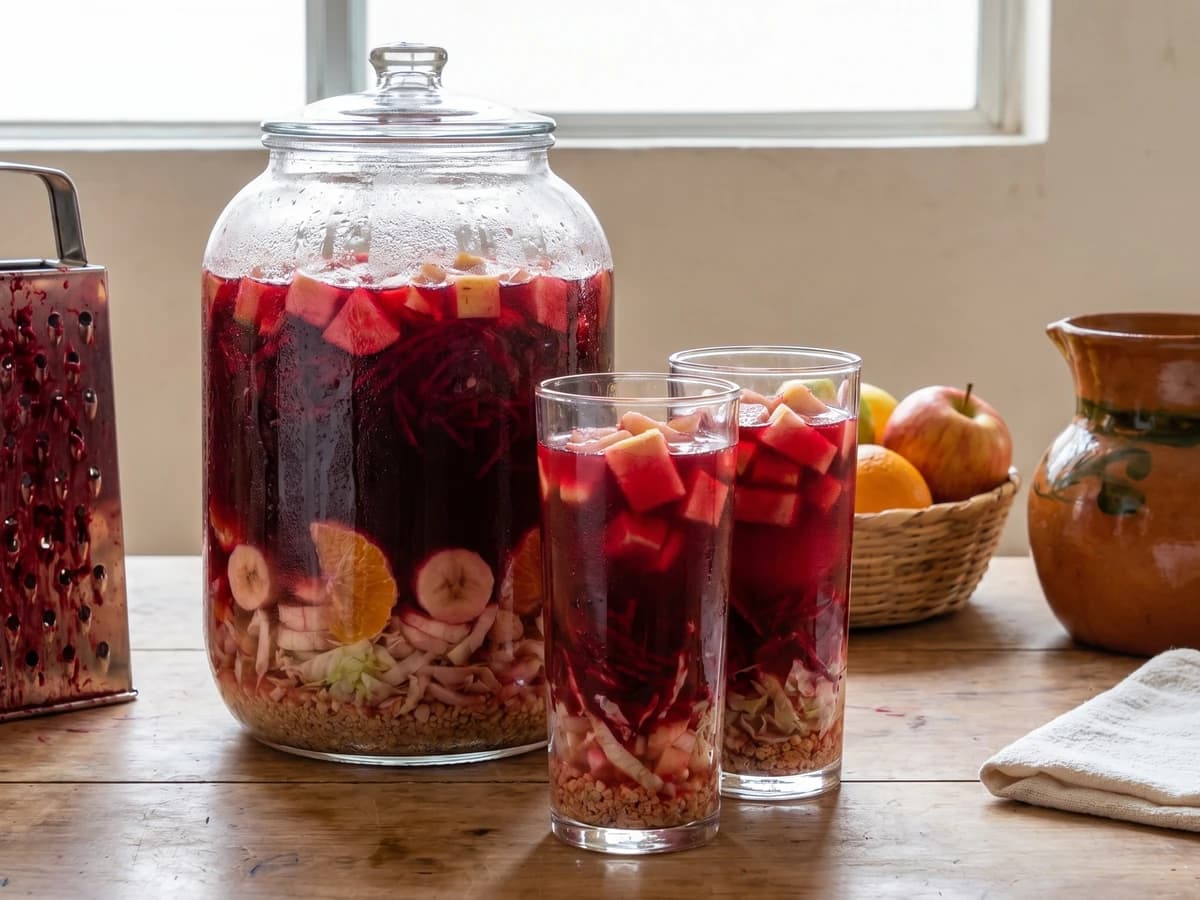
Aguascalientes' Lenten agua fresca, jewel-red from cooked beet and full of apple, banana, orange, lettuce, and ground peanuts, served cold when Holy Week meets the Feria de San Marcos.

Chef Lupita
Sonora and Sinaloa's creamy malted barley water, built on toasted cebada perla, Mexican canela, vanilla from Papantla, and evaporated milk. Pink-beige, rich, and served cold over heavy ice in a heavy glass tumbler. Liquid cookie comfort the northwest way.

Chef Lupita
Yucatán's everyday tonic of boiled chaya leaves blended with lima agria, sugar, and ice. The bright green jarra that sits on every Peninsula table from Mérida to Valladolid.