
Chef Lupita
Atole de Dátil Bajacaliforniano
Baja California Sur's date-palm atole from the oases of San Ignacio and Mulege, built on local dates, whole milk, canela, and masa, finished with a pinch of sea salt that turns the sweetness into caramel.

Recipe Archive
Beverages include bright refreshers, hot drinks, smoothies, cocktails, and alcohol-free options where balance and garnish matter as much as the base.
602 recipes
A cooking platform built around craft, culture, and the stories behind what we eat.
Chef Lupita
Baja California Sur's date-palm atole from the oases of San Ignacio and Mulege, built on local dates, whole milk, canela, and masa, finished with a pinch of sea salt that turns the sweetness into caramel.

Chef Lupita
Oaxaca's seasonal atole built on fresh corn tassels and masa, grassy and faintly sweet, tied to a single fleeting moment in the agricultural year when the milpa flowers and the cooks of the Sierra Norte get to work.

Chef Lupita
The Zapotec wedding atole of Oaxaca's Valles Centrales, hot corn beneath a cold cloud of fermented pataxte cacao and toasted wheat, whipped by hand with a molinillo until the foam stands high above the rim of the jicara.

Chef Lupita
Chiapas highland atole built from black beans, masa, hierba santa, and toasted chile costeño, served hot in clay cups as the kind of food that fills the stomach without showing off.
Chef Lupita
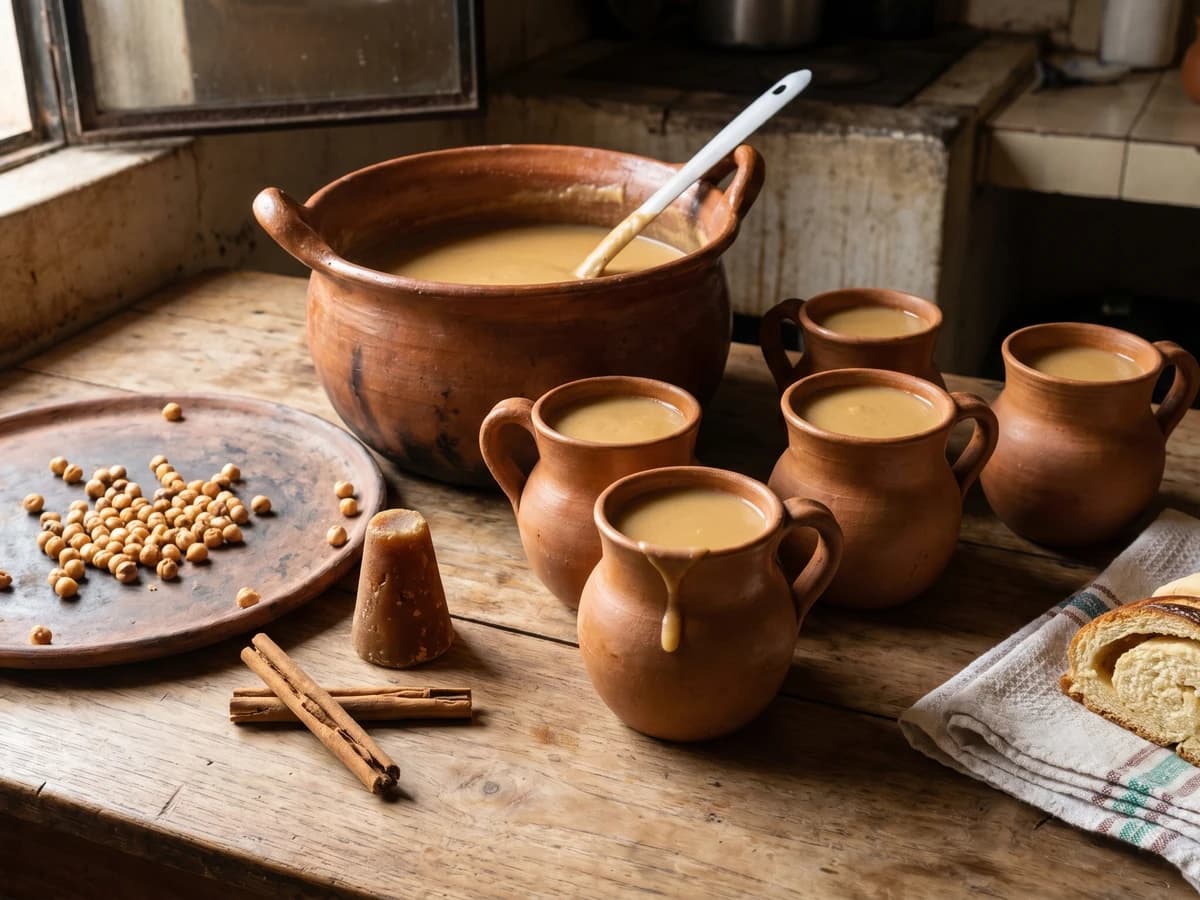
Guanajuato's toasted garbanzo atole from Cortazar and Abasolo, thickened slowly with piloncillo and canela until the pot smells like January, market grain, and patience.

Chef Lupita
Chiapas's Comiteco birthday atole, made with coarse cracked white maize, whole milk, hojas de arrayán, and sugar, cooked slowly until the drink is thick, grainy, and unmistakably from Comitán.

Chef Lupita
Michoacán's P'urhépecha kamáta de grano, tender elote simmered with fresh masa and nurite until thick enough for a clay jarro, then finished at the table with salt and chile perón.

Chef Lupita
Aguascalientes gives this atole its perfume: ripe Calvillo guavas blended into masa-thickened milk with piloncillo and canela, the morning drink that belongs beside tamales.

Chef Lupita
Michoacan's Meseta P'urhepecha morning kamáta, made with fresh masa and nurite, a mountain herb that gives the atole its green, minty comfort.

Chef Lupita
An atole from Oaxaca's Canada region, built on corn kernels toasted nearly black on the comal and ground with chilhuacle amarillo. Smoky, earthy, barely sweet. The morning drink of cooks who don't measure.

Chef Lupita
The white cacao atole of Arroyo de Banco in the Papaloapan basin of Veracruz, made only for Day of the Dead, with pataxte buried for months to ferment, then ground with nixtamal for a floral, faintly smoky drink that belongs to the altar before it belongs to the table.

Chef Lupita
Northern Mexico's mesquite-pod atole, built from pechitas simmered until the water runs the color of coffee, thickened with masa, and finished with piloncillo and milk. Desert food, indigenous food, the kind of drink that has been keeping people warm in the sierra for a thousand years.

Chef Lupita
Guanajuato's rainy-season atole turns toasted field corn into pinole, then thickens it with piloncillo, canela, and chocolate de metate until the spoon leaves a clean path.
Chef Lupita
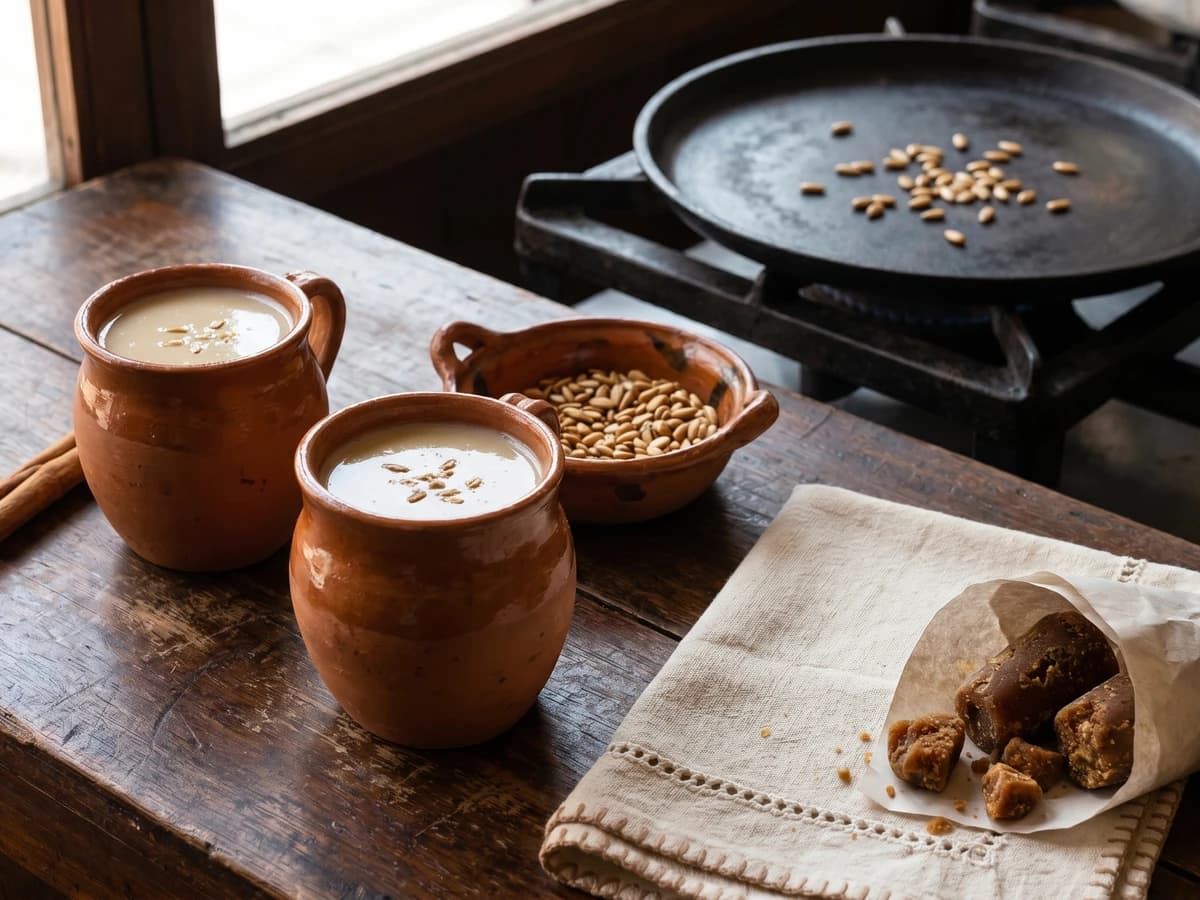
San Luis Potosí's market atole built from toasted semilla de teja, nixtamal masa, piloncillo, and cinnamon, the creamy hot drink sold by the ladle in the Mercado República.

Chef Lupita
Western Michoacán's purple kamáta of fresh zarzamoras, nixtamalized masa, canela, and piloncillo, cooked slowly in the clay olla until it pours thick, glossy, and sweet-tart.

Chef Dimitra
Attiki lemonada is the kafeneio summer glass: fresh lemon juice, a light syrup, and a little zest steeped just long enough to smell like the peel.

Chef Dean
Bold black tea steeped with bruised whole spices and simmered in creamy milk, producing a warming cup that puts every coffeehouse version to shame. This is chai as it should be made.

Chef Makoa
Sāmoa's ʻava is kava root worked in cool water, strained clear-brown into the tānoa, and passed in chiefly order. This is welcome, rank, and quiet, not a party drink.

Chef Makoa
Hawaiian ʻawa is kava root kneaded cool, strained into an ʻapu coconut cup, and shared with a quiet hand: earthy, peppery, calming, and far older than the tourist glass.

Chef Takumi
Awamori mizuwari is not a trick of the bar. It is three parts awamori, seven parts cold water, and enough patience to let the black-kōji aroma open.

Chef Takumi
Hot awamori asks for one small discipline: pour the hot water first, then the spirit. Do that, and the glass turns round, fragrant, and calmer than its strength suggests.

Chef Lupita
Sonora in a glass: small-batch bacanora poured over ice with fresh pink grapefruit, Squirt made with cane sugar, lime, and a pinch of wild chiltepín on the rim. Smoke, citrus, and fire from the sierra.

Chef Lupita
Baja California Sur's herbal margarita, built on damiana liqueur from Todos Santos instead of triple sec, with reposado tequila and fresh Mexican lime. The drink that may have come first, before Texas claimed the recipe.

Chef Lupita
Chiapas Selva balche is a Lacandon Maya ceremonial ferment of balche bark, honey, and water, a lightly alcoholic drink that belongs to ritual space, not the bar cart.
Culinary guides, cultural storytelling, and the editorial depth that makes cooking meaningful.
Discover Culinary Explorer