
Chef Lupita
Agua de Alfalfa
Ciudad de México's highland market agua fresca, fresh alfalfa blended with pineapple and lime until bright green, strained clean, and poured cold from the vitrolero.
A cooking platform built around craft, culture, and the stories behind what we eat.

Created by
Baja California Sur's date-palm atole from the oases of San Ignacio and Mulege, built on local dates, whole milk, canela, and masa, finished with a pinch of sea salt that turns the sweetness into caramel.
This atole is from Baja California Sur. Specifically from the inland oases of San Ignacio, Mulege, and San Jose de Comondu, where the date palms were planted by Jesuit missionaries in the seventeenth century and have been bearing fruit ever since. The peninsula does not look like the rest of Mexico. The desert pours into the sea, and in the middle of all that dust, there are pockets of green where the palmas datileras lean over irrigation channels and drop their fruit into baskets every fall. This is a desert-oasis cuisine, and this atole is one of its quiet signatures.
The dates do the work. A good Medjool or a zahidi from the Mulege harvest carries its own salted-caramel flavor, dark, toasty, with a faint smokiness from the long sun-drying on the palm. You do not need to add caramel. You do not need brown sugar. You blend the dates into hot canela-infused milk and you release what the fruit already has. The masa gives the body. The pinch of sea salt at the end is what makes the sweetness honest. Salt is not optional in this drink. Salt is the reason it tastes like caramel and not like a milkshake.
My mother never made this atole. She was from Jalisco and her atole was champurrado, dark with chocolate and piloncillo. I learned this one in San Ignacio, from a senora named Dona Carmela who runs a small dulceria in the shadow of the mission church and who has been making date sweets for fifty-three years. She poured me a clay cup of this atole on a December afternoon when the wind off the laguna was cold enough to need it, and she watched me drink it without saying a word. When I finished she said, 'la sal, verdad? La sal es lo que lo hace.' The salt. The salt is what does it. Saber cocinar es saber vivir, and in Baja Sur, knowing how to cook means knowing what the palms give you.
Date palms (Phoenix dactylifera) were introduced to Baja California Sur by Jesuit missionaries between 1697 and 1768, planted in the oasis missions of Loreto, San Javier, San Ignacio, Mulege, and Comondu as a reliable food source for an isolated mission network that could not depend on supply ships from the mainland. The palms thrived in the peninsula's combination of desert heat and freshwater spring irrigation, and by the nineteenth century, after the Jesuit expulsion, the date groves had become the economic backbone of the inland oasis towns, with families harvesting and sun-drying the fruit through the autumn. Atole de dátil belongs to the broader category of atoles de fruta documented across northern and northwestern Mexico, in which the regional fruit (date in Baja Sur, pitahaya in Sonora, mezquite pod in Chihuahua) replaces the chocolate or piloncillo of central and southern atoles, reflecting a desert pantry that prizes what the land actually grows.
Quantity
1 1/2 cups (about 18 large)
pitted
Quantity
2 cups, plus more for soaking
Quantity
4 cups
Quantity
1 cup
Quantity
1 stick, about 4 inches
Quantity
1/3 cup
Maseca para atole or fine white masa harina
Quantity
1 cup
for slaking the masa
Quantity
1/2 teaspoon, plus a pinch for finishing
Quantity
1 teaspoon
Quantity
2 tablespoons, grated, or to taste
optional, depending on the sweetness of the dates
Quantity
for serving
Quantity
for serving
| Ingredient | Quantity |
|---|---|
| Medjool datespitted | 1 1/2 cups (about 18 large) |
| water | 2 cups, plus more for soaking |
| whole milk | 4 cups |
| evaporated milk | 1 cup |
| Mexican canela (Ceylon cinnamon stick) | 1 stick, about 4 inches |
| masa harina for atoleMaseca para atole or fine white masa harina | 1/3 cup |
| cold waterfor slaking the masa | 1 cup |
| flaky sea salt | 1/2 teaspoon, plus a pinch for finishing |
| Mexican vanilla extract | 1 teaspoon |
| piloncillo (optional)optional, depending on the sweetness of the dates | 2 tablespoons, grated, or to taste |
| ground canela (optional) | for serving |
| finely chopped dates (optional) | for serving |
Place the pitted dates in a bowl and cover with hot, not boiling, tap water. Hot softens them. Boiling water turns the skins bitter and you will taste it later. Let them sit for fifteen minutes, until you can press a date flat between two fingers without resistance. Drain.
In a heavy 4-quart pot, combine the whole milk, evaporated milk, and the canela stick. Set over medium-low heat. Bring it to the edge of a simmer, where you see bubbles forming around the rim but no rolling boil. Hold it there for ten minutes so the canela releases its oils into the milk. Mexican canela is soft and flaky; it gives up its flavor easily and turns bitter if it boils hard.
Transfer the softened dates to a blender. Add two cups of the warm canela-infused milk from the pot. Blend on high for two full minutes, until the dates dissolve into a smooth caramel-colored cream with no visible flecks of skin. This is where the salted-caramel character of the atole comes from. The dates of San Ignacio carry their own toasty sweetness; you are not adding caramel flavor, you are releasing what is already in the fruit.
In a separate bowl, whisk the masa harina with one cup of cold water until completely smooth. No lumps. Cold water, not warm. Warm water cooks the starch on contact and you end up with a paste that will not dissolve. The slurry should look like thin cream. Asi se hace y punto.
Return the blended date mixture to the pot of canela-infused milk. Stir well with a wooden spoon. Whisk the masa slurry once more and pour it into the pot in a steady stream while you stir continuously. Add the salt. Keep the heat at medium-low. The atole has to come up slowly, with you stirring the bottom and corners of the pot so the masa does not catch and scorch. A scorched atole tastes burnt all the way through and there is no rescuing it.
Cook for twelve to fifteen minutes, stirring almost constantly. The atole will thicken visibly around minute eight, then deepen as the masa fully cooks. It should coat the back of the wooden spoon and leave a clean line when you draw your finger across it. Pull a small spoonful onto a saucer and taste it. The raw-corn edge of the masa should be completely gone. If you taste any chalkiness, give it three more minutes.
Stir in the vanilla. Taste the atole. The dates of Baja Sur are sweet enough that most batches need no sugar, but if your dates were on the dry side, grate in the piloncillo a little at a time until the sweetness is honest, not cloying. Add the pinch of flaky salt at the very end. Salt is what makes the date taste like caramel instead of just sweet. La sal es lo que despierta al dátil. Remove the canela stick.
Ladle into clay jarros, the small handled mugs that hold heat without burning your hand. Dust the top of each with ground canela and a few finely chopped dates so the drinker sees what is inside. Serve immediately. Atole waits for nobody. As it cools, the masa keeps tightening and the drink turns from velvet to pudding.
1 serving (about 300g)
Culinary guides, cultural storytelling, and the editorial depth that makes cooking meaningful.
Discover Culinary ExplorerChef Lupita
Ciudad de México's highland market agua fresca, fresh alfalfa blended with pineapple and lime until bright green, strained clean, and poured cold from the vitrolero.
Chef Lupita
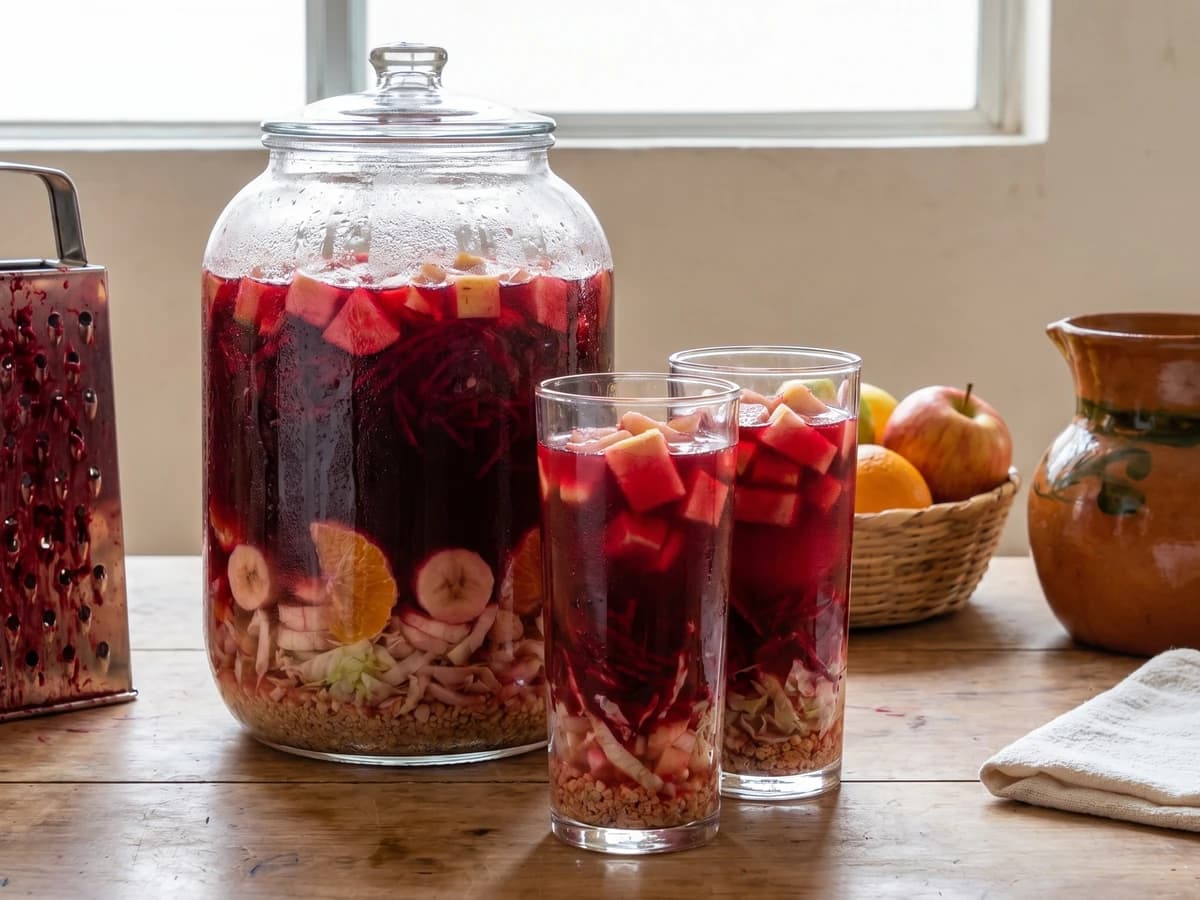
Aguascalientes' Lenten agua fresca, jewel-red from cooked beet and full of apple, banana, orange, lettuce, and ground peanuts, served cold when Holy Week meets the Feria de San Marcos.

Chef Lupita
Sonora and Sinaloa's creamy malted barley water, built on toasted cebada perla, Mexican canela, vanilla from Papantla, and evaporated milk. Pink-beige, rich, and served cold over heavy ice in a heavy glass tumbler. Liquid cookie comfort the northwest way.

Chef Lupita
Yucatán's everyday tonic of boiled chaya leaves blended with lima agria, sugar, and ice. The bright green jarra that sits on every Peninsula table from Mérida to Valladolid.