
Chef Lupita
Agua de Alfalfa
Ciudad de México's highland market agua fresca, fresh alfalfa blended with pineapple and lime until bright green, strained clean, and poured cold from the vitrolero.
A cooking platform built around craft, culture, and the stories behind what we eat.
Created by
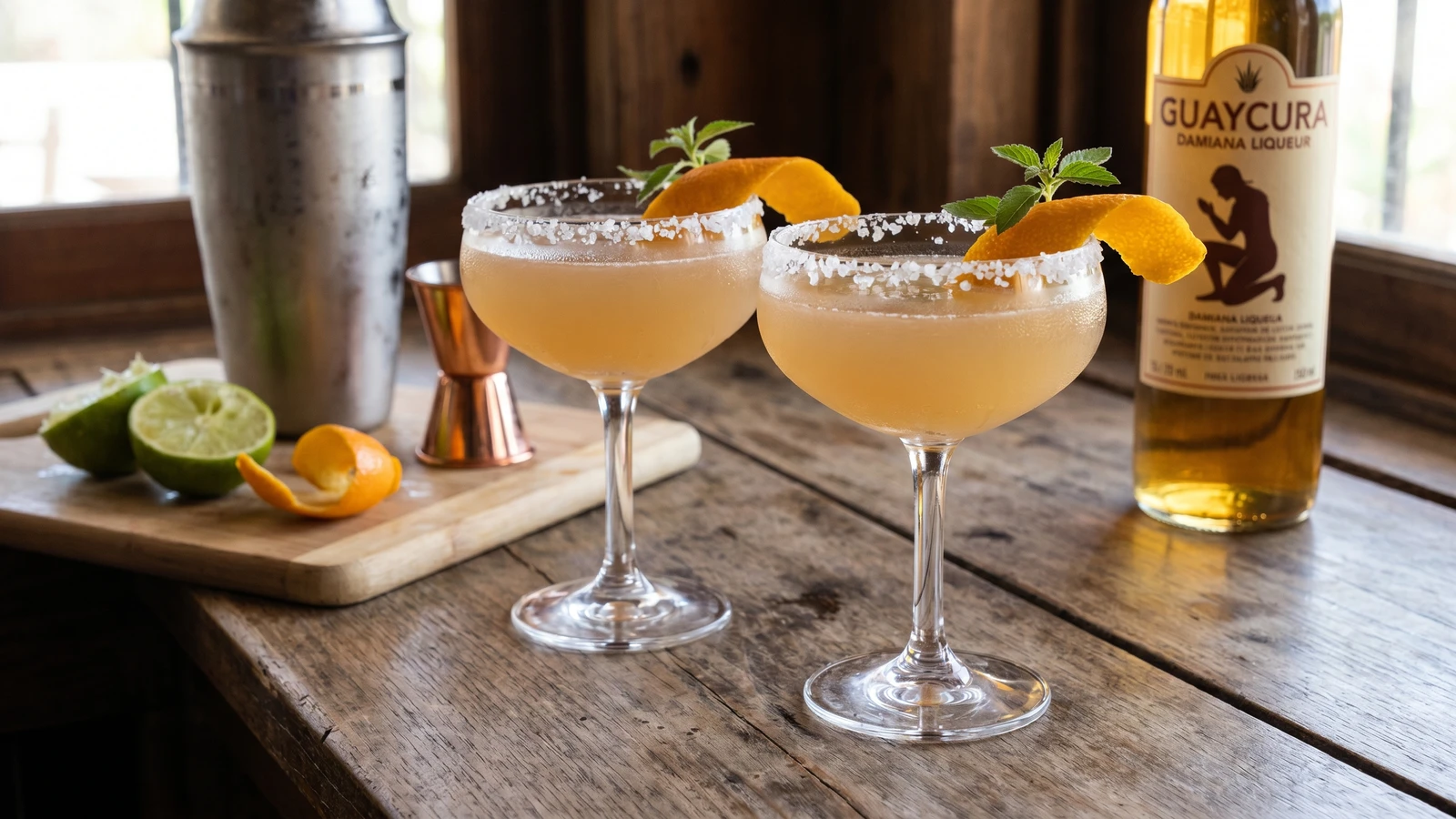
Baja California Sur's herbal margarita, built on damiana liqueur from Todos Santos instead of triple sec, with reposado tequila and fresh Mexican lime. The drink that may have come first, before Texas claimed the recipe.
This is from Baja California Sur. Specifically from the corridor between La Paz and Todos Santos, where damiana grows wild in the scrub and the women have been infusing it into liqueur and tea for generations before tequila ever showed up in a coupe.
Damiana is Turnera diffusa, a small flowering desert plant the indigenous Pericu and Guaycura peoples used as a tonic. The Jesuits learned about it. The ranchers carried the tradition forward. By the 20th century, damiana liqueur from Baja Sur was on every cantina shelf from La Paz to Cabo San Lucas, sold in those distinctive bottles shaped like a kneeling Indigenous woman. The folklore is that the first margarita was built on damiana, not triple sec, in a Baja bar in the 1930s or 1940s, and that the Texas version of the story is a later import. I am not here to settle the argument. I am here to tell you that the damiana version is more interesting, more rooted, and more honest to the peninsula it comes from. Cada estado, su propia cocina, even in a cocktail glass.
The reposado tequila matters. Blanco is too sharp against the herb. Anejo is too oaky and crowds out the damiana. Reposado, aged just enough to soften the agave, is the only one that holds its ground next to the liqueur. Use 100 percent agave or do not bother. The Mexican lime, the small green one with thin skin, is what every cantinero in La Paz uses. Persian lime works if you cannot find Mexican, but the drink loses a little of the bite that makes a margarita a margarita. Saber cocinar es saber vivir, and that includes knowing what to pour.
Damiana (Turnera diffusa) is endemic to the dry scrublands of Baja California Sur, and its use as a medicinal and ceremonial infusion is documented in Jesuit mission records dating to the 18th century, building on far older Pericu and Guaycura traditions. The commercial damiana liqueur industry centered in Todos Santos and La Paz dates to the late 19th century, and the local claim that bartender Don Javier Delgado Corona or earlier Baja Sur cantineros created the original margarita with damiana, predating the more famous Texas and Tijuana origin stories of the 1930s and 1940s, remains a point of regional pride and unresolved historical debate. The bottle shape that became iconic, modeled on a kneeling Indigenous fertility figure from Pericu iconography, was registered as a commercial trademark in the mid-20th century and is still produced in the peninsula.
Quantity
3 ounces
100 percent agave
Quantity
1.5 ounces
Guaycura or Damiana de Baja California
Quantity
0.5 ounce
Naranja or a dry triple sec
Quantity
2 ounces (about 6 to 8 limes)
Quantity
0.5 ounce, adjusted to taste
Quantity
for the rim
Quantity
1
halved, for the rim and garnish
Quantity
2
for garnish
Quantity
1 small
for garnish
Quantity
for shaking
| Ingredient | Quantity |
|---|---|
| reposado tequila100 percent agave | 3 ounces |
| damiana liqueurGuaycura or Damiana de Baja California | 1.5 ounces |
| orange liqueurNaranja or a dry triple sec | 0.5 ounce |
| fresh-squeezed Mexican lime juice | 2 ounces (about 6 to 8 limes) |
| light agave syrup | 0.5 ounce, adjusted to taste |
| coarse sea salt from Guerrero Negro | for the rim |
| fresh limehalved, for the rim and garnish | 1 |
| wide strips of orange peelfor garnish | 2 |
| fresh damiana sprig (optional)for garnish | 1 small |
| ice cubes | for shaking |
Pour the Guerrero Negro sea salt into a shallow saucer. Run a cut lime half around the outer rim of each margarita coupe or rocks glass. Press the rim into the salt, turning the glass to coat only the outside edge. Salt on the outside, not the inside. The drink does not need salt in it. The lip needs salt to wake up the tongue.
In a cocktail shaker, combine the reposado tequila, damiana liqueur, orange liqueur, fresh lime juice, and agave syrup. The damiana liqueur is the soul of this drink. It is herbal, slightly bitter, faintly sweet, with a quality the desert women of Todos Santos describe as warming. It is not a substitute for triple sec. It is what made the margarita what it is, if you believe the Baja Sur version of the story.
Fill the shaker with ice. Seal it and shake hard for 12 to 15 seconds. You want the metal of the shaker to frost in your hand and the liquid inside to chill all the way through. A weak shake gives you a warm margarita. No me vengas con atajos.
Strain the cocktail through a fine-mesh strainer into the two prepared glasses. The pour should be the color of pale amber tea, not the radioactive yellow-green of a mix-based margarita. Twist a wide strip of orange peel over each glass to release the oils, then drop it in. Lay the sprig of fresh damiana across the rim if you have it. Serve immediately.
Take a sip before you serve. The drink should taste of agave first, lime second, herb third, with the orange in the background. If it tastes too tart, add a quarter ounce more agave syrup to the shaker and shake again. If it tastes flat, the lime juice was old. Squeeze fresh limes and start over. Asi se hace y punto.
1 serving (about 150g)
Culinary guides, cultural storytelling, and the editorial depth that makes cooking meaningful.
Discover Culinary ExplorerChef Lupita
Ciudad de México's highland market agua fresca, fresh alfalfa blended with pineapple and lime until bright green, strained clean, and poured cold from the vitrolero.
Chef Lupita
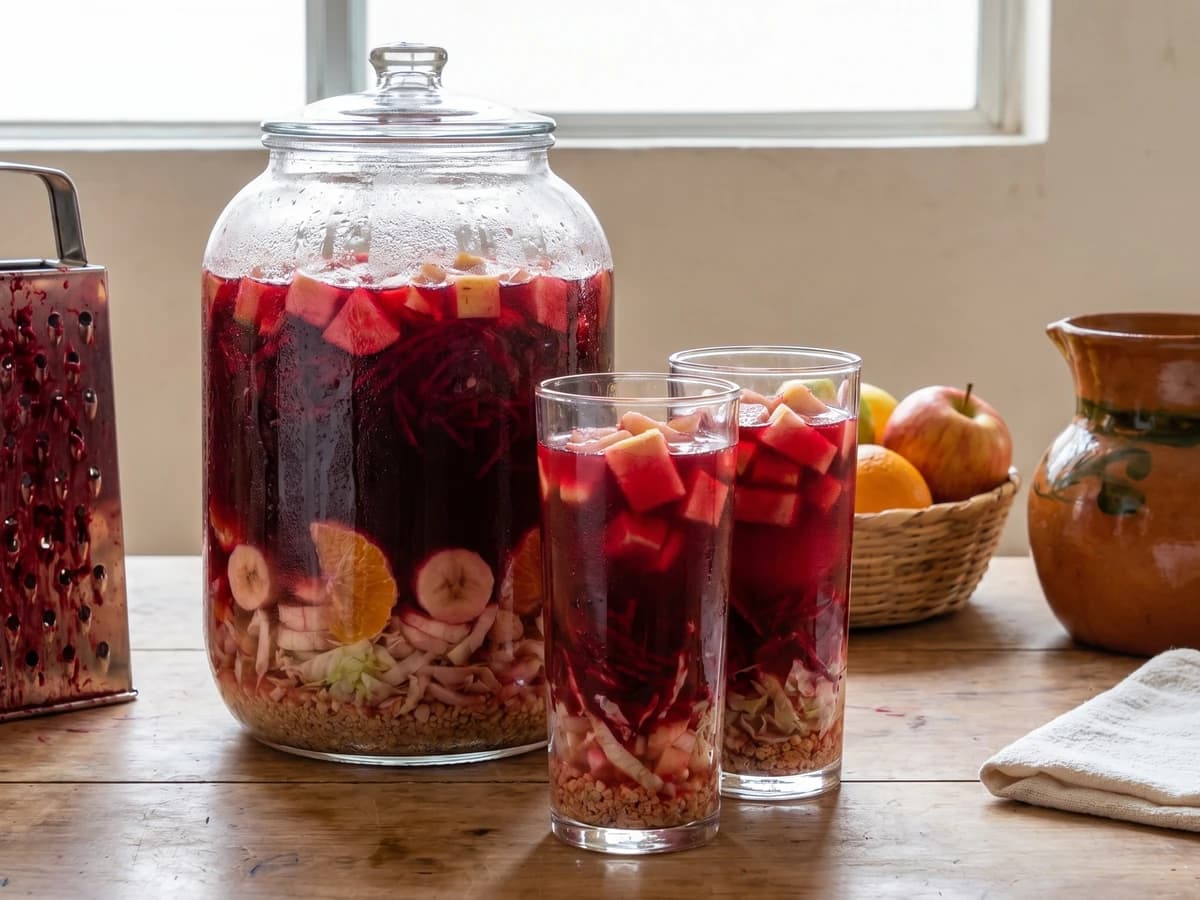
Aguascalientes' Lenten agua fresca, jewel-red from cooked beet and full of apple, banana, orange, lettuce, and ground peanuts, served cold when Holy Week meets the Feria de San Marcos.

Chef Lupita
Sonora and Sinaloa's creamy malted barley water, built on toasted cebada perla, Mexican canela, vanilla from Papantla, and evaporated milk. Pink-beige, rich, and served cold over heavy ice in a heavy glass tumbler. Liquid cookie comfort the northwest way.

Chef Lupita
Yucatán's everyday tonic of boiled chaya leaves blended with lima agria, sugar, and ice. The bright green jarra that sits on every Peninsula table from Mérida to Valladolid.