
Chef Juliette
John Dory (St. Pierre)
John Dory has the delicacy of sole and the firmness of turbot. A light flouring, a quick butter sauté, and nut-brown beurre noisette show exactly why looks never mattered.
A cooking platform built around craft, culture, and the stories behind what we eat.

Created by Chef Juliette
Based on No. 986, Quenelles d’Huîtres à la Reine, from Le Guide Culinaire (1907) by Auguste Escoffier
Cold mousseline holds two tender oysters at the heart of each quenelle, then a gentle poach and glossy Sauce Suprême turn four careful parcels into a generous main.
Quenelles d’Huîtres à la Reine (oyster-filled chicken mousseline dumplings in a cream-enriched poultry sauce) teach the quiet law of every mousseline: cold is structure. The chicken and oyster paste must stay chilled enough to hold its cream in suspension, because warmth loosens the emulsion before the poaching water can set it. Keep it cold and each ivory quenelle will swell lightly around two tender oysters. Let it warm and it slumps. That is the one true thing to know before you touch a pan.
The original kitchen assumed a mortar and pestle, a fine sieve, a saucier on staff, poultry stock never off the fire, and a salamander waiting nearby, although no browning belongs on this pale dish. At home, the food processor specified in the mousseline entry replaces the pounding, a fine-mesh strainer and small saucepan handle the Suprême, and the salamander stays idle. I have scaled the tray down to four large quenelles, one generous parcel per person, and replaced the draining linen with a clean lint-free towel. Those are brigade scaffolds. The cold mousseline, two oysters sealed inside each quenelle, gentle poach, smooth Suprême, truffle, and buttered asparagus are the dish, so they stay. One cook, one stove, one evening.
The finished platter should gleam ivory and butter-gold, with a dark truffle slice on every quenelle and green asparagus gathered at the center. Your decisive step is the test quenelle: poach one teaspoon of paste before shaping the four large ovals. If it feathers or spreads, chill it and test again. Ça se rattrape. Do not shape the full batch until that little quenelle holds.
Quenelles d’Huîtres à la Reine belong to the grand-kitchen repertoire of Paris, where the designation à la Reine signaled a pale, delicate composition of poultry, cream, and costly garnish rather than a regional oyster specialty. The surprising construction is its point: chicken gives the mousseline the albumen and body to hold cream, while oysters perfume the paste and remain whole at the center. From formal service it passed naturally to the bourgeois dining room, where Sauce Suprême, truffle, and buttered asparagus kept the dish generous without turning it brown or heavy.
Quantity
About 2 cups (475 ml / 420 g) Fine Chicken Forcemeat or “Mousseline” (No. 195)
One home-scale batch made with 4 ounces (½ cup / 113 g) chicken fillet and 6 raw oysters (about ⅓ cup / 90 g drained); kept very cold
Quantity
8 oysters (about ½ cup / 120 g drained oysters, plus about ¼ cup / 60 ml / 60 g liquor)
Quantity
2 quarts (1.9 liters / 1.9 kg)
Quantity
1 tablespoon (15 ml / 18 g)
Quantity
10 ounces (about 3 cups / 285 g)
Use fresh tips in season or frozen tips at other times
Quantity
3 tablespoons (45 ml / 42 g)
Divided
Quantity
2 tablespoons (30 ml / 16 g)
Quantity
1½ cups (355 ml / 360 g)
Warmed
Quantity
¾ cup (180 ml / 180 g)
Cold, with 1 tablespoon reserved
Quantity
1 teaspoon (5 ml / 5 g)
Quantity
Up to ½ teaspoon (2.5 ml / 3 g)
Quantity
¼ teaspoon (1.25 ml / 0.5 g)
Quantity
2 tablespoons (30 ml / 28 g)
Quantity
4 paper-thin slices (about 0.1 ounce / 3 g)
Fresh or preserved
| Ingredient | Quantity |
|---|---|
| Fine Chicken Forcemeat or “Mousseline”One home-scale batch made with 4 ounces (½ cup / 113 g) chicken fillet and 6 raw oysters (about ⅓ cup / 90 g drained); kept very cold | About 2 cups (475 ml / 420 g) Fine Chicken Forcemeat or “Mousseline” (No. 195) |
| medium oysters in their liquor | 8 oysters (about ½ cup / 120 g drained oysters, plus about ¼ cup / 60 ml / 60 g liquor) |
| water | 2 quarts (1.9 liters / 1.9 kg) |
| fine salt for the poaching water | 1 tablespoon (15 ml / 18 g) |
| asparagus tipsUse fresh tips in season or frozen tips at other times | 10 ounces (about 3 cups / 285 g) |
| unsalted butter for the Sauce SuprêmeDivided | 3 tablespoons (45 ml / 42 g) |
| all-purpose flour | 2 tablespoons (30 ml / 16 g) |
| light chicken stockWarmed | 1½ cups (355 ml / 360 g) |
| heavy creamCold, with 1 tablespoon reserved | ¾ cup (180 ml / 180 g) |
| fresh lemon juice | 1 teaspoon (5 ml / 5 g) |
| fine salt for the Sauce Suprême | Up to ½ teaspoon (2.5 ml / 3 g) |
| ground white pepper | ¼ teaspoon (1.25 ml / 0.5 g) |
| unsalted butter for the asparagus | 2 tablespoons (30 ml / 28 g) |
| black truffleFresh or preserved | 4 paper-thin slices (about 0.1 ounce / 3 g) |
Prepare the Fine Chicken Forcemeat or “Mousseline” (No. 195) exactly as its own entry directs, using the 4 ounces of chicken fillet and 6 raw oysters as its base. Scrape it into a shallow stainless-steel bowl, press parchment directly against the surface, and nest the bowl over ice. Chill two tablespoons and a small tray as well. Cold is doing structural work here, so return the bowl to the refrigerator whenever your attention moves to the sauce or garnish.
Bring the water and poaching salt to a boil in a wide saucepan. Add the asparagus tips and blanch until bright green and just tender, about 2 minutes for fresh tips or 30 seconds for thawed frozen tips. Transfer them to ice water, drain thoroughly, and reserve. Keep the salted water for the quenelles. Put the 8 oysters and their liquor in a small covered pan over gentle heat; remove each oyster as soon as its rim ruffles and its center turns barely opaque, about 45 to 90 seconds. Cool the oysters completely in their liquor, then drain and blot them dry. A hard boil tightens an oyster, so lift the pan from the heat the moment the liquor begins to surge.
Melt 2 tablespoons of the sauce butter in a small saucepan. Stir in the flour and cook this roux blanc (white roux) for 2 minutes without letting it color. Add the warm chicken stock in four additions, whisking each one smooth before the next, then simmer gently for 12 minutes. Add the cream, reserving 1 tablespoon cold, and simmer for another 6 to 8 minutes, until the sauce is nappant, thick enough to coat the back of a spoon while still flowing freely. Season with the lemon juice, white pepper, and only as much salt as the stock requires. Strain through a fine-mesh sieve, then whisk in the remaining tablespoon of butter. If the sauce looks greasy at the edge, take it off the heat and whisk in the reserved cold cream. Ça se rattrape. Hold it covered over a bain-marie, a warm water bath, and never let it boil after the finishing butter goes in.
Return the reserved salted water to 175 to 185°F (80 to 85°C), a quiet tremble with no rolling bubbles. Drop in a rounded teaspoon of Fine Chicken Forcemeat or “Mousseline” (No. 195) and poach it until cooked through, about 3 minutes. It should swell slightly and hold a clean oval. If its edges feather or the paste spreads, chill the bowl and spoons for 15 minutes, fold the paste together gently over ice, and test again. Do not add flour, which makes a heavy dumpling while leaving the warm emulsion unfixed.
Divide the cold Fine Chicken Forcemeat or “Mousseline” (No. 195) into four equal portions. Working with one portion at a time, wet the two chilled tablespoons in cold water. Set half the portion on one spoon, make a shallow trough, and lay 2 cold poached oysters lengthwise in the center. Cap them with the remaining paste, then pass the mixture between the spoons until it forms a smooth oval about 3½ inches long. Seal every trace of oyster beneath the paste. If the surface grows sticky or slack, put the paste and spoons back over ice for 5 minutes before continuing.
Lower the four quenelles into the poaching water with a wet slotted spoon, leaving room around each. Hold the water between 175 and 180°F (80 and 82°C) and poach for 15 to 18 minutes, turning the quenelles gently halfway through. They are ready when they feel lightly resilient, look evenly opaque, and register 165°F (74°C) in the thickest layer of chicken mousseline. If the water begins to boil, lower the heat and add a small splash of cold water at the side of the pan. The quenelles will recover, but boiling left unchecked makes them coarse.
Warm a round serving platter and bring the Sauce Suprême back to a flowing spoon-coating consistency over gentle heat, loosening it with a spoonful of warm stock if necessary. Melt the asparagus butter in a sauté pan, add the drained tips, and toss only until the butter clings and the asparagus is hot. Lift the quenelles onto a clean lint-free towel and blot them gently, then arrange them in a circle on the warm platter. Mask each quenelle generously with Sauce Suprême, gather the buttered asparagus tips in the center, and lay one fine truffle slice on every quenelle. Serve the remaining sauce alongside. À table!
1 serving (about 350g)
Culinary guides, cultural storytelling, and the editorial depth that makes cooking meaningful.
Discover Culinary ExplorerChef Juliette
John Dory has the delicacy of sole and the firmness of turbot. A light flouring, a quick butter sauté, and nut-brown beurre noisette show exactly why looks never mattered.

Chef Juliette
Fresh haddock proves its delicacy in the meunière pan: a fine flour crust, moist pearly flakes, and beurre noisette sharpened with lemon and parsley, ready from one skillet in half an hour.
Chef Juliette
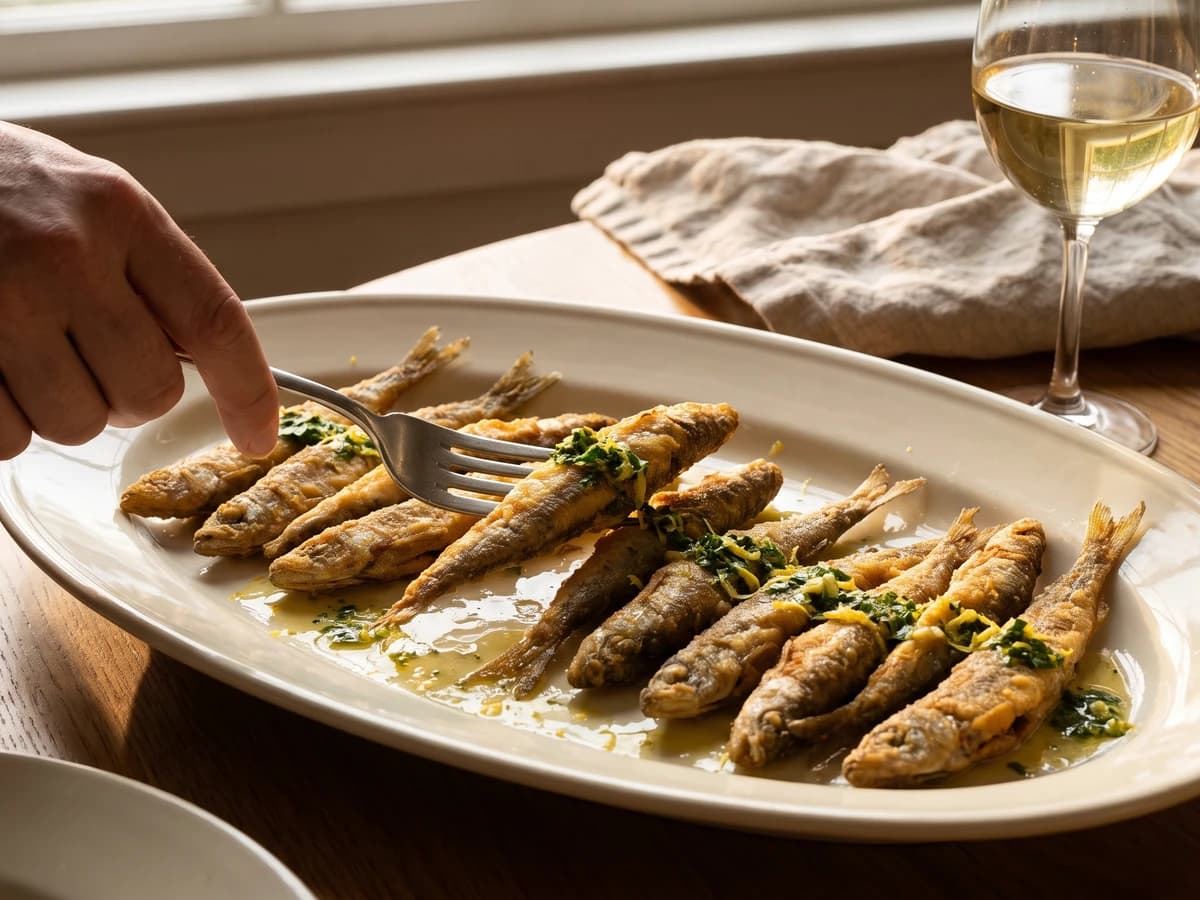
Éperlans à l’Anglaise turns small fish into a lesson in disciplined coating: boned smelts under a close, crisp crumb, pan-fried in clarified butter and finished with bright, half-melted maître d’hôtel butter.

Chef Juliette
Tiny smelts, shallot, mushrooms, white wine, gratin sauce, and fine bread raspings meet a fierce oven, where the fish must turn tender in the same breath the buttered crust bronzes.