
Chef Juliette
John Dory (St. Pierre)
John Dory has the delicacy of sole and the firmness of turbot. A light flouring, a quick butter sauté, and nut-brown beurre noisette show exactly why looks never mattered.
A cooking platform built around craft, culture, and the stories behind what we eat.

Created by Chef Juliette
Based on No. 1001, Fresh Haddock (Eglefin), from Le Guide Culinaire (1907) by Auguste Escoffier
Fresh haddock proves its delicacy in the meunière pan: a fine flour crust, moist pearly flakes, and beurre noisette sharpened with lemon and parsley, ready from one skillet in half an hour.
Églefin frais à la meunière (fresh haddock in the miller’s style) teaches a clean principle: delicate fish wants less handling and more attention. Haddock is every bit as fine as cod, but its flakes loosen quickly, so the pan must be hot, the coating thin, and the turn singular. Meunière means flouring the fish lightly and frying it in butter. The word carries the technique.
The source entry is intentionally spare: fresh églefin may follow any cod preparation, poached, grilled, or fried. For tonight, meunière is the honest choice because it preserves that instruction while giving the home cook a complete supper. A brigade could trim a whole fish, flour portions to order, and pass the butter finish down the line. That service scaffolding can go. No saucier, stockpot, or salamander is needed: four fillets, one skillet, clarified butter for clean frying, and beurre noisette, butter cooked to hazelnut color, made in the same pan. What changed is the scale and the selection of one permitted method, not the intent. One cook, one stove, one evening.
Done properly, the crust is butter-gold and barely there, the flesh separates into moist pearly flakes, and the lemon catches the richness without covering the fish. Last-minute flouring and one careful turn cannot go; they are the dish. The step that decides everything comes before the pan: dry the fillets completely.
Fresh églefin belongs to the fish counters of France’s Channel and North Sea ports, especially Boulogne-sur-Mer and the Norman coast, where the pale, fine-fleshed fish could be sold fresh or sent to the smoker. French culinary usage keeps a useful distinction: églefin names the fresh fish, while haddock commonly names the same fish after salting and smoking. Classical manuals judged fresh églefin equal to cod in delicacy and directed cooks toward the same poached, grilled, or fried preparations.
Quantity
4 fillets, 5 to 6 ounces (150 to 170 g) each
Quantity
1 teaspoon (5 ml / 6 g)
Quantity
1/4 teaspoon (1.25 ml / 0.5 g)
Quantity
1/2 cup (120 ml / 60 g)
Quantity
3 tablespoons (45 ml / 40 g)
divided
Quantity
5 tablespoons (75 ml / 70 g)
cut into small cubes
Quantity
2 tablespoons (30 ml / 30 g)
Quantity
1/4 cup (60 ml / 15 g)
finely chopped
Quantity
1
cut into 4 wedges
| Ingredient | Quantity |
|---|---|
| skinless, boneless fresh haddock fillets | 4 fillets, 5 to 6 ounces (150 to 170 g) each |
| fine sea salt | 1 teaspoon (5 ml / 6 g) |
| ground white pepper | 1/4 teaspoon (1.25 ml / 0.5 g) |
| all-purpose flour | 1/2 cup (120 ml / 60 g) |
| clarified butterdivided | 3 tablespoons (45 ml / 40 g) |
| unsalted buttercut into small cubes | 5 tablespoons (75 ml / 70 g) |
| fresh lemon juice | 2 tablespoons (30 ml / 30 g) |
| flat-leaf parsleyfinely chopped | 1/4 cup (60 ml / 15 g) |
| lemoncut into 4 wedges | 1 |
Run your fingertips over the haddock and pull out any pin bones with tweezers. Blot every surface thoroughly with clean towels, especially the shallow creases between the flakes. Moisture turns the flour to paste and prevents even coloring. Set a serving platter somewhere warm while you cook.
Set the skillet over medium-high heat. Season only the first two fillets with half the salt and pepper, then pass them through the flour on both sides. Shake them until they look almost bare; meunière wants a fine veil, not a coat of batter. Flour the remaining fish only when the first batch leaves the pan, because flour left sitting on damp fish becomes gummy.
Add half the clarified butter, about 1 1/2 tablespoons (22 ml / 20 g), to the hot skillet. When it glistens, lay in two fillets with their smoother, rounded sides down. Cook without nudging for 2 1/2 to 3 1/2 minutes, until the edges look opaque and the underside is evenly golden. Slide a thin fish spatula underneath and turn each fillet once, then cook for another 2 to 3 minutes, until the thickest part reaches 145°F (63°C) and separates into moist flakes under gentle pressure. If a fillet resists the spatula, give it another 20 seconds rather than forcing it; the crust releases when ready. If it splits during the turn, settle the pieces together on the platter and sauce them as one. Ça se rattrape. Repeat with the remaining seasoning, flour, fish, and clarified butter, wiping away any flour crumbs that have turned dark before the second batch.
Lower the heat to medium and wipe loose, dark flour from the skillet, leaving the golden film behind. Add the unsalted butter and swirl continuously as it melts, foams, and quiets. In 2 to 3 minutes, the milk solids will turn hazelnut-brown and smell nutty. Pull the pan from the heat immediately. If the color races past gold, pour the butter into a cool heatproof bowl to stop the cooking, then finish the sauce there. Ça se rattrape. Add the lemon juice in two additions, swirling carefully as it spits, then fold in the parsley.
Taste a drop of the beurre noisette and correct the salt only if needed. Spoon it over the haddock at the last moment, letting it pool around the fillets without drowning their fine crust. Bring the platter straight to the table with the lemon wedges. Meunière waits for nobody. À table!
1 serving (about 195g)
Culinary guides, cultural storytelling, and the editorial depth that makes cooking meaningful.
Discover Culinary ExplorerChef Juliette
John Dory has the delicacy of sole and the firmness of turbot. A light flouring, a quick butter sauté, and nut-brown beurre noisette show exactly why looks never mattered.
Chef Juliette
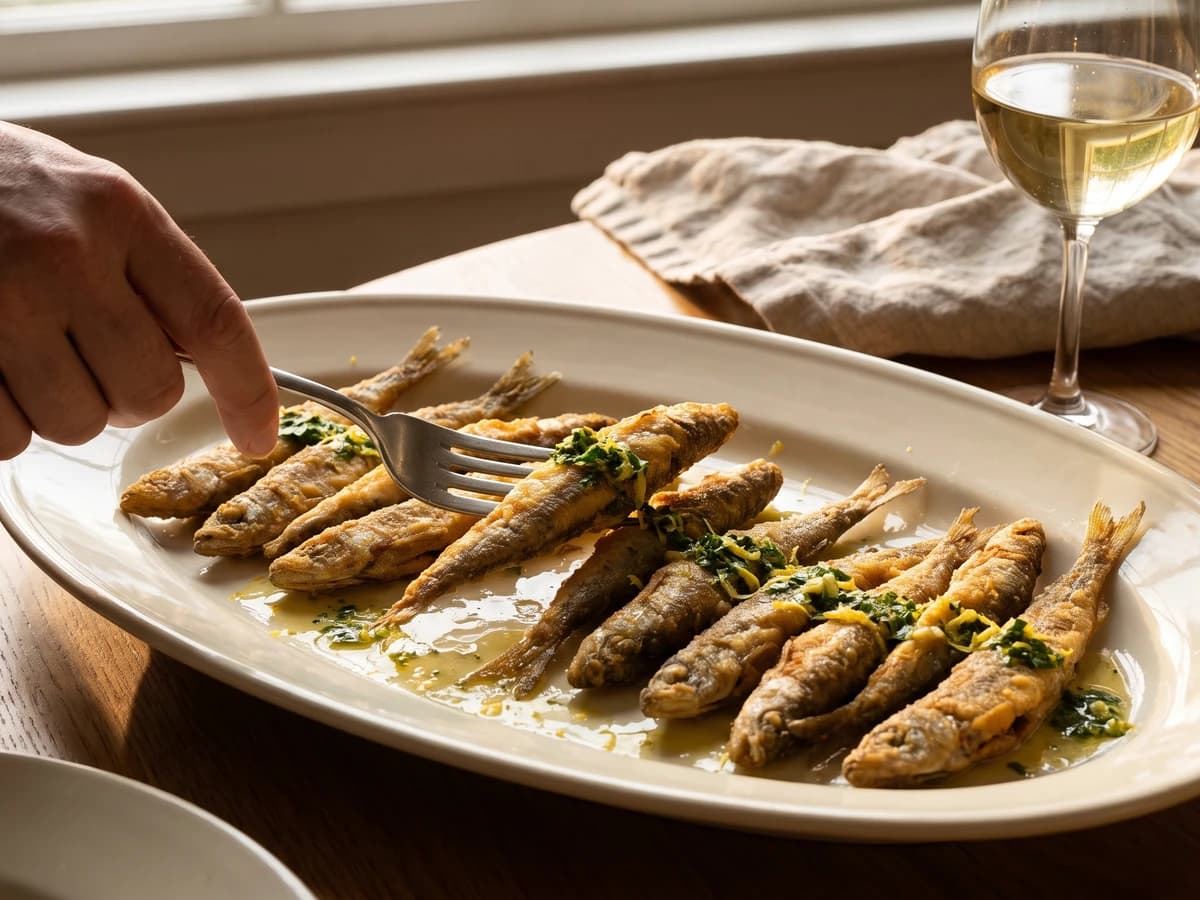
Éperlans à l’Anglaise turns small fish into a lesson in disciplined coating: boned smelts under a close, crisp crumb, pan-fried in clarified butter and finished with bright, half-melted maître d’hôtel butter.

Chef Juliette
Tiny smelts, shallot, mushrooms, white wine, gratin sauce, and fine bread raspings meet a fierce oven, where the fish must turn tender in the same breath the buttered crust bronzes.

Chef Juliette
Éperlans Grillés make delicacy from discipline: smelts opened along the back, partly boned, floured and buttered, then broiled in minutes and served with lemon, crisp parsley, and beurre maître d’hôtel.