
Chef Juliette
John Dory (St. Pierre)
John Dory has the delicacy of sole and the firmness of turbot. A light flouring, a quick butter sauté, and nut-brown beurre noisette show exactly why looks never mattered.
A cooking platform built around craft, culture, and the stories behind what we eat.

Created by Chef Juliette
Based on No. 945, Homard à la Crème, from Le Guide Culinaire (1907) by Auguste Escoffier
Homard à la Crème brings coral lobster and black truffle into an ivory brandy cream, teaching the discipline that matters most in rich sauces: reduce patiently, then finish below the boil.
Homard à la Crème (lobster in cream) teaches control at the edge of a boil. The lobster must cook gently enough to remain tender while its cream absorbs the brandy, shell juices, and black truffle, then the sauce must reduce without turning grainy or greasy. The one true thing is simple: cream can tremble, but it must never rage.
The original formula assumed a saucier on staff, a stock never off the fire for white meat-glaze, brigade quantities, and muslin ready for the final strain. Here, the source's four ounces of truffle and three tablespoons of glaze become 1.6 ounces and a little over one tablespoon, keeping the same proportion for four people. A fine sieve lined with damp cheesecloth replaces the muslin, and a warmed serving bowl replaces the timbale. The salamander can stay cold, because this preparation has no gratin work. One cook, one stove, one evening.
The dedicated saucier and service-sized quantities were scaffolding, so they can go. The raw-lobster sear, brandy alone, truffle added immediately, gentle cream cook, separate reduction, meat-glaze, lemon, and final strain are the dish, so they stay. Before you touch the pan, settle this in your mind: once the cream begins reducing, watch its bubbles, not the clock.
Homard à la Crème belongs to the Parisian classical service table, where luxurious lobster preparations moved readily between grand kitchens and formal dining rooms. It draws its working method from Homard à la New-burg, a preparation that entered the French repertoire from American hotel dining, but changes the structure decisively: brandy replaces the Marsala, fresh truffle perfumes the cream, and white meat-glaze replaces the coral thickener. The truffle is an infusion rather than a garnish, an extravagance strained from the finished sauce after giving up its perfume.
Quantity
1 home-scaled preparation (No. 948), using 2 live lobsters weighing 1¼ to 1½ pounds each (570 to 680 g each)
prepared only through the stiffened-and-coloured stage
Quantity
3 tablespoons (45 ml / 43 g)
Quantity
⅓ cup loosely packed slices (80 ml / 45 g)
peeled and thinly sliced
Quantity
2 cups (480 ml / 490 g)
Quantity
¾ teaspoon (3.75 ml / 4.5 g), plus more only if needed
Quantity
⅛ teaspoon (0.6 ml / 0.25 g)
Quantity
1 tablespoon plus ½ teaspoon (18 ml / 20 g)
melted
Quantity
½ teaspoon (2.5 ml / 2.5 g), plus a few drops if needed
Quantity
2 tablespoons (30 ml / 31 g)
well chilled
| Ingredient | Quantity |
|---|---|
| Homard à la New-burg (with raw lobster)prepared only through the stiffened-and-coloured stage | 1 home-scaled preparation (No. 948), using 2 live lobsters weighing 1¼ to 1½ pounds each (570 to 680 g each) |
| brandy | 3 tablespoons (45 ml / 43 g) |
| fresh black trufflespeeled and thinly sliced | ⅓ cup loosely packed slices (80 ml / 45 g) |
| fresh pouring cream, 30 to 35% fat | 2 cups (480 ml / 490 g) |
| fine sea salt | ¾ teaspoon (3.75 ml / 4.5 g), plus more only if needed |
| cayenne pepper | ⅛ teaspoon (0.6 ml / 0.25 g) |
| white meat-glaze, preferably chicken or vealmelted | 1 tablespoon plus ½ teaspoon (18 ml / 20 g) |
| fresh lemon juice | ½ teaspoon (2.5 ml / 2.5 g), plus a few drops if needed |
| fresh pouring cream for sauce rescue (optional)well chilled | 2 tablespoons (30 ml / 31 g) |
Have every ingredient measured before the lobster meets the pan. Slice the peeled truffle, melt the white meat-glaze, dampen the cheesecloth, and set a covered serving bowl somewhere warm but not hot. Keep the brandy in its measured cup, never in the bottle, and place a tight-fitting lid beside the sauté pan before flambéing. Mise en place means everything in its place, and here it protects both the lobster and the cook.
Prepare the home-scaled lobster base according to Homard à la New-burg (with raw lobster) (No. 948), stopping as soon as the raw lobster pieces have stiffened and taken colour in the oil and butter. Do not continue with that preparation's Marsala, fumet, cream, or coral-butter thickener. This formula takes its own path from this point.
Lift the coloured lobster pieces briefly to a tray and pour away all free cooking fat, leaving the browned fond clinging to the pan. Return the lobster. Remove the pan from the burner, extinguish nearby flames, turn off the extraction fan, and pour in the measured brandy. Ignite it with a long match, keeping your face and sleeves back, and let the flame die by itself. If it fails to catch, don't add more brandy; return the pan to gentle heat and let the liquid bubble for 60 to 90 seconds, until the harsh alcoholic smell softens. Ça se rattrape.
The moment the flame has gone, scatter in all the sliced truffle. Pour in the fresh cream, which should come close to covering the lobster in a snug 3 to 4-quart sauté pan, then season with the salt and cayenne. Scrape the pan floor gently so the brandy-loosened fond joins the cream without damaging the shells.
Cover the pan and bring the cream only to a bare tremble, with small bubbles collecting at the edge rather than breaking violently across the surface. Cook for 12 to 15 minutes, turning the lobster pieces once, until the shell is brilliant coral and the thickest meat is opaque and reaches 140 to 145°F (60 to 63°C). A hard boil tightens the lobster and risks breaking the cream, so lower the heat whenever the bubbles become noisy.
Lift the lobster pieces from the cream and let them stand just long enough to handle. Remove the tail, claw, and knuckle meat from the shells, keeping the pieces generous rather than cutting them into little dice. Return any clear shelling juices to the pan, arrange the meat in the warmed serving bowl, and cover it loosely. Warm is enough; fierce holding heat would finish the cooking and turn the lobster firm.
Keep the truffle cream at a controlled simmer until it reduces to about ⅓ cup (80 ml), coats a spoon, and leaves a clear trail when you draw a finger across the back. Stir often near the end, when reduction accelerates. If the sauce looks oily or grainy, take it off the heat at once. Put 1 tablespoon of the chilled rescue cream into a clean pan and whisk in the troubled sauce one spoonful at a time until it comes together, then return it briefly to the gentlest heat. Ça se rattrape. If the sauce is merely too thick but still smooth, loosen it with a teaspoon of hot water.
Lower the heat completely and stir in the melted white meat-glaze, followed by the lemon juice. Do not boil the sauce again. Taste before adding more salt, since meat-glaze can carry plenty of its own, then add only another drop or two of lemon if the richness needs lifting. Pour the sauce through the damp cheesecloth-lined sieve, coaxing it through gently without pressing hard; the spent truffle slices remain behind, while their perfume stays in the sauce.
Pour the strained sauce directly over the warm lobster pieces, turning them once so every surface gleams. Serve immediately, while the meat is tender and the sauce flows in a slow ivory ribbon. Nothing should be dotted, smeared, or piled into a tower. Bring the bowl to the table generously. À table!
1 serving (about 195g)
Culinary guides, cultural storytelling, and the editorial depth that makes cooking meaningful.
Discover Culinary ExplorerChef Juliette
John Dory has the delicacy of sole and the firmness of turbot. A light flouring, a quick butter sauté, and nut-brown beurre noisette show exactly why looks never mattered.

Chef Juliette
Fresh haddock proves its delicacy in the meunière pan: a fine flour crust, moist pearly flakes, and beurre noisette sharpened with lemon and parsley, ready from one skillet in half an hour.
Chef Juliette
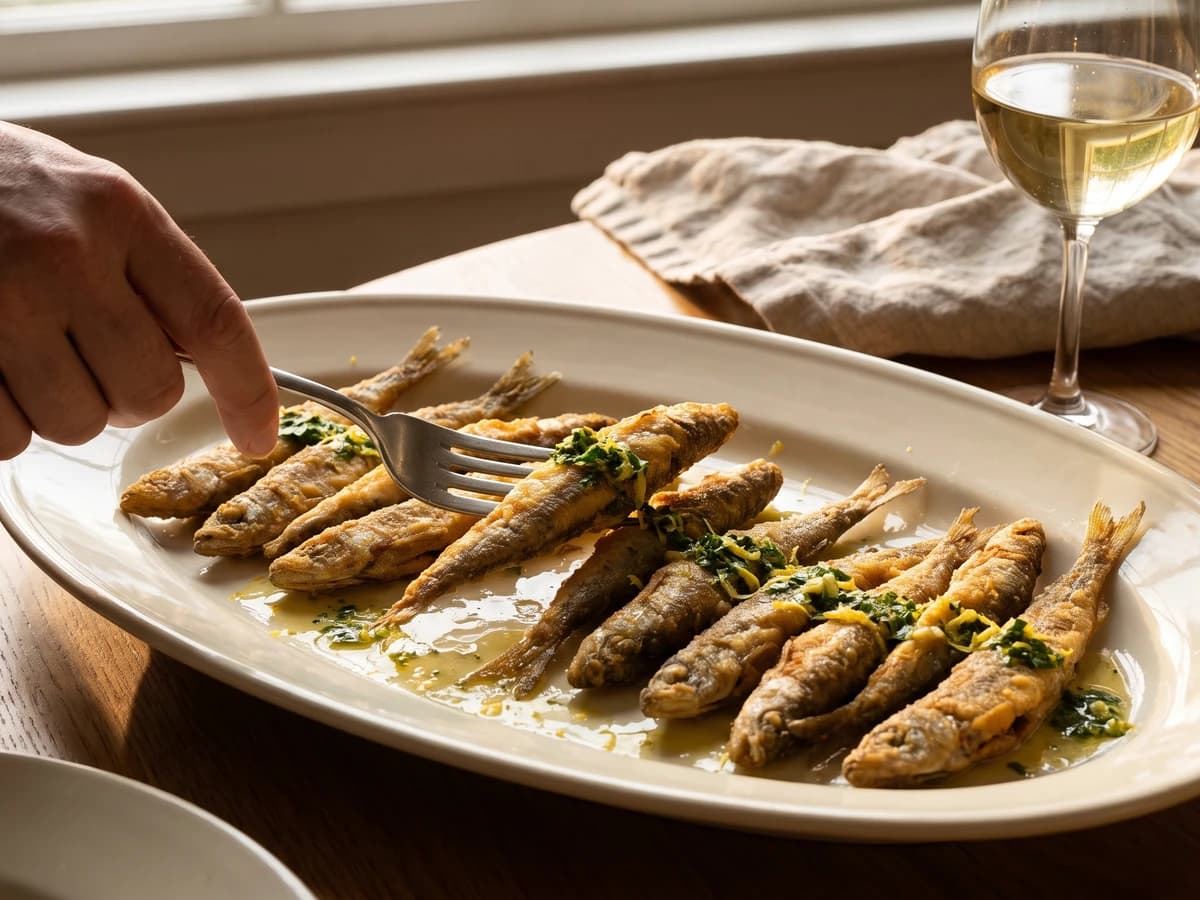
Éperlans à l’Anglaise turns small fish into a lesson in disciplined coating: boned smelts under a close, crisp crumb, pan-fried in clarified butter and finished with bright, half-melted maître d’hôtel butter.

Chef Juliette
Tiny smelts, shallot, mushrooms, white wine, gratin sauce, and fine bread raspings meet a fierce oven, where the fish must turn tender in the same breath the buttered crust bronzes.