Culinary Explorer
A cooking platform built around craft, culture, and the stories behind what we eat.
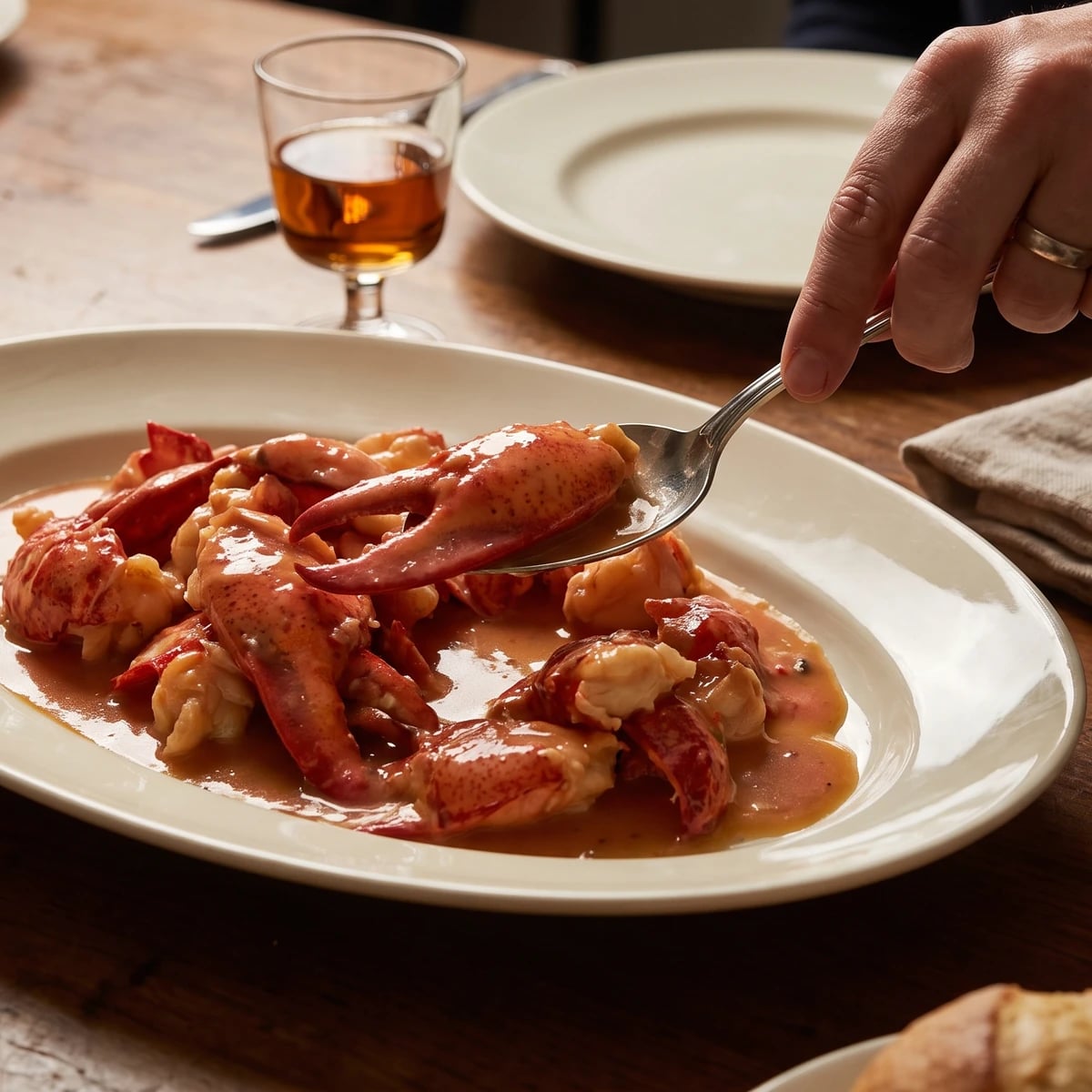
Homard à la New-burg (with raw lobster)
Created by Chef Juliette
Raw lobster meets hot butter, Cognac flame, and Marsala cream, then its own coral finishes the sauce: a lesson in fierce beginnings, gentle endings, and knowing when heat has done enough.
Homard à la New-burg (raw lobster in Marsala cream) teaches control of heat in two directions. The lobster needs a fierce beginning so its flesh stiffens and its shell colors in hot oil and butter; the finished sauce needs gentleness, because the coral-and-butter liaison thickens beautifully but turns grainy if it boils. That change of pace is the one true thing to know before you touch the pan.
The original formula assumed a saucier minding the reduction, fish fumet never far from the fire, another pair of hands extracting hot lobster meat, a timbale for holding it, and a tammy for the final sauce. At home, two manageable lobsters replace one unwieldy specimen, a warmed covered bowl replaces the timbale, and a fine-mesh sieve does the tammy's work. The salamander has nothing to do here; this dish lives entirely in the sauté pan. These objects were brigade scaffolding and can go. The hot initial frying, the Cognac flame, the one-third reduction of Marsala, and the coral-butter finish are the dish, and they stay.
The old instruction brings the liaison back to a boil, but a home-sized pan heats too quickly for that treatment. Here it is tempered and cooked just below boiling, which sets the coral and preserves the same glossy body without scrambling it. One cook, one stove, one evening. At the finish, watch the surface rather than the clock: once the sauce veils a spoon, remove it from the heat and do not let it boil.
Ingredients
live cold-water lobsters
Quantity
2, 2 pounds each (907 g each / 1.81 kg total), for Homard à l'Américaine (No. 939)
dispatched and sectioned for the initial frying stage, with the coral and creamy liver reserved
fine sea salt
Quantity
1 teaspoon (5 ml / 6 g), plus more as needed
freshly ground black pepper
Quantity
1/2 teaspoon (2.5 ml / 1 g)
| Ingredient | Quantity |
|---|---|
| live cold-water lobstersdispatched and sectioned for the initial frying stage, with the coral and creamy liver reserved | 2, 2 pounds each (907 g each / 1.81 kg total), for Homard à l'Américaine (No. 939) |
| fine sea salt | 1 teaspoon (5 ml / 6 g), plus more as needed |
| freshly ground black pepper | 1/2 teaspoon (2.5 ml / 1 g) |
Where cooking meets culture.
Culinary guides, cultural storytelling, and the editorial depth that makes cooking meaningful.
Discover Culinary Explorer