
Chef Juliette
John Dory (St. Pierre)
John Dory has the delicacy of sole and the firmness of turbot. A light flouring, a quick butter sauté, and nut-brown beurre noisette show exactly why looks never mattered.
A cooking platform built around craft, culture, and the stories behind what we eat.
Created by Chef Juliette
Based on No. 781, The Grilling of Fish, from Le Guide Culinaire (1907) by Auguste Escoffier
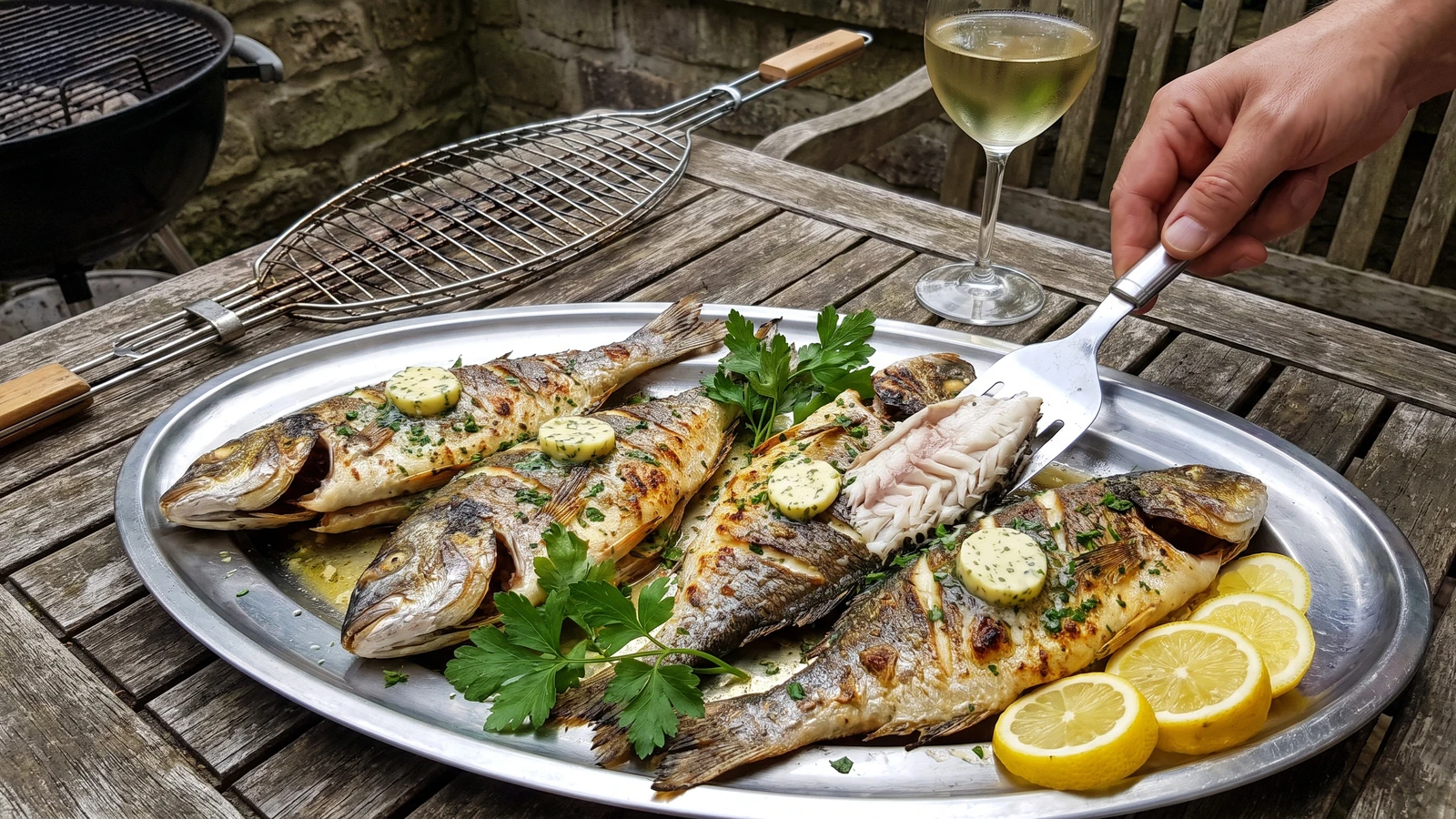
Poisson grillé is open-fire roasting at its clearest: lean fish protected by flour and butter, fatty fish glossed with butter alone, each turned whole and served golden with lemon.
Poisson grillé (fish grilled over live coals) teaches one true thing before all others: the grill must be hot before the fish touches it. Heat firms the coating at once, releases it cleanly from the bars, and concentrates the juices beneath a thin golden crust. Begin over a lukewarm grate and even a beautiful fish will cling, tear, and dry while you argue with it.
The original method needed no saucier and no stockpot, but it did assume an expertly tended charcoal range, an ordinary grill already blazing above it, and a special double gridiron that turned fragile fish without breaking them. At home, a two-zone charcoal fire and a hinged fish basket do the same work honestly. I have scaled the method to four small fish, one per person. The dedicated range and second grill were brigade scaffolding and can go; the moderate clean fire, the heated basket, and the flour-before-butter coating for lean fish are the dish and must stay.
For lean white fish, flour forms the protective crust and clarified butter carries the browning. Fatty fish such as mackerel, red mullet, herring, trout, or salmon need butter but no flour. One cook, one fire, one evening. Heat and butter the basket thoroughly before the fish meets it, because that first contact decides the crust.
Poisson grillé has no single regional home: it belongs to fish cookery from the Channel and Atlantic ports of Brittany and Normandy to Provence’s Mediterranean coast, with local fish and cooking fat changing from one shore to another. Northern tables favored butter with their small sea fish, while very good oil could take its place in Provence. The classical kitchen codified the hinged double gridiron and the flour rule, but the underlying method remained elemental: a grill is a roast over open fire, not merely fish decorated with marks from a pan.
Quantity
4 fish, 10 to 12 ounces (285 to 340 g) each
scaled, gutted, and fins trimmed
Quantity
2 teaspoons (10 ml / 12 g)
Quantity
½ cup (120 ml / 60 g)
Quantity
½ cup (120 ml / 110 g)
melted and divided
Quantity
¼ cup (60 ml / 57 g)
chilled and cut into 4 coins
Quantity
1 small bunch
washed and thoroughly dried
Quantity
2
grooved and sliced
Quantity
1 moderate live-coal fire from 1 chimney (about 900 g), prepared following Grills (No. 257)
Quantity
1, preheated and used following Fish Grills (No. 260)
| Ingredient | Quantity |
|---|---|
| small whole lean fish, such as black sea bass, porgy, or sea breamscaled, gutted, and fins trimmed | 4 fish, 10 to 12 ounces (285 to 340 g) each |
| fine sea salt | 2 teaspoons (10 ml / 12 g) |
| all-purpose flour | ½ cup (120 ml / 60 g) |
| clarified unsalted buttermelted and divided | ½ cup (120 ml / 110 g) |
| prepared Butter à la Maître d’Hôtelchilled and cut into 4 coins | ¼ cup (60 ml / 57 g) |
| fresh flat-leaf parsleywashed and thoroughly dried | 1 small bunch |
| lemonsgrooved and sliced | 2 |
| natural lump charcoal | 1 moderate live-coal fire from 1 chimney (about 900 g), prepared following Grills (No. 257) |
| double fish-grilling basket | 1, preheated and used following Fish Grills (No. 260) |
Prepare the charcoal according to Grills (No. 257). Light one full chimney and wait until the coals glow red beneath a fine grey coating, with no black pieces giving off sooty smoke. Arrange an even, moderately thick bed beneath two-thirds of the grate and leave the remaining third cooler. This safety zone matters: butter can flare, and moving the fish is wiser than scorching it. Set the serving platter near the grill so it warms gently without becoming too hot to handle.
Set the double fish-grilling basket over the fire in advance, following Fish Grills (No. 260), and heat it for 8 to 10 minutes. Brush both inner faces generously with about 2 tablespoons (30 ml / 28 g) of the clarified butter. A cold basket seizes the fish; a properly heated, buttered one begins setting the crust on contact.
Pat the fish dry inside and out. Unless they are exceptionally small, cut three shallow diagonal gashes on each side, about ¼ inch (6 mm) deep, passing through the skin and into the thick flesh without striking the backbone. These openings let heat reach the thickest part before the thinner tail dries. Season the cavities and both sides with the salt, then blot away any moisture that appears.
Spread the flour in a wide dish and roll each lean fish through it, coating both sides and the gashes. Shake off every loose patch, because excess flour becomes pasty rather than crisp. Brush the fish copiously with clarified butter only after flouring, allowing it to run into the cuts. If you are using mackerel, red mullet, herring, trout, or thick salmon sections, omit the flour and brush the fish directly with butter; their natural fat supplies the protection lean fish lacks.
Lay the fish in the hot basket with space between them, close it securely, and place it over the moderate fire. Grill the first side for 5 to 7 minutes, brushing more clarified butter through the basket once or twice. Do not shift or open it while the crust is forming. If dripping butter raises a flame, move the whole basket to the cool zone until it dies, then return it to the heat. Ça se rattrape, and the fish need never taste scorched.
Turn the entire closed basket in one confident movement and grill the second side for 4 to 6 minutes, basting once more. The fish is ready when the crust is evenly golden, the dorsal fin pulls free without resistance, and the flesh beside the backbone is opaque and separates easily from the bones. An instant-read thermometer inserted into the thickest flesh should register 145°F (63°C). If the crust colors before the centre is ready, move the basket to the cool zone and close the grill lid for 2 to 3 minutes; gentle surrounding heat finishes the flesh without burning the flour.
Open the basket over the warmed platter and release each fish with a thin fish slice. If a small patch catches, work beneath it slowly rather than pulling; the golden crust is worth keeping attached. Arrange the fish directly on the hot platter, without paper or a napkin. Set one coin of Butter à la Maître d’Hôtel on each fish so it softens into the gashes, then garnish generously with fresh parsley and grooved lemon slices. Grilled fish does not wait for its guests. À table!
1 serving (about 210g)
Culinary guides, cultural storytelling, and the editorial depth that makes cooking meaningful.
Discover Culinary ExplorerChef Juliette
John Dory has the delicacy of sole and the firmness of turbot. A light flouring, a quick butter sauté, and nut-brown beurre noisette show exactly why looks never mattered.

Chef Juliette
Fresh haddock proves its delicacy in the meunière pan: a fine flour crust, moist pearly flakes, and beurre noisette sharpened with lemon and parsley, ready from one skillet in half an hour.
Chef Juliette
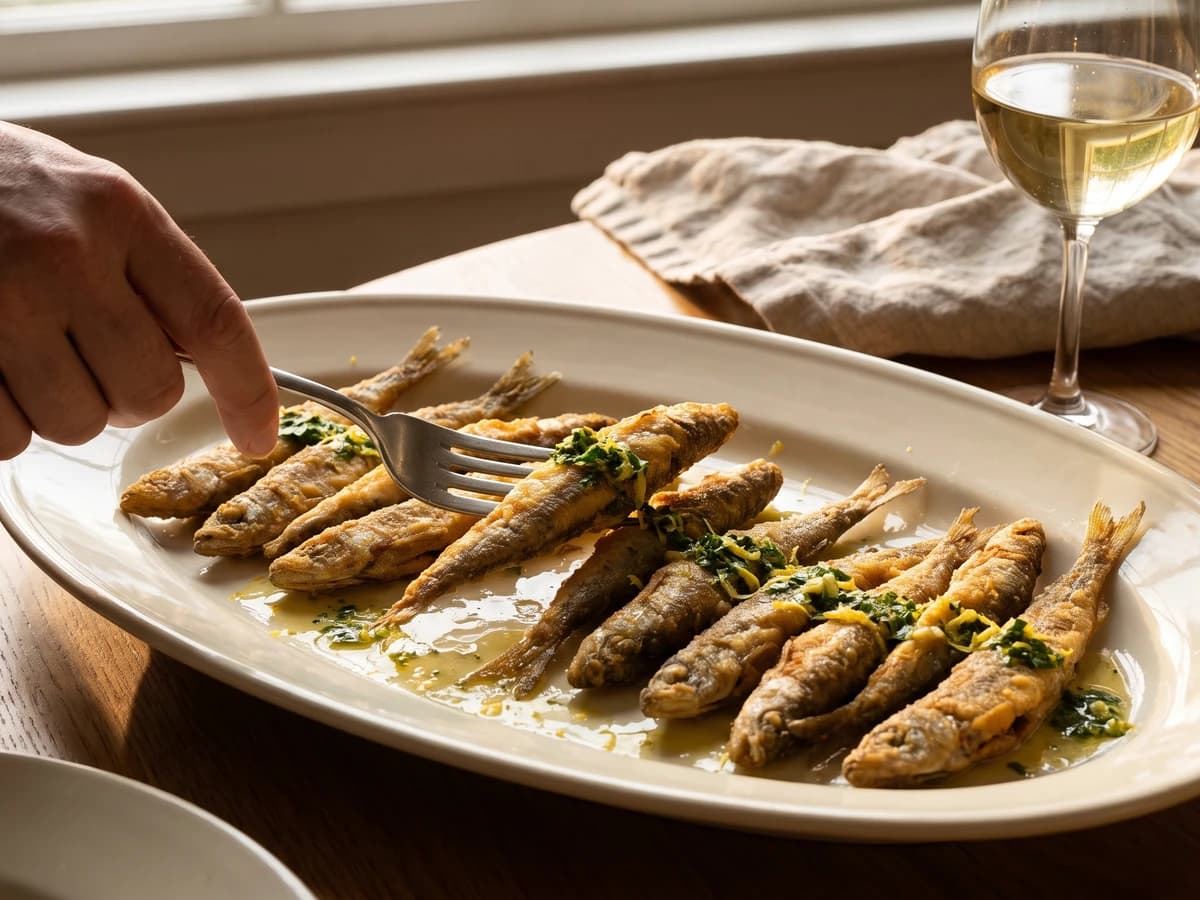
Éperlans à l’Anglaise turns small fish into a lesson in disciplined coating: boned smelts under a close, crisp crumb, pan-fried in clarified butter and finished with bright, half-melted maître d’hôtel butter.

Chef Juliette
Tiny smelts, shallot, mushrooms, white wine, gratin sauce, and fine bread raspings meet a fierce oven, where the fish must turn tender in the same breath the buttered crust bronzes.