
Chef Juliette
John Dory (St. Pierre)
John Dory has the delicacy of sole and the firmness of turbot. A light flouring, a quick butter sauté, and nut-brown beurre noisette show exactly why looks never mattered.
A cooking platform built around craft, culture, and the stories behind what we eat.

Created by Chef Juliette
Based on No. 247, Ordinary Braisings, from Le Guide Culinaire (1907) by Auguste Escoffier
A beef rump, larded and browned, then held in a close cocotte with marinade, aromatics, and excellent stock until every slice yields and the short liquor becomes its own glossy gravy.
Bœuf braisé ordinaire (ordinary braised beef) teaches the governing law of braising: the meat must sit in a vessel that only just contains it, moistened with a small quantity of excellent liquor. Too much liquid makes broth and leaves the beef washed of character. The small liquor is the sauce. Browning does not seal the juices behind a magical cuirass, but it builds the fond without which that sauce has no backbone.
The grand kitchen assumed a special larding needle, clarified fat collected from consommé, a saucier watching the reductions, finished stock never far from the fire, and a spare clean pan for the second phase. At home, a narrow boning knife and sturdy skewer make the larding channels, clarified butter replaces the collected fat, and one close-fitting cocotte does both phases after a quick wipe. The repeated glazing of an intact joint is service scaffolding and goes, because this beef is sliced. The larding, browned aromatics, concentrated marinade, excellent stock, and patient basting stay. They are the dish. One cook, one stove, one evening of cooking, with the marinade begun ahead.
Done properly, the roast gives under the knife in moist, even slices, and its liquor has reduced to a mahogany gloss with enough body to cling but never enough to smother. Use the smallest cocotte that comfortably holds the beef. That choice decides the braise before the oven door closes.
Ordinary braising belongs to the cuisine bourgeoise table throughout France, where lean, mature cuts were larded and cooked slowly for a generous family meal. The method traveled from the household pot into the grand kitchen and back again, gathering specialist needles, muslin straining, two-pan service, and repeated glazing while preserving its essential grammar of browned meat, fried aromatics, excellent stock, and short liquor. The classical explanation that searing forms a juice-tight cuirass is a misconception, but the browning remains indispensable because it creates fond and savour while slow moist heat brings tenderness.
Quantity
2½ lb (1.13 kg)
Quantity
7½ oz (213 g)
cut into ½-inch strips as long as the roast
Quantity
2 tablespoons (30 ml / 28 g)
Quantity
2 tablespoons (30 ml / 8 g)
finely chopped
Quantity
1 teaspoon (5 ml / 2 g)
divided
Quantity
¼ teaspoon (1.25 ml / 0.5 g)
Quantity
¼ teaspoon (1.25 ml / 0.6 g)
divided
Quantity
2 teaspoons (10 ml / 12 g)
Quantity
1½ cups (355 ml / 355 g) Cooked Marinade for Venison (No. 168)
finished and fully cooled
Quantity
⅔ cup (160 ml / 70 g)
thickly sliced
Quantity
⅔ cup (160 ml / 70 g)
thickly sliced
Quantity
1 clove
lightly crushed
Quantity
1
Quantity
1½ oz (43 g) bacon rind prepared according to Blanchings (No. 273)
Quantity
2 tablespoons (30 ml / 28 g)
Quantity
4 oz (115 g)
thinly sliced for barding
Quantity
2½ to 3½ cups (600 to 840 ml / 600 to 840 g) Ordinary or White Consommé (No. 1)
hot
| Ingredient | Quantity |
|---|---|
| boneless beef rump roast | 2½ lb (1.13 kg) |
| chilled pork back fatcut into ½-inch strips as long as the roast | 7½ oz (213 g) |
| brandy | 2 tablespoons (30 ml / 28 g) |
| flat-leaf parsleyfinely chopped | 2 tablespoons (30 ml / 8 g) |
| freshly ground black pepperdivided | 1 teaspoon (5 ml / 2 g) |
| ground nutmeg | ¼ teaspoon (1.25 ml / 0.5 g) |
| quatre-épicesdivided | ¼ teaspoon (1.25 ml / 0.6 g) |
| fine salt | 2 teaspoons (10 ml / 12 g) |
| Cooked Marinade for Venisonfinished and fully cooled | 1½ cups (355 ml / 355 g) Cooked Marinade for Venison (No. 168) |
| carrotsthickly sliced | ⅔ cup (160 ml / 70 g) |
| yellow onionsthickly sliced | ⅔ cup (160 ml / 70 g) |
| garliclightly crushed | 1 clove |
| bouquet garni of parsley stems, thyme, and bay | 1 |
| fresh bacon rind | 1½ oz (43 g) bacon rind prepared according to Blanchings (No. 273) |
| clarified butter | 2 tablespoons (30 ml / 28 g) |
| unsmoked streaky baconthinly sliced for barding | 4 oz (115 g) |
| Ordinary or White Consomméhot | 2½ to 3½ cups (600 to 840 ml / 600 to 840 g) Ordinary or White Consommé (No. 1) |
| Thickened Gravyhot | ¾ cup (180 ml / 180 g) Thickened Gravy (No. 41) |
Toss the chilled back-fat strips with the brandy, parsley, nutmeg, half the pepper, and half the quatre-épices. Cover and refrigerate for two hours. Keep the strips straight and very cold, because firm fat passes through the meat cleanly while warm fat buckles and smears.
Season the beef all over with the salt and remaining pepper and quatre-épices. Make evenly spaced channels through the length of the roast with a long narrow knife, widen each gently with a clean ½-inch skewer or chopstick, then push in the seasoned fat. If a strip bunches, withdraw it and chill it again rather than tearing a larger tunnel. Scatter half the carrots and onions in a close-fitting dish, add the beef, garlic, bouquet garni, and bacon rind prepared according to Blanchings (No. 273), then cover with the remaining vegetables. Pour over the cold Cooked Marinade for Venison (No. 168), cover, and refrigerate for six hours, turning the beef three or four times.
Lift out the beef and let it drain over a bowl for thirty minutes. Strain and reserve every drop of marinade, keeping the vegetables and other aromatics separately, then dry the beef thoroughly with a clean cloth or paper towels. A wet roast cannot brown. The used marinade is safe only after the hard reduction that follows, so don't taste it cold.
Heat the clarified butter in a heavy cocotte that only just holds the roast. Brown the beef briskly on every surface, including the ends, until it wears a deep Maillard bronze, then lift it out. Brown the drained carrots and onions in the same fat, stirring so every cut face takes colour. Do not practice pinçage by leaving raw vegetables to scorch beneath the meat. If the fond turns black or smells acrid, wipe out the pot and begin again with fresh clarified butter; burnt bitterness does not improve during four hours of cooking.
Lay the bacon slices over the browned beef, tie them securely with butcher's twine, and settle the roast over the browned vegetables. Add the garlic, bouquet garni, and bacon rind. Pour in the reserved marinade and boil briskly with the lid off until the liquid becomes a syrupy glaze around the meat. Watch the last few minutes closely. If the glaze catches at the edge, lower the heat and loosen it immediately with two tablespoons of consommé; ça se rattrape before it burns.
Pour in just enough hot Ordinary or White Consommé (No. 1) to cover the beef. A close-fitting cocotte keeps this quantity short and strong; bones would only demand a larger pot and more liquid, while yielding little in the time the beef needs. Bring the liquor to a boil, cover, and place in a 300°F (150°C) oven for about two hours. The first phase is complete when a thin skewer reaches the centre without releasing red juices, though the meat will still resist.
Lift the beef into a bowl. Strain the liquor through a fine sieve lined with cheesecloth, pressing nothing, then discard the exhausted vegetables, rind, garlic, and bouquet garni. Wipe the cocotte clean and return the beef and strained liquor to it. A brigade transferred everything to a second clean pan; a bowl, a sieve, and the same wiped cocotte accomplish the same clear result at home.
Return the cocotte to the oven with its lid slightly ajar and continue braising for one and a half to two hours. Turn the roast and baste it every thirty minutes as the liquor falls below its surface. This attention is the dish, not ceremony: an exposed patch dries while the rest grows tender. If the meat remains firm when the clock says it should be done, add a small ladle of consommé, cover, and continue in twenty-minute intervals. Ça se rattrape. The beef is ready only when a skewer passes through without resistance.
Lift the beef out and keep it loosely covered. Strain the cooking liquor once more, let it stand for five minutes, and skim away the clear fat from the surface. Return the liquor to the cocotte and whisk in the hot Thickened Gravy (No. 41) a few spoonfuls at a time, using only enough to give the sauce a light coating consistency. Simmer briefly. If it runs like broth, reduce it; if it becomes heavy, loosen it with Ordinary or White Consommé (No. 1). The finished gravy should be short, substantial, and glossy, not floury or abundant.
Rest the beef for fifteen minutes, remove the twine and bacon covering, then slice it across the grain. Repeated oven glazing belongs to a whole joint presented intact; because this roast is sliced before serving, that labour would polish a surface immediately cut away. Arrange the slices generously, spoon over the hot gravy, and pass the rest at the table. À table!
1 serving (about 360g)
Culinary guides, cultural storytelling, and the editorial depth that makes cooking meaningful.
Discover Culinary ExplorerChef Juliette
John Dory has the delicacy of sole and the firmness of turbot. A light flouring, a quick butter sauté, and nut-brown beurre noisette show exactly why looks never mattered.

Chef Juliette
Fresh haddock proves its delicacy in the meunière pan: a fine flour crust, moist pearly flakes, and beurre noisette sharpened with lemon and parsley, ready from one skillet in half an hour.
Chef Juliette
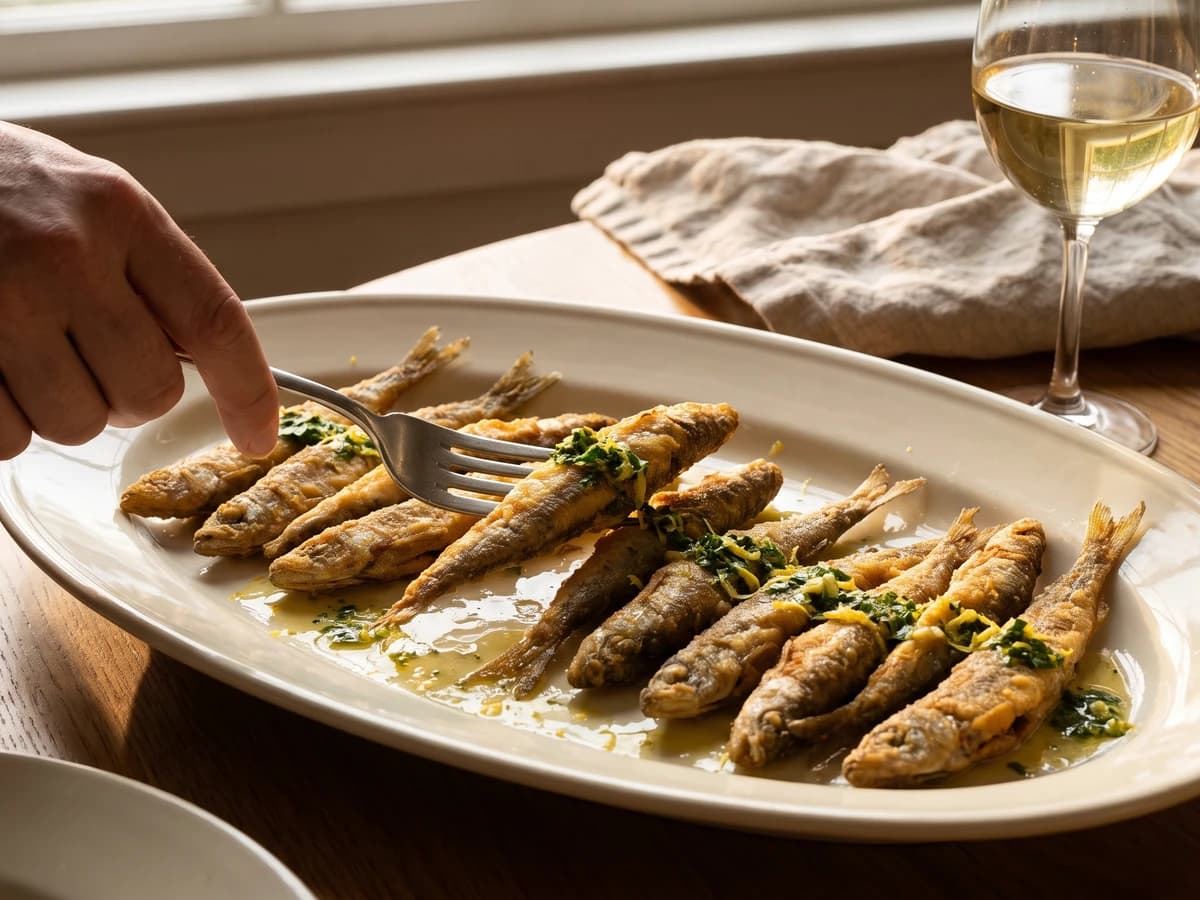
Éperlans à l’Anglaise turns small fish into a lesson in disciplined coating: boned smelts under a close, crisp crumb, pan-fried in clarified butter and finished with bright, half-melted maître d’hôtel butter.

Chef Juliette
Tiny smelts, shallot, mushrooms, white wine, gratin sauce, and fine bread raspings meet a fierce oven, where the fish must turn tender in the same breath the buttered crust bronzes.