Culinary Explorer
A cooking platform built around craft, culture, and the stories behind what we eat.
Blanchings
Created by Chef Juliette
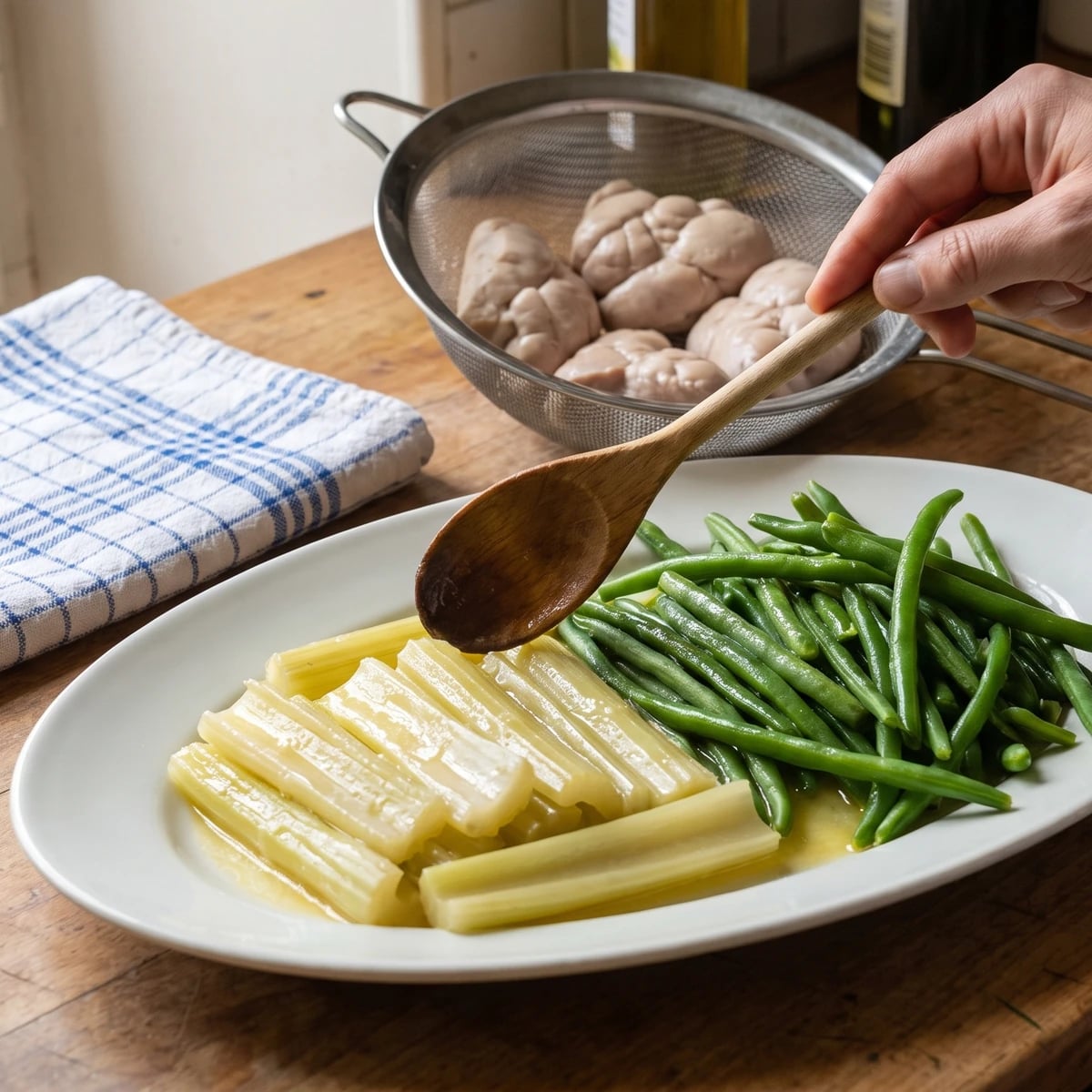
One awkward term, three distinct operations: firm sweetbreads gently, tame celery before its butter braise, and cook green beans fully à l’Anglaise. The timing, not the cold water, decides each result.
Blanchir (to blanch) is not one operation but three, and the one true thing to know before touching a pan is that each has a different stopping point. Sweetbreads are firmed for another cooking, celery is only partly cooked to soften its pungency, and green beans are cooked through in salted water. Confuse those endpoints and you get tough offal, watery celery, or beans still raw at the centre.
The original entry assumed a brigade prep bench, several pots moving at once, and cold running water used freely for soaking and cooling. This home version uses one broad pot in sequence, a refrigerated bowl of water changed twice, and one ice bath. The entry supplied no portions because a brigade repeated the work as service demanded; here the representative batch is scaled for four. The water use and pace have changed, not the intended degree of cooking. One cook, one stove, one evening.
Routine blanching is not a kindness to every pale meat. Fine veal or poultry destined for blanquette or fricassée should begin in cold water or stock and rise slowly while you skim; soaking and blanching only wash away savor. Sweetbreads are the exception demonstrated here. Watch the clock once each ingredient reaches its proper water, because timing is the step that decides all three.
Ingredients
veal sweetbreads
Quantity
1 pound (454 g)
celery heart
Quantity
1, about 12 ounces (340 g)
trimmed and cut into 4-inch (10 cm) lengths
haricots verts or slender green beans
Quantity
8 ounces (225 g)
trimmed
| Ingredient | Quantity |
|---|---|
| veal sweetbreads | 1 pound (454 g) |
| celery hearttrimmed and cut into 4-inch (10 cm) lengths | 1, about 12 ounces (340 g) |
| haricots verts or slender green beanstrimmed | 8 ounces (225 g) |
Where cooking meets culture.
Culinary guides, cultural storytelling, and the editorial depth that makes cooking meaningful.
Discover Culinary Explorer