
Chef Juliette
John Dory (St. Pierre)
John Dory has the delicacy of sole and the firmness of turbot. A light flouring, a quick butter sauté, and nut-brown beurre noisette show exactly why looks never mattered.
A cooking platform built around craft, culture, and the stories behind what we eat.
Created by Chef Juliette
Based on No. 2097, Sauerkraut (Choucroûte), from Le Guide Culinaire (1907) by Auguste Escoffier
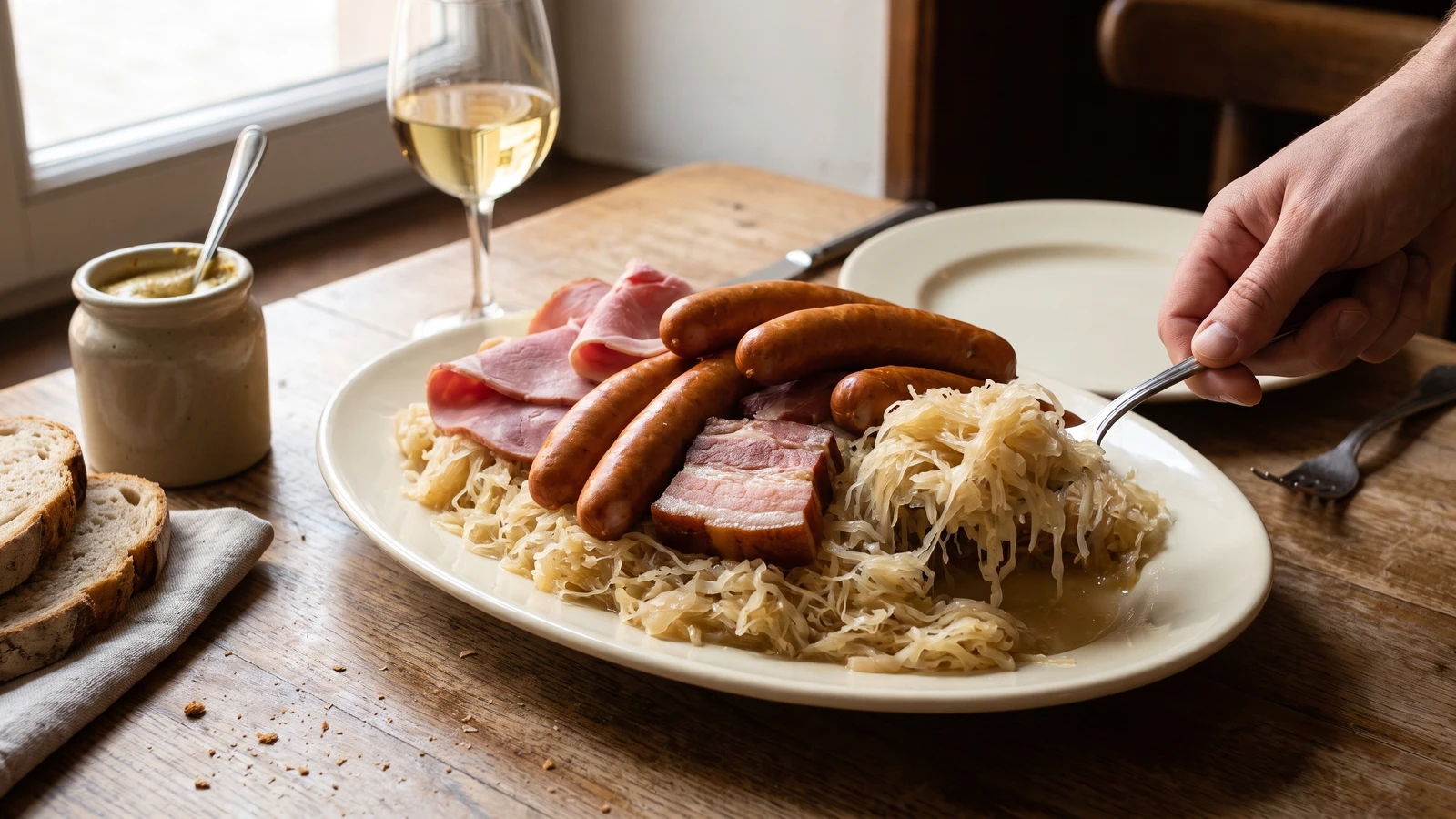
Choucroûte is Alsace in one pot: sauerkraut loosened, seasoned, and braised slowly over bacon and goose fat, then brought to the table with ham, tender pork belly, and Strasbourg sausages.
Choucroûte (Alsatian braised sauerkraut) teaches one true thing: fermented cabbage must be softened without washing away the character that made it worth preserving. Taste it before you rinse it. Fresh choucroûte needs only draining; an older, aggressively sour batch may need a cold soak, but a pleasant clean acidity belongs in the finished dish.
The original recipe assumed ten pounds of cabbage, a broad braising pan, a stockpot never off the fire, and spare hands to manage a canvas spice bag. I scale it to one quarter, two and a half pounds for four generous servings, and use a five-quart Dutch oven, prepared white consommé or clear chicken stock, and a little cheesecloth or tea infuser. One small carrot and onion replace awkward fractional vegetables while preserving their scaled weights. The canvas bag was brigade scaffolding and can change; the bacon lining, goose fat, restrained stock, and full five-hour braise are the dish and must stay.
The finished choucroûte should be supple and pale gold, each strand distinct but yielding, with juniper in its perfume and pork arranged generously around it. Before the cabbage touches the pot, press it thoroughly dry and pull every clump apart. That separation decides whether it braises evenly or reaches the table in heavy, sour knots.
Choucroûte belongs to Alsace, where cabbage preservation, pork curing, and the region's Germanic dialect met in one practical winter larder. The word choucroûte properly names the fermented cabbage itself; once sausages, ham, and bacon surround it, the complete platter is often called choucroûte garnie. What began as household preservation traveled through Alsatian winstubs and grand kitchens, gaining ceremonial abundance without losing its farmhouse method.
Quantity
8 cups (2½ lb / 1.13 kg)
tasted, soaked only if harsh, drained, pressed dry, and separated
Quantity
8 thick slices (8 oz / 225 g)
divided between lining and covering the pot
Quantity
1 small (about ¾ medium; 2 oz / 55 g)
quartered lengthwise
Quantity
1 small (about ¾ medium; 3 oz / 85 g)
peeled
Quantity
1
Quantity
1
2 parsley sprigs, 1 thyme sprig, and 1 bay leaf, tied
Quantity
3 tablespoons (45 ml / 21 g)
Quantity
1½ teaspoons (7.5 ml / 3.5 g)
Quantity
3 tablespoons (45 ml / 43 g)
Quantity
1 piece (4 oz / 115 g), prepared by Blanchings (No. 273)
Quantity
3 to 4 cups (720 to 960 ml / 720 to 960 g)
kept hot, as needed
Quantity
1 teaspoon (5 ml / 6 g)
divided and used as needed
Quantity
½ teaspoon (2.5 ml / 1 g)
Quantity
8 thin slices (8 oz / 225 g)
Quantity
4 (about 12 oz / 340 g)
| Ingredient | Quantity |
|---|---|
| fresh refrigerated sauerkrauttasted, soaked only if harsh, drained, pressed dry, and separated | 8 cups (2½ lb / 1.13 kg) |
| unsmoked streaky bacondivided between lining and covering the pot | 8 thick slices (8 oz / 225 g) |
| carrotquartered lengthwise | 1 small (about ¾ medium; 2 oz / 55 g) |
| onionpeeled | 1 small (about ¾ medium; 3 oz / 85 g) |
| whole clove | 1 |
| small bouquet garni2 parsley sprigs, 1 thyme sprig, and 1 bay leaf, tied | 1 |
| whole juniper berries | 3 tablespoons (45 ml / 21 g) |
| whole black peppercorns | 1½ teaspoons (7.5 ml / 3.5 g) |
| goose fat or lard | 3 tablespoons (45 ml / 43 g) |
| unsmoked breast of bacon | 1 piece (4 oz / 115 g), prepared by Blanchings (No. 273) |
| unsalted white chicken consommé or clear chicken stockkept hot, as needed | 3 to 4 cups (720 to 960 ml / 720 to 960 g) |
| fine saltdivided and used as needed | 1 teaspoon (5 ml / 6 g) |
| freshly ground black pepper | ½ teaspoon (2.5 ml / 1 g) |
| cooked ham | 8 thin slices (8 oz / 225 g) |
| fully cooked Frankfort or Strasbourg sausages | 4 (about 12 oz / 340 g) |
Taste a strand before doing anything to it. If the choucroûte is fresh, cleanly tart, and pleasant, drain it without rinsing. If it is old or sharply sour, soak it in cold water for 2 to 3 hours, changing the water once, then drain it. Press out as much water as you can and pull the leaves apart strand by strand so no dense masses remain. Wet clumps dilute the braise outside while staying harsh within.
Push the clove firmly into the onion. Tie the juniper berries and whole peppercorns in cheesecloth, or close them inside a reusable tea infuser. Keep this spice packet distinct from the bouquet garni so both can be removed cleanly. The juniper quantity is deliberate, but the berries must remain whole; crushing them would make their resinous flavor too forceful.
Heat the oven to 300°F (150°C). Line the bottom and lower sides of a 5-quart Dutch oven with half the streaky bacon. Season the separated choucroûte lightly with about half the salt and all the ground pepper, then pile it loosely over the bacon. Tuck in the carrot, clove-studded onion, bouquet garni, spice packet, goose fat, and the breast of bacon prepared by Blanchings (No. 273). Pour in enough hot white consommé or stock to barely cover the cabbage, then lay the remaining bacon slices across the surface as a fatty lid.
Cover the pot and bring the liquid just to a boil on the stove. Move it immediately to the oven and braise for 1 hour. The liquid should scarcely move beneath the bacon covering; a hard boil batters the cabbage and renders the pork greasy instead of tender.
After 1 hour, uncover the pot and remove the breast bacon. Let it cool, then cut it into neat rectangles for serving. Cover the choucroûte again and return it to the oven for 4 more hours. Check the liquid every hour without stirring the cabbage. If the upper strands begin drying or the pot smells as though it is catching, ça se rattrape: pour a little hot consommé down the side, cover tightly, and continue. The cabbage needs moisture beneath it, not enough liquid to float.
During the final 15 minutes, place the Frankfort or Strasbourg sausages in a saucepan of water held just below a simmer. Poach gently until heated through and taut, about 8 to 10 minutes. Never boil them, which splits the casings and sends their juices into the water. If a casing begins to swell alarmingly, lift that sausage out and let its own heat finish the center.
Remove the covering bacon, carrot, onion, bouquet garni, and spice packet. Drain the choucroûte thoroughly, then taste and add only as much of the remaining salt as it needs. Mound it in a warmed deep oval platter, the home equivalent of the original timbale. Arrange the thin ham slices, reserved bacon rectangles, and poached sausages around and over the cabbage; cover for 2 minutes so the ham and bacon warm against it. Bring the whole generous platter to the table. À table!
1 serving (about 560g)
Culinary guides, cultural storytelling, and the editorial depth that makes cooking meaningful.
Discover Culinary ExplorerChef Juliette
John Dory has the delicacy of sole and the firmness of turbot. A light flouring, a quick butter sauté, and nut-brown beurre noisette show exactly why looks never mattered.

Chef Juliette
Fresh haddock proves its delicacy in the meunière pan: a fine flour crust, moist pearly flakes, and beurre noisette sharpened with lemon and parsley, ready from one skillet in half an hour.
Chef Juliette
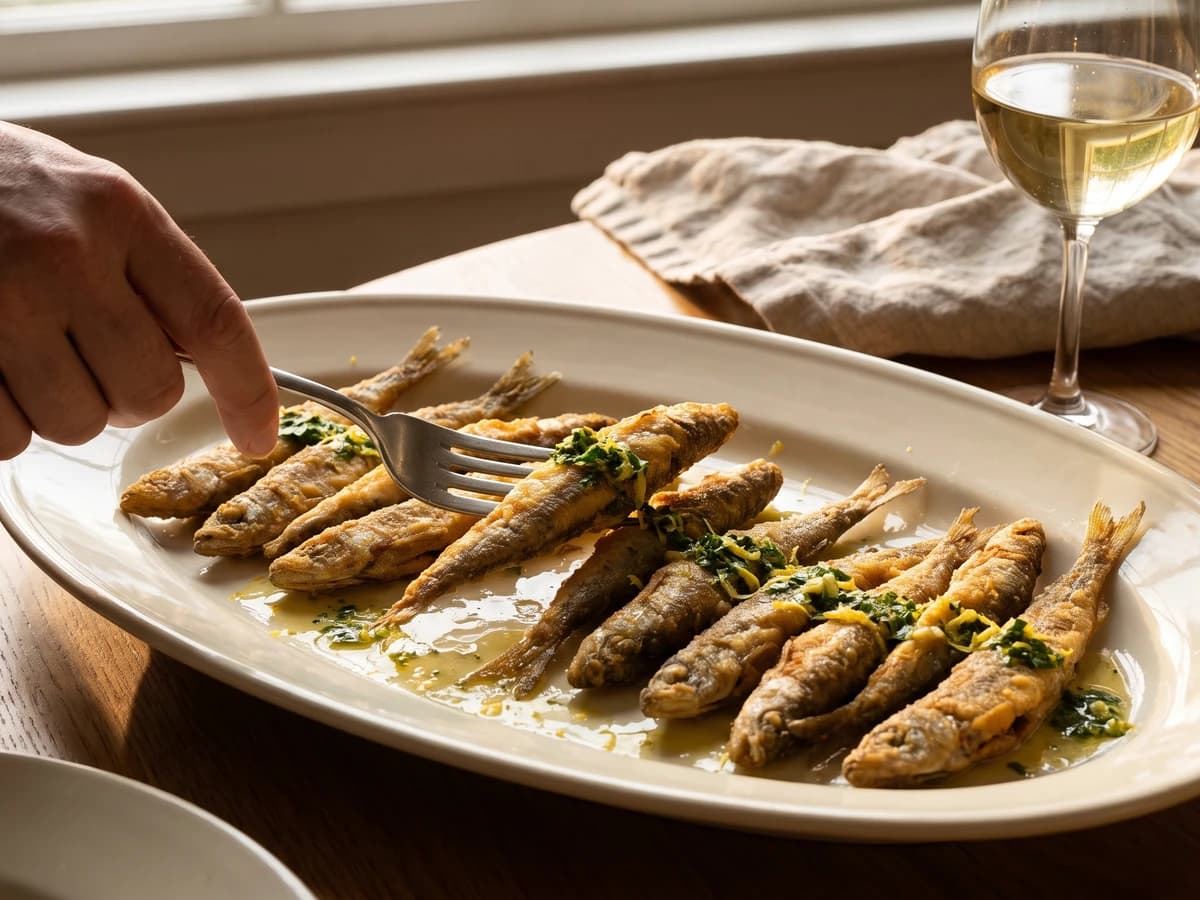
Éperlans à l’Anglaise turns small fish into a lesson in disciplined coating: boned smelts under a close, crisp crumb, pan-fried in clarified butter and finished with bright, half-melted maître d’hôtel butter.

Chef Juliette
Tiny smelts, shallot, mushrooms, white wine, gratin sauce, and fine bread raspings meet a fierce oven, where the fish must turn tender in the same breath the buttered crust bronzes.