
Chef Juliette
John Dory (St. Pierre)
John Dory has the delicacy of sole and the firmness of turbot. A light flouring, a quick butter sauté, and nut-brown beurre noisette show exactly why looks never mattered.
A cooking platform built around craft, culture, and the stories behind what we eat.
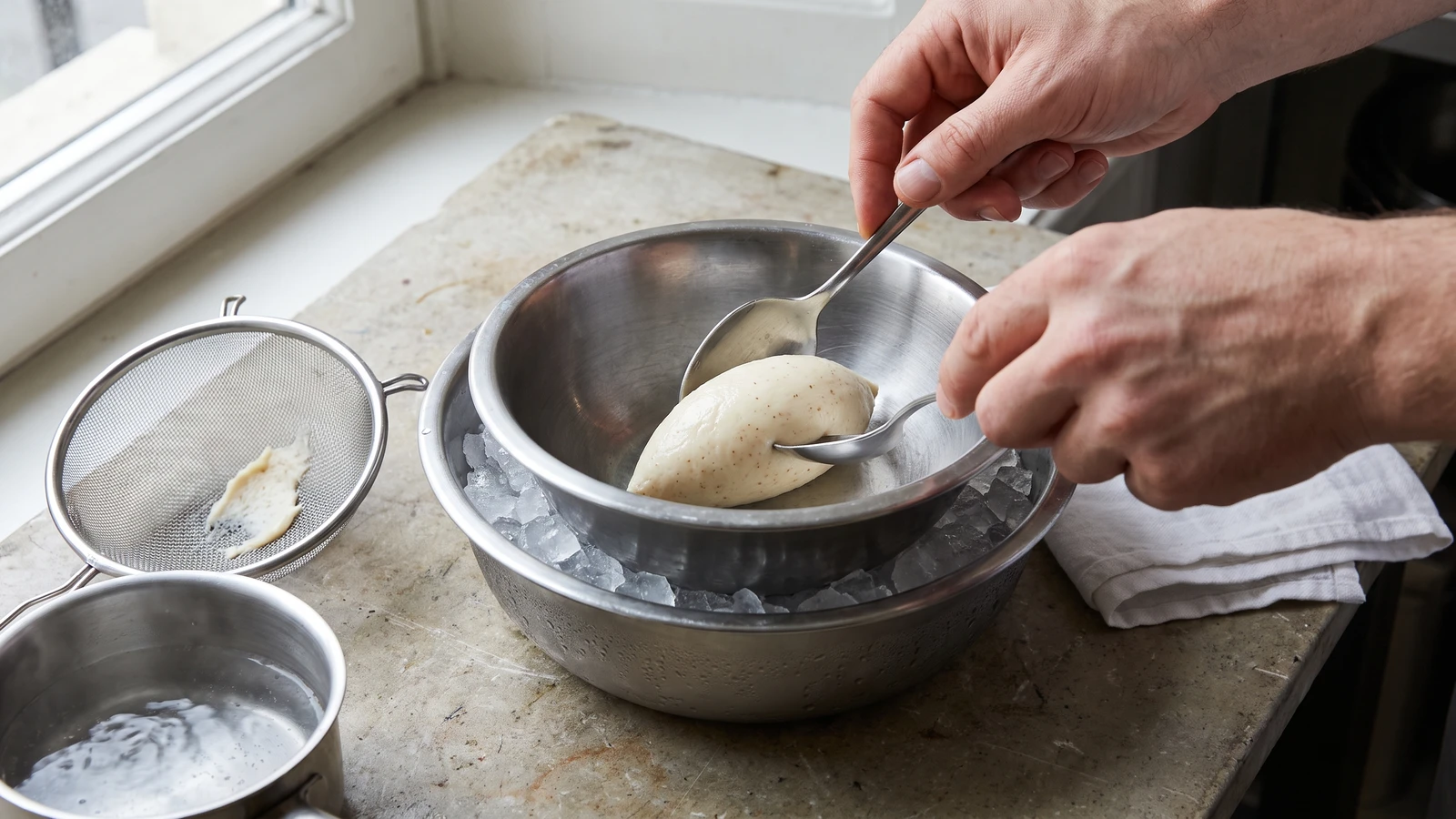
Created by Chef Juliette
Based on No. 203, Pike Forcemeat for Quenelles à la Lyonnaise, from Le Guide Culinaire (1907) by Auguste Escoffier
Cold is the structure in this Lyonnaise farce: pike, stiff frangipan panada, and beef fat worked to satin, passed fine, and test-poached before shaping into delicate quenelles.
Farce de Brochet pour Quenelles à la Lyonnaise teaches the cold emulsion. Temperature is not housekeeping here, it is structure. The pike must become tacky enough to hold its panada and fluid fat in one fine, coherent paste. Let the mixture warm and the fat slips out; keep it cold and the poached quenelle sets tenderly, without a greasy seam.
The original formula assumed a heavy mortar, a strong arm, a fine sieve, ice always ready, and enough forcemeat for a busy service. A chilled food processor now supplies the pounding, while a home tamis or sturdy fine-mesh sieve does the old sieve's essential work. The batch is reduced to 340 grams of pike for four portions, but the book's 2:1:1 ratio of pike, stiff frangipan panada, and fat remains exact. The hours at the mortar and the brigade quantity are scaffolding. The cold, the sieve, and the gradual incorporation of fat are the dish. One cook, one stove, one evening.
The moment that matters is the fat addition. Keep the paste cold while the fat is fluid but not hot, add it little by little, and stop at the first shine of loose oil. If it slips, don't throw it away; the method below gives you a cold seed from which to rebuild it. Ça se rattrape.
Quenelles de brochet belong to Lyon, where cooks turned the delicate but notoriously bony pike of the Rhône and Saône river country into a smooth, generous preparation by pounding and sieving its flesh. This Lyonnaise farce is distinguished from a cream-heavy mousseline by its stiff frangipan panada and beef fat, a substantial method from the city's working table that the grand kitchens refined and recorded. Across generations, the sieve served beauty and necessity together: it made the farce silken while catching the forked bones that make pike difficult to serve whole.
Quantity
1 1/2 cups (12 oz / 340 g)
cut into 1-inch pieces and checked carefully for bones
Quantity
2/3 cup (160 ml / 170 g)
completely cold
Quantity
3/4 cup (180 ml / 170 g) total
melted and cooled until just fluid
Quantity
1 1/2 teaspoons (7.5 ml / 9 g)
Quantity
1/8 teaspoon (0.6 ml / 0.25 g)
Quantity
4 1/4 cups (1 L / 1 kg)
for the test poach
Quantity
1 3/4 teaspoons (9 ml / 10 g)
for the test-poaching water
Quantity
1 formula Chicken Forcemeat with Panada and Butter (No. 193), reference alternative only
Quantity
1 formula Chicken Forcemeat with Panada and Cream (No. 194), reference alternative only
Quantity
1 formula Fine Chicken Forcemeat or “Mousseline” (No. 195), reference alternative only
| Ingredient | Quantity |
|---|---|
| boneless, skinless pike fleshcut into 1-inch pieces and checked carefully for bones | 1 1/2 cups (12 oz / 340 g) |
| prepared stiff frangipan panadacompletely cold | 2/3 cup (160 ml / 170 g) |
| clean rendered beef fat, or an equal-weight blend of beef fat and unsalted butter or cleaned beef marrowmelted and cooled until just fluid | 3/4 cup (180 ml / 170 g) total |
| fine sea salt | 1 1/2 teaspoons (7.5 ml / 9 g) |
| freshly grated nutmeg | 1/8 teaspoon (0.6 ml / 0.25 g) |
| waterfor the test poach | 4 1/4 cups (1 L / 1 kg) |
| fine sea saltfor the test-poaching water | 1 3/4 teaspoons (9 ml / 10 g) |
| Chicken Forcemeat with Panada and Butter (optional) | 1 formula Chicken Forcemeat with Panada and Butter (No. 193), reference alternative only |
| Chicken Forcemeat with Panada and Cream (optional) | 1 formula Chicken Forcemeat with Panada and Cream (No. 194), reference alternative only |
| Fine Chicken Forcemeat or “Mousseline” (optional) | 1 formula Fine Chicken Forcemeat or “Mousseline” (No. 195), reference alternative only |
Chill the food processor bowl and blade, a stainless-steel mixing bowl, the sieve, and the scraper for 20 minutes. Prepare a larger bowl of ice for holding the work cold. Melt the beef fat gently, then take it off the heat and let it cool to 95 to 100°F (35 to 38°C), fluid enough to pour but never hot. The source also names Chicken Forcemeat with Panada and Butter (No. 193), Chicken Forcemeat with Panada and Cream (No. 194), and Fine Chicken Forcemeat or “Mousseline” (No. 195) as complete alternative systems. They are choices instead of this Lyonnaise formula, never additions to it.
Put the cold pike in the chilled processor and pulse until it becomes a fine, sticky paste that clings to the blade. Add the stiff frangipan panada in small pieces, followed by the salt and nutmeg. Process in short bursts, scraping the bowl often, until the two masses become completely uniform. If the paste softens, looks wet, or begins smearing loosely around the bowl, stop and nest the processor bowl in ice for 10 minutes before continuing.
Press the pike mixture through a fine-mesh tamis or sturdy sieve in small portions, using a flexible scraper. Discard the sinew and any bone fragments left behind, then scrape every bit of smooth paste from the underside. This step stays. Pike carries troublesome forked bones, and the sieve both protects the cook and gives the quenelle its delicate, even crumb. Chill the sieved paste for 10 minutes if the bowl no longer feels distinctly cold.
Reserve 2 tablespoons (30 ml / about 30 g) of the cold, fat-free paste in a small bowl over ice. Return the rest to the chilled processor and work it vigorously for 20 seconds so it regains its tack. Add the fluid beef fat in a thread, using five-second bursts and scraping between additions. After each quarter of the fat, stop and set the processor bowl over ice for two minutes. Keep the paste below 54°F (12°C); when finished, it should be elastic and satiny, never oily. If beads of fat appear or the paste stops clinging together, stop immediately. Beat the reserved paste in a clean cold bowl until tacky, then work the broken mixture into it one spoonful at a time over ice. Ça se rattrape. If the emulsion remains sound, pulse the reserved paste back in at the end.
Bring the water and its salt to a bare tremble, about 180°F (82°C), with no hard bubbling. Shape a heaped teaspoon of farce between two wet spoons and lower it into the water. Poach gently for 3 to 4 minutes, until set through, then cut and taste it. Correct the salt or nutmeg in the raw farce if needed. If the test spreads or feels greasy, the farce is too warm or insufficiently worked; chill it over ice for 15 minutes, process it again in very short bursts, and test once more. A hard boil can tear even a sound quenelle, so judge the farce in quiet water.
Scrape the finished farce into the chilled stainless-steel bowl, smooth the surface, and cover it directly so no skin forms. Set the bowl over fresh ice and refrigerate for at least 30 minutes, until the farce is firm enough to hold the sweep of a spoon. Keep it cold until the quenelles are shaped and poached according to their final preparation. The mortar work and brigade quantity were scaffolding; the exact 2:1:1 weight ratio, fine sieve, gradual fat, and unbroken cold chain are the dish.
1 serving (about 170g)
Culinary guides, cultural storytelling, and the editorial depth that makes cooking meaningful.
Discover Culinary ExplorerChef Juliette
John Dory has the delicacy of sole and the firmness of turbot. A light flouring, a quick butter sauté, and nut-brown beurre noisette show exactly why looks never mattered.

Chef Juliette
Fresh haddock proves its delicacy in the meunière pan: a fine flour crust, moist pearly flakes, and beurre noisette sharpened with lemon and parsley, ready from one skillet in half an hour.
Chef Juliette
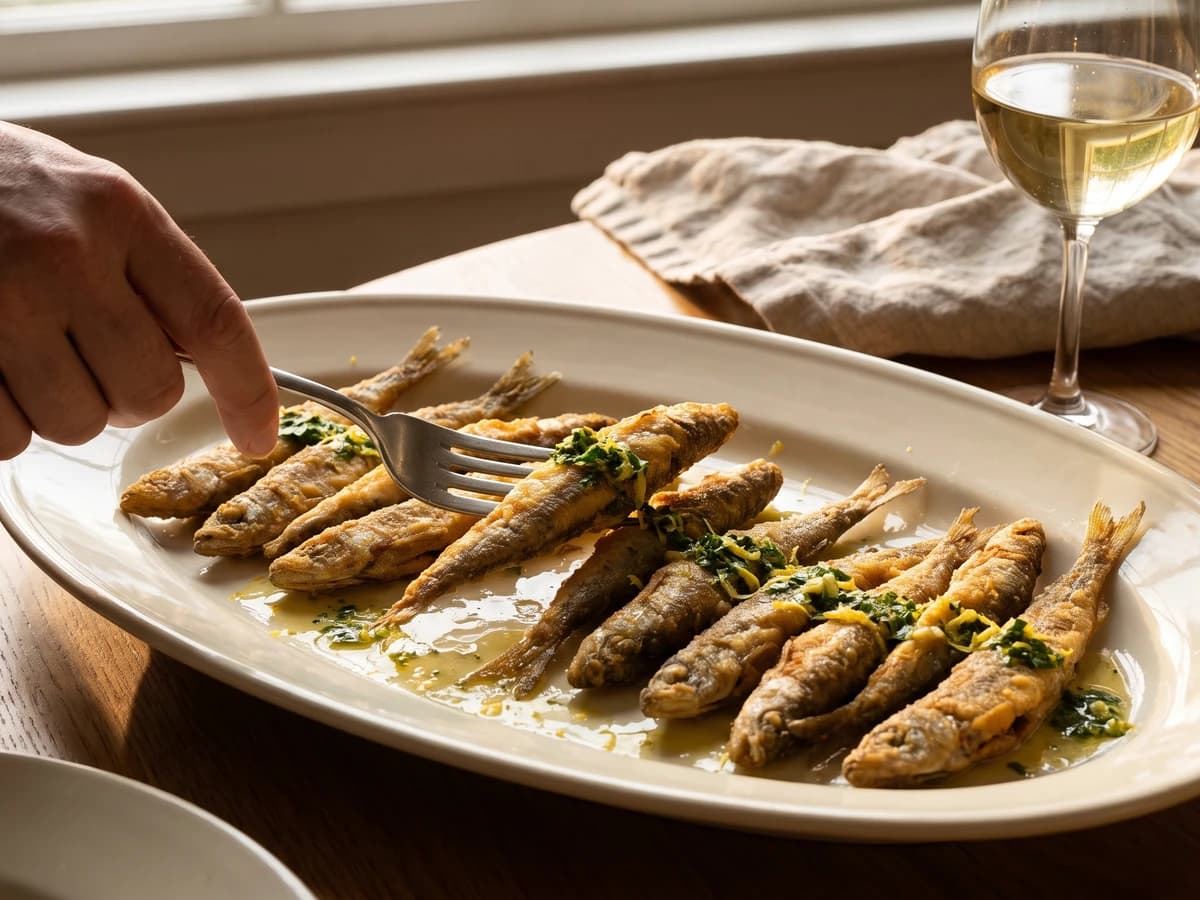
Éperlans à l’Anglaise turns small fish into a lesson in disciplined coating: boned smelts under a close, crisp crumb, pan-fried in clarified butter and finished with bright, half-melted maître d’hôtel butter.

Chef Juliette
Tiny smelts, shallot, mushrooms, white wine, gratin sauce, and fine bread raspings meet a fierce oven, where the fish must turn tender in the same breath the buttered crust bronzes.