
Chef Juliette
John Dory (St. Pierre)
John Dory has the delicacy of sole and the firmness of turbot. A light flouring, a quick butter sauté, and nut-brown beurre noisette show exactly why looks never mattered.
A cooking platform built around craft, culture, and the stories behind what we eat.
Created by Chef Juliette
Based on No. 1631, Poulet de Grains à la Bergère, from Le Guide Culinaire (1907) by Auguste Escoffier
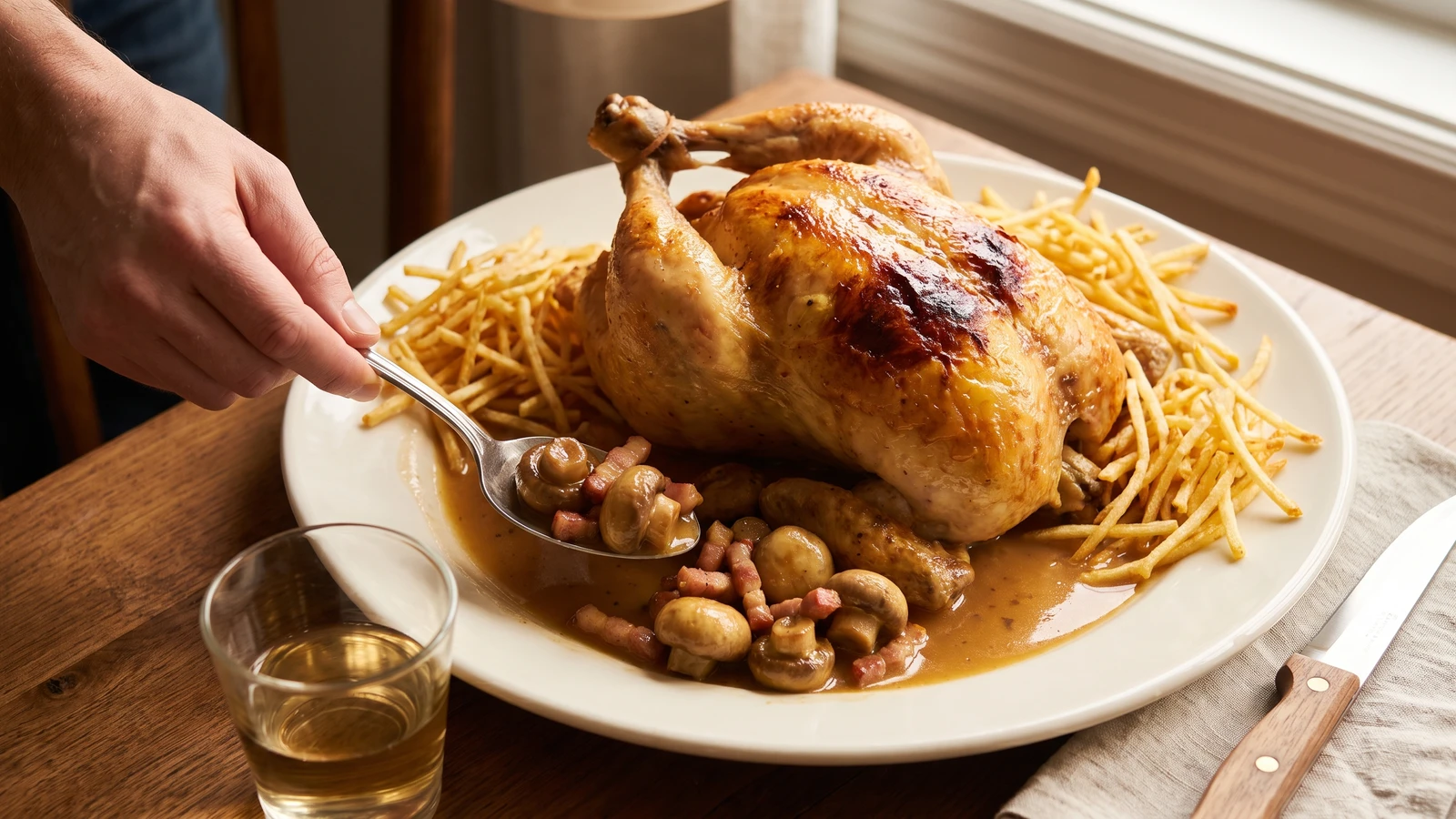
A gilded whole chicken with lardons, mushrooms, and concentrated white-wine gravy, ringed by crisp pommes paille: a generous lesson in reduction, fond, and the quiet power of beurre manié.
Poulet de grains à la bergère (grain-fed chicken in the shepherdess style) teaches the discipline of reduction. The wine must lose two-thirds of its volume before the veal gravy goes in; otherwise its raw acidity survives, and no amount of beurre manié (butter kneaded with flour) can turn it into a finished sauce. That is the one true thing to know before you touch the pan.
The original recipe assumed a saucier on staff, veal gravy from a stockpot never off the fire, and a separate fry station waiting for the potatoes. Its salamander has no work here because nothing is gratinéed. Your honest equivalents are an ovenproof braiser, a small saucepan, concentrated veal stock, and one pot of frying oil used while the chicken rests. The book's one-bird ratio already feeds four, so I have kept its garnish and proportions intact. Separate stations are brigade scaffolding and can go; gilding the bird, reducing the wine fully, and refusing to boil the sauce after its final liaison are the dish and must stay. One cook, one stove, one evening.
The result is generous and unmistakable: butter-gold chicken, bronzed lardons, whole mushrooms shining with the cooking liquor, and crisp potatoes built into a proper border. Before you begin, measure the wine and remember its target, 95 millilitres must become about 30. That reduction decides the dish.
Poulet de grains à la bergère belongs to the Parisian classical table, where à la bergère is a repertoire name for a pastoral garnish, not a claim to one shepherding province. Its pork, mushrooms, and potatoes carry the farm larder into formal service, while poulet de grains identifies the young grain-fed bird prized at French markets for tender flesh and skin that gilds readily. The dish moved easily to the bourgeois home table because its grandeur is organizational rather than ornamental: one bird, one pan, and a garnish made generous.
Quantity
1 chicken, 3½ to 4 lb (1.6 to 1.8 kg)
giblets removed
Quantity
2 teaspoons (10 ml / 12 g), divided
Quantity
½ teaspoon (2.5 ml / 1 g)
Quantity
½ onion (¼ cup / 60 ml / 40 g)
finely chopped
Quantity
1 cup (240 ml / 3 oz / 85 g)
finely chopped
Quantity
6 tablespoons (⅜ cup / 90 ml / 3 oz / 85 g)
softened
Quantity
1 teaspoon (5 ml / 2 g)
finely chopped
Quantity
4 tablespoons (¼ cup / 60 ml / 2 oz / 56 g), divided
Quantity
½ cup (120 ml / 4 oz / 113 g), prepared according to Blanchings (No. 273)
cut into ½-inch dice
Quantity
3 cups (710 ml / 8 oz / 227 g)
wiped clean and left whole
Quantity
⅓ cup plus 1 tablespoon (95 ml / 95 g)
Quantity
¼ cup (60 ml / about 60 g)
Quantity
2 teaspoons (10 ml / 10 g) Manied Butter (No. 151), added only as needed
made immediately before use
Quantity
4 medium potatoes (about 1¼ lb / 570 g)
peeled
Quantity
4 cups (950 ml / about 875 g)
| Ingredient | Quantity |
|---|---|
| grain-fed or air-chilled whole chickengiblets removed | 1 chicken, 3½ to 4 lb (1.6 to 1.8 kg) |
| fine sea salt | 2 teaspoons (10 ml / 12 g), divided |
| freshly ground black pepper | ½ teaspoon (2.5 ml / 1 g) |
| small yellow onionfinely chopped | ½ onion (¼ cup / 60 ml / 40 g) |
| button mushrooms for the stuffingfinely chopped | 1 cup (240 ml / 3 oz / 85 g) |
| unsalted butter for the stuffingsoftened | 6 tablespoons (⅜ cup / 90 ml / 3 oz / 85 g) |
| flat-leaf parsleyfinely chopped | 1 teaspoon (5 ml / 2 g) |
| unsalted butter for cooking | 4 tablespoons (¼ cup / 60 ml / 2 oz / 56 g), divided |
| salt pork bellycut into ½-inch dice | ½ cup (120 ml / 4 oz / 113 g), prepared according to Blanchings (No. 273) |
| small button mushroomswiped clean and left whole | 3 cups (710 ml / 8 oz / 227 g) |
| dry white wine | ⅓ cup plus 1 tablespoon (95 ml / 95 g) |
| prepared veal gravy or concentrated veal jus | ¼ cup (60 ml / about 60 g) |
| Manied Buttermade immediately before use | 2 teaspoons (10 ml / 10 g) Manied Butter (No. 151), added only as needed |
| floury potatoespeeled | 4 medium potatoes (about 1¼ lb / 570 g) |
| neutral frying oil | 4 cups (950 ml / about 875 g) |
Heat the oven to 350°F (180°C) with a rack in the centre. Melt 1 tablespoon of the cooking butter in the braiser over medium heat, then cook the chopped onion and chopped mushrooms for 6 to 8 minutes, stirring often, until their moisture has evaporated and the mixture begins to gild. Cool for 5 minutes, then mix with the softened butter and parsley. Season the chicken inside and out with 1½ teaspoons of the salt and the pepper, spoon the mushroom butter loosely into the cavity, and truss the legs. Don't pack the filling tightly; it needs room to warm evenly.
Melt 2 tablespoons of the cooking butter in the same braiser over medium heat. Add the salt pork belly prepared according to Blanchings (No. 273) and fry until its fat renders and the edges turn pale gold, about 4 minutes. Add the whole mushrooms and cook for another 6 to 8 minutes, turning them until glossy and lightly browned. Lift the pork and mushrooms out with a slotted spoon and leave the butter and rendered fat in the pan.
Add the remaining tablespoon of cooking butter and raise the heat to medium-high. Set the chicken breast-side down and brown it carefully on every accessible surface, turning with tongs and a wooden spoon, for 10 to 14 minutes. To gild here means giving the skin a deep golden sheen through heat; the fond beneath should be bronze, never black. If the butter begins to scorch before the skin colours, lift out the bird, wipe away only the black flecks, lower the heat, and continue with a little fresh butter.
Return the pork and whole mushrooms to the braiser, arranging them around the chicken. Pour the white wine around the bird, not over its gilded skin, and scrape the fond from the pan floor. Boil steadily until the wine has reduced by two-thirds, from 95 ml to about 30 ml, roughly 2 tablespoons. Tilt the pan to pool the liquid when you judge it. Don't stop at halfway: unreduced wine leaves the finished sauce thin and sharp, and flour cannot repair missing reduction. If the pan dries before the fond dissolves, add 1 tablespoon of water and keep scraping, never another pour of raw wine.
Pour in the veal gravy and transfer the uncovered braiser to the oven. Roast for 55 to 70 minutes, spooning a little cooking liquor around the chicken twice, until the stuffing and the thickest part of the thigh reach at least 165°F (74°C). If the breast becomes dark enough before the legs are ready, shield it loosely with foil. If the pan threatens to dry, add 1 or 2 tablespoons of hot water or veal stock; the sauce needs moisture, not more acidity. Transfer the chicken to a warm round platter and rest it for 15 minutes.
While the chicken roasts, cut the potatoes into pommes paille (straw potatoes), matchsticks about ⅛ inch (3 mm) thick. Rinse them in cold water until the water runs clear, then dry them with almost comic seriousness; wet potatoes spit and soften in the oil. Heat the oil to 350°F (175°C) in a deep saucepan filled no more than halfway. Once the chicken begins resting, fry the potatoes in small batches for 2 to 3 minutes, until crisp and golden. Drain on a rack or paper, season with the remaining salt, and keep them uncovered. If a batch softens, raise the oil to 365°F (185°C) and return it for 20 to 30 seconds.
Lift the pork and mushrooms from the braiser and keep them warm. Skim away only the excess chicken fat, leaving the cooking liquor's butter sheen, then pour the liquor into a small saucepan and bring it just below a simmer. Remove it from the heat and whisk in the Manied Butter (No. 151), a small pinch at a time, using only enough for the sauce to lightly coat the back of a spoon. Hold it over the lowest heat for a minute, but do not let it boil after the Manied Butter goes in. If it becomes too thick or grainy, pull it from the heat and whisk in a spoonful of hot veal gravy or water. If it stays thin, add another small pinch of Manied Butter. Ça se rattrape.
Arrange the lardons and whole mushrooms around the rested chicken, then spoon the glossy sauce around the garnish without drowning the gilded breast. Build a border of pommes paille around the edge at the last moment, keeping the sauce away from them so they remain crisp. Bring the chicken whole to the table and carve it there. À table!
1 serving (about 430g)
Culinary guides, cultural storytelling, and the editorial depth that makes cooking meaningful.
Discover Culinary ExplorerChef Juliette
John Dory has the delicacy of sole and the firmness of turbot. A light flouring, a quick butter sauté, and nut-brown beurre noisette show exactly why looks never mattered.

Chef Juliette
Fresh haddock proves its delicacy in the meunière pan: a fine flour crust, moist pearly flakes, and beurre noisette sharpened with lemon and parsley, ready from one skillet in half an hour.
Chef Juliette
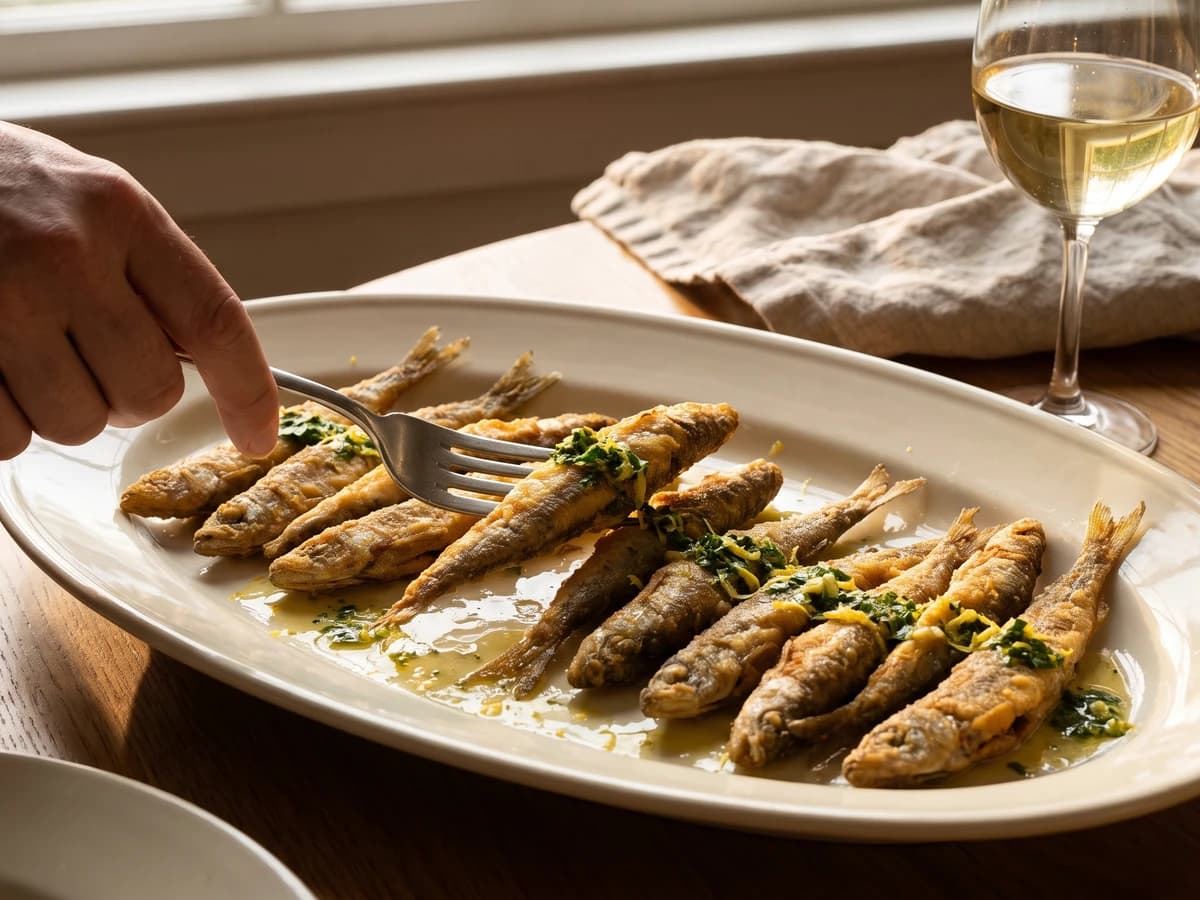
Éperlans à l’Anglaise turns small fish into a lesson in disciplined coating: boned smelts under a close, crisp crumb, pan-fried in clarified butter and finished with bright, half-melted maître d’hôtel butter.

Chef Juliette
Tiny smelts, shallot, mushrooms, white wine, gratin sauce, and fine bread raspings meet a fierce oven, where the fish must turn tender in the same breath the buttered crust bronzes.