
Chef Juliette
John Dory (St. Pierre)
John Dory has the delicacy of sole and the firmness of turbot. A light flouring, a quick butter sauté, and nut-brown beurre noisette show exactly why looks never mattered.
A cooking platform built around craft, culture, and the stories behind what we eat.
Created by Chef Juliette
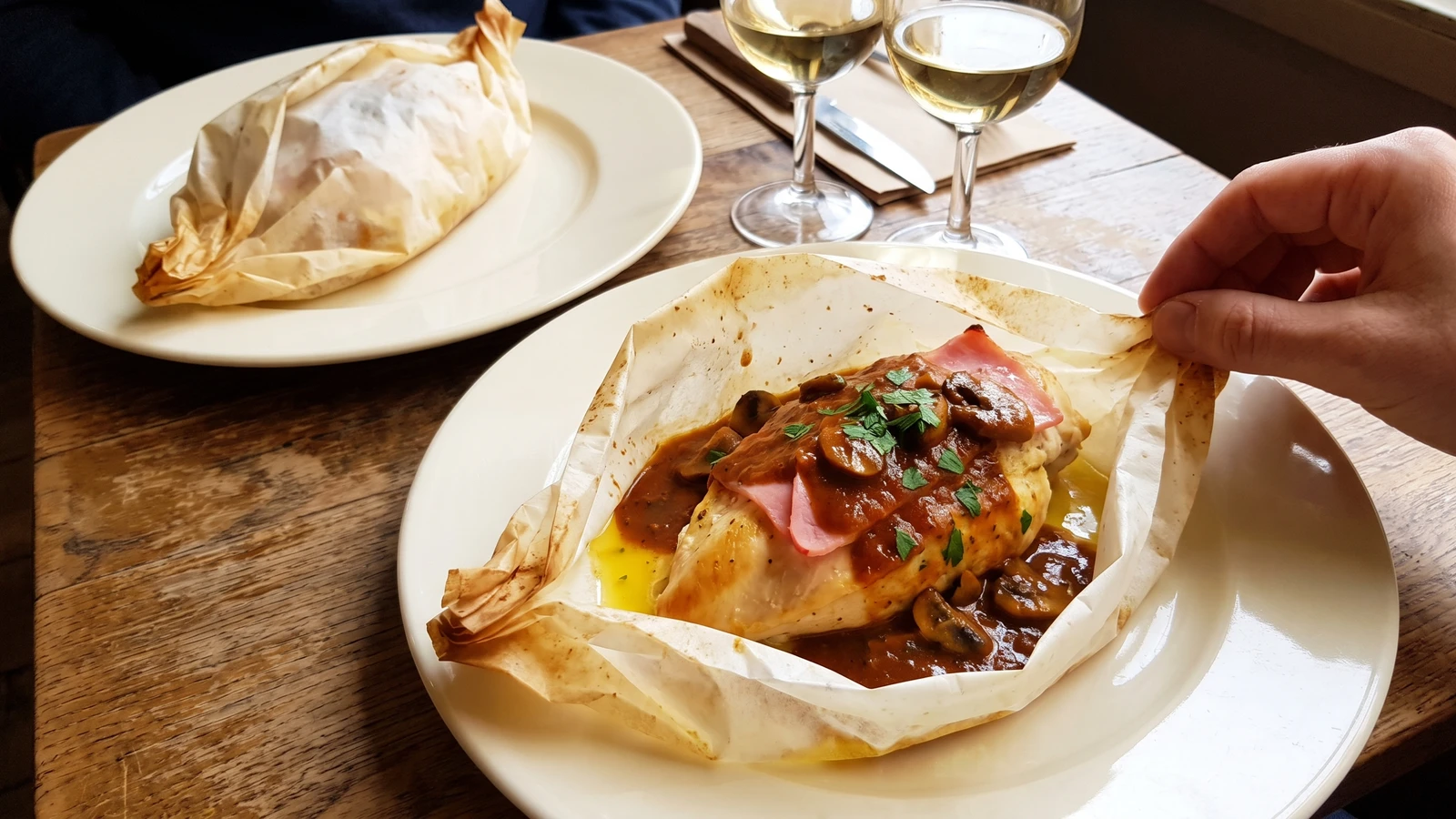
Based on No. 1611, Suprêmes de Volaille en Papillote, from Le Guide Culinaire (1907) by Auguste Escoffier
A chicken suprême, ham, and concentrated Sauce Italienne sealed inside a buttered paper heart, then baked until the parcel swells tight and the breast finishes tender in its own fragrant chamber.
Suprêmes de Volaille en Papillote (chicken breast fillets in parchment) teaches one clean principle: the paper is not wrapping, it is the cooking vessel. Seal it completely and the trapped juices swell the heart, finish the suprême gently, and carry its aroma to the table. Leave a weak pleat and the whole effect escapes before the chicken is cooked.
The original entry assumed a saucier with reduced Sauce Italienne ready, a stockpot never off the fire, and enough hands to fold a full service of paper hearts. At home, one small saucepan builds four portions from mushroom and ham fond, a light roux, white-wine reduction, concentrated tomato, and strong chicken stock. Modern parchment replaces buttered kitchen paper, while a rimmed sheet pan replaces the service tray. No salamander belongs here; a thoroughly preheated home oven provides the fierce, even heat the dish actually requires. Making gallons of sauce is brigade scaffolding and can go. The reduced Italienne, the raidir (quick stiffening in butter without browning), the ham above and below, and the tight papillote are the dish and must stay. One cook, one stove, one evening.
The sauce must be thick enough to hold the trail of a spoon before it touches the paper. A loose sauce floods the seam and a weak reduction tastes unfinished; if yours goes too far, loosen it a teaspoon at a time. Ça se rattrape. Then give the final pleats your full attention, because the seal is the one step that decides whether the paper heart rises tight around a tender breast.
Suprêmes de volaille en papillote belong to Parisian classical service, where the finest fillet of the bird was paired with a reduced sauce and enclosed so its aroma reached the diner only when the paper was opened. The method traveled freely among poultry, veal, and fish; the book points to Côte de Veau Papillote (No. 1259) as the folding model for this chicken preparation. The inflated heart was never mere decoration: it proved that the pleated paper had held a sealed, gentle cooking chamber.
Quantity
4 (5 to 6 oz / 140 to 170 g each)
Quantity
4 tablespoons (60 ml / 56 g)
divided
Quantity
8 thin slices (about 4 oz / 115 g)
cut into broad triangles
Quantity
1/4 cup (60 ml / 40 g)
finely diced
Quantity
1 cup (240 ml / 115 g)
finely chopped
Quantity
1 (about 1 1/2 oz / 40 g)
finely minced
Quantity
1 tablespoon (15 ml / 16 g)
Quantity
2 teaspoons (10 ml / 6 g)
Quantity
1/3 cup (80 ml / 80 g)
Quantity
1 cup (240 ml / 240 g)
Quantity
1 teaspoon (5 ml / 3 g)
Quantity
1 small sprig
Quantity
1 small leaf
Quantity
1 tablespoon (15 ml / 4 g)
finely chopped
Quantity
1 teaspoon (5 ml / 6 g)
divided
Quantity
1/2 teaspoon (2.5 ml / 1 g)
divided
| Ingredient | Quantity |
|---|---|
| boneless, skinless chicken breast fillets | 4 (5 to 6 oz / 140 to 170 g each) |
| unsalted butterdivided | 4 tablespoons (60 ml / 56 g) |
| jambon de Paris or another unsmoked cooked hamcut into broad triangles | 8 thin slices (about 4 oz / 115 g) |
| jambon de Paris or another unsmoked cooked hamfinely diced | 1/4 cup (60 ml / 40 g) |
| cremini mushroomsfinely chopped | 1 cup (240 ml / 115 g) |
| large shallotfinely minced | 1 (about 1 1/2 oz / 40 g) |
| tomato paste | 1 tablespoon (15 ml / 16 g) |
| all-purpose flour | 2 teaspoons (10 ml / 6 g) |
| dry white wine | 1/3 cup (80 ml / 80 g) |
| strong unsalted brown chicken stock | 1 cup (240 ml / 240 g) |
| unflavored powdered gelatin (optional) | 1 teaspoon (5 ml / 3 g) |
| fresh thyme | 1 small sprig |
| bay leaf | 1 small leaf |
| flat-leaf parsleyfinely chopped | 1 tablespoon (15 ml / 4 g) |
| fine sea saltdivided | 1 teaspoon (5 ml / 6 g) |
| freshly ground white pepperdivided | 1/2 teaspoon (2.5 ml / 1 g) |
Heat the oven to 425°F (220°C), or 400°F (200°C) with convection, and set a rack in the middle. Fold four sheets of parchment measuring about 15 by 18 inches (38 by 46 cm) in half, then cut each into a large half-heart so it opens into a symmetrical heart. Make one spare for repairs. Melt 1 tablespoon of the butter and brush the inner faces lightly, leaving a dry 1-inch (2.5 cm) border so the pleats won't slip.
If the stock does not set when cold, sprinkle the gelatin over it and leave it for 5 minutes. Melt 1 tablespoon of butter in a small heavy saucepan over medium-high heat. Add the diced ham and mushrooms, then cook until the mushrooms release their water, the pan dries, and a brown fond begins to form, 6 to 8 minutes. Add the shallot and cook for 2 minutes without scorching it. Stir in the tomato paste, then the flour, and cook for another minute; this light roux gives a home quantity of stock the body that a grand kitchen drew from its standing demi-glace.
Pour in the white wine and scrape every browned bit from the saucepan. Reduce until the wine is nearly dry, then add the stock, thyme, and bay leaf. Simmer briskly until the Sauce Italienne measures about 1/2 cup (120 ml) and is nappant, coating the back of a spoon while the mushroom and ham remain distinct. Remove the herbs, stir in the parsley, and season cautiously with salt and white pepper. If the sauce runs like broth, keep reducing before it approaches the paper. If it becomes pasty or drops below the required volume, add stock or water 1 teaspoon at a time until it regains a heavy gloss. Ça se rattrape.
Pat the chicken dry. If one end is much thicker than 3/4 inch (2 cm), cover it with parchment and tap it gently to an even thickness. Season both sides with the remaining salt and white pepper. Melt the remaining 2 tablespoons butter in a wide skillet over medium-high heat. When it foams, add the suprêmes without crowding and raidir them for 45 to 60 seconds per side, just until the surfaces turn opaque and firm without forming a crust. A little gold does no harm, but lower the heat if the butter darkens quickly. The centres must remain uncooked.
Open the buttered hearts and work on one half of each, keeping the border clean. Set down one ham triangle, spoon 1 tablespoon (15 ml) of Sauce Italienne over it, and place a suprême on top. Cover the chicken with another 1 tablespoon (15 ml) of Sauce Italienne and finish with a second ham triangle. Repeat with the remaining hearts. The sauce belongs beneath and above the meat in equal measure; don't pour extra around it, because free liquid seeks out the seam.
Fold the empty half of each heart over the filling. Starting at the rounded top, make small overlapping pleats through both layers, pressing each fold firmly before making the next and continuing around to the point. Twist the final point and fold it underneath to lock the seam. This follows the paper-heart model preserved in Côte de Veau Papillote (No. 1259). If a sheet tears or a seam becomes greasy and refuses to hold, set the entire parcel inside the spare buttered heart and pleat again. Place the sealed papillotes on a rimmed baking sheet with space between them.
Bake for 12 to 15 minutes. The papillotes should swell taut and take a few pale amber marks while the butter leaves a sheen around the folds. At 12 minutes, test the largest suprême by slipping an instant-read thermometer through the seam into its thickest part; it should register 160 to 162°F (71 to 72°C), then reach 165°F (74°C) during a 2-minute rest inside the parcel. If it is cooler, pinch the seam closed as well as you can and return it to the oven for 2 to 3 minutes. It may not rise as proudly a second time, but the chicken will be sound.
Transfer each closed papillote to a warm plate and serve immediately, before the inflated paper begins to settle. Let each diner slit the top carefully and fold it back, keeping hands and faces clear of the first concentrated rush from inside. The suprême should be tender, the ham glossy, and the Sauce Italienne thick enough to cling rather than flood the paper. À table!
1 serving (about 245g)
Culinary guides, cultural storytelling, and the editorial depth that makes cooking meaningful.
Discover Culinary ExplorerChef Juliette
John Dory has the delicacy of sole and the firmness of turbot. A light flouring, a quick butter sauté, and nut-brown beurre noisette show exactly why looks never mattered.

Chef Juliette
Fresh haddock proves its delicacy in the meunière pan: a fine flour crust, moist pearly flakes, and beurre noisette sharpened with lemon and parsley, ready from one skillet in half an hour.
Chef Juliette
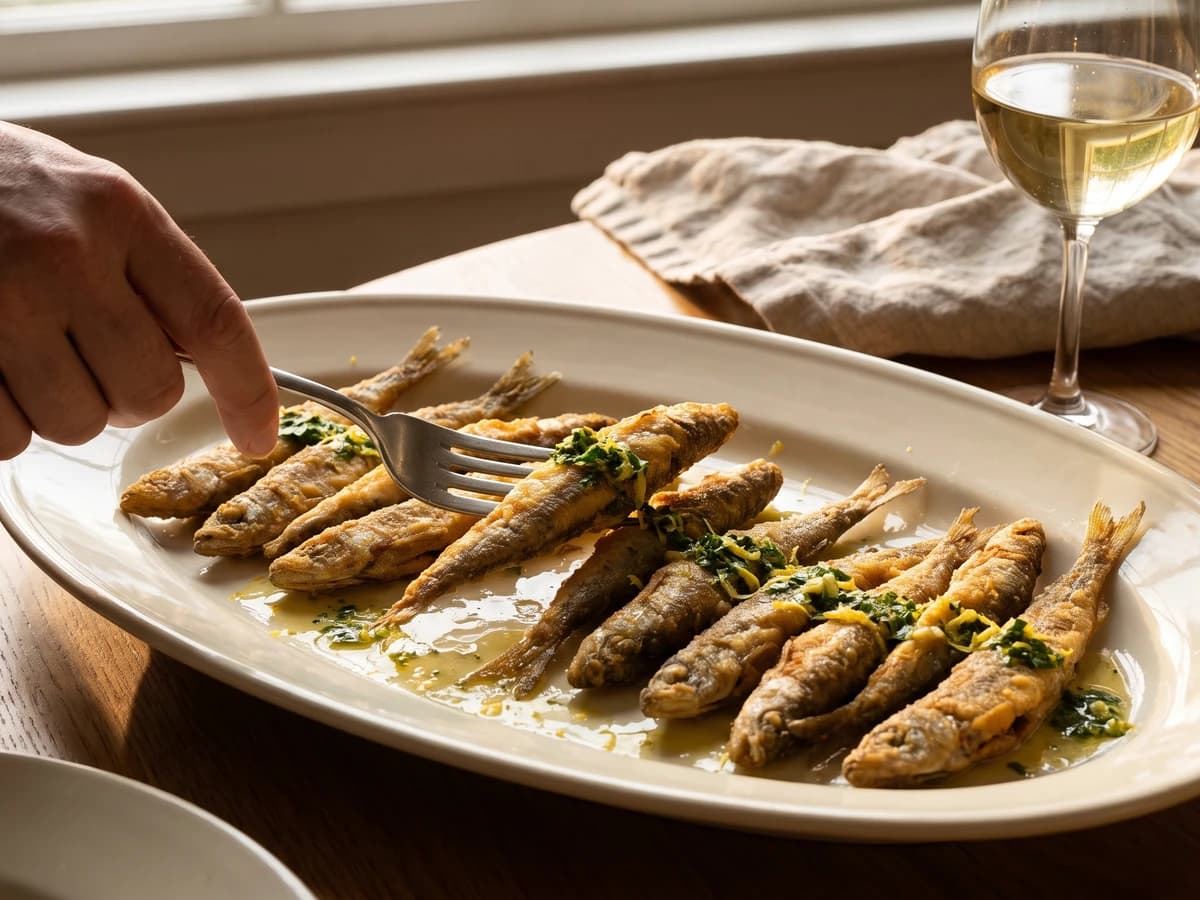
Éperlans à l’Anglaise turns small fish into a lesson in disciplined coating: boned smelts under a close, crisp crumb, pan-fried in clarified butter and finished with bright, half-melted maître d’hôtel butter.

Chef Juliette
Tiny smelts, shallot, mushrooms, white wine, gratin sauce, and fine bread raspings meet a fierce oven, where the fish must turn tender in the same breath the buttered crust bronzes.