
Chef Juliette
John Dory (St. Pierre)
John Dory has the delicacy of sole and the firmness of turbot. A light flouring, a quick butter sauté, and nut-brown beurre noisette show exactly why looks never mattered.
A cooking platform built around craft, culture, and the stories behind what we eat.

Created by Chef Juliette
Based on No. 1473, Poularde à la Fermière, from Le Guide Culinaire (1907) by Auguste Escoffier
Poularde à la Fermière seals a half-poêled bird with diced ham, peas, French beans, and buttery roots, so the cocotte makes its own glossy supper from reduced stock and chicken juices.
Poularde à la Fermière (pullet with a farmhouse garnish) teaches the virtue of a sealed cocotte: once the bird, buttery aromatic vegetables, diced ham, peas, French beans, and reduced stock are enclosed together, the bird bastes itself and the garnish absorbs its juices. The one true thing to know before touching the pan is that the seal, not extra liquid, makes the dish. A loose lid gives you a dry bird beside thin broth; a tight lid gives you succulent meat and a concentrated, glossy jus.
The original assumed Poularde en Estouffade (No. 1470) already at hand, a saucier reducing strong veal stock, one saucepan for half-poêling (gentle covered pot-roasting to the halfway point), and an oval cocotte sealed with a cord of paste. At home, the linked preparation remains the foundation, but one heavy Dutch oven does both jobs, a sheet of foil beneath its lid replaces the paste, and the source's four ounces each of peas and beans already suit four people. The second pan and pastry cord were brigade scaffolding. Half-poêling, reduction, and the closed cocotte are the dish, and they stay.
Add the diced ham, peas, and bean lozenges to the buttery root garnish before the bird goes under its lid, exactly where the source puts them. Don't salt by reflex, because ham and reduced stock speak loudly after concentration. The moment that matters is the first minute after you uncover the cocotte: taste the jus before adjusting it, then reduce or loosen it as needed. Ça se rattrape.
À la fermière belongs to the codified Parisian classical table, not to a province claiming this exact preparation as regional property. Fermière signals a generous farm-garden garnish; here Poularde en Estouffade (No. 1470) receives diced ham, peas, and French beans before its cocotte is sealed. The surprise is its direction of travel: the language of farm abundance entered grand-kitchen classification, yet the dish returns naturally to the home table because its essential apparatus is only a sound pot and lid.
Quantity
1 Poularde en Estouffade (No. 1470)
prepared through the reduced-stock stage, with all of its ham reserved and diced rather than used to line the cocotte
Quantity
¾ cup (180 ml / 115 g)
fresh or frozen
Quantity
1 cup, loosely packed (240 ml / 115 g)
trimmed and cut diagonally into small lozenges
| Ingredient | Quantity |
|---|---|
| Poularde en Estouffadeprepared through the reduced-stock stage, with all of its ham reserved and diced rather than used to line the cocotte | 1 Poularde en Estouffade (No. 1470) |
| shelled peasfresh or frozen | ¾ cup (180 ml / 115 g) |
| French beans (haricots verts)trimmed and cut diagonally into small lozenges | 1 cup, loosely packed (240 ml / 115 g) |
Prepare Poularde en Estouffade (No. 1470) through the moment when the pullet is half-poêled, the carrots, onions, and celery have been fried in butter, and the strong veal stock has been reduced by half. Use one 5- to 6-quart heavy cocotte for the initial cooking and the finish instead of moving between a saucepan and a second pot; this preserves every drop of fond. Do not line the cocotte with ham. Reserve all the ham called for in the preparation and cut it into small dice.
Cut the French beans diagonally into lozenges about ¾ inch (2 cm) long. Add the diced ham, peas, and bean lozenges to the warm, butter-fried carrots, onions, and celery. Frozen peas may go in without thawing. Do not blanch or sauté these additions separately, because the source intends them to finish inside the bird's enclosed juices. Hold back any further salt until the cocotte is opened.
Set the half-poêled bird breast-side up over the expanded garnish and pour the reduced stock around it, scraping in any collected poultry juices. Cover the pot with a sheet of heavy foil, press it snugly around the rim, and clamp the lid over it. The old cord of paste and this foil gasket perform the same duty: they hold the cooking moisture inside. That closure is the dish, so don't lift the lid to baste.
Set the sealed cocotte in the centre of a 400°F (200°C) oven and cook for 45 minutes, the source's full finishing time. Break the seal and test the thickest part of the inner thigh without touching bone; it must register at least 165°F (74°C), and the leg joint should yield when moved. If it falls short, reseal the pot and give it another 5 to 10 minutes.
Lift the poularde to a board and rest it loosely covered for 12 to 15 minutes. Transfer the garnish to a warm dish with a slotted spoon, then judge the jus left in the cocotte. If it is thin, boil it uncovered for 2 to 4 minutes until glossy and lightly coating a spoon. If it becomes too concentrated or salty, ça se rattrape: loosen it one tablespoon at a time with hot unsalted water. If excess fat sits heavily on top, spoon off only the surplus; leave enough to carry the butter-rich sheen.
Return the ham and vegetables to the cocotte. Carve the poularde into breast slices, legs, and wings, arrange the pieces over the garnish, and spoon the corrected jus over everything. Bring the cocotte straight to the table while the peas, beans, and diced ham are still glistening in the bird's juices. Cooking well is not cooking fancy. À table!
1 serving (about 325g)
Culinary guides, cultural storytelling, and the editorial depth that makes cooking meaningful.
Discover Culinary ExplorerChef Juliette
John Dory has the delicacy of sole and the firmness of turbot. A light flouring, a quick butter sauté, and nut-brown beurre noisette show exactly why looks never mattered.

Chef Juliette
Fresh haddock proves its delicacy in the meunière pan: a fine flour crust, moist pearly flakes, and beurre noisette sharpened with lemon and parsley, ready from one skillet in half an hour.
Chef Juliette
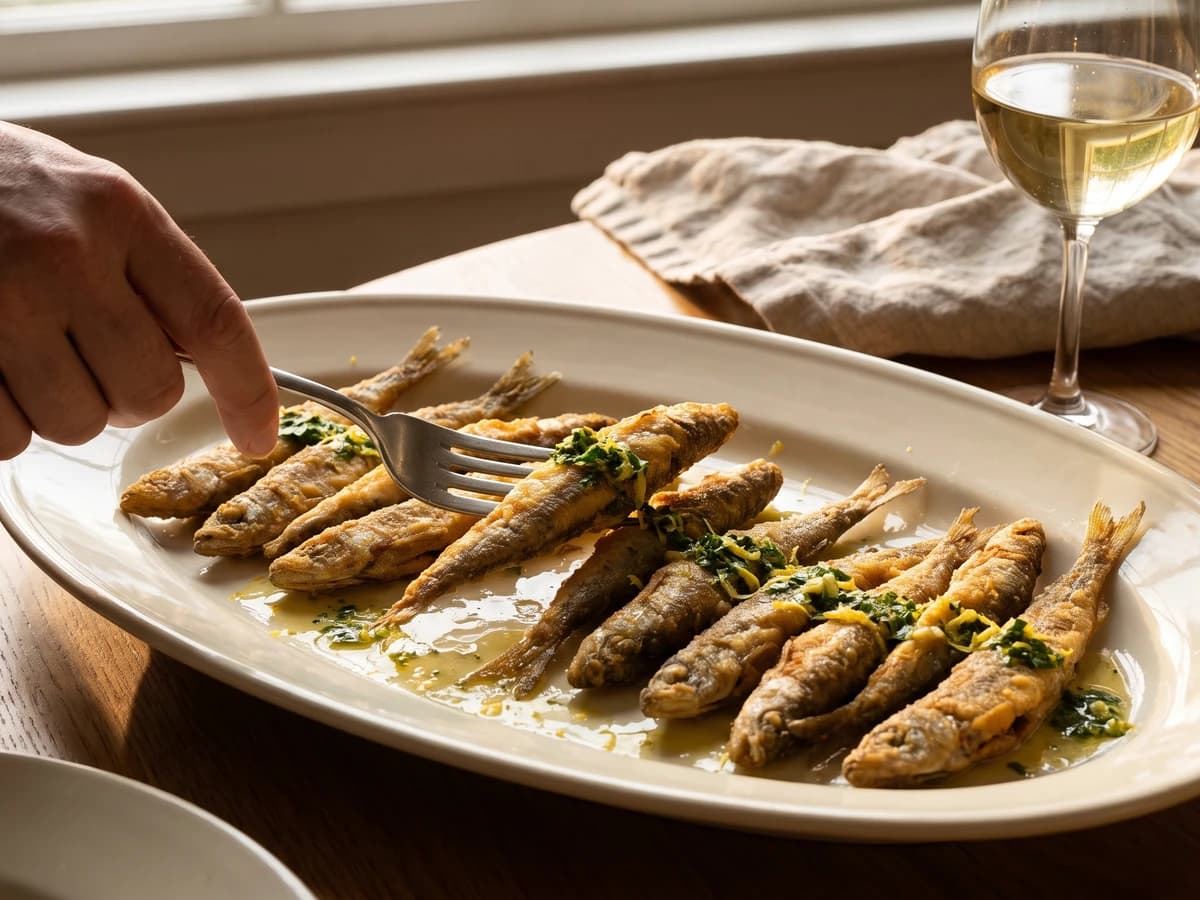
Éperlans à l’Anglaise turns small fish into a lesson in disciplined coating: boned smelts under a close, crisp crumb, pan-fried in clarified butter and finished with bright, half-melted maître d’hôtel butter.

Chef Juliette
Tiny smelts, shallot, mushrooms, white wine, gratin sauce, and fine bread raspings meet a fierce oven, where the fish must turn tender in the same breath the buttered crust bronzes.