
Chef Juliette
John Dory (St. Pierre)
John Dory has the delicacy of sole and the firmness of turbot. A light flouring, a quick butter sauté, and nut-brown beurre noisette show exactly why looks never mattered.
A cooking platform built around craft, culture, and the stories behind what we eat.
Created by Chef Juliette
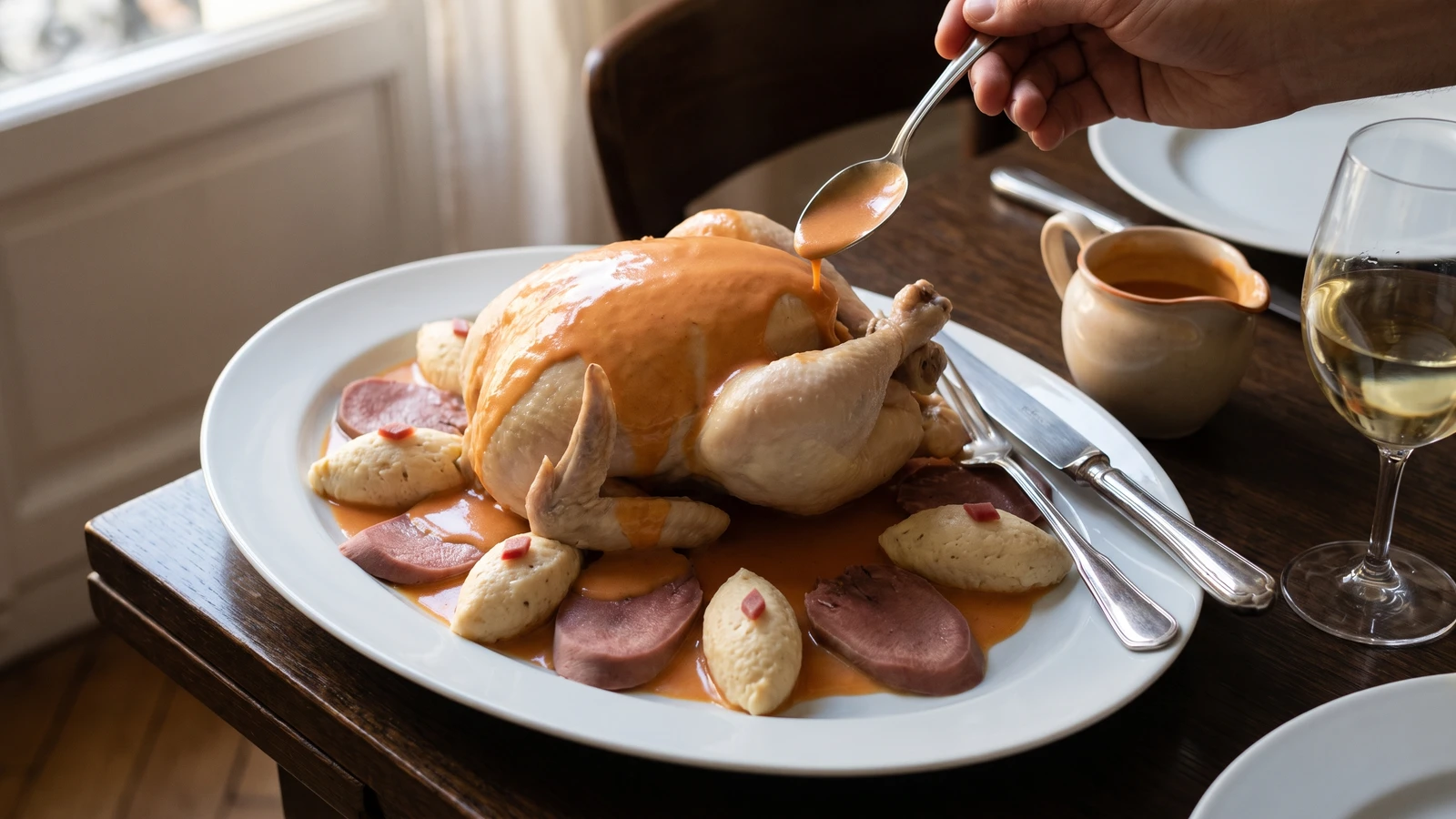
Based on No. 1450, Poularde à l’Aurore, from Le Guide Culinaire (1907) by Auguste Escoffier
A pale, tender poularde beneath glossy Aurore Sauce (No. 60), encircled by soft chicken quenelles and salted tongue: gentle poaching made generous enough for the dinner table.
Poularde à l’Aurore (poached young hen with tomato-blushed velouté) teaches cuisson douce, gentle cooking. The bird must become tender without taking a speck of colour. The one true thing to know is this: the poaching liquid barely trembles. A hard boil tightens the breast, roughens the skin, and turns its ivory pallor grey.
The original kitchen assumed a saucier on staff holding Aurore Sauce (No. 60), a stockpot never off the fire, a garniture cook with quenelle moulds, and a whole salted tongue ready for trimming. It assumed no salamander because browning would betray the dish. At home, finished sauce prepared in advance, good unsalted stock, a food processor, two tablespoons, and cooked tongue from a charcutier do the same work. Those extra hands and moulds are scaffolding and can go. The pale poach, the finished sauce, the decorated quenelles, and the tongue border are the dish and must stay. One cook, one stove, one evening.
When it reaches the table, the poularde should wear a glossy coral-rose coat, with plump ivory quenelles and dark rose ovals of tongue surrounding it. It is generous, composed, and quite free of plating theater. Before you touch the pan, settle the heat in your mind: below a simmer, always.
Poularde à l’Aurore belongs to the Parisian classical service table rather than to any single province, where a fattened young hen was poached pale and presented whole as a formal main dish. Aurore Sauce (No. 60) takes its name from dawn, its tomato-blushed velouté giving the rosy colour that makes the title literal. The encircling quenelles and salted tongue reveal its grand-kitchen lineage; as the dish moved to bourgeois special-occasion tables, charcutiers and advance preparation replaced brigade hands without changing the presentation.
Quantity
1 (3½ to 4 pounds / 1.6 to 1.8 kg)
neck and giblets removed, trussed
Quantity
8 cups (1.9 L / about 1.9 kg)
Quantity
up to 4 cups (960 ml / 960 g)
divided
Quantity
1 (about 1 cup / 150 g)
quartered
Quantity
1 (about ¾ cup / 100 g)
thickly sliced
Quantity
1 (about 1 cup / 120 g)
split and thoroughly rinsed
Quantity
2 (about 1 cup / 100 g)
cut into large pieces
Quantity
1
Quantity
1 teaspoon (5 ml / 3 g)
Quantity
up to 1 tablespoon (15 ml / 18 g)
Quantity
8 ounces (about 1½ cups cubed / 225 g)
very cold
Quantity
1 (about 2 tablespoons / 30 ml / 30 g)
cold
Quantity
¾ cup (180 ml / 180 g)
very cold and divided
Quantity
¾ teaspoon (3.75 ml / 4.5 g)
Quantity
⅛ teaspoon (0.6 ml / 0.25 g)
Quantity
8 thin slices (about 4 ounces / 115 g)
trimmed into ovals with the trimmings reserved
Quantity
2 cups (480 ml / about 500 g) Aurore Sauce (No. 60)
finished and kept cold until needed
| Ingredient | Quantity |
|---|---|
| whole poularde or small roasting chickenneck and giblets removed, trussed | 1 (3½ to 4 pounds / 1.6 to 1.8 kg) |
| unsalted or low-sodium chicken stock | 8 cups (1.9 L / about 1.9 kg) |
| cold waterdivided | up to 4 cups (960 ml / 960 g) |
| medium onionquartered | 1 (about 1 cup / 150 g) |
| medium carrotthickly sliced | 1 (about ¾ cup / 100 g) |
| small leek, white and pale green parts onlysplit and thoroughly rinsed | 1 (about 1 cup / 120 g) |
| celery stalkscut into large pieces | 2 (about 1 cup / 100 g) |
| bouquet garni of parsley stems, thyme, and bay | 1 |
| white peppercorns | 1 teaspoon (5 ml / 3 g) |
| fine sea salt for the poaching liquid | up to 1 tablespoon (15 ml / 18 g) |
| skinless chicken breastvery cold | 8 ounces (about 1½ cups cubed / 225 g) |
| large egg whitecold | 1 (about 2 tablespoons / 30 ml / 30 g) |
| heavy creamvery cold and divided | ¾ cup (180 ml / 180 g) |
| fine sea salt for the quenelles | ¾ teaspoon (3.75 ml / 4.5 g) |
| ground white pepper | ⅛ teaspoon (0.6 ml / 0.25 g) |
| cooked salted beef tonguetrimmed into ovals with the trimmings reserved | 8 thin slices (about 4 ounces / 115 g) |
| Aurore Saucefinished and kept cold until needed | 2 cups (480 ml / about 500 g) Aurore Sauce (No. 60) |
Place the trussed poularde breast-side up in a snug 6-quart pot. Add the stock, 3 cups of the cold water, onion, carrot, leek, celery, bouquet garni, and peppercorns. The liquid should cover the bird by about 1 inch; add only as much reserved water as needed. Taste the liquid and add enough of the measured salt to make a lightly seasoned broth. Begin with everything cold so the thick legs and delicate breast warm together.
Set the pot over medium heat and take 25 to 30 minutes to bring the liquid to 175 to 180°F (79 to 82°C), skimming away any pale froth as it rises. Reduce the heat until there is movement beneath the surface and only an occasional lazy bubble. Hold it there for 35 to 45 minutes, turning the bird once only if part of it sits above the liquid, until both the thickest breast and innermost thigh register at least 165°F (74°C). The thigh will commonly reach 170°F (77°C). If the liquid begins to boil, lift the pot off the burner at once and add a little reserved cold water; return it only when the bubbling has subsided. The sauce can conceal slight roughening, but catching the heat immediately is what preserves tenderness.
While the poularde cooks, chill the food processor bowl and blade for 10 minutes. Process the cold chicken breast with the quenelle salt and white pepper until it becomes smooth and tacky. Add the egg white and process just until absorbed. With the machine running, pour in all but 2 tablespoons of the cold cream in a thin stream, stopping as soon as the farce mousseline, the fine chicken forcemeat, is thick, smooth, and glossy. It must remain cold. If greasy streaks appear, stop immediately, chill the bowl over ice for 10 minutes, then pulse in the reserved cream. Cover the surface and refrigerate for at least 20 minutes.
Lift the cooked poularde carefully, tipping it over the pot to drain the cavity. Set it breast-side up on a rimmed plate and cover it loosely with parchment moistened in the hot poaching liquid. Rest for 15 minutes. Strain the liquid through a fine-mesh strainer, discard the vegetables and bouquet garni, and return about 4 cups to a wide saucepan for the garniture. Save the remaining broth for soup or another sauce.
Bring the strained liquid to 175°F (79°C). Poach a teaspoon of the mousseline as a test; it should set tenderly and hold a clean shape. If it frays or spreads, chill the mixture for another 15 minutes and test again. Ça se rattrape. Cut 8 tiny diamonds from the reserved tongue trimmings. Using two spoons dipped in warm poaching liquid, shape the mousseline into 8 medium ovals and press one tongue diamond into the top of each. Lower them into the liquid and poach without boiling for 10 to 12 minutes, turning once, until their centres reach 165°F (74°C). Lift them onto a clean towel. Dip the trimmed tongue ovals into the liquid for about 20 seconds to warm them, then drain; prolonged simmering makes cured tongue tough.
Warm the Aurore Sauce (No. 60) in a small saucepan over low heat, stirring gently until it flows in a broad ribbon and coats the back of a spoon. Do not boil a butter-finished sauce. If it has tightened in the cold, whisk in hot poaching liquid 1 tablespoon at a time. If it looks oily, remove it from the heat and whisk in 1 tablespoon of cool poaching liquid until the gloss returns.
Warm a large oval platter with hot water and dry it thoroughly. Remove the trussing string and blot the poularde gently, because sauce slides from wet skin. Set the bird breast-side up and spoon about three-quarters of the sauce over it from crown to base, letting a generous pool gather beneath. Arrange the decorated quenelles and trimmed tongue ovals alternately around the bird, according to fancy but without fuss. Bring the remaining sauce in a warmed sauceboat and carve the poularde at the table. À table!
1 serving (about 470g)
Culinary guides, cultural storytelling, and the editorial depth that makes cooking meaningful.
Discover Culinary ExplorerChef Juliette
John Dory has the delicacy of sole and the firmness of turbot. A light flouring, a quick butter sauté, and nut-brown beurre noisette show exactly why looks never mattered.

Chef Juliette
Fresh haddock proves its delicacy in the meunière pan: a fine flour crust, moist pearly flakes, and beurre noisette sharpened with lemon and parsley, ready from one skillet in half an hour.
Chef Juliette
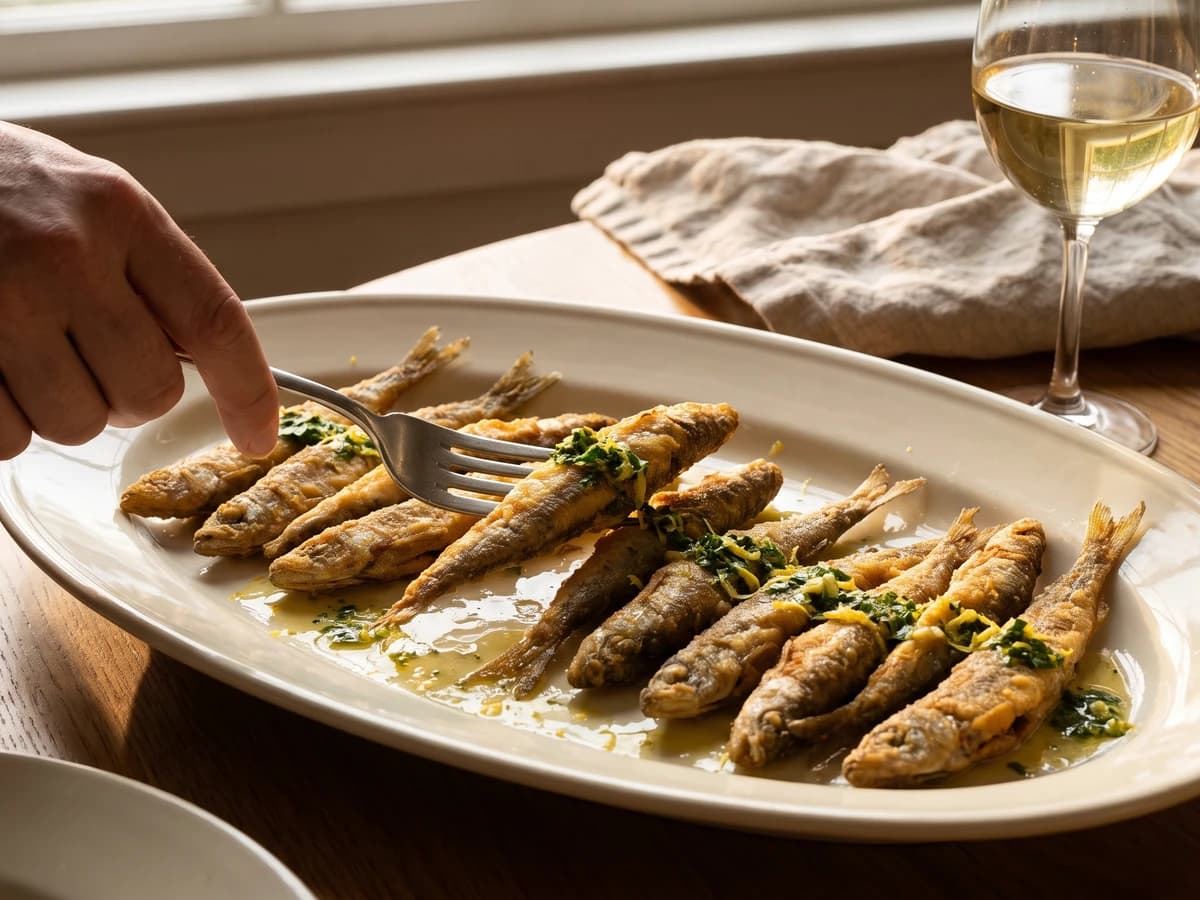
Éperlans à l’Anglaise turns small fish into a lesson in disciplined coating: boned smelts under a close, crisp crumb, pan-fried in clarified butter and finished with bright, half-melted maître d’hôtel butter.

Chef Juliette
Tiny smelts, shallot, mushrooms, white wine, gratin sauce, and fine bread raspings meet a fierce oven, where the fish must turn tender in the same breath the buttered crust bronzes.