
Chef Juliette
John Dory (St. Pierre)
John Dory has the delicacy of sole and the firmness of turbot. A light flouring, a quick butter sauté, and nut-brown beurre noisette show exactly why looks never mattered.
A cooking platform built around craft, culture, and the stories behind what we eat.
Created by Chef Juliette
Based on No. 1321, Noisettes de Mouton, from Le Guide Culinaire (1907) by Auguste Escoffier
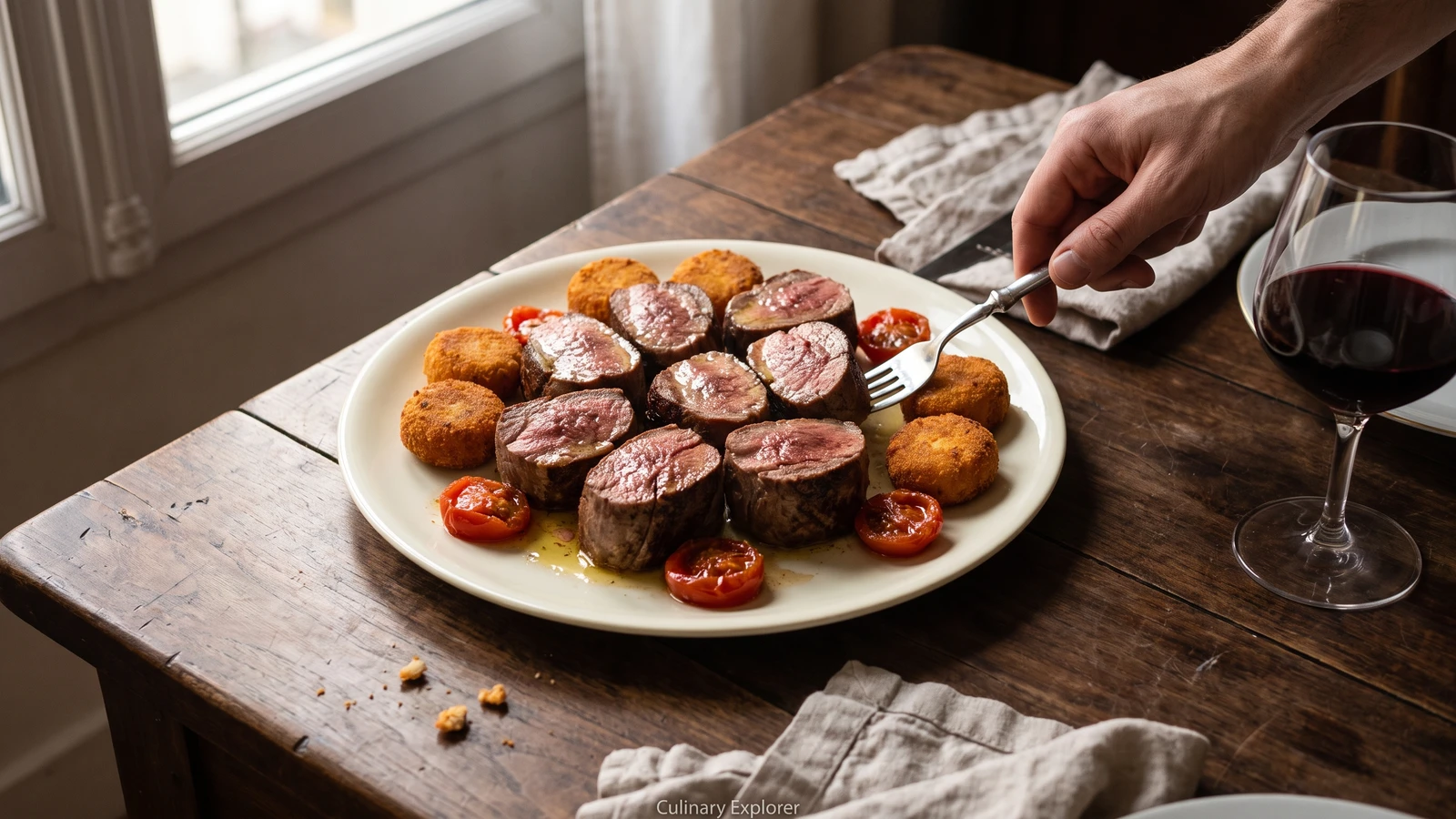
Small rounds of lamb loin meet a fiercely hot pan for minutes, then take one classical tournedos garnish. Dry meat, real clarified butter, and nerve make the dish.
Noisettes de Mouton (small mutton or lamb medallions) teaches the discipline of sauté, quick pan cooking in hot fat. The rounds must be evenly cut, thoroughly dry, and browned before their tender centres overcook. That is the one true thing to know before touching the pan: heat makes the crust, and time only cooks the meat.
The original entry assumed a grill station, a saucier, stock never off the fire, a salamander, and a whole library of tournedos garnishes ready for service. At home, the honest equivalent is a heavy skillet, clarified butter, a warm platter, and one complete garnish prepared from its own formula: Tournedos Algérienne (No. 1077) or Tournedos Villemer (No. 1139). The brigade scaffolding goes, including the parade of choices and multiple cooks assembling them. Eight noisettes and one chosen treatment remain. One cook, one stove, one evening.
What cannot go is the dry meat, fierce initial heat, and short cooking. If the pan cools and the lamb begins leaking instead of browning, lift it out and reset the pan. Ça se rattrape. Guard that first contact with the butter, because it decides the dish.
Noisettes de mouton belong to the classical Parisian grand-kitchen repertoire, where noisette described the small, rounded cut as much as any single finished dish. The rounds could be taken from the fillet or from the first six or seven ribs of the neck, boned and shaped by a skilled butcher. Their brief formula reveals how the brigade system worked: the meat supplied the cut and cooking method, while complete garnishes traveled freely from the tournedos and cutlet repertoire.
Quantity
1½ pounds (680 g)
silver skin removed and cut into 8 rounds about 1¼ inches (3 cm) thick
Quantity
1 teaspoon (5 ml / 6 g)
Quantity
½ teaspoon (2.5 ml / 1 g)
Quantity
3 tablespoons (45 ml / 42 g)
divided
Quantity
1 home-scale quantity
prepared as a finished garnish
| Ingredient | Quantity |
|---|---|
| boneless mutton or lamb loin filletsilver skin removed and cut into 8 rounds about 1¼ inches (3 cm) thick | 1½ pounds (680 g) |
| fine sea salt | 1 teaspoon (5 ml / 6 g) |
| freshly ground black pepper | ½ teaspoon (2.5 ml / 1 g) |
| clarified butterdivided | 3 tablespoons (45 ml / 42 g) |
| Tournedos Algérienne (No. 1077) (optional)prepared as a finished garnish | 1 home-scale quantity |
| Tournedos Villemer (No. 1139) (optional)prepared as a finished garnish | 1 home-scale quantity |
Choose one treatment, never both. Complete either Tournedos Algérienne (No. 1077) or Tournedos Villemer (No. 1139) as a finished garnish, scaled to four servings according to its own formula. Keep every element ready before the lamb enters the skillet. This separation preserves the book's working system: the referenced garnish remains whole rather than being re-derived or partly borrowed here.
Check that the eight noisettes are evenly thick. If a round loosens or spreads, tie a loop of kitchen string around its circumference so it cooks like its neighbours. Season both faces with the salt and pepper, then blot them thoroughly with kitchen paper. Leave them uncovered while the skillet heats. A damp surface must shed water before it can brown, and these small cuts don't have that time to spare.
Set a warm serving platter near the stove. Heat a heavy 12-inch (30 cm) skillet over medium-high heat for about 3 minutes, then add 1½ tablespoons (22 ml / 21 g) of the clarified butter. It should run freely across the pan and shimmer at once without black flecks. Clarified butter, not whole butter, gives the meat enough heat before the milk solids burn.
Lay four noisettes in the skillet with space between them. Press each very lightly for full contact, then leave them undisturbed for 2 to 2½ minutes, until the underside is a deep Maillard bronze and releases cleanly. If liquid gathers and the meat turns grey, lift the rounds out immediately, reserve the juices, wipe the skillet, heat it again, and return fewer pieces with fresh clarified butter. Ça se rattrape. If the butter develops black specks, make the same reset before continuing.
Turn the noisettes and cook the second face for 1½ to 2½ minutes, tipping the skillet and spooning the hot clarified butter over them during the final minute. For a rosy centre, remove them at 125 to 130°F (52 to 54°C); they will rise several degrees while resting. For the conservative food-safety endpoint, cook to 145°F (63°C) and rest for at least 3 minutes. Transfer them to the warm platter, add the remaining clarified butter, and repeat with the second batch.
Rest the noisettes for 5 minutes, very loosely covered so their browned surfaces stay intact. Remove any strings and spoon the reserved meat juices over them. Apply the chosen treatment as a complete finished component, either Tournedos Algérienne (No. 1077) or Tournedos Villemer (No. 1139), following its own arrangement rather than mixing elements from the two. Serve at once. À table!
1 serving (about 140g)
Culinary guides, cultural storytelling, and the editorial depth that makes cooking meaningful.
Discover Culinary ExplorerChef Juliette
John Dory has the delicacy of sole and the firmness of turbot. A light flouring, a quick butter sauté, and nut-brown beurre noisette show exactly why looks never mattered.

Chef Juliette
Fresh haddock proves its delicacy in the meunière pan: a fine flour crust, moist pearly flakes, and beurre noisette sharpened with lemon and parsley, ready from one skillet in half an hour.

Chef Juliette
Éperlans à l’Anglaise turns small fish into a lesson in disciplined coating: boned smelts under a close, crisp crumb, pan-fried in clarified butter and finished with bright, half-melted maître d’hôtel butter.

Chef Juliette
Tiny smelts, shallot, mushrooms, white wine, gratin sauce, and fine bread raspings meet a fierce oven, where the fish must turn tender in the same breath the buttered crust bronzes.