
Chef Juliette
John Dory (St. Pierre)
John Dory has the delicacy of sole and the firmness of turbot. A light flouring, a quick butter sauté, and nut-brown beurre noisette show exactly why looks never mattered.
A cooking platform built around craft, culture, and the stories behind what we eat.

Created by Chef Juliette
Based on No. 1077, Tournedos Algérienne, from Le Guide Culinaire (1907) by Auguste Escoffier
Tournedos Algérienne teaches timing: crisp sweet-potato croquettes and tender oil-stewed tomatoes must be ready before lean fillet meets clarified butter, sears fast, and goes straight to the table.
Tournedos Algérienne (clarified-butter-seared beef fillet with sweet-potato croquettes and oil-stewed tomatoes) teaches coordination. The one true thing to know is this: every garnish must be ready before the beef touches the pan. Tenderloin cooks in minutes, and no amount of ceremony can restore a tournedos left waiting for its croquette.
The original entry is brief because its kitchen already had clarified butter warm, croquettes prepared, tomatoes trimmed, and several cooks working at once. It calls for no saucier, no stockpot kept on the fire, and no salamander; its hidden luxury is simultaneous work. At home, shallow-fry four croquettes instead of maintaining a deep fryer, hold them briefly in a low oven, stew the tomatoes first, and sear the beef last. The separate stations were brigade scaffolding and can go. The round croquette, emptied tomato halves, clarified butter, and crown arrangement are the dish and must stay. One cook, one stove, one evening.
Done properly, the fillet wears a dark bronze crust and a clear butter sheen, the croquette gives way from crisp crumb to soft sweet potato, and the tomatoes bring gentle acidity without becoming sauce. Before you heat the beef pan, have the croquettes crisp and the tomatoes tender; the tournedos wait for no garnish.
Tournedos belongs to the Parisian grand-kitchen vocabulary: a thick, tidy round from the center of the beef fillet, cooked quickly and paired with a named garnish. Algérienne was one of the French canon's geographic garnish labels, and in this entry its meaning is exact, a round sweet-potato croquette on each steak with seasoned tomato halves stewed in oil around the crown. It should not be mistaken for an Algerian household beef dish; the name records how French menu writers classified the garnish, not where Algerian cooks placed tournedos on their tables.
Quantity
1 large, about 14 ounces (400 g)
Quantity
1 tablespoon (15 ml / 14 g)
Quantity
1
Quantity
2 teaspoons (10 ml / 12 g)
divided
Quantity
1 teaspoon (5 ml / 2 g)
divided
Quantity
⅓ cup (80 ml / 40 g)
Quantity
1
beaten
Quantity
1 tablespoon (15 ml / 15 g)
Quantity
1 cup (240 ml / 60 g)
Quantity
1 cup (240 ml / 220 g)
for shallow-frying
Quantity
4, about 1 pound (450 g) total
halved and emptied
Quantity
⅓ cup (80 ml / 72 g)
Quantity
4, each 6 ounces (170 g) and 1½ inches (4 cm) thick
Quantity
¼ cup (60 ml / 56 g)
divided
| Ingredient | Quantity |
|---|---|
| orange-fleshed sweet potato | 1 large, about 14 ounces (400 g) |
| unsalted butter | 1 tablespoon (15 ml / 14 g) |
| large egg yolk | 1 |
| fine sea saltdivided | 2 teaspoons (10 ml / 12 g) |
| freshly ground black pepperdivided | 1 teaspoon (5 ml / 2 g) |
| all-purpose flour | ⅓ cup (80 ml / 40 g) |
| large eggbeaten | 1 |
| water | 1 tablespoon (15 ml / 15 g) |
| fine dry breadcrumbs | 1 cup (240 ml / 60 g) |
| refined sunflower or grapeseed oilfor shallow-frying | 1 cup (240 ml / 220 g) |
| small firm tomatoeshalved and emptied | 4, about 1 pound (450 g) total |
| extra-virgin olive oil | ⅓ cup (80 ml / 72 g) |
| center-cut beef tenderloin tournedos | 4, each 6 ounces (170 g) and 1½ inches (4 cm) thick |
| clarified butterdivided | ¼ cup (60 ml / 56 g) |
Heat the oven to 425°F (220°C). Prick the sweet potato and roast it on a small tray for 40 to 50 minutes, until a knife passes through the center without resistance. Split it, scoop out the flesh, and press it smooth while warm. Stir the purée over low heat for 2 to 3 minutes to drive away excess moisture, then remove it from the heat and mix in the unsalted butter, ½ teaspoon of the salt, and ¼ teaspoon of the pepper. Let it cool for 5 minutes before beating in the egg yolk; adding the yolk to scorching purée would cook it into threads.
Divide the sweet-potato mixture into four equal portions, about 2½ ounces (70 g) each, and shape them into neat rounds about 2¼ inches (6 cm) wide and ½ inch (1.25 cm) thick. If the mixture slumps instead of holding its edge, stir in 2 tablespoons (30 ml / 8 g) of the measured breadcrumbs and chill it for 10 minutes. Ça se rattrape. Put the flour in one shallow dish, beat the whole egg with the water in a second, and place the remaining breadcrumbs in a third. Coat each round in flour, egg, and crumbs, pressing gently so the coating adheres. Chill the breaded croquettes for 20 minutes.
Lower the oven to 225°F (110°C). Scoop the seeds and watery pulp from the tomato halves without piercing their walls, then season them with ½ teaspoon of the salt and ¼ teaspoon of the pepper. Warm the olive oil in a wide skillet over low heat. Set the tomatoes in cut-side down and cook gently for 6 minutes, then turn and baste them with the oil for another 5 to 8 minutes. The oil should move quietly around them, not spit; the tomatoes are ready when tender but still capable of holding their shape. If their skins begin to split, take the pan off the heat at once and let the remaining warmth finish them. Hold the tomatoes in their oil off the heat.
Pour the neutral oil into an 8-inch (20 cm) skillet to a depth of about ¼ inch (6 mm) and heat it to 350°F (175°C). Fry the croquettes in two batches for about 2 minutes on each side, turning only when the first face is crisp and deep gold. If one cracks, the croquette was too warm or the oil too cool; lift it out, press fresh crumbs over the seam, chill the remaining rounds for 10 minutes, and bring the oil back to temperature. Drain the croquettes on a wire rack and hold them in the low oven for no longer than 15 minutes.
Do not heat the beef pan until the tomatoes are tender and the croquettes are crisp. Pat the tournedos completely dry and tie them around the middle with kitchen twine if they need help holding a round shape. Season with the remaining 1 teaspoon salt and ½ teaspoon pepper. Heat a heavy 12-inch (30 cm) skillet over medium-high heat, add 3 tablespoons (45 ml / 42 g) of the clarified butter, and wait until it glistens. Add the tournedos with room between them and cook undisturbed for about 3 minutes, until the first face has a dark bronze crust. Turn once and cook for another 2 to 3 minutes, then roll the edges briefly through the butter. Pull the beef at 125°F (52°C) for medium-rare or 135°F (57°C) for medium, and rest it uncovered for 5 minutes. If the butter turns black or smells acrid, remove the beef, take the pan off the heat, carefully wipe out the burnt fat, and continue with the reserved clarified butter. Burnt fat cannot be reasoned with, but the meat can still be saved.
Warm a round serving platter. Return the tomatoes to low heat only long enough to restore their gloss, without letting them soften further. Remove the twine from the tournedos and arrange the four pieces in a ring to form a crown. Set one sweet-potato croquette squarely on each tournedos, then arrange two tomato halves around each portion. Spoon a little of the warm tomato oil over the tomatoes and any clear clarified butter and beef juices around the meat. This is a garnished sauté, not a sauced dish. Carry it straight to the table. À table!
1 serving (about 365g)
Culinary guides, cultural storytelling, and the editorial depth that makes cooking meaningful.
Discover Culinary ExplorerChef Juliette
John Dory has the delicacy of sole and the firmness of turbot. A light flouring, a quick butter sauté, and nut-brown beurre noisette show exactly why looks never mattered.

Chef Juliette
Fresh haddock proves its delicacy in the meunière pan: a fine flour crust, moist pearly flakes, and beurre noisette sharpened with lemon and parsley, ready from one skillet in half an hour.
Chef Juliette
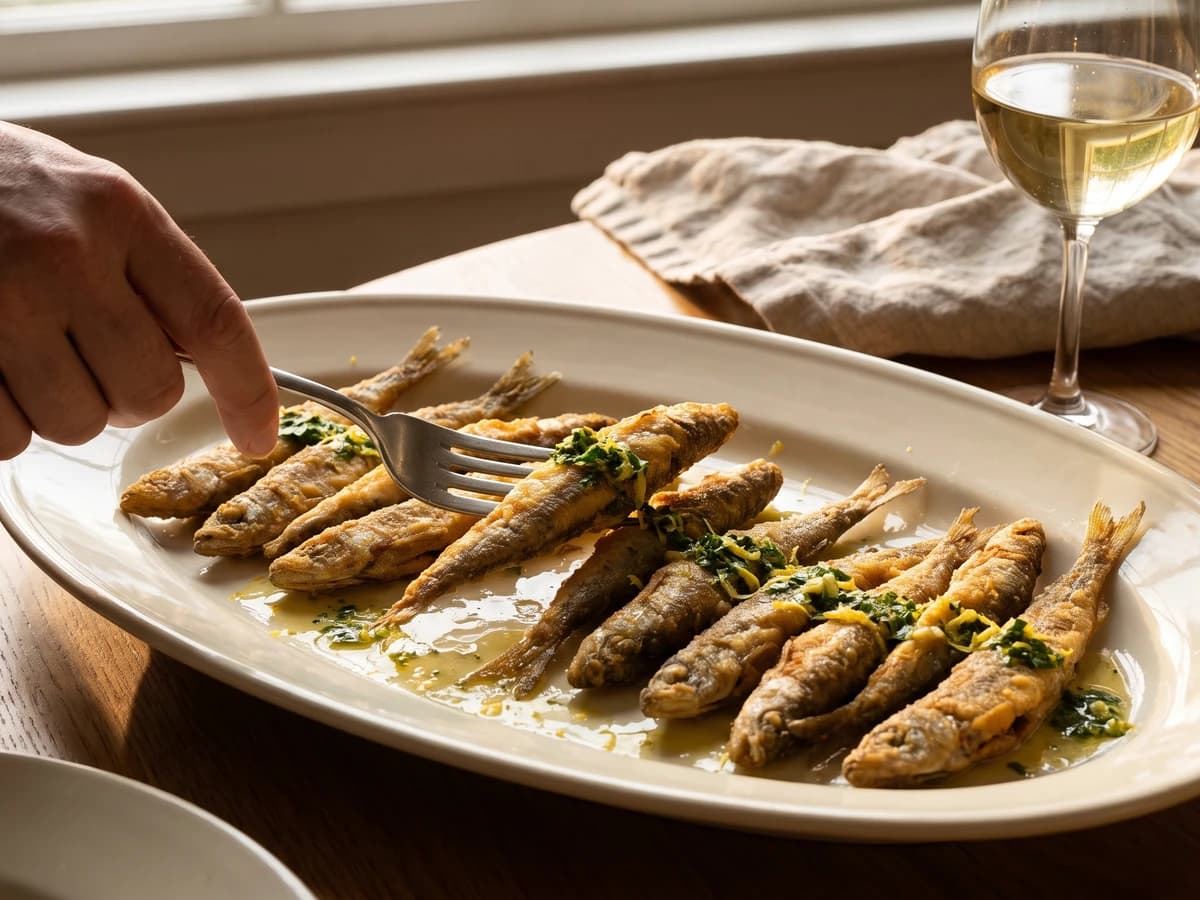
Éperlans à l’Anglaise turns small fish into a lesson in disciplined coating: boned smelts under a close, crisp crumb, pan-fried in clarified butter and finished with bright, half-melted maître d’hôtel butter.

Chef Juliette
Tiny smelts, shallot, mushrooms, white wine, gratin sauce, and fine bread raspings meet a fierce oven, where the fish must turn tender in the same breath the buttered crust bronzes.