
Chef Juliette
Bouillabaisse à la Marseillaise
Marseille's great fish stew, saffron-gold and garlic-scented, proves that a hard boil can be the careful choice: it binds olive oil into broth before the whole pot meets bread.
A cooking platform built around craft, culture, and the stories behind what we eat.
Created by Chef Juliette
Based on No. 1284, Sautés de Veau Divers, from Le Guide Culinaire (1907) by Auguste Escoffier
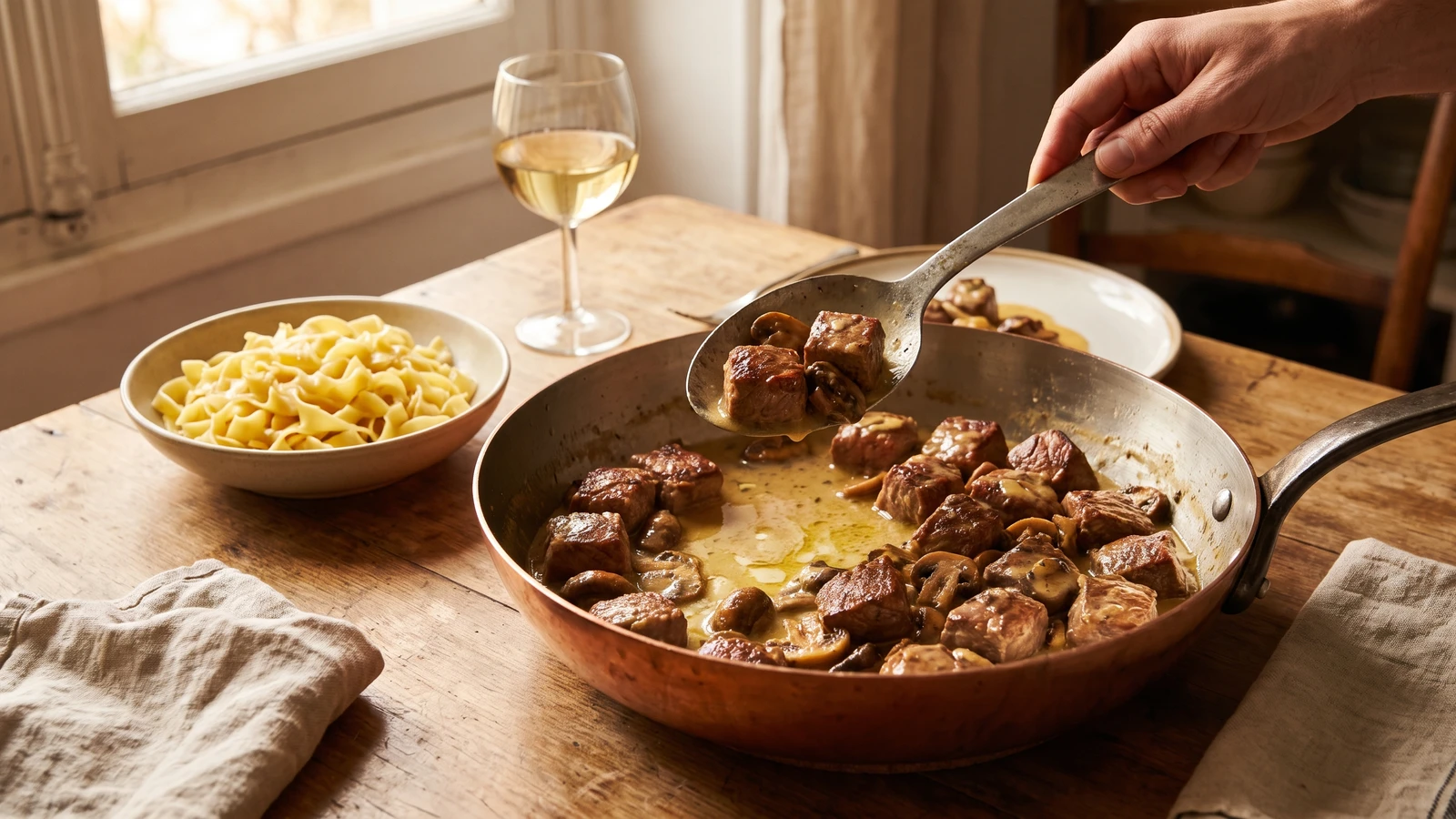
Sautés de veau divers turns one sound method into five suppers: bronze the veal, preserve the fond, simmer gently, then choose mushrooms, fines herbes, aubergine, tomato, or curry.
Sautés de veau divers (varied veal sautés) teaches the family logic of the French canon. Here sauté doesn't mean a quick toss over fierce heat. It means the veal is browned in fat, moistened, and cooked gently until tender. Change the final garnish and the dish takes a new turn, but the grammar remains: colour, fond, bound sauce, quiet simmer.
The original entry assumed a saucier, stock never off the fire, brigade quantities, and several garnish pans moving at once. At home, you need one broad pan, good unsalted stock, and a small skillet used while the veal simmers. I've scaled the family to four servings and folded the parallel garnish work into the cooking time. That service choreography was scaffolding. The browning, deglazing, and gentle moist cooking are the dish, and they stay. One cook, one stove, one evening.
Choose one finish, not all five. Mushrooms bring woodland depth, fines herbes keep the sauce bright, aubergine makes it more substantial, tomato gives acidity, and Currie à l’Indienne warms the bound sauce with spice and cream. Before you touch the pan, dry every cube of veal and leave room around it. Crowding is the one error that steals the fond before the dish has begun.
Sautés de veau divers belongs to France’s cuisine bourgeoise and classical professional repertoire rather than to one province. In this vocabulary, sauté names meat browned in fat and then moistened for gentle cooking, not a quick tossing over high heat, which is why mushrooms, fines herbes, aubergine, and tomato can change without disturbing the method. Currie à l’Indienne is the canon’s French treatment of curry powder in a bound sauce, a record of imported spice passing through Parisian and grand-kitchen practice, not an Indian regional dish.
Quantity
1½ pounds, about 4 cups (950 ml / 680 g)
cut into 1½-inch (4 cm) cubes
Quantity
¼ cup (60 ml / 56 g)
divided
Quantity
1 small, about ¾ cup (180 ml / 120 g)
finely chopped
Quantity
2 tablespoons (30 ml / 16 g)
Quantity
2 cups (475 ml / 475 g), or 1 cup (240 ml / 240 g) for the tomato variation
Quantity
1¼ teaspoons (6 ml / 7 g), plus more to taste
Quantity
½ teaspoon (2.5 ml / 1 g)
Quantity
1
Quantity
8 ounces, about 3 cups (710 ml / 225 g)
quartered, for the mushroom variation
Quantity
2 tablespoons (30 ml / 28 g)
for the mushroom variation
Quantity
¼ cup (60 ml / 15 g)
finely chopped for the fines herbes variation
Quantity
1 small, about 3 cups (710 ml / 340 g)
cut into ¾-inch (2 cm) cubes for the aubergine variation
Quantity
3 tablespoons (45 ml / 42 g)
for the aubergine variation
Quantity
1¾ cups (415 ml / 400 g)
crushed for the tomato variation
Quantity
2 teaspoons (10 ml / 5 g)
for the Currie à l’Indienne variation
Quantity
½ cup (120 ml / 120 g)
for the Currie à l’Indienne variation
| Ingredient | Quantity |
|---|---|
| boneless veal shouldercut into 1½-inch (4 cm) cubes | 1½ pounds, about 4 cups (950 ml / 680 g) |
| unsalted butterdivided | ¼ cup (60 ml / 56 g) |
| yellow onionfinely chopped | 1 small, about ¾ cup (180 ml / 120 g) |
| all-purpose flour | 2 tablespoons (30 ml / 16 g) |
| unsalted chicken or veal stock | 2 cups (475 ml / 475 g), or 1 cup (240 ml / 240 g) for the tomato variation |
| fine salt | 1¼ teaspoons (6 ml / 7 g), plus more to taste |
| freshly ground black pepper | ½ teaspoon (2.5 ml / 1 g) |
| bouquet garni of parsley stems, thyme, and bay leaf | 1 |
| mushrooms (optional)quartered, for the mushroom variation | 8 ounces, about 3 cups (710 ml / 225 g) |
| unsalted butter (optional)for the mushroom variation | 2 tablespoons (30 ml / 28 g) |
| mixed parsley, chervil, chives, and tarragon (optional)finely chopped for the fines herbes variation | ¼ cup (60 ml / 15 g) |
| aubergine (optional)cut into ¾-inch (2 cm) cubes for the aubergine variation | 1 small, about 3 cups (710 ml / 340 g) |
| unsalted butter (optional)for the aubergine variation | 3 tablespoons (45 ml / 42 g) |
| canned whole peeled tomatoes with their juices (optional)crushed for the tomato variation | 1¾ cups (415 ml / 400 g) |
| mild curry powder (optional)for the Currie à l’Indienne variation | 2 teaspoons (10 ml / 5 g) |
| heavy cream (optional)for the Currie à l’Indienne variation | ½ cup (120 ml / 120 g) |
Trim away thick surface sinew, leaving the fine seams of fat that will soften during cooking. Pat the cubes thoroughly dry, then season them with the salt and pepper. Choose one variation and prepare its ingredients before heating the pan. The five finishes are separate branches of the same sauté, not invitations to empty the whole market into one pot.
Heat 2 tablespoons of the base butter in a broad heavy pan over medium-high heat until it foams and smells nutty. Add the veal in a single uncrowded layer, working in two or three batches, and brown every broad face before lifting the meat to a plate. This initial browning is the sauté named by the glossary, and the bronze film left on the pan is the fond that will carry the sauce. If the butter or fond turns black and smells bitter, remove the meat, wipe out only the burnt fat, and continue with fresh butter. Ça se rattrape. Deep brown stays; black goes.
Lower the heat to medium and add 1 tablespoon of the base butter. Cook the onion for 5 minutes, stirring, until soft and pale gold. Singer, dust the contents with flour, and stir for 2 minutes so the flour cooks in the butter. For Currie à l’Indienne, add the curry powder with the flour and stir until fragrant. Gradually pour in 1¾ cups (415 ml) of stock, reserving the rest, while scraping every brown deposit from the pan. For the tomato variation, use ¾ cup (180 ml) stock here, reserve the remaining ¼ cup (60 ml), and stir in the crushed tomatoes. If the sauce forms lumps, take the pan off the heat and whisk firmly before continuing. It will smooth.
Return the veal and its collected juices to the pan and add the bouquet garni. The liquid should reach roughly two-thirds of the way up the meat. Bring it just to a simmer, partly cover, and cook over low heat for 55 to 75 minutes, turning the pieces occasionally, until a fork enters without resistance. The surface should barely tremble. A rolling boil tightens the meat and drives fat from the sauce, so lower the heat if the pan becomes lively.
For mushrooms, heat their 2 tablespoons of butter in a separate skillet and sauté them in batches until deeply browned; fold them into the veal for its final 10 minutes. For aubergine, brown the cubes in their 3 tablespoons of butter, working in batches until the centres are tender, then fold them into the veal for the final 10 minutes. For fines herbes, chop the herbs just before finishing and keep them uncooked. The tomato is already in its sauce, and the curry variation receives its cream in the next step.
When the veal is tender, lift it and any solid garnish into a warm bowl and discard the bouquet garni. Boil the sauce uncovered until it reaches nappage, a coating consistency that leaves a clear trail when you draw a finger across the back of a spoon. For Currie à l’Indienne, add the cream and simmer gently for 3 to 5 minutes before judging the consistency. If the sauce is too thick, loosen it with reserved stock; if it is thin, keep reducing. Remove the pan from the heat and swirl in the final tablespoon of base butter. If the sauce looks oily after the butter goes in, whisk in a teaspoon of cold stock off the heat. Ça se rattrape.
Return the veal and any mushroom or aubergine garnish to the finished sauce and turn the pieces gently until glazed. For fines herbes, fold in the chopped herbs only after the pan leaves the heat so their flavour remains fresh. Taste for salt and pepper, then let the sauté stand for 5 minutes before serving. Bring it to the table with potatoes, buttered noodles, or plain rice for Currie à l’Indienne. À table!
1 serving (about 395g)
Culinary guides, cultural storytelling, and the editorial depth that makes cooking meaningful.
Discover Culinary ExplorerChef Juliette
Marseille's great fish stew, saffron-gold and garlic-scented, proves that a hard boil can be the careful choice: it binds olive oil into broth before the whole pot meets bread.

Chef Juliette
Waterzoi asks fresh, bone-in river fish to thicken its own buttery broth, with parsley root and pepper for company. No flour, no stockpot, just a brisk simmer watched closely.
Chef Juliette
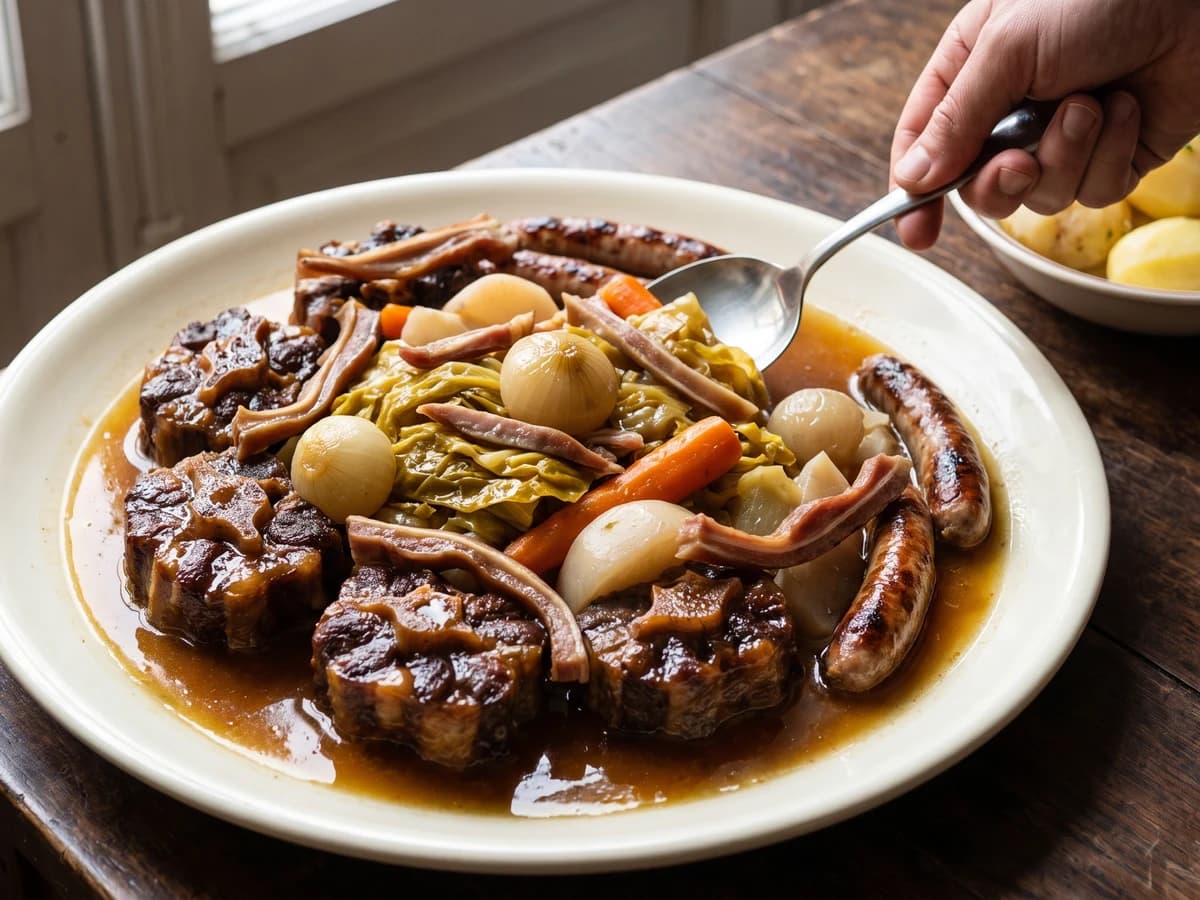
Queue de Bœuf en Hochepot gathers oxtail, pig's trotter and ear, cabbage, roots, and grilled chipolatas around a clear, gelatin-rich broth whose quiet simmer keeps every piece tender and distinct.

Chef Juliette
Beef shoulder larded with bacon, sharpened by red wine and vinegar, then sealed with garlic, vegetables, and dry lemon peel until the low oven turns it yielding and the gravy darkly glossy.