
Chef Juliette
John Dory (St. Pierre)
John Dory has the delicacy of sole and the firmness of turbot. A light flouring, a quick butter sauté, and nut-brown beurre noisette show exactly why looks never mattered.
A cooking platform built around craft, culture, and the stories behind what we eat.

Created by Chef Juliette
Based on No. 1113, Tournedos Mirette, from Le Guide Culinaire (1907) by Auguste Escoffier
Tournedos Mirette turns one skillet’s fond into the whole sauce: beef tenderloin seared deep bronze, each fillet crowned with a glazed potato timbale, then glossed with white wine, meat glaze, and cold butter.
Tournedos Mirette (seared beef tenderloin crowned with glazed truffled potato timbales) teaches one hard, useful truth: the fond is the sauce. Before you touch the pan, understand the colour you need. Mahogany tastes of roasted beef; black tastes burnt, and no quantity of butter will make it otherwise.
The original assumed a grill cook, a saucier on staff, a stock never off the fire reduced to meat glaze, and a salamander waiting to bronze each timbale. At home, the grill and sauté-pan become one heavy skillet, the salamander becomes your broiler, and four small molds replace a row of service timbales. A spoonful of properly concentrated meat glaze supplies the foundation. The brigade choreography is scaffolding and can go; the hot sear, individual glazed timbales, wine deglazing, and cold-butter finish are the dish and must stay. One cook, one stove, one evening.
Have the timbales shaped and the broiler hot before the beef meets the skillet. That order is what lets you rest the tournedos, glaze their crowns, and build the sauce without one element waiting miserably for another. Timing, not ornament, decides Tournedos Mirette.
Tournedos Mirette belongs to the grand Parisian dining-room repertoire, where tenderloin rounds were matched with named garnishes so a short title could specify an entire plate. Mirette names a codified garnish, not a regional potato specialty: the individual timbale crowns the beef, while Parmesan, butter, white wine, and meat glaze establish the dish’s exact finish. The formula passed readily into domestic manuals because its service logic scales cleanly, one timbale per guest and one sauce made à la minute, at the last moment.
Quantity
4 tournedos, each 6 oz (170 g)
cut 1½ inches (4 cm) thick and tied into neat rounds
Quantity
1½ teaspoons (7.5 ml / 9 g)
Quantity
½ teaspoon (2.5 ml / 1 g)
Quantity
1 tablespoon (15 ml / 14 g)
Quantity
4 small timbales, about 2 cups (480 ml / 600 g), Pommes de Terre Mirette (No. 2234)
prepared warm with their final glazing reserved
Quantity
¼ cup (60 ml / 20 g)
finely grated
Quantity
1 tablespoon (15 ml / 14 g)
melted
Quantity
½ cup (120 ml / 120 g)
Quantity
2 tablespoons (30 ml / 35 g)
preferably unsalted
Quantity
3 tablespoons (45 ml / 42 g)
cut into small cubes
| Ingredient | Quantity |
|---|---|
| center-cut beef tenderloin tournedoscut 1½ inches (4 cm) thick and tied into neat rounds | 4 tournedos, each 6 oz (170 g) |
| fine sea salt | 1½ teaspoons (7.5 ml / 9 g) |
| freshly ground black pepper | ½ teaspoon (2.5 ml / 1 g) |
| clarified butter | 1 tablespoon (15 ml / 14 g) |
| Pommes de Terre Miretteprepared warm with their final glazing reserved | 4 small timbales, about 2 cups (480 ml / 600 g), Pommes de Terre Mirette (No. 2234) |
| Parmesanfinely grated | ¼ cup (60 ml / 20 g) |
| unsalted butter for glazingmelted | 1 tablespoon (15 ml / 14 g) |
| dry white wine | ½ cup (120 ml / 120 g) |
| concentrated meat glazepreferably unsalted | 2 tablespoons (30 ml / 35 g) |
| cold unsalted buttercut into small cubes | 3 tablespoons (45 ml / 42 g) |
Set an oven rack about 6 inches (15 cm) beneath the broiler and heat the broiler to high. Bring the prepared Pommes de Terre Mirette (No. 2234) to a warm, pliable state in four small timbale molds, reserving its final glazing for later. Pat the tournedos completely dry, tie them firmly enough to hold a round shape, and season with the salt and pepper. Have a broiler-safe platter and every sauce ingredient beside the stove before you begin.
Run a thin knife around each timbale and invert it onto the broiler-safe platter. If one clings, wrap the mold briefly in a hot towel and try again without shaking it. If it slumps, press it back into the mold and glaze it there, then lift the compact potato onto its tournedos with a spoon. The silhouette changes slightly; the flavour does not.
Heat a heavy skillet over high heat until thoroughly hot, then add the clarified butter and swirl it into a thin film. Lay in the tournedos with space between them and cook without disturbing them for about 3 minutes, until the undersides are deeply browned and release readily. Turn and cook for another 2 to 3 minutes, then roll the edges against the pan for about 30 seconds. Remove them at 125 to 130°F (52 to 54°C) for medium-rare, or at the temperature preferred at your table, and rest for 6 to 8 minutes. The film on the pan should be dark mahogany. If it has burnt black, wipe out the bitter residue and build the sauce with the wine and meat glaze in the clean skillet. You lose a little depth, not the dinner.
While the beef rests, sprinkle the Pommes de Terre Mirette (No. 2234) evenly with the Parmesan and trickle the melted butter over their tops. Broil for 2 to 4 minutes, watching continuously, until the cheese bubbles and takes a mottled bronze colour. This is the home salamander. If the tops remain pale, move them closer to the heat for 30 seconds rather than leaving the potatoes underneath to dry.
Pour excess fat from the skillet without disturbing its brown fond. Return it to medium-high heat, add the white wine, and scrape firmly with a wooden spoon until every savoury speck dissolves. Boil until the wine has reduced to about 3 tablespoons and looks lightly syrupy, then whisk in the meat glaze. Simmer for 1 to 2 minutes, until the sauce coats the back of a spoon in a thin, glossy layer. If it becomes too concentrated, loosen it with a tablespoon of water; if it remains watery, reduce it further before adding the butter.
Take the skillet completely off the heat. Monter au beurre, mounting the sauce with cold butter, by whisking in one cube at a time until the sauce becomes glossy and softly thickened. Do not let it boil after the butter goes in. If it separates into greasy droplets, put a teaspoon of cold water in a clean warm bowl and whisk in the broken sauce one spoonful at a time. Ça se rattrape. Taste before adding any salt, since the meat glaze may already provide enough.
Remove the strings from the rested tournedos and arrange the four pieces in a crown on a warm oval platter. Set one glazed timbale squarely upon each tournedos. Spoon the buttered wine sauce over the beef and around the bases, leaving the bronzed potato tops visible, then carry the platter directly to the table. À table!
1 serving (about 320g)
Culinary guides, cultural storytelling, and the editorial depth that makes cooking meaningful.
Discover Culinary ExplorerChef Juliette
John Dory has the delicacy of sole and the firmness of turbot. A light flouring, a quick butter sauté, and nut-brown beurre noisette show exactly why looks never mattered.

Chef Juliette
Fresh haddock proves its delicacy in the meunière pan: a fine flour crust, moist pearly flakes, and beurre noisette sharpened with lemon and parsley, ready from one skillet in half an hour.
Chef Juliette
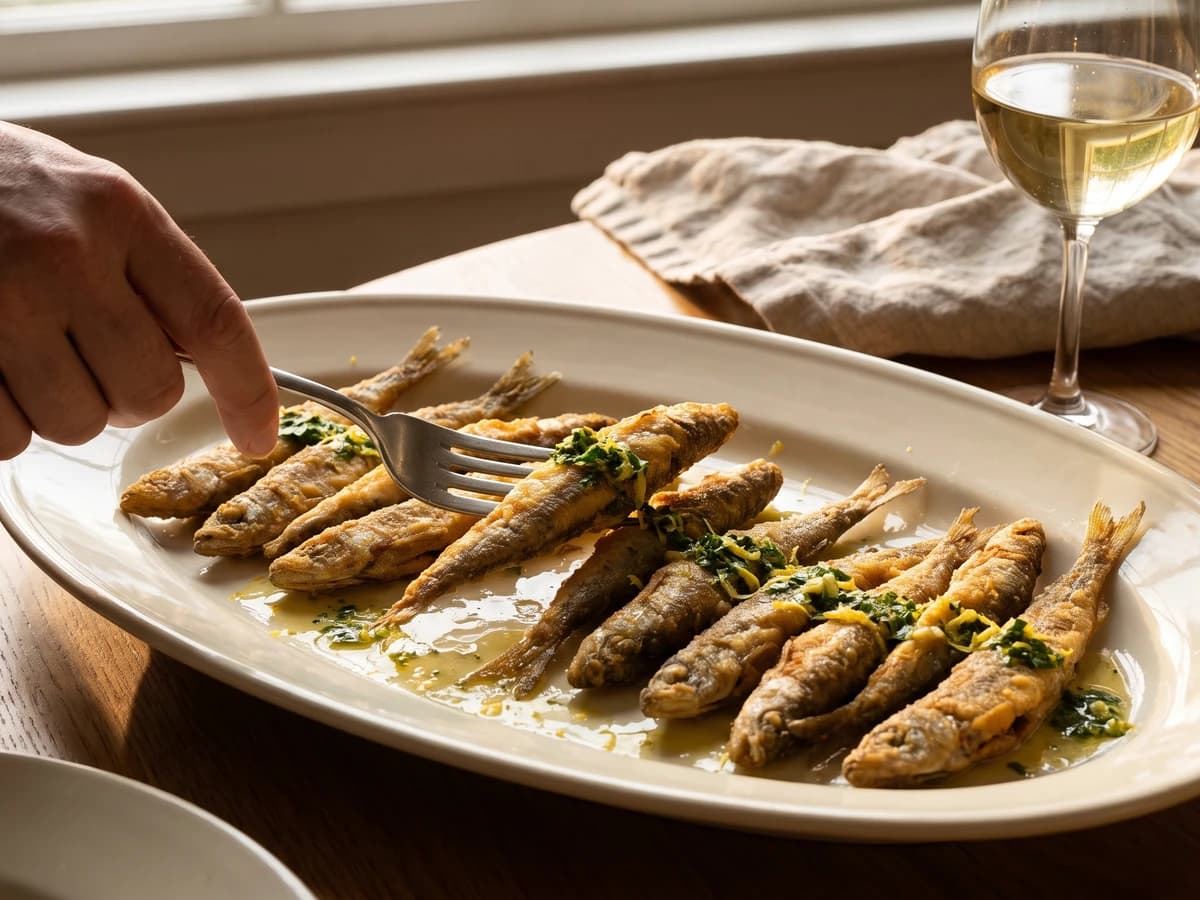
Éperlans à l’Anglaise turns small fish into a lesson in disciplined coating: boned smelts under a close, crisp crumb, pan-fried in clarified butter and finished with bright, half-melted maître d’hôtel butter.

Chef Juliette
Tiny smelts, shallot, mushrooms, white wine, gratin sauce, and fine bread raspings meet a fierce oven, where the fish must turn tender in the same breath the buttered crust bronzes.