
Chef Graziella
Torta Pasqualina
The great Easter pie of Liguria, where paper-thin pastry enfolds a filling of greens and ricotta with whole eggs nestled inside, their yolks set but still golden when you slice through.
A cooking platform built around craft, culture, and the stories behind what we eat.
Created by
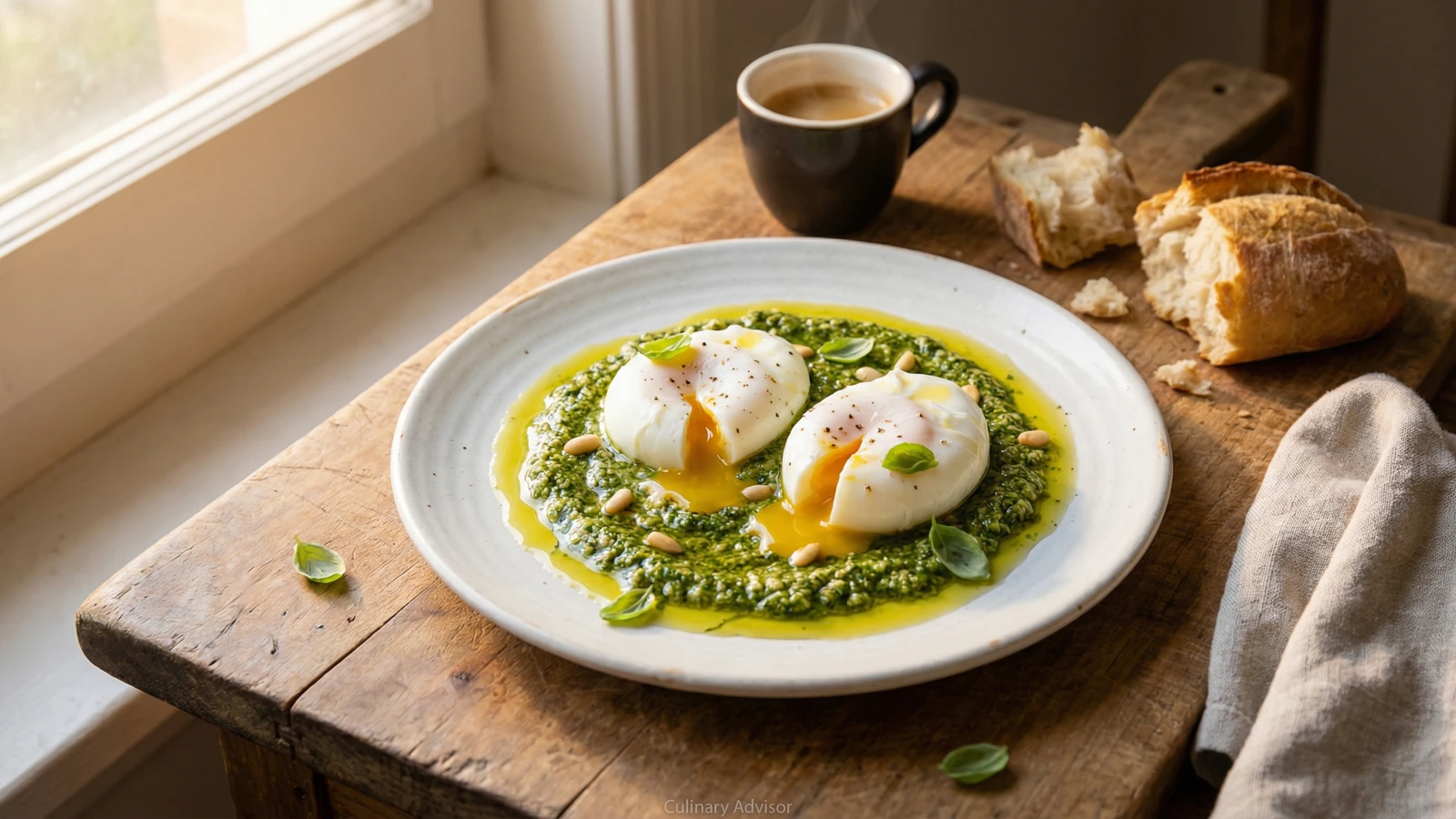
Ligurian mornings distilled: a warm poached egg breaks over cold basil pesto, the runny yolk becoming sauce for crusty bread. Two temperatures, one ancient tradition.
In Liguria, they understand that breakfast need not be complicated to be perfect. A properly poached egg, its white set firm while the yolk remains liquid gold, placed atop cold pesto Genovese. When you break the yolk with your fork, it mingles with the bright green sauce. You have created something neither ingredient could achieve alone.
The pesto must be cold. This is not negotiable. The temperature contrast is the point. Warm pesto loses its brightness, its fresh basil perfume dulled by heat. The egg provides warmth. The pesto provides intensity. Together they find balance.
Americans have corrupted pesto beyond recognition, adding too much garlic, substituting walnuts for pine nuts, leaving out the Pecorino. True pesto Genovese contains seven ingredients, no more. The basil must be Genovese basil if you can find it, with small leaves that have none of the mintiness of larger varieties. You pound it in a mortar, never a blender, which bruises the leaves and turns them bitter. If you must use a food processor, use short pulses and accept that you have compromised.
Pesto alla Genovese dates to the 19th century, though Ligurian cooks had been pounding basil and garlic since at least the 16th century in preparations called agliata. The mortar and pestle technique, from which pesto takes its name (pestare, to pound), predates mechanical alternatives by centuries. Ligurian sailors carried dried pesto on long voyages, reconstituting it with oil when they longed for home.
Quantity
2 cups packed (about 2 ounces)
Genovese basil preferred
Quantity
2 tablespoons
Quantity
1 small clove
Quantity
1/4 cup
freshly grated
Quantity
2 tablespoons
freshly grated
Quantity
1/2 cup
Ligurian if possible
Quantity
to taste
Quantity
4
as fresh as possible
Quantity
2 tablespoons
Quantity
for serving
| Ingredient | Quantity |
|---|---|
| fresh basil leavesGenovese basil preferred | 2 cups packed (about 2 ounces) |
| pine nuts | 2 tablespoons |
| garlic | 1 small clove |
| Parmigiano-Reggianofreshly grated | 1/4 cup |
| Pecorino Fiore Sardofreshly grated | 2 tablespoons |
| extra virgin olive oilLigurian if possible | 1/2 cup |
| coarse salt | to taste |
| large eggsas fresh as possible | 4 |
| white wine vinegar | 2 tablespoons |
| crusty bread | for serving |
Wash the basil leaves gently and dry them completely. Wet basil will not pound properly and will darken the pesto. A salad spinner works. Paper towels work better. The leaves must be bone dry before you begin.
In a marble mortar, combine the garlic clove with a generous pinch of coarse salt. Pound to a paste. The salt acts as an abrasive. Add the pine nuts and pound until they are crushed but not pureed. You want texture, not smooth paste. Add the basil in handfuls, pounding and grinding in a circular motion against the sides of the mortar. Work each addition until it breaks down before adding more.
When the basil is reduced to a coarse paste with visible flecks of green, add both cheeses. Pound briefly to incorporate. Drizzle in the olive oil slowly, stirring constantly with the pestle to emulsify. The pesto should be thick enough to hold its shape on a spoon but loose enough to spread. Taste and adjust salt. Cover and set aside at room temperature. Do not refrigerate.
Fill a wide, shallow saucepan with three inches of water. Add the white wine vinegar and a generous pinch of salt. Bring to a bare simmer. You want small bubbles rising from the bottom, not a rolling boil. Violent water tears the whites apart.
Crack each egg into a small bowl. This is not optional. You must examine each egg individually. One bad yolk ruins the dish. Stir the water gently to create a slow whirlpool. Slide an egg from the bowl into the center of the whirlpool. The spinning water wraps the white around the yolk. This is the camicia, the shirt. Poach for exactly 3 minutes for a runny yolk, 4 minutes for a yolk that is set at the edges but liquid at the center.
Lift each egg from the water with a slotted spoon. Let it drain for several seconds, then blot the bottom gently on a clean kitchen towel. Excess water will dilute your pesto. Repeat with remaining eggs. Work quickly. The eggs should be served immediately.
Spread a generous spoonful of cold pesto on each warmed plate. Nestle two poached eggs on the pesto. Drizzle a thin thread of olive oil over each egg. Serve immediately with crusty bread for mopping. Once the eggs are plated, invite your guests to begin. This dish waits for no one.
1 serving (about 210g)
Culinary guides, cultural storytelling, and the editorial depth that makes cooking meaningful.
Discover Culinary ExplorerChef Graziella
The great Easter pie of Liguria, where paper-thin pastry enfolds a filling of greens and ricotta with whole eggs nestled inside, their yolks set but still golden when you slice through.

Chef Graziella
The great vegetable pie of Genoa, where whatever greens the garden offers are wilted, squeezed dry, and bound with eggs and cheese into something that travels beautifully and tastes even better the next day.

Chef Juliette
A creamy omelette aux fines herbes closes around smoked-salmon-wrapped herring milts, gently poached in butter. Have the filling ready, then roll the eggs while they still shine.

Chef Juliette
Four tender herbs, hot butter, and two eggs per pan: this rolled omelette teaches the quick hand and good judgment that keep the outside pale and the center creamy.