
Chef Lupita
Acambaritas de Acámbaro
Guanajuato's daily bread from Acámbaro, a small glazed roll built on pata, enriched with manteca de cerdo, and baked until the top shines lightly for merienda.
A cooking platform built around craft, culture, and the stories behind what we eat.
Created by
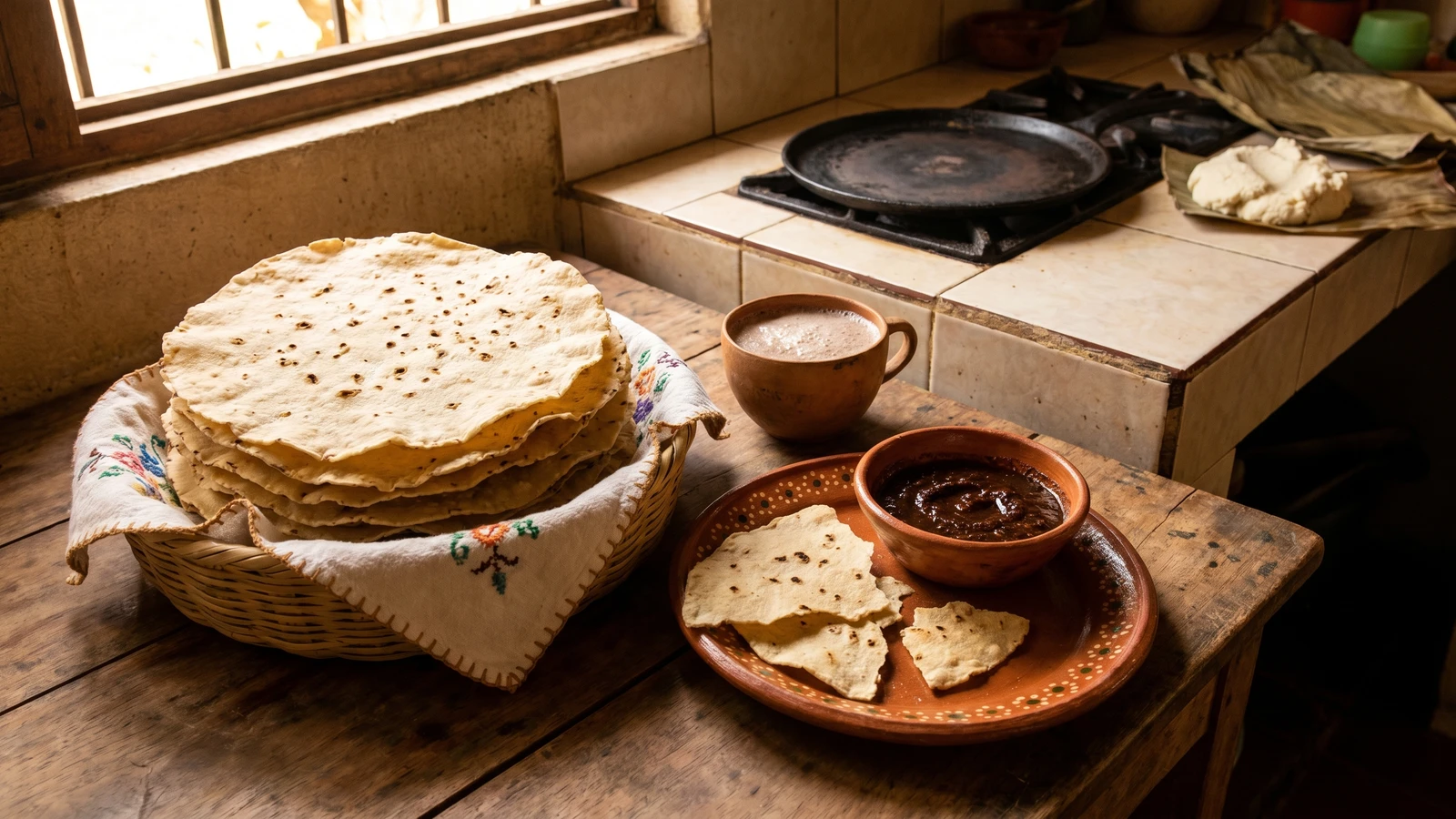
Tabasco's thin corn wafer from the humid Gulf lowlands, kneaded with manteca and dried patiently on the comal until brittle enough to travel for weeks.
Tabasco, especially the Chontalpa and the river country around Villahermosa and Nacajuca, knows why a tortilla must sometimes become a wafer. Heat, humidity, work in the milpa, travel by river, food that has to last. That is where totoposte lives. Not as a snack invented for a package, but as a practical bread made from corn, salt, and manteca.
The technique belongs to women who understood moisture before anyone gave it a fancy name. Press the masa thin. Cook it gently. Turn it and turn it until the comal dries it all the way through. A soft tortilla feeds you now. A totoposte feeds you later, tucked into a basket with beans, chile amashito salsa, or a jicara of pozol. Saber cocinar es saber vivir.
Use fresh nixtamalized masa if you can get it from a tortilleria. Masa harina will make a wafer, yes, but it will not have the same smell of corn and cal. A substitution is a compromise, not an upgrade. And use manteca de cerdo. La manteca es el sabor, and in this case it is also the texture. The wafer should snap clean under your teeth, not crumble into dust.
My mother did not write this one in her Jalisco notebook. I learned it in Tabasco from a señora who kept a stack wrapped in a palm tortillero near the stove and handed them out with black beans as if she were handing out coins. Cada estado, su propia cocina.
Totoposte belongs to the older Mesoamerican family of dried and toasted corn breads made to preserve nixtamalized masa before refrigeration, especially useful in hot, humid regions where fresh tortillas spoil quickly. In Tabasco, Chontal Maya communities and mestizo cooks kept versions of thin toasted corn wafers for field work, river travel, and market days, often eaten with pozol, beans, or chile amashito sauces. The name is related to the Nahuatl root for toasted corn preparations, but the Tabasco version reflects Gulf lowland geography: corn made portable against humidity.
Quantity
2 pounds
preferably white corn masa from a tortilleria
Quantity
1/2 cup
softened
Quantity
1 1/2 teaspoons
Quantity
1/4 to 1/2 cup
as needed
Quantity
extra
for lightly greasing hands
| Ingredient | Quantity |
|---|---|
| fresh nixtamalized corn masapreferably white corn masa from a tortilleria | 2 pounds |
| rendered pork lard (manteca de cerdo)softened | 1/2 cup |
| fine sea salt | 1 1/2 teaspoons |
| warm wateras needed | 1/4 to 1/2 cup |
| manteca de cerdo (optional)for lightly greasing hands | extra |
Put the fresh masa in a wide bowl. Sprinkle in the salt and break the masa apart with your fingers. Fresh masa should smell like cooked corn and cal, clean and mineral. If it smells sour, take it back. Si no conoces el mercado, no conoces la cocina.
Add the softened manteca de cerdo and knead with the heel of your hand for 5 to 7 minutes, until the fat disappears into the masa and the dough feels smooth, flexible, and lightly glossy. La manteca es el sabor. It also helps the totoposte dry crisp instead of turning tough.
Add warm water one tablespoon at a time only if the masa cracks at the edges. You want dough that presses thin without breaking, not wet dough that sticks to everything. Roll into 24 balls, each about the size of a small lime. Cover with a damp cloth so the surface does not dry while you work.
Line a tortilla press with plastic or a cut piece of hoja de platano. Press each ball into a thin round, about 5 to 6 inches wide. Press once, turn it a quarter turn, and press again. The edges do not need to be perfect. A totoposte is market food, not a paper doily.
Heat a comal over medium-low. Lay one thin round on the dry comal and cook for about 45 seconds, just until the surface firms enough to turn. Flip and cook the second side for another 45 seconds. It should look pale with small toasted freckles, not browned like a tostada.
Lower the heat. Keep turning each totoposte every 2 to 3 minutes, pressing gently with a folded cloth if it puffs too much. Cook until it is completely dry, brittle, and lightly golden in spots, 8 to 12 minutes per wafer depending on your comal. The sound changes when it is ready: it taps sharp against the comal, not dull. No me vengas con atajos. Fast heat burns the outside and leaves damp masa inside.
Move the totopostes to a rack or a clean woven basket lined with a dry servilleta. Let them cool completely before stacking. If you trap them while warm, they soften. This bread survives because the moisture is driven out. That is the whole intelligence of the recipe.
Once fully cool, stack in a woven palm tortillero or an airtight tin lined with paper. Keep away from humidity. Eat with frijol colado, queso de poro, chile amashito salsa, caldo, cacao pozol, or cualquier cosa. Así se hace y punto.
1 serving (about 28g)
Culinary guides, cultural storytelling, and the editorial depth that makes cooking meaningful.
Discover Culinary ExplorerChef Lupita
Guanajuato's daily bread from Acámbaro, a small glazed roll built on pata, enriched with manteca de cerdo, and baked until the top shines lightly for merienda.

Chef Lupita
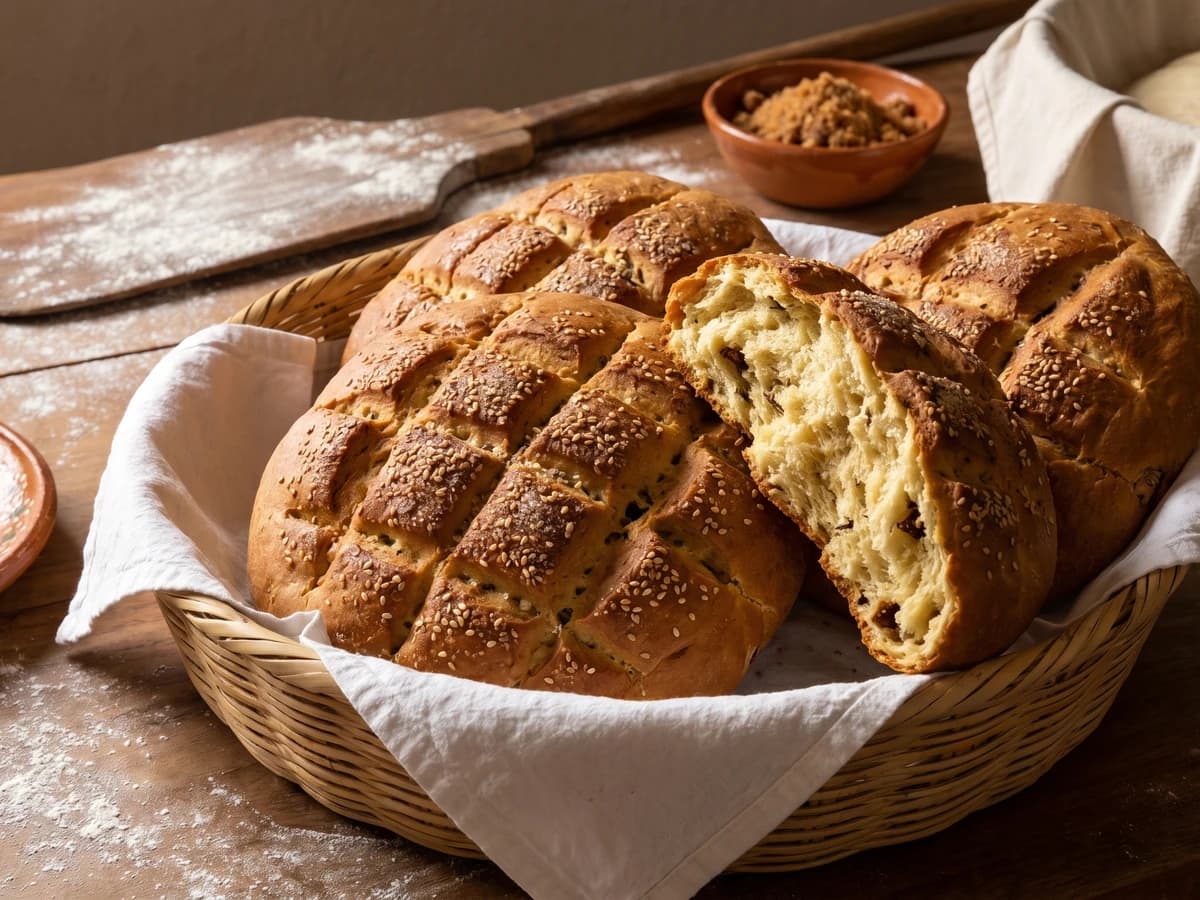
Michoacan's Tinguindin aguacatas are flat, leaf-scored sweet breads made with harina de trigo, piloncillo, anise, and manteca de cerdo, shaped by hand for the wood oven.
Chef Lupita
From Ajijic on Lake Chapala, Pan Tachihual is a lightly sweet wedding loaf built with harina de trigo, harina de maiz, piloncillo, manteca, anise, and the old Guadalajara pata.

Chef Lupita
Comitán's pan de yema shaped into little pigs, birds, and rabbits, a Chiapas bakery bread rich with egg yolks, manteca de cerdo, and anís, baked golden on hoja de plátano.