Culinary Explorer
A cooking platform built around craft, culture, and the stories behind what we eat.
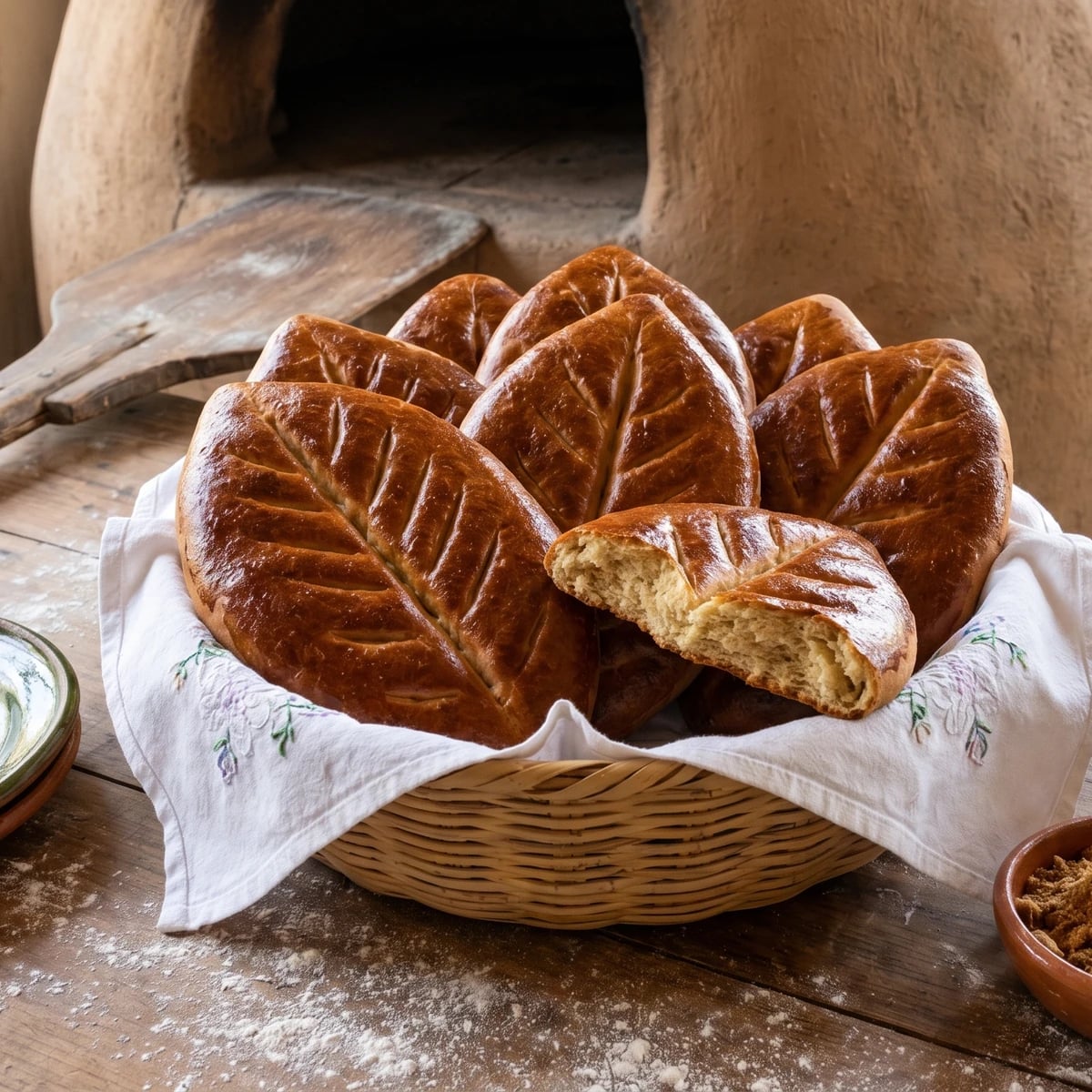
Aguacatas de Tinguindin
Created by Chef Lupita
Michoacan's Tinguindin aguacatas are flat, leaf-scored sweet breads made with harina de trigo, piloncillo, anise, and manteca de cerdo, shaped by hand for the wood oven.
This comes from Tinguindin, Michoacan, in the Purépecha region west of the lake country and below the cold highlands where wheat bread became a serious craft. Not a concha. Not a bolillo. Aguacatas are flat sweet breads, shaped and scored like avocado leaves, baked until the lard and piloncillo give the surface that deep brown shine.
The name confuses people. There is no avocado in the dough. The leaf shape is the point. In the panaderias of Tinguindin, women and men shape them fast on flour-dusted tables, marking the veins by hand before the breads go toward the horno de leña. That scoring is regional memory. Machine-perfect rounds would miss the lesson.
The dough is harina de trigo, piloncillo miel, anise, eggs, and manteca de cerdo. No me vengas con atajos. Butter makes a different bread. Vegetable shortening makes a dull one. Lard gives tenderness, flavor, and keeping power, the reason these breads travel well wrapped in cloth for visits, holidays, and altar season.
My mother did not make aguacatas in Colonia Roma. She wrote one note in the margin of her notebook after a trip through Michoacan: 'the bread looks like a leaf, but tastes like the oven.' She was right. Cada estado, su propia cocina.
Ingredients
piloncillo
Quantity
1 cup
grated or chopped
water
Quantity
1 cup
cinnamon stick
Quantity
1
| Ingredient | Quantity |
|---|---|
| piloncillograted or chopped | 1 cup |
| water | 1 cup |
| cinnamon stick | 1 |
Where cooking meets culture.
Culinary guides, cultural storytelling, and the editorial depth that makes cooking meaningful.
Discover Culinary Explorer