
Chef Lupita
Aguacatas de Tinguindin
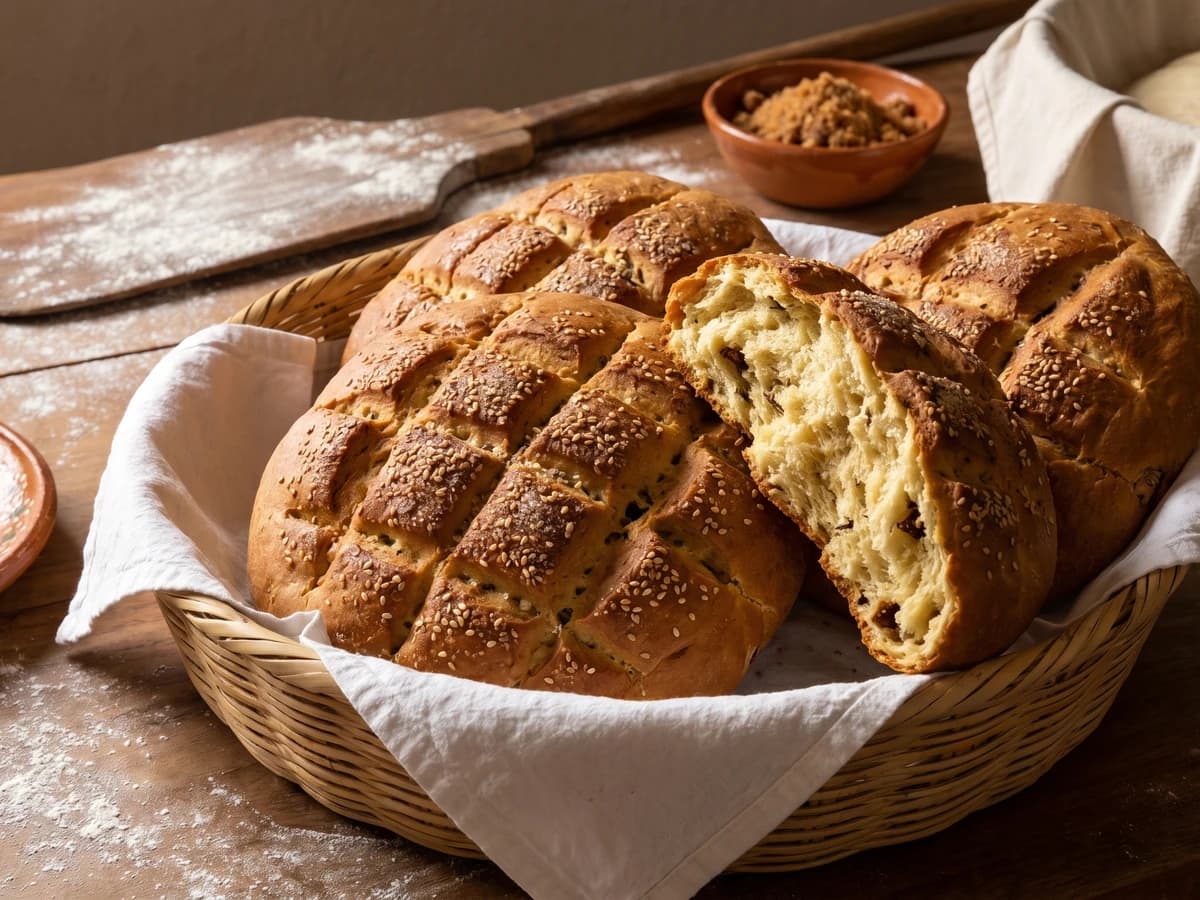
Michoacan's Tinguindin aguacatas are flat, leaf-scored sweet breads made with harina de trigo, piloncillo, anise, and manteca de cerdo, shaped by hand for the wood oven.
A cooking platform built around craft, culture, and the stories behind what we eat.
Created by
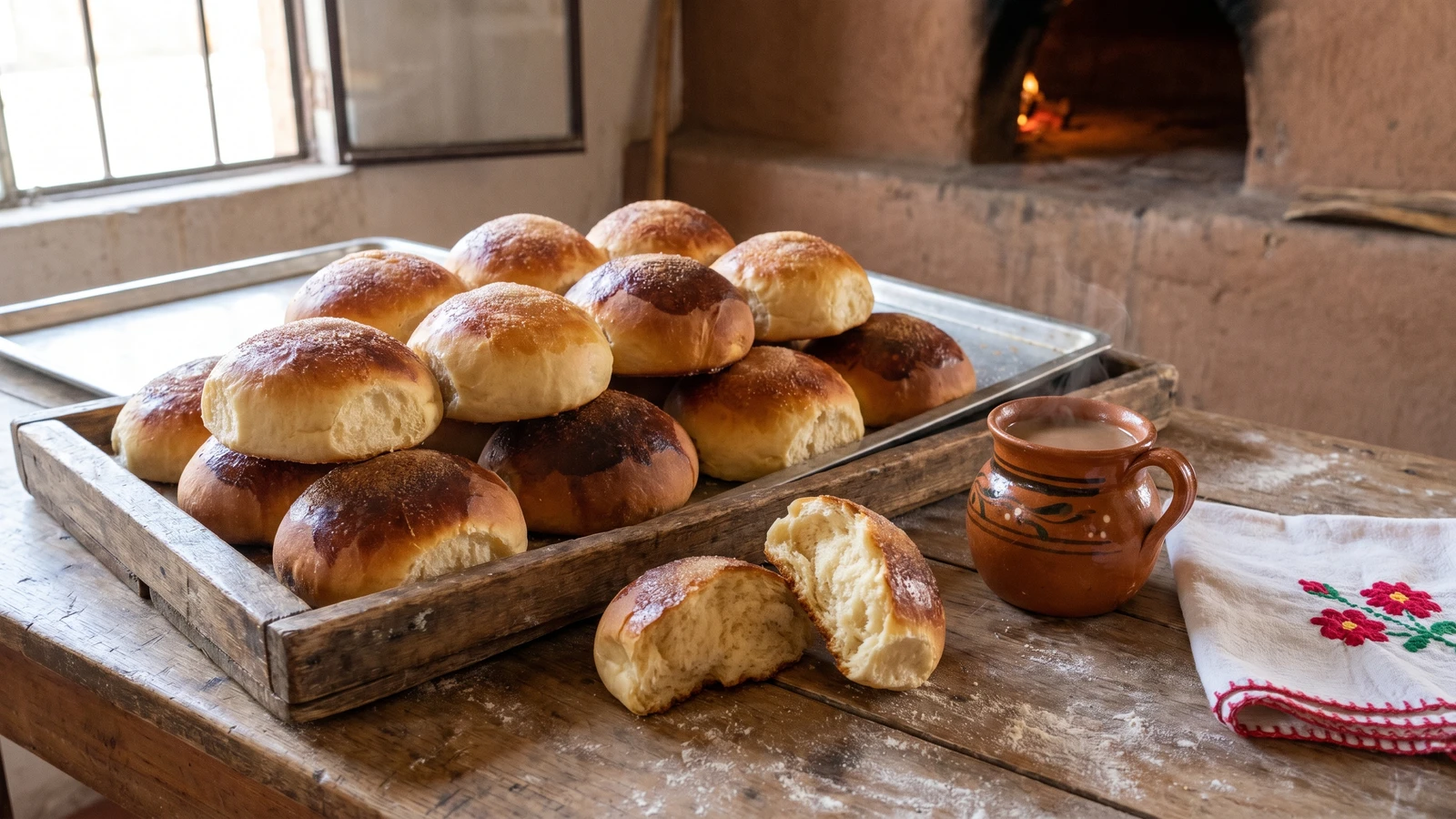
Guanajuato's daily bread from Acámbaro, a small glazed roll built on pata, enriched with manteca de cerdo, and baked until the top shines lightly for merienda.
Guanajuato, the Bajío, Acámbaro. That is where this bread belongs. The town sits in the southeast of the state, on old wheat routes, and its panaderías are known for big loaves from hornos de bóveda and smaller pieces made for the table before the day is finished. The acambarita is the little sister of the pan grande, softer, smaller, glazed, made to sit beside café de olla, not to show off in a bakery window.
The heart of the dough is the pata. Listen carefully: pata is masa madre, old dough carried from one batch to the next. It is not baking powder. It is not a packet of chemical leavener. A good pata gives the bread its gentle strength, that faint fermented depth under the sugar and lard. If you skip it, you can still make a sweet roll, but don't call it Acámbaro with too much confidence.
La manteca es el sabor. In this secular Bajío register, manteca de cerdo gives the crumb its tenderness and keeps the roll from becoming a bland milk bun. The glaze is modest, just enough sugar shine on top, because this is working bread. You tear it open with your hands, you dip it in coffee, and you understand why every state has its own kitchen. Cada estado, su propia cocina.
Acámbaro became one of Guanajuato's recognized bread towns through the expansion of wheat cultivation and milling in the Bajío after the colonial period, when the region supplied grain to mines, convents, and urban markets. The town's famous pan grande de Acámbaro was later protected as a regional specialty, and smaller forms such as acambaritas developed from the same panadero logic: wheat flour, pata, sugar, fat, and wood-oven baking adapted for daily sale. The pata system, old dough saved from a previous batch, links Acámbaro bread to older bakery guild practice, where fermentation was managed by memory, touch, and repetition rather than commercial shortcuts.
Quantity
120 grams
mature and bubbly
Quantity
90 grams
plus more for dusting
Quantity
45 grams
Quantity
500 grams
Quantity
90 grams
Quantity
8 grams
Quantity
160 grams
lukewarm
Quantity
2
room temperature
Quantity
85 grams
soft but not melted
Quantity
1 teaspoon
Quantity
1 egg beaten with 1 tablespoon milk
for brushing
Quantity
60 grams
Quantity
60 grams
Quantity
1 small piece
for the glaze
| Ingredient | Quantity |
|---|---|
| active wheat masa madre or sourdough startermature and bubbly | 120 grams |
| bread flour for the pataplus more for dusting | 90 grams |
| room-temperature water | 45 grams |
| bread flour | 500 grams |
| granulated sugar | 90 grams |
| fine sea salt | 8 grams |
| whole milklukewarm | 160 grams |
| large eggsroom temperature | 2 |
| manteca de cerdosoft but not melted | 85 grams |
| vanilla extract | 1 teaspoon |
| egg washfor brushing | 1 egg beaten with 1 tablespoon milk |
| granulated sugar for glaze | 60 grams |
| water for glaze | 60 grams |
| Mexican cinnamon stickfor the glaze | 1 small piece |
The night before baking, mix the active masa madre with 90 grams bread flour and 45 grams water until you have a firm dough. Knead it for one minute, cover it, and let it ferment at room temperature for 8 to 10 hours. In the morning it should smell clean, lightly sour, and wheaty. This is the pata. No baking powder. No excuses.
Tear the ripe pata into small pieces and put it in a mixing bowl. Add the 500 grams bread flour, sugar, salt, lukewarm milk, eggs, and vanilla. Mix until the dough comes together into a rough mass. It will look dry at first, then soften as the pata hydrates and the eggs disappear into the flour.
Knead for 6 to 8 minutes, then add the soft manteca de cerdo a spoonful at a time. Do not dump it in all at once or the dough will slide around the bowl like it has no discipline. Keep kneading until the dough is smooth, elastic, and slightly tacky. The lard should be fully absorbed, leaving the dough supple, not greasy.
Place the dough in a lightly greased bowl, cover it, and let it rise until expanded by about 75 percent, 3 to 4 hours depending on your kitchen. Masa madre does not move on your schedule. It moves when it is ready. The dough should feel airy but still strong when you press it with one finger.
Turn the dough onto a lightly floured table and divide it into 12 equal pieces, about 80 grams each. Shape each piece into a tight round by cupping your hand over it and dragging it gently against the table until the skin tightens. Set the rounds on a parchment-lined baking sheet, leaving space between them. Their tops should be smooth but not machine-perfect. This is bread shaped by hands.
Cover the shaped rolls with a clean cloth and let them proof for 2 to 3 hours, until puffy and light. When you touch the side of one roll, the indentation should fill back slowly. If it springs back immediately, it needs more time. If it collapses, you waited too long. Bread teaches you to pay attention.
Heat the oven to 375F. Brush the rolls lightly with the egg wash. Bake for 18 to 22 minutes, rotating the pan once, until the tops are deep golden and the bottoms sound hollow when tapped. A wood-fired horno de bóveda gives darker edges and a deeper crust, but a home oven can do the work if you bake with attention.
While the rolls bake, combine 60 grams sugar, 60 grams water, and the cinnamon stick in a small saucepan. Simmer for 3 to 4 minutes, just until the sugar dissolves and the syrup lightly coats a spoon. Remove the cinnamon. This glaze should shine, not drown the bread.
Brush the hot rolls with the cinnamon syrup as soon as they come out of the oven. Let them rest on a rack for at least 20 minutes before tearing one open. The crumb should be soft, enriched, and slightly stretchy from the pata, with a light sweetness on the top. Serve with café de olla. Así se hace y punto.
1 serving (about 100g)
Culinary guides, cultural storytelling, and the editorial depth that makes cooking meaningful.
Discover Culinary ExplorerChef Lupita
Michoacan's Tinguindin aguacatas are flat, leaf-scored sweet breads made with harina de trigo, piloncillo, anise, and manteca de cerdo, shaped by hand for the wood oven.
Chef Lupita
From Ajijic on Lake Chapala, Pan Tachihual is a lightly sweet wedding loaf built with harina de trigo, harina de maiz, piloncillo, manteca, anise, and the old Guadalajara pata.

Chef Lupita
Comitán's pan de yema shaped into little pigs, birds, and rabbits, a Chiapas bakery bread rich with egg yolks, manteca de cerdo, and anís, baked golden on hoja de plátano.

Chef Lupita
The Noroeste sourdough roll from Sonora and Sinaloa, built on pata starter laced with Mexican lager and lime, with a dark crackling crust and a dense sour crumb that drinks capirotada syrup without falling apart.