
Chef Lupita
Acambaritas de Acámbaro
Guanajuato's daily bread from Acámbaro, a small glazed roll built on pata, enriched with manteca de cerdo, and baked until the top shines lightly for merienda.
A cooking platform built around craft, culture, and the stories behind what we eat.

Created by
Guerrero's Tierra Caliente bread from Tlapehuala, built with harina de maiz, harina de trigo, piloncillo, manteca de cerdo, and an overnight ferment that gives capirotada its soul.
Guerrero, Tierra Caliente, Tlapehuala. That is where pan de vaqueta belongs. Not in a generic basket of Mexican sweet breads. This bread comes from a hot, dry region where corn is not decoration, it is daily survival, and where Lenten capirotada needs a bread that can drink piloncillo syrup without collapsing.
The defining thing is not only the harina de maiz. It is the way the dough was handled. Older panaderos rested it on a cured cowhide, the vaqueta, which held warmth, absorbed a little moisture, and gave the bread its name. Most of you will not have a food-safe cured hide in the kitchen. Fine. Use a well-floured linen-lined wooden board and understand what you are replacing. A substitution is a compromise, not an upgrade.
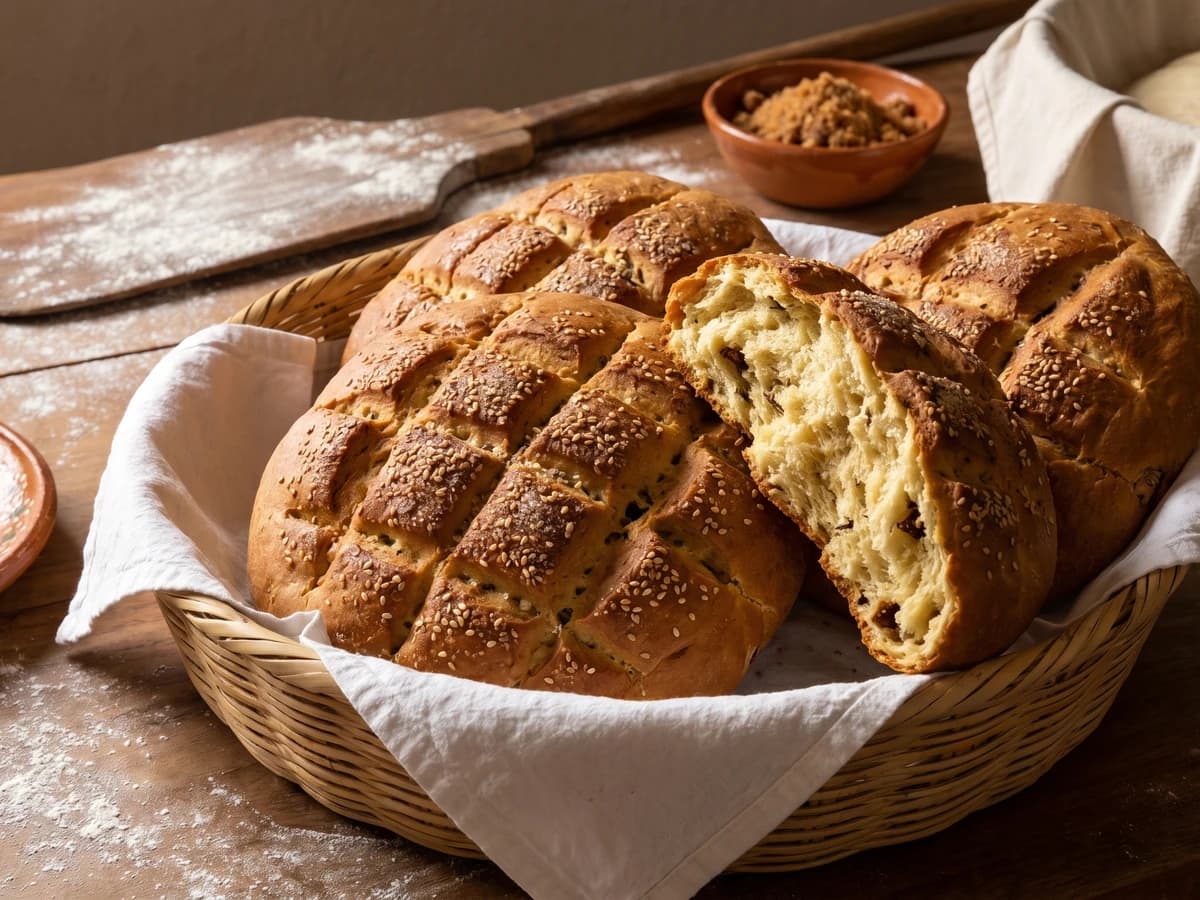
This bread is faintly sweet, light for a corn bread, and built with harina de trigo for structure, harina de maiz for flavor, piloncillo for a dark sweetness, manteca de cerdo for tenderness, and masa madre for patience. No me vengas con atajos. The dough rests overnight because flavor needs time. The best loaves I saw in Tlapehuala came from a horno de leña before dawn, browned by wood heat and stacked in woven baskets while the town was still deciding what the day would cost.
My mother did not make this one in Colonia Roma. She wrote one line in her notebook after visiting Guerrero: pan de vaqueta para capirotada, poco dulce, mucha miga. She was right. The crumb matters more than the sugar. Saber cocinar es saber vivir.
Pan de vaqueta is associated with Tlapehuala in Guerrero's Tierra Caliente, where it became tied to Cuaresma because its dry but tender crumb works especially well in capirotada, the Lenten bread pudding sweetened with piloncillo syrup. The name refers to vaqueta, cured cowhide once used as a work surface or resting surface for dough in regional panaderias, a practical tool in hot climates before standardized bakery cloths and stainless tables. Guerrero's version sits apart from western breads like Guadalajara birote, which is a sourdough and not a bolillo, because pan de vaqueta is built for soaking, feeding families, and stretching the pantry through the religious calendar.
Quantity
150 grams
100 percent hydration, fed and bubbly
Quantity
280 grams
divided
Quantity
90 grams
finely grated
Quantity
360 grams, plus more for dusting
Quantity
140 grams
not cornstarch
Quantity
7 grams
Quantity
5 grams
lightly crushed
Quantity
60 grams
softened
Quantity
1
room temperature
Quantity
1 tablespoon
for brushing
Quantity
1 teaspoon
for topping
| Ingredient | Quantity |
|---|---|
| active masa madre100 percent hydration, fed and bubbly | 150 grams |
| warm waterdivided | 280 grams |
| piloncillofinely grated | 90 grams |
| harina de trigo | 360 grams, plus more for dusting |
| fine harina de maiznot cornstarch | 140 grams |
| fine sea salt | 7 grams |
| anise seedlightly crushed | 5 grams |
| manteca de cerdosoftened | 60 grams |
| large eggroom temperature | 1 |
| milk or waterfor brushing | 1 tablespoon |
| sesame seedsfor topping | 1 teaspoon |
Warm 160 grams of the water until it feels warm to your finger, not hot. Stir in the grated piloncillo until dissolved. Let it cool until just warm. If you pour hot syrup over masa madre, you weaken the ferment before it begins. Patience starts here.
In a large bowl, combine the harina de trigo, harina de maiz, salt, and crushed anise seed. Add the masa madre, cooled piloncillo water, remaining 120 grams water, softened manteca de cerdo, and egg. Mix with your hand until no dry flour remains. The dough will feel tacky and slightly gritty from the corn. That texture is correct.
Turn the dough onto a lightly floured table and knead for 10 to 12 minutes. It should become smoother, stretchy, and soft, but it will not feel like white pan dulce dough because the harina de maiz interrupts the gluten. Do not drown it in extra flour. A heavy hand makes a heavy loaf.
Shape the dough into a round, place it in a lightly greased bowl, cover, and let it rise at cool room temperature for 10 to 12 hours. In Tlapehuala, older bakers rested dough on vaqueta. In your kitchen, use a covered bowl or a flour-dusted linen-lined basket. The dough should rise by about half, smell lightly sour and sweet, and feel airy under your fingers.
Turn the dough onto a floured board. Divide it into 2 equal pieces and shape each into a low oval or round loaf, pressing gently so the crumb stays even. Place the loaves on a parchment-lined sheet pan or a well-floured wooden peel if you are baking on a stone. Cover with a cloth and let proof 1 1/2 to 2 hours, until puffy and slow to spring back when touched.
Heat the oven to 400F with a baking stone inside if you have one. A horno de leña gives stronger bottom heat and a deeper crust, but a home oven can do honest work if you preheat it properly. Give it at least 45 minutes. Bread knows when the oven was rushed.
Beat the tablespoon of milk or water with a fork and brush the tops lightly. Sprinkle with sesame seeds. Score each loaf with 2 or 3 shallow cuts. The cuts guide the expansion so the bread opens where you tell it to. La cocina no es decoración, es trabajo.
Bake for 30 to 35 minutes, rotating once, until the loaves are deep golden, firm on the sides, and sound hollow when tapped underneath. The crust should be thin and the crumb should smell of corn, piloncillo, and anise. Cool at least 1 hour before slicing. Cut too early and you crush the structure you spent all night building.
Serve the bread in thick slices with cafe de olla, or let it sit uncovered overnight if you are making capirotada. For capirotada de Cuaresma, slightly dry bread is not stale bread. It is prepared bread. Así se hace y punto.
1 serving (about 73g)
Culinary guides, cultural storytelling, and the editorial depth that makes cooking meaningful.
Discover Culinary ExplorerChef Lupita
Guanajuato's daily bread from Acámbaro, a small glazed roll built on pata, enriched with manteca de cerdo, and baked until the top shines lightly for merienda.

Chef Lupita
Michoacan's Tinguindin aguacatas are flat, leaf-scored sweet breads made with harina de trigo, piloncillo, anise, and manteca de cerdo, shaped by hand for the wood oven.
Chef Lupita
From Ajijic on Lake Chapala, Pan Tachihual is a lightly sweet wedding loaf built with harina de trigo, harina de maiz, piloncillo, manteca, anise, and the old Guadalajara pata.

Chef Lupita
Comitán's pan de yema shaped into little pigs, birds, and rabbits, a Chiapas bakery bread rich with egg yolks, manteca de cerdo, and anís, baked golden on hoja de plátano.