
Chef Juliette
Bouillabaisse à la Marseillaise
Marseille's great fish stew, saffron-gold and garlic-scented, proves that a hard boil can be the careful choice: it binds olive oil into broth before the whole pot meets bread.
A cooking platform built around craft, culture, and the stories behind what we eat.
Created by
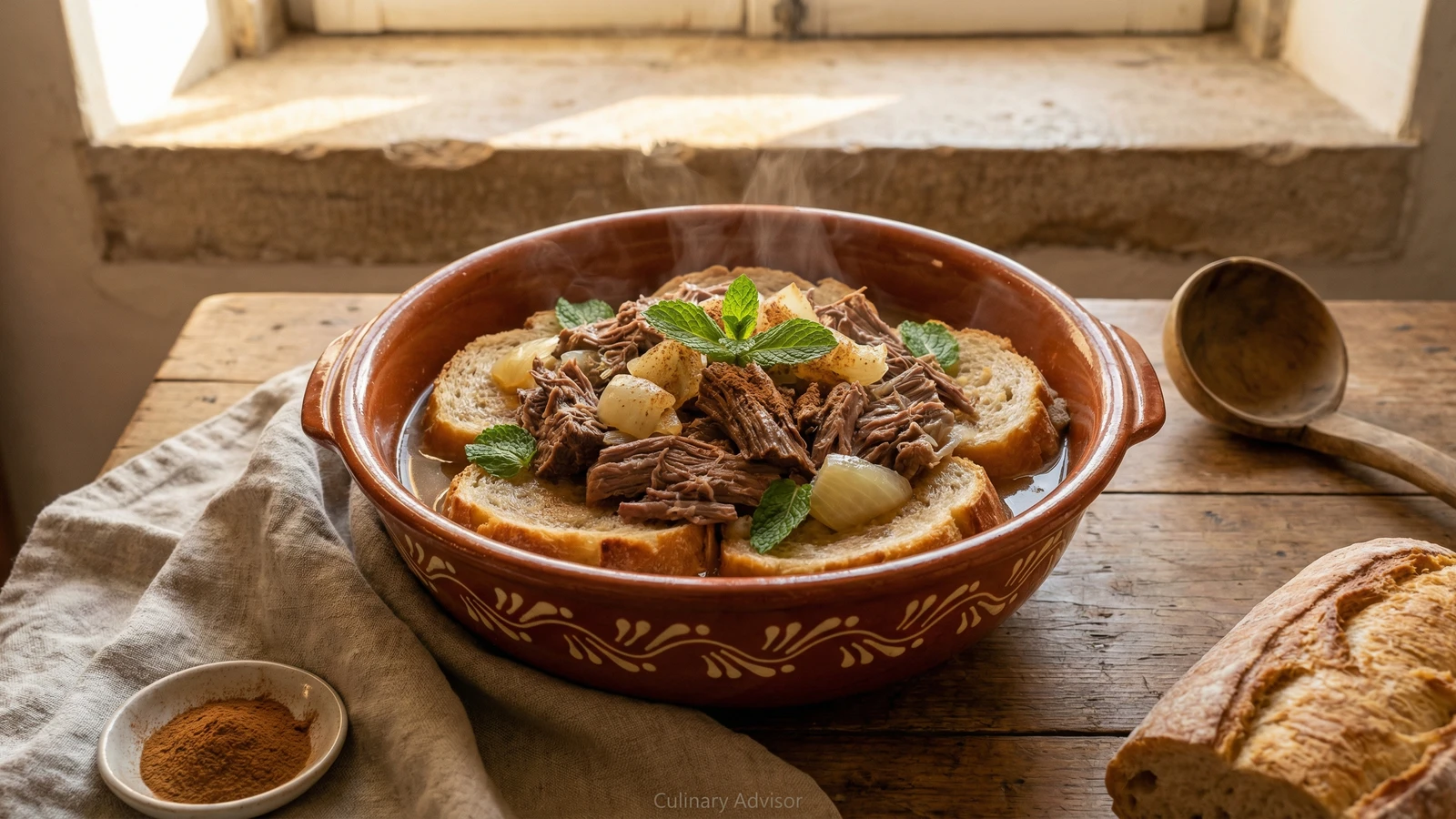
The sacred soup of the Azores, where beef simmers with mint and cinnamon until the broth becomes holy in its own right. Bread drinks the offering. A community gathers. This is who we are.
This is not just a recipe. This is a sacrament.
Every year across the Azores and wherever Azoreans have scattered across the world, communities gather for the Festa do Espírito Santo. The Holy Ghost festivals. And at the center of every festa, there is this soup. Sopas. Bread on the bottom, beef on top, a broth perfumed with mint and cinnamon poured over everything. You eat it with your neighbors, with strangers, with anyone who comes hungry. That's the point.
I learned to make this not from Avó Leonor (she was Alentejana, after all) but from the grandmothers of São Miguel when I traveled there to document their recipes. They showed me how the mint must be fresh, how the cinnamon is essential but subtle, how the bread must be yesterday's bread because fresh bread turns to paste. They showed me how the soup is served in the império, the little chapels built for this purpose, and how the mordomo who sponsors the festa feeds anyone who comes. Rich or poor. Known or stranger. Everyone eats.
Queen Isabel started this tradition in the 14th century, feeding the poor from her own table. Seven hundred years later, we're still feeding each other. A cozinha é memória. Some memories are older than families. Some memories belong to everyone.
Sopas do Espírito Santo traces directly to Queen Isabel of Portugal in the 14th century, who distributed food to the poor during Pentecost celebrations. The tradition took deepest root in the Azores, where the festas do Espírito Santo became the islands' most important cultural celebration. UNESCO recognized the festival as Intangible Cultural Heritage in 2023, preserving a tradition that has united Azorean communities for seven centuries.
Quantity
1.5 kg
cut into large pieces
Quantity
2 large
quartered
Quantity
1 whole head
halved crosswise
Quantity
4
Quantity
1 tablespoon
Quantity
2 tablespoons
Quantity
2
Quantity
1 large bunch
tied with kitchen string
Quantity
1 tablespoon
Quantity
3 liters
Quantity
1 loaf (about 500g)
sliced thick
Quantity
for garnish
Quantity
for dusting
| Ingredient | Quantity |
|---|---|
| beef brisket or chuckcut into large pieces | 1.5 kg |
| onionsquartered | 2 large |
| garlichalved crosswise | 1 whole head |
| bay leaves | 4 |
| whole black peppercorns | 1 tablespoon |
| sea salt | 2 tablespoons |
| cinnamon sticks | 2 |
| fresh mint (hortelã)tied with kitchen string | 1 large bunch |
| pimenta da terra or sweet paprika | 1 tablespoon |
| water | 3 liters |
| day-old crusty breadsliced thick | 1 loaf (about 500g) |
| fresh mint leaves | for garnish |
| ground cinnamon | for dusting |
In your largest pot, combine the beef, onions, halved garlic head, bay leaves, peppercorns, salt, cinnamon sticks, the tied bunch of mint, and pimenta da terra. Cover with the water. The meat should be submerged. Bring to a boil over high heat, then immediately reduce to the gentlest simmer. Skim any foam that rises in the first 15 minutes.
Let the soup simmer uncovered for 2.5 to 3 hours. The surface should barely tremble. A few lazy bubbles, nothing more. You're looking for meat that falls apart at the touch of a fork, a broth that's rich and golden, a kitchen that smells of mint and cinnamon and something ancient. Taste the broth after 2 hours and adjust salt. It should be deeply savory with a whisper of sweetness from the cinnamon.
Remove the mint bundle and cinnamon sticks from the broth. Slice the day-old bread into thick slices, about 2 centimeters. Never fresh bread. Fresh bread dissolves into nothing. Day-old bread drinks the broth and holds its shape. Arrange the bread slices in a single layer in wide, deep bowls or a large serving platter.
Lift the beef from the broth and slice or shred it into generous pieces. Place the meat on top of the bread. Now comes the moment. Ladle the hot broth generously over everything. The bread should soak through. The meat should swim. Keep ladling until the bread is saturated but not floating. Let it rest for 2 minutes so the bread drinks deeply.
Scatter fresh mint leaves over the top. Dust lightly with ground cinnamon. Serve immediately in the bowl, or if you're doing this properly, serve it family-style from one great platter, everyone reaching in together. This is food meant to be shared. At a real festa, the mordomo would be serving this to hundreds. At your table, serve it with the same spirit. No one eats alone.
1 serving (about 450g)
Culinary guides, cultural storytelling, and the editorial depth that makes cooking meaningful.
Discover Culinary ExplorerChef Juliette
Marseille's great fish stew, saffron-gold and garlic-scented, proves that a hard boil can be the careful choice: it binds olive oil into broth before the whole pot meets bread.

Chef Juliette
Waterzoi asks fresh, bone-in river fish to thicken its own buttery broth, with parsley root and pepper for company. No flour, no stockpot, just a brisk simmer watched closely.
Chef Juliette
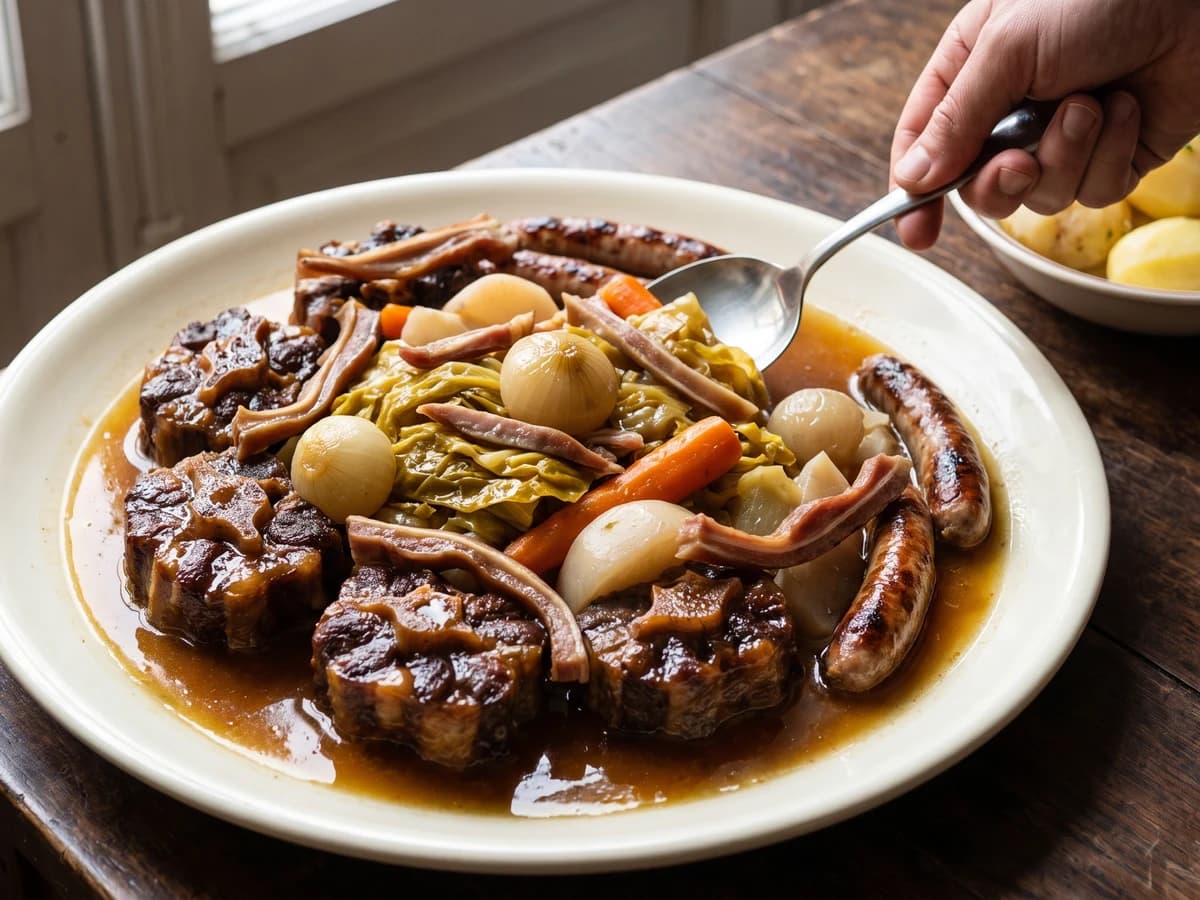
Queue de Bœuf en Hochepot gathers oxtail, pig's trotter and ear, cabbage, roots, and grilled chipolatas around a clear, gelatin-rich broth whose quiet simmer keeps every piece tender and distinct.

Chef Juliette
Beef shoulder larded with bacon, sharpened by red wine and vinegar, then sealed with garlic, vegetables, and dry lemon peel until the low oven turns it yielding and the gravy darkly glossy.