
Chef Juliette
Bouillabaisse à la Marseillaise
Marseille's great fish stew, saffron-gold and garlic-scented, proves that a hard boil can be the careful choice: it binds olive oil into broth before the whole pot meets bread.
A cooking platform built around craft, culture, and the stories behind what we eat.
Created by
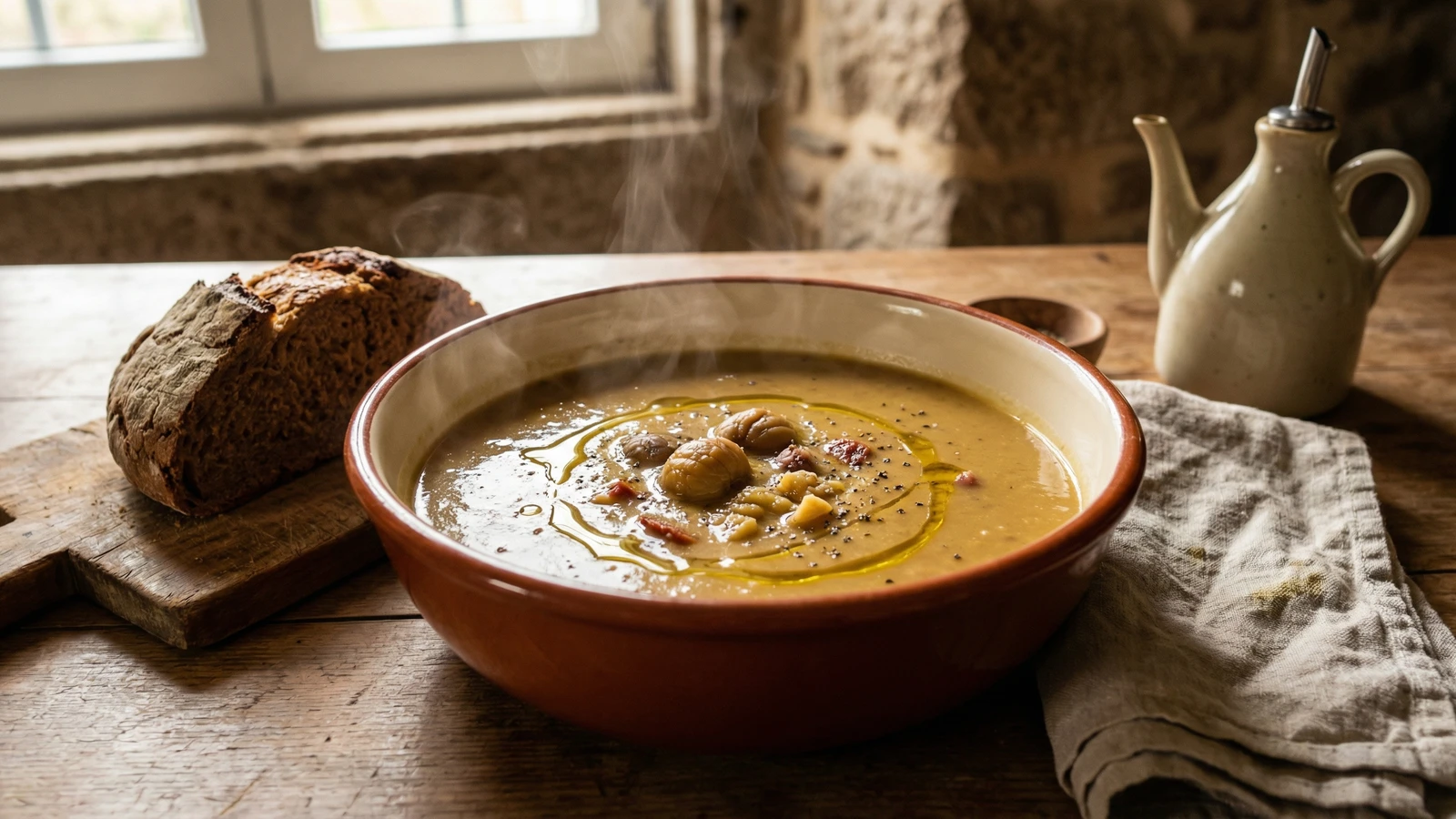
The soup of Trás-os-Montes winters, where chestnuts were bread, chestnuts were life, and a bowl of this velvet kept families alive when snow buried the villages.
In Trás-os-Montes, they call the chestnut tree the árvore do pão. The bread tree. Because for centuries, when wheat wouldn't grow in those cold mountain soils and rye was scarce, the chestnut was everything. Ground into flour for bread. Roasted on the fire. Boiled into soup.
I learned about this soup not from Avó Leonor (she was Alentejana, her trees were cork and olive), but from the grandmothers I've documented in villages like Bragança and Vinhais. Women in their eighties who remember when chestnut soup wasn't comfort food. It was survival food. The difference matters.
The soup itself is almost absurdly simple. Chestnuts, water, a whisper of chouriço for depth, good azeite to finish. You cook it until the chestnuts surrender completely, then crush some against the side of the pot to thicken the broth. No cream. No butter. The chestnuts provide their own velvet. Their own sweetness. The forest gives you everything you need.
At Mesa da Avó, I serve this in November, during chestnut season, when you can still find fresh castanhas at the markets. The guests who grew up in Trás-os-Montes get quiet when they taste it. They're not just eating soup. They're sitting in their grandmother's kitchen again, watching snow fall outside, warming their hands on the bowl.
Chestnuts sustained the isolated mountain communities of Trás-os-Montes for centuries, earning the tree its name árvore do pão (bread tree). Before modern roads connected these villages, families survived winters on stored chestnuts when other food sources failed. This soup dates back at least to the medieval period, when monasteries in the region documented chestnut-based dishes as peasant sustenance.
Quantity
750g
or 500g frozen peeled chestnuts
Quantity
150g
casing removed, crumbled
Quantity
1 medium
diced
Quantity
2
smashed
Quantity
2
Quantity
2 liters
Quantity
1 teaspoon, plus more to taste
Quantity
1/4 cup, plus more for serving
Quantity
freshly ground, to taste
Quantity
for serving
| Ingredient | Quantity |
|---|---|
| fresh chestnutsor 500g frozen peeled chestnuts | 750g |
| chouriço de carne transmontanocasing removed, crumbled | 150g |
| oniondiced | 1 medium |
| garlic clovessmashed | 2 |
| bay leaves | 2 |
| water or light chicken broth | 2 liters |
| sea salt | 1 teaspoon, plus more to taste |
| extra virgin olive oil (azeite) | 1/4 cup, plus more for serving |
| black pepper | freshly ground, to taste |
| crusty bread (optional) | for serving |
If using fresh chestnuts, score an X on the flat side of each one with a sharp knife. Bring a pot of water to a boil and blanch the chestnuts for 3 minutes. Remove a few at a time (keeping the rest warm in the water) and peel away both the hard outer shell and the papery inner skin. Work quickly. Cold chestnuts are stubborn chestnuts. This takes patience. Put on some fado and settle in.
In a heavy pot, warm the olive oil over medium-low heat. Add the crumbled chouriço and cook, stirring occasionally, until it renders its fat and turns golden at the edges, about 5 minutes. The kitchen should smell like smoke and paprika. Add the onion and cook slowly until soft and translucent, another 8 to 10 minutes. Add the garlic in the last minute. Não tenhas pressa.
Add the peeled chestnuts to the pot and stir to coat them in the fragrant fat. Pour in the water or broth. Add the bay leaves and salt. Bring to a gentle simmer, then reduce heat to low. Cover and cook until the chestnuts are completely tender and beginning to break apart, 35 to 45 minutes. Some will hold their shape; others will crumble. Both are right.
Remove the bay leaves. Using the back of a wooden spoon, crush about half of the chestnuts against the side of the pot. This thickens the broth and creates that velvety texture. Leave the rest whole for contrast. Taste and adjust the salt. The soup should be nutty, slightly sweet from the chestnuts, savory from the chouriço. If it needs brightness, a small splash of white wine vinegar can help, but this is optional.
Ladle the soup into deep bowls. Drizzle each portion with your best azeite. Finish with freshly ground black pepper. Serve immediately with thick slices of pão de centeio or broa for dipping. In Trás-os-Montes, they say you haven't finished your soup until you've wiped the bowl clean with bread. I don't argue with tradition.
1 serving (about 400g)
Culinary guides, cultural storytelling, and the editorial depth that makes cooking meaningful.
Discover Culinary ExplorerChef Juliette
Marseille's great fish stew, saffron-gold and garlic-scented, proves that a hard boil can be the careful choice: it binds olive oil into broth before the whole pot meets bread.

Chef Juliette
Waterzoi asks fresh, bone-in river fish to thicken its own buttery broth, with parsley root and pepper for company. No flour, no stockpot, just a brisk simmer watched closely.
Chef Juliette
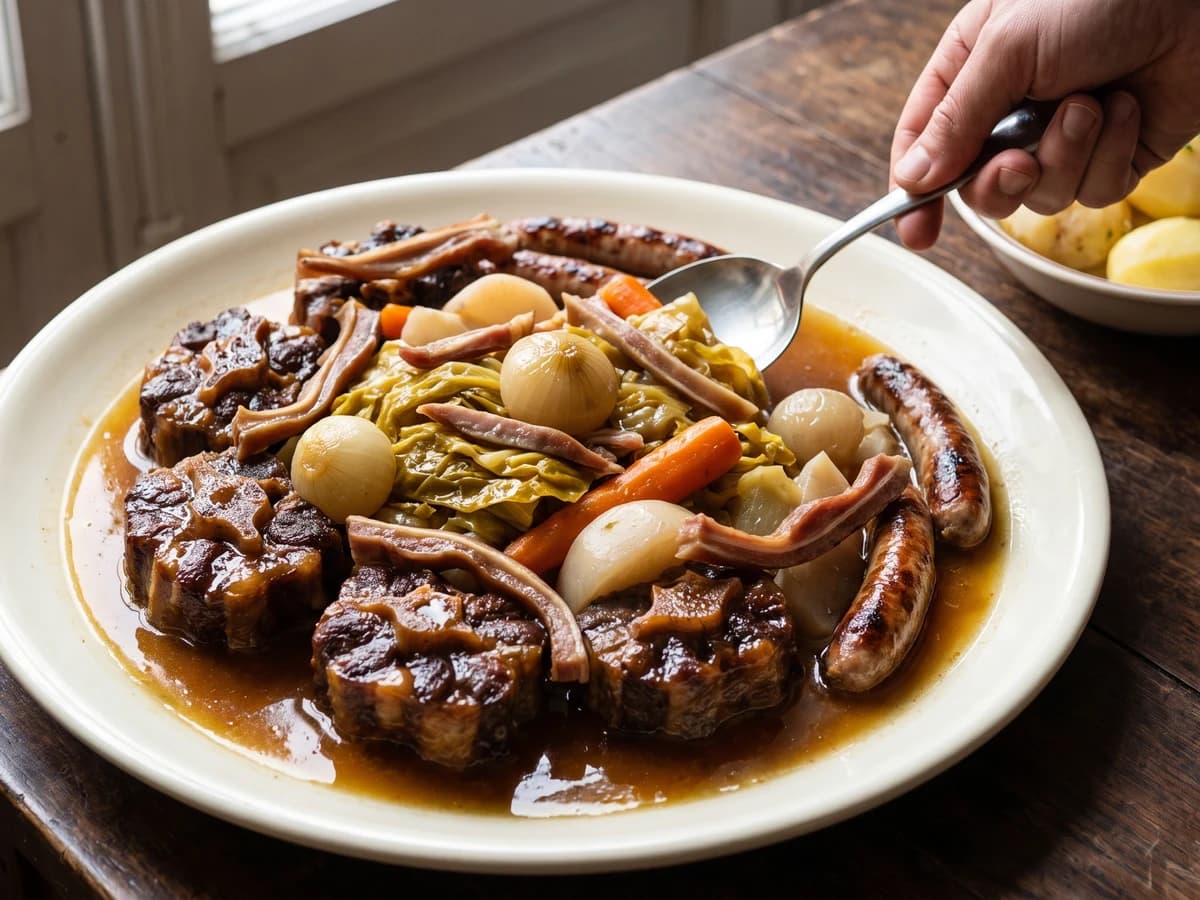
Queue de Bœuf en Hochepot gathers oxtail, pig's trotter and ear, cabbage, roots, and grilled chipolatas around a clear, gelatin-rich broth whose quiet simmer keeps every piece tender and distinct.

Chef Juliette
Beef shoulder larded with bacon, sharpened by red wine and vinegar, then sealed with garlic, vegetables, and dry lemon peel until the low oven turns it yielding and the gravy darkly glossy.