
Chef Dean
Grilled Salmon Collar with Ponzu
The fisherman's reward: rich, fatty salmon collar charred over high heat until the skin shatters, served with a bright citrus ponzu that cuts through the richness like a cold Pacific breeze.
A cooking platform built around craft, culture, and the stories behind what we eat.
Created by
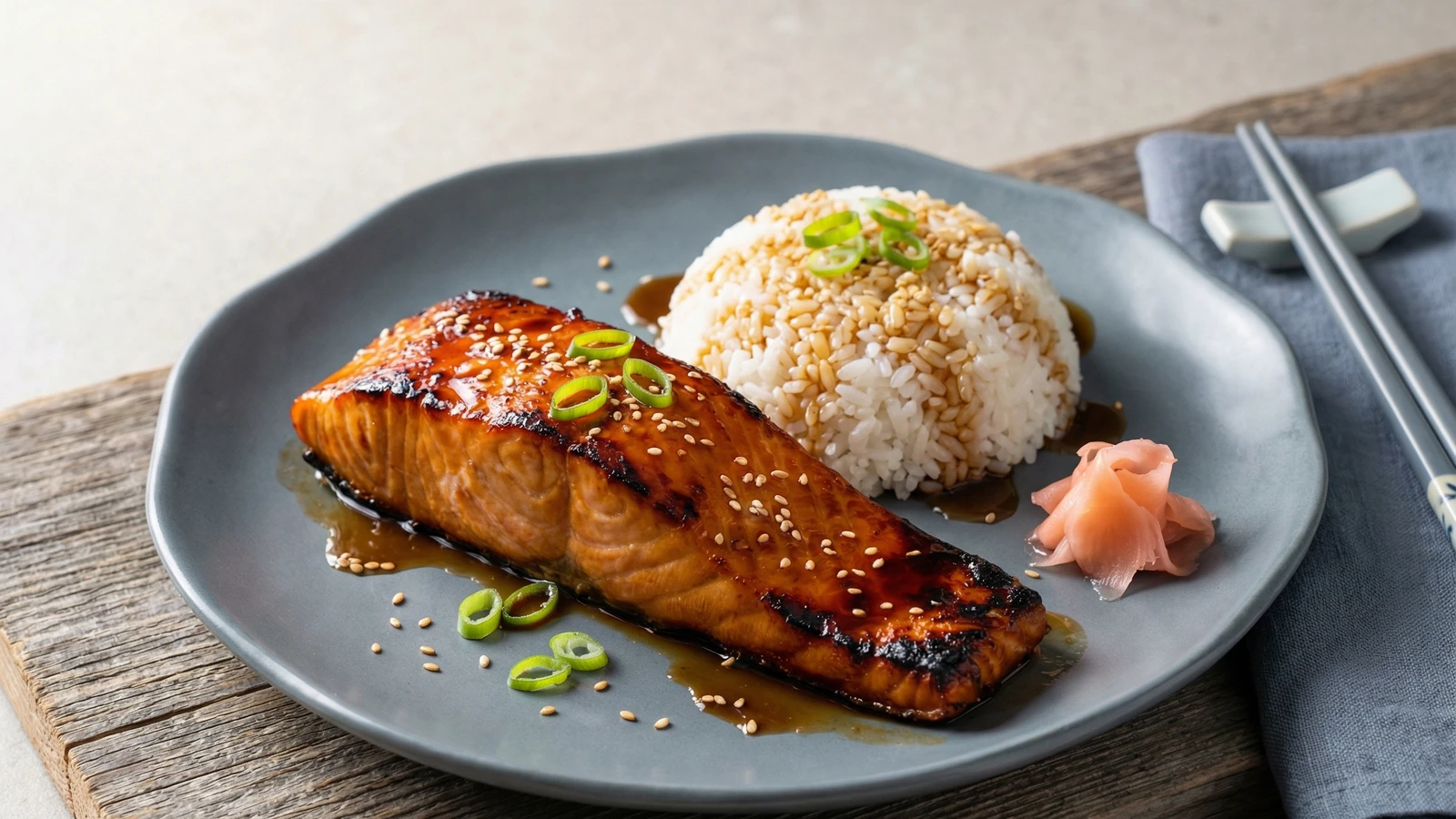
Wild salmon brushed with glossy house-made teriyaki, charred at the edges and silky within. This is the dish that built Seattle's lunch counter legacy, where Japanese immigrants and Pacific waters created something entirely new.
Seattle lunch counters have served this dish since the 1930s. Japanese immigrants brought teriyaki technique to the Pacific Northwest, where wild salmon was so abundant it sold for pennies a pound. The marriage was inevitable. What emerged became the definitive Seattle teriyaki: thick fillets of king or sockeye, glazed until lacquered and caramelized, served over rice with pickled ginger on the side. This isn't fusion cuisine. This is regional American cooking at its finest.
The sauce requires four ingredients and fifteen minutes. Soy sauce, mirin, sake, and sugar, reduced until it coats a spoon with that characteristic gloss. I've watched cooks complicate this with garlic, ginger, citrus, pineapple. They're missing the point. Traditional teriyaki is about restraint. The sauce exists to amplify the salmon, not compete with it. Let the fish speak.
Buy your salmon from someone who can tell you where it came from and when it was caught. Wild Pacific salmon runs from late spring through fall, each species offering something different: king for its fat content, sockeye for its deep color, coho for its mild sweetness. Farmed Atlantic works in a pinch, but you'll notice the difference. Wild salmon has earned its reputation through flavor, not marketing.
This recipe honors both traditions that created it. Japanese technique demands precision with the glaze, building layers through multiple applications. Pacific Northwest sensibility insists on respecting the ingredient above all else. Together they produce something worthy of the waters that shaped this region's cuisine.
Quantity
4 (6 oz each)
Quantity
1/2 cup
Quantity
1/2 cup
Quantity
1/4 cup
Quantity
3 tablespoons
Quantity
2 tablespoons
Quantity
2 cups
Quantity
2 1/2 cups
Quantity
1 tablespoon
Quantity
for garnish
Quantity
2
thinly sliced
Quantity
for serving
| Ingredient | Quantity |
|---|---|
| salmon fillets, skin-on, preferably wild Pacific | 4 (6 oz each) |
| soy sauce | 1/2 cup |
| mirin | 1/2 cup |
| sake | 1/4 cup |
| granulated sugar | 3 tablespoons |
| neutral oil | 2 tablespoons |
| short-grain Japanese rice | 2 cups |
| water | 2 1/2 cups |
| rice vinegar | 1 tablespoon |
| toasted sesame seeds (optional) | for garnish |
| green onionsthinly sliced | 2 |
| pickled ginger (optional) | for serving |
Rinse the rice in a fine-mesh strainer under cold water until the water runs clear, about 90 seconds of agitation. This removes excess starch and prevents gummy results. Combine rice and water in a heavy-bottomed pot. Bring to a boil over high heat, then immediately reduce to the lowest setting. Cover and cook for 18 minutes without lifting the lid. Remove from heat and let stand, still covered, for 10 minutes.
Combine soy sauce, mirin, sake, and sugar in a small saucepan over medium heat. Stir until the sugar dissolves completely. Bring to a gentle simmer and cook for 12 to 15 minutes, watching carefully. The sauce is ready when it coats the back of a spoon and a line drawn through it holds its shape for a moment. It will thicken further as it cools. You should have about 2/3 cup of glossy, amber glaze.
Pat the salmon fillets thoroughly dry with paper towels, pressing firmly to remove all surface moisture. Season both sides with a light hand of salt. The soy sauce in the glaze carries plenty of salinity, so restraint matters here. Let the fillets rest at room temperature while your pan heats. Cold fish hitting a hot pan steams rather than sears.
Heat the oil in a large cast iron or stainless steel skillet over medium-high heat until it shimmers and flows like water across the pan. Lay the fillets skin-side down, pressing gently with a spatula for the first 30 seconds to ensure full contact. You'll hear an aggressive sizzle that settles into a steady crackle. Cook without moving for 4 minutes. The skin should release easily when ready, golden and crisp.
Flip the fillets and immediately brush the seared top generously with teriyaki sauce. Cook flesh-side down for 2 minutes, then flip again. Apply another coat of glaze to the flesh side. Repeat this process twice more, flipping and glazing every minute or so, building lacquered layers. The sugars in the sauce will caramelize at the edges, creating those characteristic charred spots. Total cooking time after the initial sear runs 5 to 6 minutes for medium (slightly translucent center) or 7 to 8 for well done.
Fluff the cooked rice with a fork or rice paddle, separating the grains gently. Drizzle the rice vinegar over the surface and fold it through. This adds brightness that balances the rich glaze. The rice should be tender with distinct, separate grains.
Mound rice onto warmed plates, creating a bed for the salmon. Place the glazed fillet beside or atop the rice, skin-side up to showcase its lacquered finish. Drizzle any remaining sauce from the pan over the fish and rice. Scatter sesame seeds and sliced green onions over everything. Serve immediately with pickled ginger on the side. The contrast between rich salmon, sticky rice, and sharp ginger is the whole point.
1 serving (about 330g)
Culinary guides, cultural storytelling, and the editorial depth that makes cooking meaningful.
Discover Culinary ExplorerChef Dean
The fisherman's reward: rich, fatty salmon collar charred over high heat until the skin shatters, served with a bright citrus ponzu that cuts through the richness like a cold Pacific breeze.

Chef Ally
Silken black cod transformed by days in white miso, then broiled until the surface shatters into sweet, salty caramel while the flesh beneath stays impossibly tender and rich.

Chef Dean
Wild king salmon brushed with sweet white miso and broiled until the glaze blisters into a lacquered crust, the flesh beneath silky and rich. This is the Pacific Northwest on a plate, where Japanese tradition meets the bounty of cold northern waters.

Chef Dean
Silken Pacific cod draped in sweet white miso, broiled until the glaze caramelizes into a burnished lacquer that shatters at the touch of a fork. This is where Japanese precision meets Pacific Northwest abundance.