
Chef Dean
Grilled Salmon Collar with Ponzu
The fisherman's reward: rich, fatty salmon collar charred over high heat until the skin shatters, served with a bright citrus ponzu that cuts through the richness like a cold Pacific breeze.
A cooking platform built around craft, culture, and the stories behind what we eat.
Created by
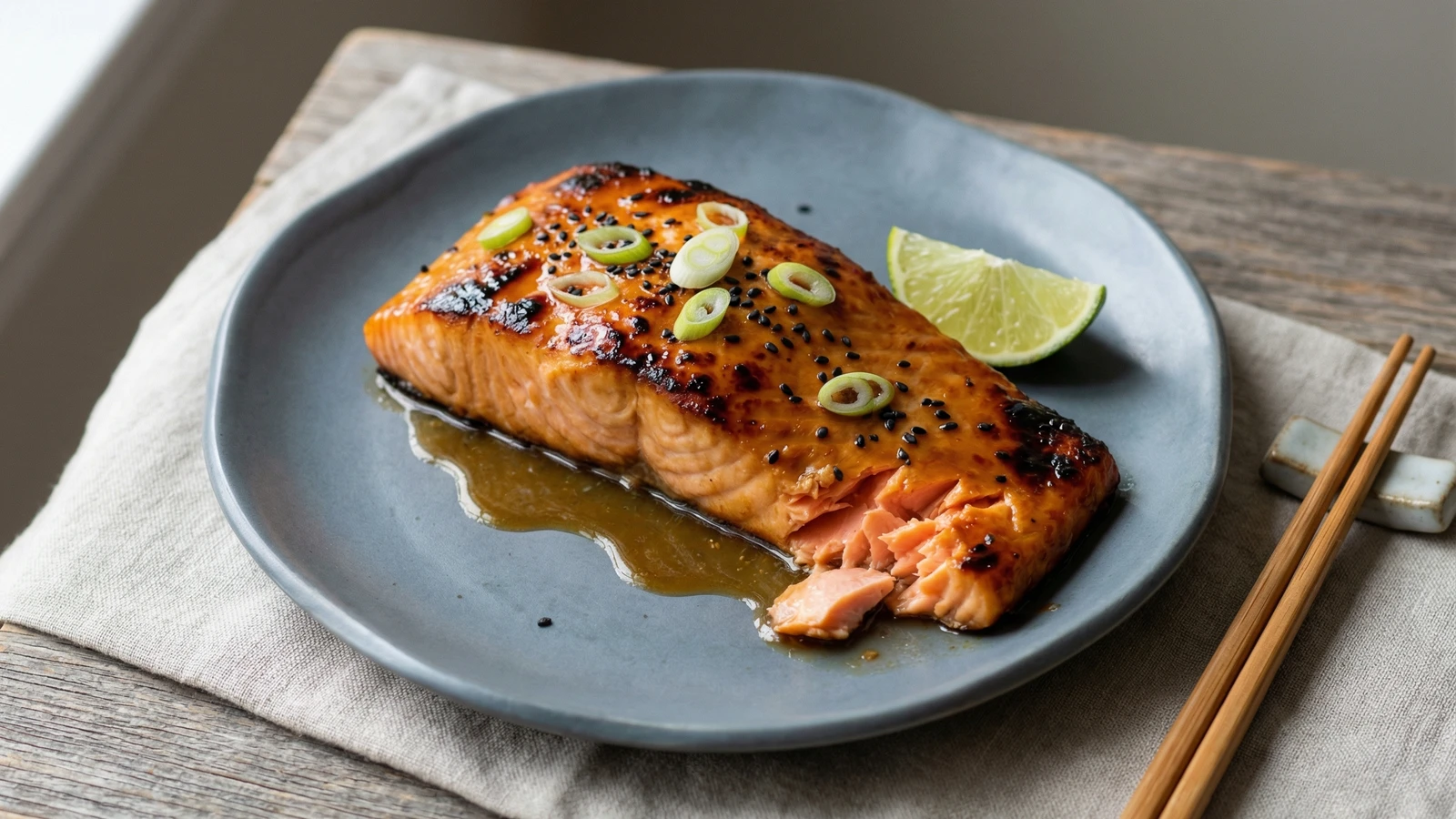
Wild king salmon brushed with sweet white miso and broiled until the glaze blisters into a lacquered crust, the flesh beneath silky and rich. This is the Pacific Northwest on a plate, where Japanese tradition meets the bounty of cold northern waters.
The confluence of cultures in the Pacific Northwest created something remarkable. Japanese fishermen who settled along Puget Sound brought their techniques for curing and glazing fish. They found themselves working alongside Scandinavian immigrants and learning from the Coast Salish peoples who had been harvesting these waters for ten thousand years. What emerged was a cuisine shaped by respect for the salmon itself.
Miso-glazed salmon represents this cultural exchange at its finest. The sweet white miso, fermented from rice and soybeans, caramelizes under high heat into a crackling lacquer that yields to impossibly tender flesh. The technique requires almost nothing from you except restraint. Don't fuss with the fish. Let the glaze do its work.
I first encountered this preparation at a small izakaya in Seattle's International District, decades before it became ubiquitous on restaurant menus across the country. The cook there marinated his salmon for three days, but I've found overnight produces magnificent results for the home kitchen. The miso penetrates the flesh, seasoning it deeply while the sugars prepare to caramelize.
Seek out wild-caught king salmon when the summer runs begin. The fat content of these fish, built up during their ocean journeys, creates the silky texture that makes this dish extraordinary. Farmed Atlantic salmon works in a pinch, but it lacks the depth of flavor that justifies the preparation.
Quantity
4 (6 oz each)
Quantity
1/3 cup
Quantity
3 tablespoons
Quantity
2 tablespoons
Quantity
2 tablespoons
Quantity
1 tablespoon
Quantity
1 teaspoon
Quantity
2
thinly sliced
Quantity
1 teaspoon
Quantity
1
cut into wedges
| Ingredient | Quantity |
|---|---|
| wild king salmon fillets, skin removed | 4 (6 oz each) |
| white miso paste (shiro miso) | 1/3 cup |
| mirin | 3 tablespoons |
| sake | 2 tablespoons |
| brown sugar | 2 tablespoons |
| rice vinegar | 1 tablespoon |
| toasted sesame oil | 1 teaspoon |
| scallionsthinly sliced | 2 |
| black sesame seeds | 1 teaspoon |
| limecut into wedges | 1 |
Whisk together the white miso, mirin, sake, brown sugar, rice vinegar, and sesame oil in a bowl until completely smooth. The mixture should be pourable but thick enough to coat a spoon. Taste it. You want a balance of sweet, salty, and the subtle funk of fermentation. Adjust with more sugar if your miso runs salty.
Pat the salmon fillets completely dry with paper towels. Place them in a shallow dish or resealable bag and pour the miso glaze over, turning to coat all surfaces evenly. Press out any air if using a bag. Refrigerate for at least 8 hours, or up to 48 hours for deeper flavor penetration. The longer marination allows the miso's enzymes to gently break down proteins, resulting in an almost custard-like texture.
Remove the salmon from the refrigerator 30 minutes before cooking. Position your oven rack about 6 inches from the broiler element and turn the broiler to high. Line a rimmed baking sheet with aluminum foil and place a wire rack on top. Lightly oil the rack. Remove the salmon from the marinade, letting excess drip off, but don't scrape the fillets clean. You want a thin coating of glaze remaining.
Arrange the fillets on the prepared rack with at least an inch between them. Slide under the broiler and watch carefully. The glaze will begin to bubble and darken within 3 to 4 minutes. You want deep caramelization, almost charred in spots, but not burnt. The sugars in the miso will blister and blacken at the edges while the center turns a gorgeous amber. Total cooking time runs 6 to 8 minutes for medium-rare at the center, 9 to 10 for medium. The fish should flake easily at the edges while the center remains slightly translucent.
Transfer the salmon to serving plates and let rest for 2 minutes. The residual heat will continue cooking the centers while the exterior cools enough to handle. Scatter the sliced scallions over the top and sprinkle with black sesame seeds. The contrast of green and black against the amber glaze is part of what makes this dish so striking. Serve with lime wedges for squeezing over just before eating.
Bring the salmon to the table immediately. This dish wants to be eaten warm, when the glaze still has some give to it and the flesh practically melts on your tongue. Serve alongside steamed rice to catch the juices, or with a simple salad of bitter greens dressed in rice vinegar. A cold Junmai sake or a dry Riesling makes for an honest pairing.
1 serving (about 175g)
Culinary guides, cultural storytelling, and the editorial depth that makes cooking meaningful.
Discover Culinary ExplorerChef Dean
The fisherman's reward: rich, fatty salmon collar charred over high heat until the skin shatters, served with a bright citrus ponzu that cuts through the richness like a cold Pacific breeze.

Chef Ally
Silken black cod transformed by days in white miso, then broiled until the surface shatters into sweet, salty caramel while the flesh beneath stays impossibly tender and rich.

Chef Dean
Silken Pacific cod draped in sweet white miso, broiled until the glaze caramelizes into a burnished lacquer that shatters at the touch of a fork. This is where Japanese precision meets Pacific Northwest abundance.

Chef Dean
Buttery Pacific sablefish transformed by a three-day soak in sake lees and white miso, then broiled until the surface shatters into a lacquered, bittersweet crust while the flesh beneath melts on your tongue.