
Chef Juliette
Bouillabaisse à la Marseillaise
Marseille's great fish stew, saffron-gold and garlic-scented, proves that a hard boil can be the careful choice: it binds olive oil into broth before the whole pot meets bread.
A cooking platform built around craft, culture, and the stories behind what we eat.
Created by
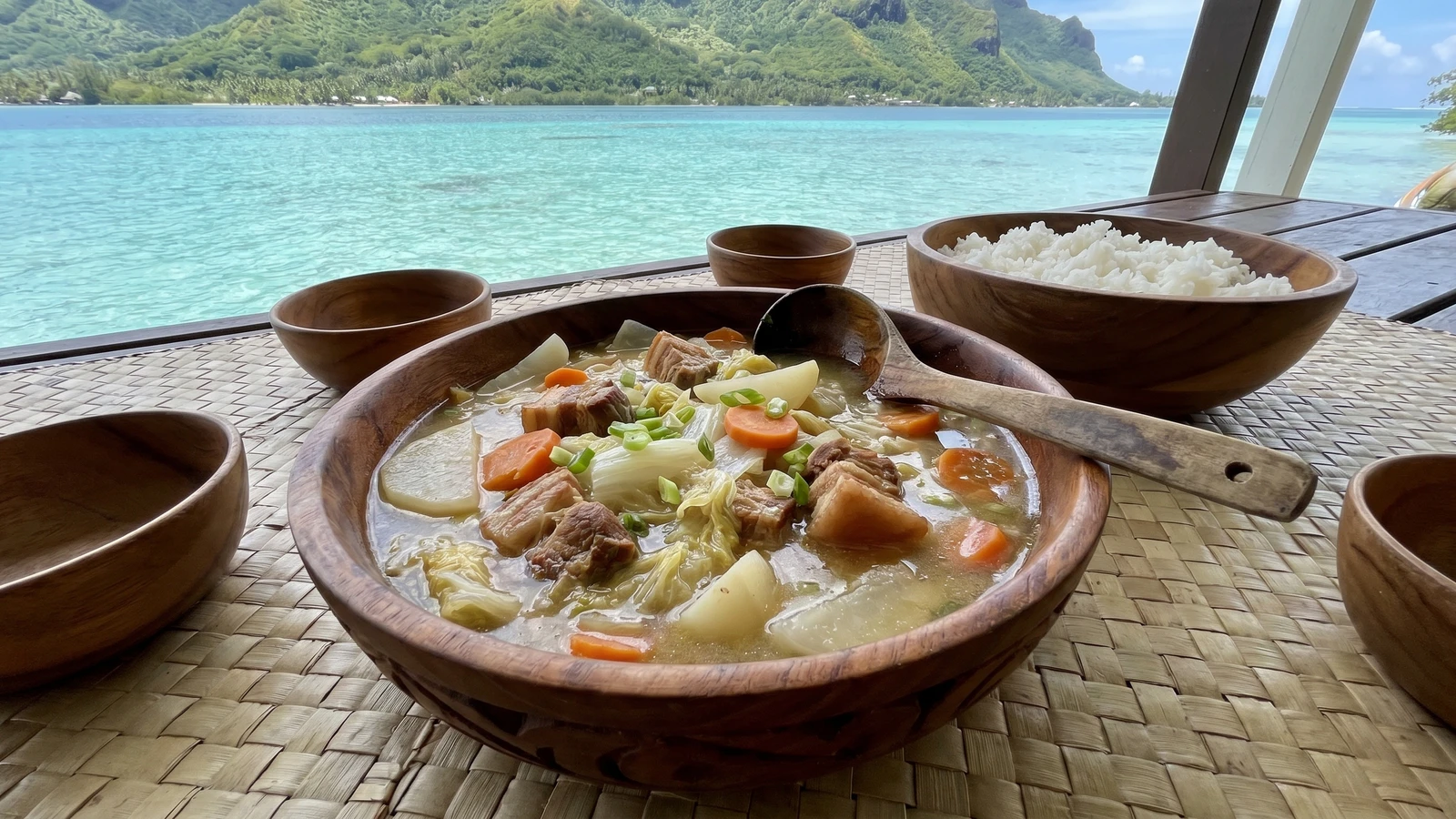
A Tahitian Sunday pot from the Chinese-Tahitian table: pork belly, Chinese cabbage, carrots, and turnips simmered soft in a savory broth, made for rice and one more bowl.
The canoe gives us the old roots, but the table keeps making room for the cousins who arrive later. On Tahiti, the fenua, the land and homeland, this pot belongs to the Chinese-Tahitian Tinito families as much as to the Māʻohi neighbors who eat it with rice on a quiet Sunday. Puaʻa is pig, choux chinois is Chinese cabbage in the French tongue that stayed on the island, and the name tells you the history before the spoon even hits the bowl.
This isn't Tahiti's ahimaʻa, the Tahitian earth oven, and it isn't a canoe-crop dish pretending to be older than it is. That's okay. The islands eat what history put in their hands and what families made kind: Sāmoa has sapasui, Hawaiʻi has saimin and plate lunch cabbage with kālua puaʻa, Tonga has chop suey beside lū sipi, and Tahiti has this Hakka-Tahitian pork and cabbage pot. Same ocean, different hands, no blur.
The why behind the method is simple: belly needs time, cabbage needs gentleness. Brown the puaʻa until the edges shine, simmer it until the fat goes soft, then lay the cabbage on top near the end so it sweetens without turning to rags. No need make it precious. Put rice on the side, or taro, or ʻuru, breadfruit, if that's what you have. Eat what you have, my kumu would say, and no waste the broth.
I cook this open-handed, because the Hakka story isn't mine to own. The Tahitian table carries it now, and for the deeper Tinito family versions, go sit with the aunties and uncles who kept that pot alive. They should tell their own story. I just help you keep the bowl warm.
Chinese workers, many of them Hakka from Guangdong, began arriving in Tahiti in 1865 for the Atimaono cotton plantation, and their descendants became the Tinito community whose cooking shaped everyday māʻa, food, across French Polynesia. Puaʻa choux chinois sits in that later, living line: canoe-crop Tahiti has ahimaʻa, fāfā, ʻuru, and taro, while the post-contact table also made room for cabbage, turnips, soy sauce, rice, and pork belly cut the butcher's way. The surprise is the name itself, Tahitian puaʻa beside French choux chinois beside a Hakka hand, one island telling its history in a stew pot.
Quantity
2 pounds
cut into 1 1/2-inch chunks
Quantity
1 1/2 teaspoons
plus more to taste
Quantity
1 teaspoon
Quantity
1 tablespoon
Quantity
1 large
sliced
Quantity
4
smashed
Quantity
1 tablespoon
minced or thinly sliced
Quantity
3 tablespoons
Quantity
1 tablespoon
Quantity
4 cups
Quantity
1
Quantity
3
cut into thick rounds
Quantity
2 medium
peeled and cut into wedges
Quantity
1 large head
cored and cut into wide ribbons
Quantity
2
thinly sliced
Quantity
as needed
| Ingredient | Quantity |
|---|---|
| skinless pork belly (puaʻa)cut into 1 1/2-inch chunks | 2 pounds |
| coarse sea saltplus more to taste | 1 1/2 teaspoons |
| freshly ground black pepper | 1 teaspoon |
| neutral oil (optional) | 1 tablespoon |
| onionsliced | 1 large |
| garlic clovessmashed | 4 |
| fresh gingerminced or thinly sliced | 1 tablespoon |
| soy sauce | 3 tablespoons |
| oyster sauce (optional) | 1 tablespoon |
| water or light chicken stock | 4 cups |
| bay leaf (optional) | 1 |
| carrotscut into thick rounds | 3 |
| white turnipspeeled and cut into wedges | 2 medium |
| Chinese cabbage (choux chinois), preferably napacored and cut into wide ribbons | 1 large head |
| green onions (optional)thinly sliced | 2 |
| steamed white rice, boiled taro, or roasted ʻuru (breadfruit) (optional) | as needed |
Pat the pork belly dry and season it all over with the salt and black pepper. Let it sit while you cut the vegetables, just long enough for the salt to start pulling into the meat. Puaʻa means pig, and in Tahiti this cut is going into a later, living family pot, not an old earth-oven ceremony.
Set a heavy pot over medium heat. Add the oil only if the belly looks lean, then brown the pork in batches until the edges are honey-brown and the fat has begun to render into the bottom of the pot. If the pork throws water, wait it out. Let the water cook off and the browning come back.
Pour off excess fat until about 2 tablespoons remain. Add the onion and cook until it softens and smells sweet, then add the garlic and ginger and stir for a minute. Add the soy sauce and oyster sauce if using, scraping the browned bits from the pot, then pour in the water or stock and add the bay leaf.
Return the pork to the pot, bring the broth to a gentle simmer, then cover and cook 75 to 90 minutes. You want the lean tender and the fat soft enough a chopstick or fork slides through without much fight. No rush this part. Belly needs time to become kind.
Add the carrots and turnips, tuck them down into the broth, and simmer covered for 20 to 25 minutes. They should be tender at the edge but not falling apart. The broth will taste richer now, pork fat, onion sweetness, soy, and the quiet earthiness of the turnip.
Lay the Chinese cabbage, the choux chinois, over the top in loose handfuls. Cover and cook 20 to 30 minutes, folding it through once or twice only after it softens. The cabbage should turn glossy, pale jade and ivory, with a little body left. Tender, not gray mush.
Taste the broth and adjust with salt or pepper. Skim a little fat if the pot feels too heavy, but leave enough sheen to carry the flavor. Rest 10 minutes off the heat, then serve in deep bowls with rice, taro, or ʻuru, breadfruit. Put the pot in the middle. Somebody will want another spoon.
1 serving (about 425g)
Culinary guides, cultural storytelling, and the editorial depth that makes cooking meaningful.
Discover Culinary ExplorerChef Juliette
Marseille's great fish stew, saffron-gold and garlic-scented, proves that a hard boil can be the careful choice: it binds olive oil into broth before the whole pot meets bread.

Chef Juliette
Waterzoi asks fresh, bone-in river fish to thicken its own buttery broth, with parsley root and pepper for company. No flour, no stockpot, just a brisk simmer watched closely.
Chef Juliette
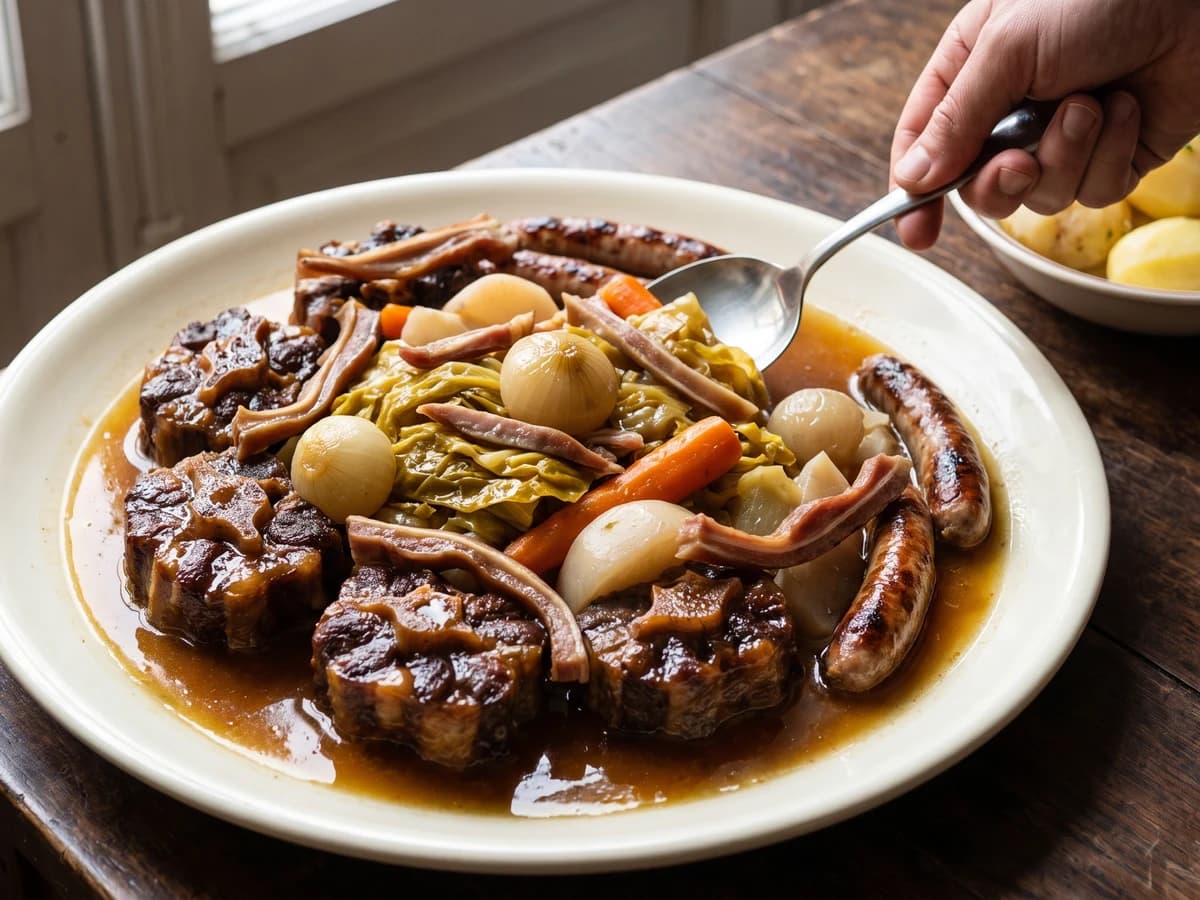
Queue de Bœuf en Hochepot gathers oxtail, pig's trotter and ear, cabbage, roots, and grilled chipolatas around a clear, gelatin-rich broth whose quiet simmer keeps every piece tender and distinct.

Chef Juliette
Beef shoulder larded with bacon, sharpened by red wine and vinegar, then sealed with garlic, vegetables, and dry lemon peel until the low oven turns it yielding and the gravy darkly glossy.