
Chef Lupita
Acambaritas de Acámbaro
Guanajuato's daily bread from Acámbaro, a small glazed roll built on pata, enriched with manteca de cerdo, and baked until the top shines lightly for merienda.
A cooking platform built around craft, culture, and the stories behind what we eat.

Created by
A Yucatecan loaf built on naranja agria, the sour orange that defines the Peninsula's cooking. Tender fine crumb, sharp citrus perfume, finished with a warm sour-orange syrup that soaks into the still-hot crust.
This panqué belongs to Yucatán. The Peninsula has its own citrus, its own pantry, its own way of doing things, and the sour orange, the naranja agria, is at the center of all of it. Cochinita pibil takes naranja agria. Salbutes take naranja agria in the pickled onion. And the panaderias of Mérida, Valladolid, and Izamal bake this loaf with the same fruit, juice and zest both.
Do not confuse this with the orange-zest panqué from central Mexico. That one uses sweet orange and tastes like a polite breakfast cake. This one uses naranja agria, and the difference is night and day. The peel is sharper, almost floral. The juice is tart in a way sweet orange can never be, closer to a cross between lime and bitter orange. When you rub the zest into the sugar, the kitchen smells like a Yucatecan mercado at seven in the morning. That is the smell you are after.
Naranja agria grows in the patios and yards of every village across the Peninsula. If you cannot find the fruit at a Mexican mercado outside Yucatán, you can approximate it with two parts lime juice to one part sweet orange juice plus a small piece of grapefruit zest. I will tell you what I tell my students: it is a compromise, not an upgrade. The real fruit has a perfume the substitute cannot match. If you are anywhere near a Mexican market that sells Yucatecan ingredients, ask for naranja agria by name. Pregúntale a las señoras del mercado.
My mother did not bake Yucatecan panqué. She was from Jalisco. But on the second trip I made to Mérida, a panadera named doña Elsi taught me her recipe on the back of a paper bag and told me the syrup soak was non-negotiable. She was right. Cada estado, su propia cocina, and this one belongs to Yucatán.
Naranja agria (Citrus aurantium), the bitter or sour orange, was introduced to the Yucatán Peninsula by the Spanish in the 16th century and adapted so completely to the regional cuisine that it functions today as a quintessentially Maya-Yucatecan ingredient, used in cochinita pibil, escabeche oriental, and the pickled red onions of salbutes and panuchos. The panqué itself derives from the European pound cake tradition that arrived in Mexico via Spanish convents and was reshaped through the 19th and 20th centuries in regional panaderias, each state adapting the basic butter-sugar-egg-flour ratio to its local citrus and pantry. Yucatán's panaderias historically operated as neighborhood institutions tied to the morning chocolate or coffee meal, with breads like pan francés, hojaldras, and panqués baked daily in wood-fired stone hornos that still operate in some Mérida and Valladolid bakeries today.
Quantity
2 cups
Quantity
2 teaspoons
Quantity
1/2 teaspoon
Quantity
1 cup
Quantity
from 3 sour oranges
finely grated
Quantity
1 cup
at room temperature
Quantity
4
at room temperature
Quantity
1/2 cup
from about 3 to 4 sour oranges
Quantity
1/2 cup
at room temperature
Quantity
1 teaspoon
Quantity
1/3 cup
Quantity
1/3 cup
Quantity
1 strip
| Ingredient | Quantity |
|---|---|
| all-purpose flour | 2 cups |
| baking powder | 2 teaspoons |
| fine sea salt | 1/2 teaspoon |
| granulated sugar | 1 cup |
| naranja agria (sour orange) zestfinely grated | from 3 sour oranges |
| unsalted butterat room temperature | 1 cup |
| large eggsat room temperature | 4 |
| fresh naranja agria juicefrom about 3 to 4 sour oranges | 1/2 cup |
| whole milkat room temperature | 1/2 cup |
| pure vanilla extract | 1 teaspoon |
| fresh naranja agria juice (for the syrup) | 1/3 cup |
| granulated sugar (for the syrup) | 1/3 cup |
| naranja agria zest strip (for the syrup) | 1 strip |
Heat the oven to 350F. Butter a 9x5-inch loaf pan and line the bottom and long sides with a strip of parchment, leaving an overhang. Yucatecan panaderas grease and line because this is a butter-heavy batter and the crust browns deep. You want to lift it out clean.
In a wide bowl, pour the granulated sugar over the grated naranja agria zest. Rub the zest into the sugar with your fingertips for a full minute. The sugar will turn pale yellow and smell sharp, floral, and a little bitter. That smell is the oil from the peel of the sour orange, and it is what makes this panqué Yucatecan and not the orange-zest version they make in Ciudad de México.
Add the room-temperature butter to the zested sugar. Beat with a stand mixer or hand mixer on medium-high for 4 to 5 minutes, scraping down the bowl twice. The mixture should turn pale, almost ivory, and double in volume. Do not rush this. The air you beat in now is the lift of the loaf. Skip it and the crumb turns dense.
Add the eggs one at a time, beating for 30 seconds between each addition. Scrape down after the second and the fourth. The batter may look curdled when you add the third egg. That is normal. It will come back together when the flour goes in. Cold eggs split the emulsion. Warm eggs hold it. This is why the eggs must be at room temperature.
Whisk the flour, baking powder, and salt together in a separate bowl. In a measuring cup, stir together the 1/2 cup naranja agria juice, the milk, and the vanilla. The milk will curdle slightly when it meets the sour-orange juice. That is the acid doing its work, and it will give the crumb its tenderness.
Add the flour mixture to the butter in three additions, alternating with the milk-and-juice mixture in two additions, starting and ending with the flour. Mix on low only until each addition disappears. Stop the mixer the second the last streak of flour vanishes. Overmixed batter builds gluten and gluten is the enemy of a fine panqué crumb. No me vengas con atajos: this is the step that separates a tender loaf from a tough one.
Scrape the batter into the prepared pan and smooth the top with a spatula. Drag a knife down the center of the batter from end to end. That cut guides the classic split down the top of the loaf as it rises. Bake for 50 to 60 minutes, until the top is deep gold, the split is dry, and a wooden skewer in the center comes out with a few moist crumbs. The kitchen will smell like a Mérida panadería at mid-morning.
While the loaf bakes, combine the 1/3 cup naranja agria juice, 1/3 cup sugar, and the strip of zest in a small saucepan. Bring to a gentle simmer over medium heat, stirring until the sugar dissolves. Cook for 3 to 4 minutes more, until slightly syrupy and reduced by a third. Pull off the heat and let it sit with the zest. The zest steeps and the syrup deepens while the loaf finishes.
When the panqué comes out of the oven, leave it in the pan. Discard the zest strip from the syrup. Poke the top of the loaf all over with a wooden skewer, going almost to the bottom. Slowly spoon the warm syrup over the warm loaf, pausing to let each pour soak in. Use all of it. The loaf will drink it. This is the step that makes the crust glossy, the crumb damp at the edges, and the sour-orange flavor double in intensity.
Let the panqué rest in the pan for 20 minutes. Lift it out by the parchment overhang and set it on a wire rack to cool completely, at least one hour. Slice thick. Serve with strong black coffee or a glass of cold milk. Así se hace y punto.
1 serving (about 105g)
Culinary guides, cultural storytelling, and the editorial depth that makes cooking meaningful.
Discover Culinary ExplorerChef Lupita
Guanajuato's daily bread from Acámbaro, a small glazed roll built on pata, enriched with manteca de cerdo, and baked until the top shines lightly for merienda.

Chef Lupita
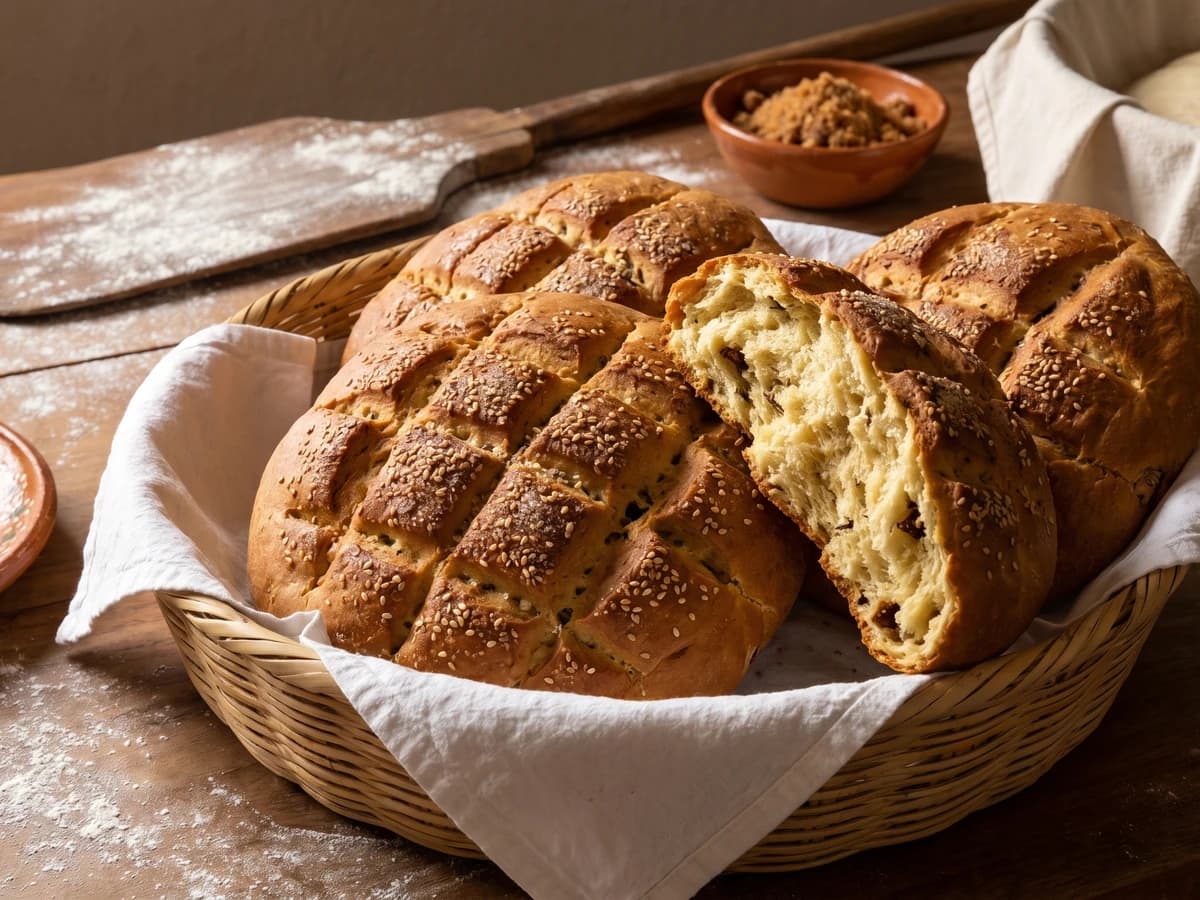
Michoacan's Tinguindin aguacatas are flat, leaf-scored sweet breads made with harina de trigo, piloncillo, anise, and manteca de cerdo, shaped by hand for the wood oven.
Chef Lupita
From Ajijic on Lake Chapala, Pan Tachihual is a lightly sweet wedding loaf built with harina de trigo, harina de maiz, piloncillo, manteca, anise, and the old Guadalajara pata.

Chef Lupita
Comitán's pan de yema shaped into little pigs, birds, and rabbits, a Chiapas bakery bread rich with egg yolks, manteca de cerdo, and anís, baked golden on hoja de plátano.