
Chef Lupita
Acambaritas de Acámbaro
Guanajuato's daily bread from Acámbaro, a small glazed roll built on pata, enriched with manteca de cerdo, and baked until the top shines lightly for merienda.
A cooking platform built around craft, culture, and the stories behind what we eat.
Created by
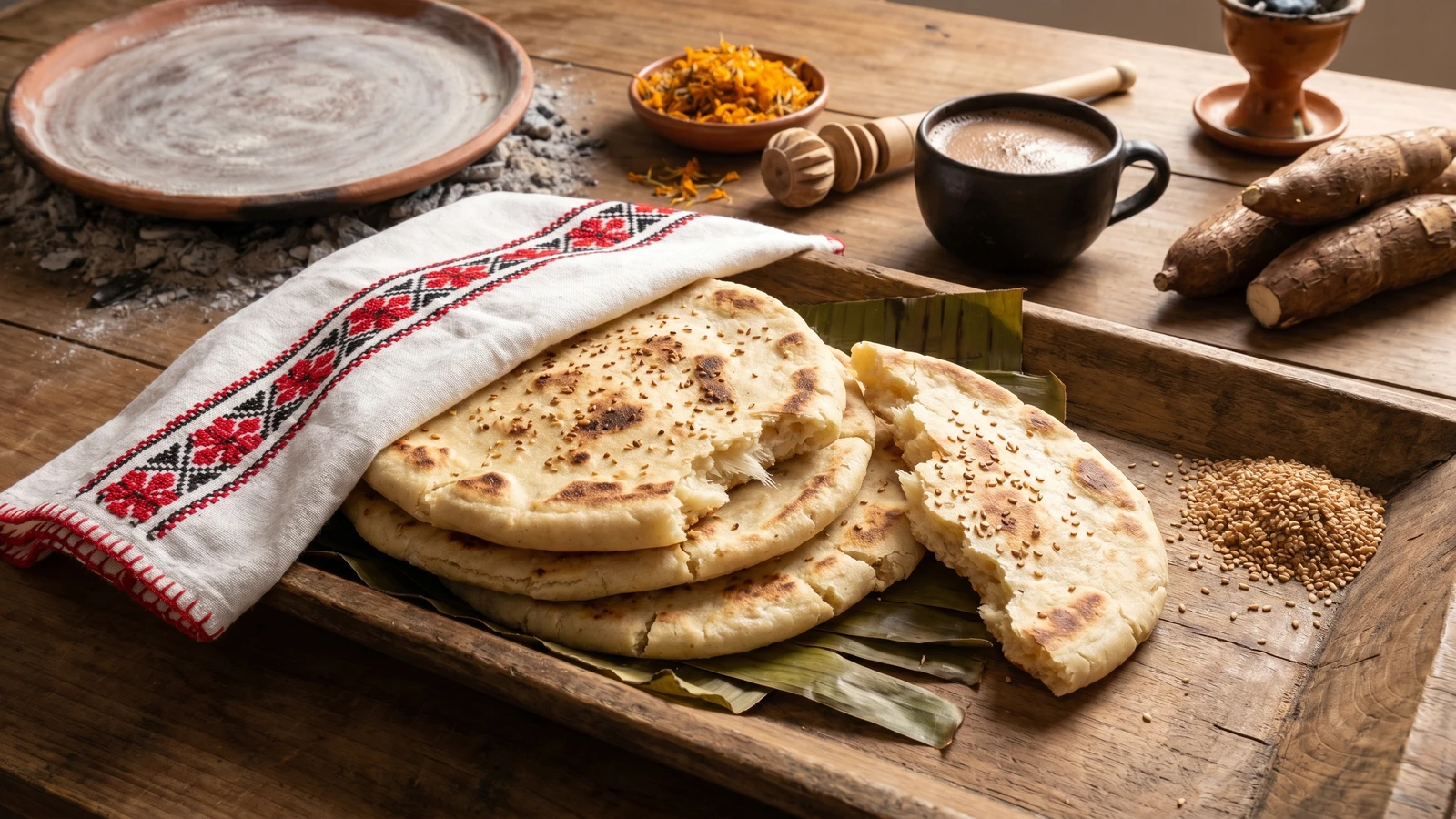
From Mayultiaguis in Oaxaca's Sierra Norte. A pre-Columbian cassava flatbread, grated by hand, pressed on banana leaf, and baked on a clay comal. Still placed on Día de Muertos altars where panaderia bread never belonged.
This bread is from Mayultiaguis, a small Chinanteco community in Oaxaca's Sierra Norte. It is not pan de muerto. It is not a cookie. It is a pre-Columbian flatbread of cassava, ajonjolí, and a little manteca, baked dry on a comal the way it has been baked since long before wheat reached this continent. If you came looking for the sugared shell-shaped pan de muerto of Mexico City, close this page. That is a different bread for a different altar.
The yuca is the whole thing. Sweet cassava, peeled, boiled, the woody cord pulled out and discarded, then grated fine while still warm. In Mayultiaguis the women grind it on a metate until the texture turns almost powdery, and they bind it with just enough manteca de cerdo to hold the dough together. A handful of masa harina gives the disk enough structure to lift cleanly off the comal. The ajonjolí is toasted first, never raw, and you should taste it in every bite. Cada estado, su propia cocina, and the Sierra Norte cooks with what the milpa and the monte give them. Yuca grew here before wheat existed in this hemisphere, and this bread carries that lineage on its surface.
My mother did not know this bread. She was from Jalisco. I learned it from doña Tomasa in Mayultiaguis on a trip in the second year of the 32-state project, sitting on a low wooden bench while she grated yuca into a clay bowl on her lap. She told me her grandmother made it for the altar every November and that the souls preferred it to the wheat breads from the panaderia in Tuxtepec because the yuca was the older food, the one their mothers had fed them. I wrote it in the notebook exactly as she gave it to me. I am giving it to you the same way. Recetas probadas y garantizadas.
Do not skip the banana leaf. The leaf is not decoration. It carries the dough to the comal without tearing it and it leaves a faint vegetal scent on the underside of the bread that you cannot get any other way. If you cannot find banana leaf at a Mexican or Asian mercado, wait until you can. Saber cocinar es saber vivir, and part of knowing how to live is knowing when to wait for the right ingredient.
Cassava (Manihot esculenta) is one of the oldest cultivated plants in the Americas, domesticated in the southwestern Amazon basin some 8,000 to 10,000 years ago and traded northward into Mesoamerica well before the rise of the Olmec. In Oaxaca's Sierra Norte and the Chinanteco and Mazateco communities of the Papaloapan basin, yuca-based flatbreads predate the arrival of wheat by millennia and survived the colonial imposition of European panaderia traditions because they were tied to ritual offerings the church could not displace. The Día de Muertos altars of these communities still distinguish between the wheat pan de muerto of mestizo towns and the yuca and corn breads of the indigenous tradition, the latter understood as the proper food for the older souls who lived before wheat.
Quantity
2 pounds
peeled and woody core removed
Quantity
1/2 cup
Quantity
1/4 cup
melted and slightly cooled
Quantity
2 tablespoons
lightly toasted on a comal
Quantity
1 1/2 teaspoons
Quantity
1/2 cup, as needed
Quantity
1 large piece
passed over the flame to soften
Quantity
as needed
| Ingredient | Quantity |
|---|---|
| fresh yuca root (cassava)peeled and woody core removed | 2 pounds |
| masa harina nixtamalizada | 1/2 cup |
| manteca de cerdomelted and slightly cooled | 1/4 cup |
| ajonjolí (sesame seeds)lightly toasted on a comal | 2 tablespoons |
| sea salt from the Istmo | 1 1/2 teaspoons |
| warm water | 1/2 cup, as needed |
| banana leafpassed over the flame to soften | 1 large piece |
| manteca de cerdo (for the comal) (optional) | as needed |
Peel the yuca with a sharp knife. The skin is thick and brown and the pink layer underneath comes off with it. Cut the root into chunks, slice each chunk lengthwise, and pull out the woody fibrous cord that runs down the center. That cord is bitter and tough and it has no place in this bread. Rinse the chunks well under cold water.
Place the yuca chunks in a pot, cover with cold water, and add a pinch of salt. Bring to a simmer and cook for 20 to 25 minutes, until a knife slides through without resistance. Drain well. Let the chunks cool until you can handle them. Grate the cooked yuca on the fine side of a box grater while it is still warm. The texture you want is fluffy and fibrous, not pasty. In Mayultiaguis the women grind it on a metate until it forms a fine, almost powdery mass.
In a wide bowl, combine the grated yuca, masa harina, melted manteca, toasted ajonjolí, and salt. Work it together with your hands. Add warm water a tablespoon at a time, only as much as you need for the dough to come together into a soft, pliable mass that holds its shape when pressed. La manteca es el sabor here, and the masa harina gives the dough enough body to hold on the comal. The dough should feel like damp sand pressed into a patty, not like wheat dough.
Pass a piece of banana leaf over an open flame for a few seconds, until it darkens and softens. Cut it into squares the size of a small plate. Divide the dough into 12 equal portions. Place one portion on a banana leaf square and press it flat with the heel of your hand or a tortilla press lined with the leaf. Aim for a disk about a quarter inch thick. The edges will crack a little. That is the right texture. Smooth wheat-bread edges are not what this is.
Heat a clay comal over medium until you can hold your hand a few inches above it for only three seconds. Rub the surface with a small piece of manteca on a folded cloth. A clay comal is the right tool here because it holds an even, dry heat the way a metal pan never will. If you only have cast iron, use it, but lower the heat slightly because cast iron runs hotter at the surface.
Lift one flatbread on its banana leaf and lay it leaf side down on the comal. After about three minutes, the leaf will release easily and you can peel it off. Cook the bread directly on the comal for another four to five minutes per side. The surface should turn pale gold with darker spots where it touches the hot clay. The interior cooks through to a soft, slightly chewy crumb. Press the edge gently with your fingertip. If it springs back, it is done. If it dents, give it another minute.
Stack the cooked flatbreads inside a clean cotton servilleta, the embroidered ones the women in the Sierra weave on backstrap looms. The cloth holds the warmth and the slight humidity that keeps the bread tender. Eat them within an hour of cooking, with a jícara of chocolate de agua frothed with a molinillo, or set them at the foot of the altar for the visiting souls on the night of November first. Asi se hace y punto.
1 serving (about 70g)
Culinary guides, cultural storytelling, and the editorial depth that makes cooking meaningful.
Discover Culinary ExplorerChef Lupita
Guanajuato's daily bread from Acámbaro, a small glazed roll built on pata, enriched with manteca de cerdo, and baked until the top shines lightly for merienda.

Chef Lupita
Michoacan's Tinguindin aguacatas are flat, leaf-scored sweet breads made with harina de trigo, piloncillo, anise, and manteca de cerdo, shaped by hand for the wood oven.
Chef Lupita
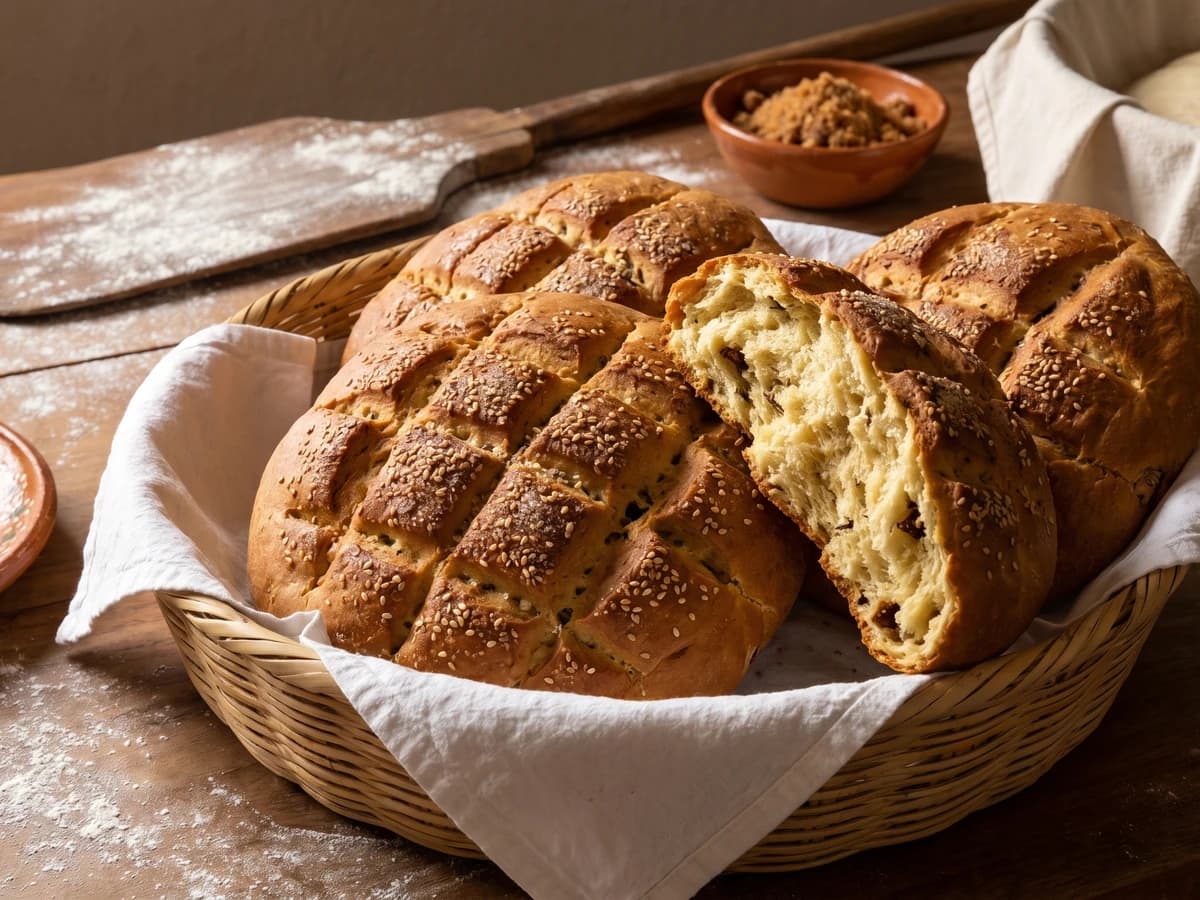
From Ajijic on Lake Chapala, Pan Tachihual is a lightly sweet wedding loaf built with harina de trigo, harina de maiz, piloncillo, manteca, anise, and the old Guadalajara pata.

Chef Lupita
Comitán's pan de yema shaped into little pigs, birds, and rabbits, a Chiapas bakery bread rich with egg yolks, manteca de cerdo, and anís, baked golden on hoja de plátano.