
Chef Lupita
Acambaritas de Acámbaro
Guanajuato's daily bread from Acámbaro, a small glazed roll built on pata, enriched with manteca de cerdo, and baked until the top shines lightly for merienda.
A cooking platform built around craft, culture, and the stories behind what we eat.
Created by
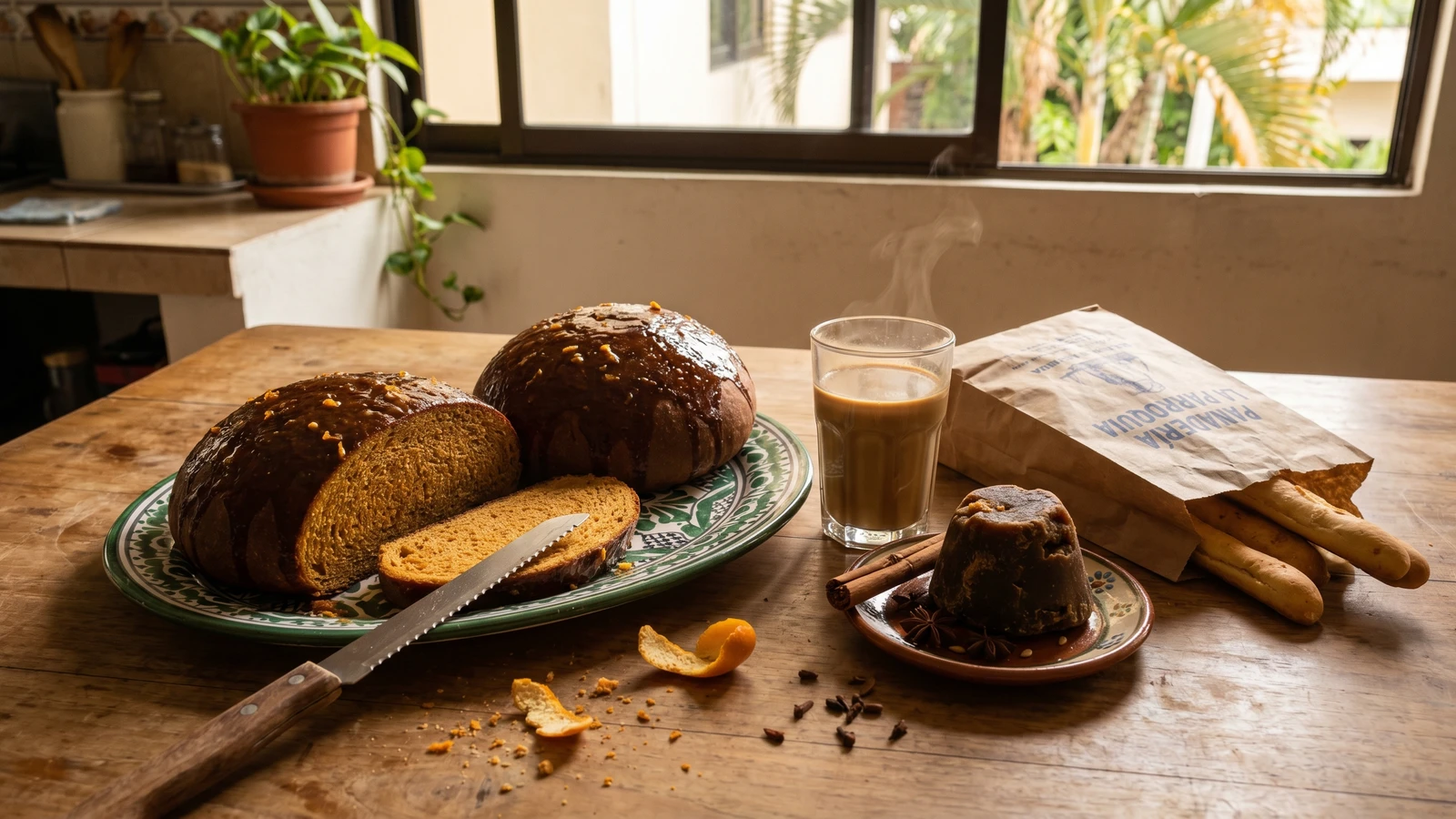
Veracruz's panela bread belongs to the Gulf sugar belt, a dark wheat loaf fed by cane sugar, softened with lard, and built for cafe lechero before the day's heat settles in.
Veracruz, from the old port inland toward Cordoba and the Papaloapan cane country, is where this bread makes sense. Pan de panela is not a delicate bakery sweet. It is dark, dense, fragrant with canela and anise, and built from the sugarcane geography of the Gulf. The panela is not just sweetness. It gives color, weight, and that mineral edge you don't get from white sugar.
I learned a version of this from a woman near Tlacotalpan who baked in a horno de lena behind her house, the kind of oven that makes you respect heat because it will not forgive laziness. She dissolved the panela first, strained it, and let it cool before it touched the yeast. That is the part beginners rush. Hot syrup kills yeast. Cold syrup slows it down. Warm syrup feeds it. Cooking is a chain of decisions.
No chile belongs here. Veracruz does not need to prove itself with heat in every dish. This bread belongs beside cafe lechero, with the molasses shine of the panela on the crust and the crumb tight enough to slice thick. Use manteca de cerdo, clean and fresh. Butter will make a softer bread, yes, and also a different one. La manteca es el sabor.
This is a 32-state cuisine. Veracruz has canilla, pambazo, pan de Xico, hojaldra for Dia de Muertos, and sweet cemita that has nothing to do with Puebla's sandwich roll. Cada estado, su propia cocina.
The port of Veracruz, founded in 1519, became New Spain's first Atlantic door, bringing Spanish wheat-bread techniques into a region already shaped by Indigenous corn cookery. Sugarcane arrived in New Spain in the 16th century, and Veracruz's humid lowlands and foothills became a major cane zone where trapiches produced panela and piloncillo from boiled cane juice. Pan de panela belongs to that meeting: European wheat bread structure, Gulf sugar, and Mexican home-bakery seasoning with canela and anise.
Quantity
9 ounces
chopped
Quantity
1 1/4 cups
Quantity
1
Quantity
1 teaspoon
lightly crushed
Quantity
1/2 cup
lukewarm
Quantity
2 1/4 teaspoons
Quantity
1
room temperature
Quantity
4 1/2 cups
plus more only as needed
Quantity
1 1/2 teaspoons
Quantity
1 tablespoon
finely grated
Quantity
1/4 cup
softened
Quantity
1 teaspoon
Quantity
2 tablespoons
| Ingredient | Quantity |
|---|---|
| panela or dark piloncillochopped | 9 ounces |
| water | 1 1/4 cups |
| Mexican canela stick | 1 |
| anise seedlightly crushed | 1 teaspoon |
| whole milklukewarm | 1/2 cup |
| active dry yeast | 2 1/4 teaspoons |
| large eggroom temperature | 1 |
| unbleached all-purpose flourplus more only as needed | 4 1/2 cups |
| fine sea salt | 1 1/2 teaspoons |
| orange zestfinely grated | 1 tablespoon |
| fresh pork lard (manteca de cerdo)softened | 1/4 cup |
| pork lard for greasing | 1 teaspoon |
| whole milk for brushing | 2 tablespoons |
Put the chopped panela, water, canela stick, and crushed anise seed in a small heavy saucepan. Warm over medium-low heat, stirring until the panela dissolves completely. Let it simmer for 3 minutes, then take it off the heat. Strain out the canela and anise. You need 1 cup of panela infusion. If you are short, add a spoonful of water. If you have extra, keep it for brushing the bread.
Let the panela infusion cool until it is warm to the touch, about 95F to 100F. Hotter than that and you can kill the yeast. Stir the yeast into the lukewarm milk with 1 tablespoon of the panela infusion. Wait 8 to 10 minutes, until the surface looks foamy. If nothing happens, your yeast is dead. Do not build a bread on dead yeast.
In a large bowl, whisk together the flour, salt, and orange zest. Add the foamy yeast mixture, the egg, and all but 2 tablespoons of the remaining panela infusion. Save those 2 tablespoons for the finish. Mix with your hand or a wooden spoon until you have a rough brown dough with no dry pockets.
Add the softened manteca de cerdo in small pieces and knead it into the dough. At first the dough will look greasy and stubborn. Keep working. After 8 to 10 minutes by hand, or 5 to 6 minutes with a dough hook, it should turn smooth, elastic, and tacky. Do not keep throwing flour at it. Panela bread is supposed to have weight.
Grease a clean bowl with a little lard. Set the dough inside, turn it once to coat, and cover. Let it rise in a warm place for 1 1/2 to 2 hours, until puffed and almost doubled. In a humid Veracruz kitchen this can move faster. In a cold kitchen it takes longer. The dough decides, not your impatience.
Grease two 8 by 4 inch loaf pans or a heavy sheet pan with lard. Turn the dough onto a lightly floured surface and divide it in two. Shape each piece into a tight oval loaf by folding the edges toward the center, turning it seam side down, and tucking with your hands until the surface has tension. Place in the pans or on the sheet pan.
Cover the shaped loaves and let them proof for 45 to 60 minutes, until they look swollen and a finger pressed gently into the side leaves a slow mark. Heat the oven to 350F. Brush the tops with the 2 tablespoons of whole milk. This gives the crust a clean brown finish before the panela glaze goes on.
Bake for 30 to 35 minutes, rotating once, until the loaves are deep brown and sound hollow when tapped on the bottom. The center should read about 190F if you use a thermometer. Panela darkens faster than white sugar, so if the tops brown too quickly after 20 minutes, cover them loosely with foil.
Brush the hot loaves with the reserved panela infusion. Let them sit in the pans for 10 minutes, then move them to a rack. Wait at least 30 minutes before slicing. Cut too soon and you crush the crumb you worked for. Serve thick slices with cafe lechero. Recetas probadas y garantizadas.
1 serving (about 98g)
Culinary guides, cultural storytelling, and the editorial depth that makes cooking meaningful.
Discover Culinary ExplorerChef Lupita
Guanajuato's daily bread from Acámbaro, a small glazed roll built on pata, enriched with manteca de cerdo, and baked until the top shines lightly for merienda.

Chef Lupita
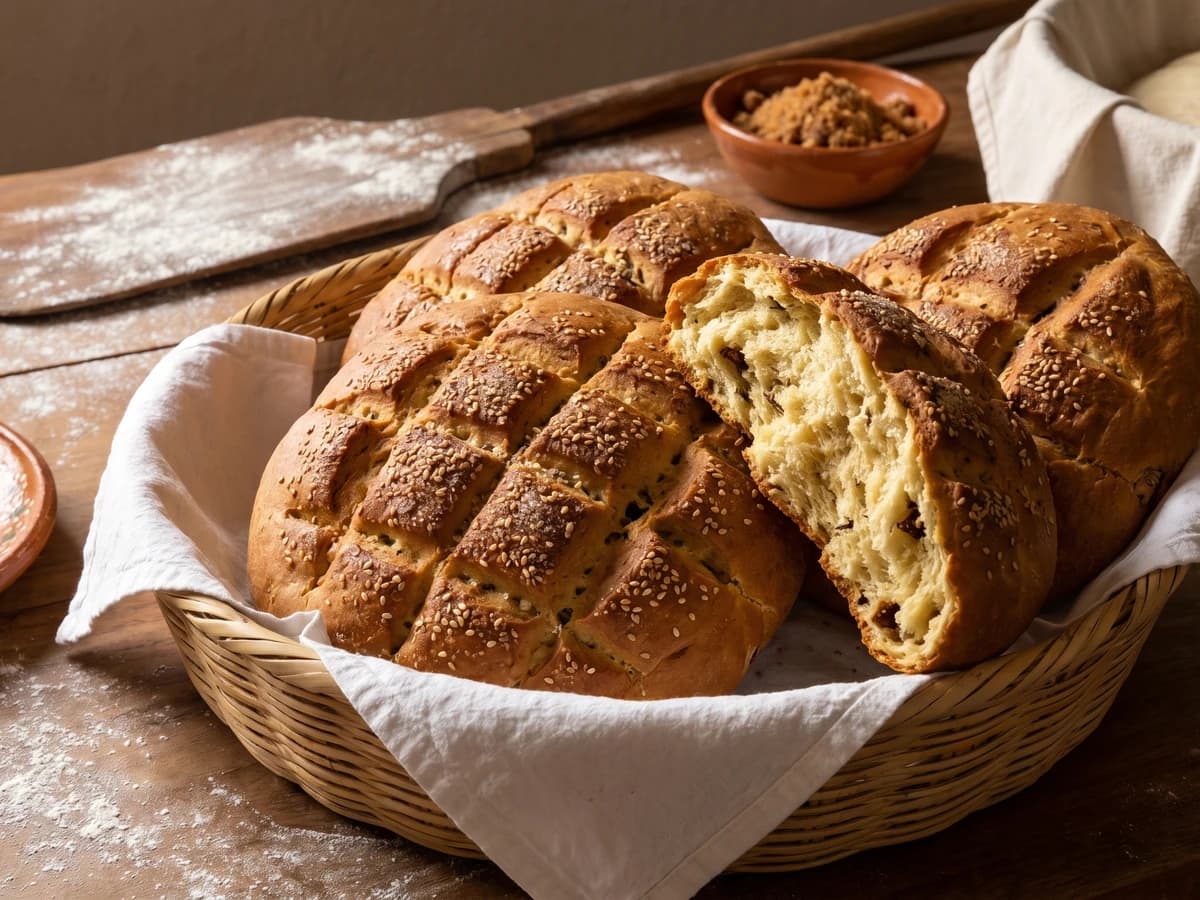
Michoacan's Tinguindin aguacatas are flat, leaf-scored sweet breads made with harina de trigo, piloncillo, anise, and manteca de cerdo, shaped by hand for the wood oven.
Chef Lupita
From Ajijic on Lake Chapala, Pan Tachihual is a lightly sweet wedding loaf built with harina de trigo, harina de maiz, piloncillo, manteca, anise, and the old Guadalajara pata.

Chef Lupita
Comitán's pan de yema shaped into little pigs, birds, and rabbits, a Chiapas bakery bread rich with egg yolks, manteca de cerdo, and anís, baked golden on hoja de plátano.