
Chef Lupita
Acambaritas de Acámbaro
Guanajuato's daily bread from Acámbaro, a small glazed roll built on pata, enriched with manteca de cerdo, and baked until the top shines lightly for merienda.
A cooking platform built around craft, culture, and the stories behind what we eat.

Created by
San Luis Potosí's Altiplano monito, an enriched lard-rich pan de muerto shaped like a small person, scented with anise and orange, then finished with a sugar face for the ofrenda.
San Luis Potosí, Altiplano Potosino. This bread belongs to the high, dry country around Matehuala, Charcas, Venado, Guadalcázar, and the road toward Real de Catorce, where the Day of the Dead altar is not complete until the bread looks back at you. The monito is not the round Mexico City pan de muerto with bone strips. It is a small human figure, the little body of the ánima, with a sugar face set on the head.
I learned this version from panaderas who worked by feel, not by speeches. They warmed anise in milk, rubbed orange zest into the sugar, and folded in manteca de cerdo until the dough turned soft under the palms. The face goes on after baking so it stays clean and visible on the ofrenda. That detail matters. The dead are invited properly or they are not invited at all.
My mother did not make monitos in Colonia Roma. She was from Jalisco. But in her notebook, beside a pan de muerto recipe, she wrote: 'in San Luis they make little people.' That note sent me north years later, to the Altiplano, where the panadería table carries wheat, lard, anise, sugar, and the dry patience of people who know how to make bread last.
Do not ask where the chile goes. It does not. Not all Mexican food is chile and salsa. This is a 32-state cuisine, and this state speaks here with wheat, lard, anise, orange, and sugar. Saber cocinar es saber vivir.
Pan de muerto was not standardized as the round Mexico City loaf until commercial bakeries and national media pushed that image in the 20th century. In San Luis Potosí's Altiplano, anthropomorphic monitos keep an older representational logic: the bread on the ofrenda stands for the ánimas themselves, not a generic skull-and-bones decoration. Wheat bread entered the region after Spanish colonization and expanded with the mining towns and haciendas of the Potosino highlands, where lard, anise, piloncillo, and wood-fired ovens shaped the local panadería register.
Quantity
3/4 cup
Quantity
1 teaspoon
Quantity
1 small piece
about 2 inches
Quantity
2 1/4 teaspoons
Quantity
1/2 cup, plus 1 tablespoon
1 tablespoon reserved for the yeast
Quantity
4 cups, plus more for dusting
Quantity
1 teaspoon
Quantity
2 teaspoons
finely grated
Quantity
3
at room temperature
Quantity
1 tablespoon
Quantity
1/2 cup
soft but not melted
Quantity
1 egg plus 1 tablespoon milk
for egg wash
Quantity
3 tablespoons
melted, for finishing
Quantity
1/2 cup
for finishing
Quantity
1/2 teaspoon
for finishing
Quantity
1 cup
sifted
Quantity
1 tablespoon
Quantity
1 to 2 tablespoons
for the sugar paste
Quantity
1/2 teaspoon
Quantity
2 drops or a pinch
Quantity
1 teaspoon
Quantity
1 teaspoon
for cocoa face paint
| Ingredient | Quantity |
|---|---|
| whole milk | 3/4 cup |
| anise seed | 1 teaspoon |
| Mexican cinnamon stickabout 2 inches | 1 small piece |
| active dry yeast | 2 1/4 teaspoons |
| granulated sugar1 tablespoon reserved for the yeast | 1/2 cup, plus 1 tablespoon |
| all-purpose flour | 4 cups, plus more for dusting |
| fine sea salt | 1 teaspoon |
| orange zestfinely grated | 2 teaspoons |
| large eggsat room temperature | 3 |
| orange blossom water (agua de azahar) | 1 tablespoon |
| rendered pork lard (manteca de cerdo)soft but not melted | 1/2 cup |
| large egg beaten with milkfor egg wash | 1 egg plus 1 tablespoon milk |
| rendered pork lard (manteca de cerdo)melted, for finishing | 3 tablespoons |
| granulated sugarfor finishing | 1/2 cup |
| ground Mexican cinnamonfor finishing | 1/2 teaspoon |
| powdered sugarsifted | 1 cup |
| meringue powder | 1 tablespoon |
| waterfor the sugar paste | 1 to 2 tablespoons |
| fresh lime juice | 1/2 teaspoon |
| pink food coloring or beet powder (optional) | 2 drops or a pinch |
| unsweetened cocoa powder | 1 teaspoon |
| waterfor cocoa face paint | 1 teaspoon |
Combine the milk, anise seed, and Mexican cinnamon in a small saucepan. Warm it until small bubbles gather at the edge, then turn off the heat, cover, and let it sit for 10 minutes. Strain and cool until warm to the touch. The anise belongs in the milk because it spreads through the dough cleanly. Dumping dry anise into flour gives you bitter little pockets. Ask the women at the market. They know.
Stir the yeast and 1 tablespoon sugar into the warm infused milk. Let it stand for 5 to 10 minutes, until foamy on top. If nothing happens, start again with fresh yeast. Dead yeast will not resurrect because you ask nicely.
In a large bowl, whisk the flour, 1/2 cup sugar, salt, and orange zest. Add the eggs, orange blossom water, and the foamy yeast milk. Mix until a shaggy dough forms, then rest it for 10 minutes. That pause lets the flour drink before you start judging the texture.
Knead by hand for 8 to 10 minutes, or in a stand mixer with the dough hook for about 6 minutes. Add the soft lard one tablespoon at a time, waiting until each addition disappears into the dough before adding the next. The dough will look slick, then stubborn, then suddenly smooth and elastic. It should be soft and slightly tacky, not dry. Manteca de cerdo gives this bread its tender pull. Vegetable shortening makes it whiter and poorer in flavor.
Shape the dough into a ball and place it in a lightly greased bowl. Cover and let it rise in a warm spot until doubled, 1 1/2 to 2 hours. Press the dough with one finger. If the dent fills slowly, it is ready. If it springs back fast, give it more time. No me vengas con atajos.
While the dough rises, stir the powdered sugar and meringue powder in a small bowl. Add 1 tablespoon water and the lime juice, then mix into a stiff sugar paste, adding drops of water only if it crumbles. Tint it pale pink or leave it white. Roll it 1/8 inch thick and cut 10 small ovals for faces. Let them dry on parchment. Mix the cocoa powder with 1 teaspoon water to make a dark paste for eyes and mouths.
Line two sheet pans with parchment. Deflate the dough and divide it into 10 equal pieces, about 85 to 90 grams each if you have a scale. From each piece, pinch off a small ball for the head. Shape the larger piece into a short oval body, then pinch or snip two arms and two legs with a bench scraper or scissors. Attach the head with a dab of egg wash and press gently at the neck. These are monitos, little human figures. If you make round buns with crossed bones, you made the Mexico City style, not this Potosino bread. Cada estado, su propia cocina.
Cover the shaped monitos loosely and let them rise 45 to 60 minutes, until puffy but still holding their arms and legs. Heat the oven to 350F. Brush each figure lightly with egg wash, avoiding puddles around the neck and cuts. Too much wash glues the shape together and the little body disappears.
Bake for 18 to 22 minutes, rotating the pans halfway through, until the monitos are golden brown with darker edges at the hands, feet, and head. The bottoms should sound hollow when tapped and the bread should feel light for its size. A wood-fired horno de bóveda gives more uneven color than a home oven. That is not a defect. That is bread with a place.
Stir the finishing sugar with the ground Mexican cinnamon. Brush the warm breads with melted lard, then sprinkle or roll the bodies lightly in the cinnamon sugar. Use a small dab of sugar paste or thick icing to attach one sugar face to each head. Paint the eyes and mouth with the cocoa paste using a toothpick. Let the faces set for 20 minutes before moving the breads to the ofrenda or serving them with cafe de olla. Recetas probadas y garantizadas.
1 serving (about 125g)
Culinary guides, cultural storytelling, and the editorial depth that makes cooking meaningful.
Discover Culinary ExplorerChef Lupita
Guanajuato's daily bread from Acámbaro, a small glazed roll built on pata, enriched with manteca de cerdo, and baked until the top shines lightly for merienda.

Chef Lupita
Michoacan's Tinguindin aguacatas are flat, leaf-scored sweet breads made with harina de trigo, piloncillo, anise, and manteca de cerdo, shaped by hand for the wood oven.
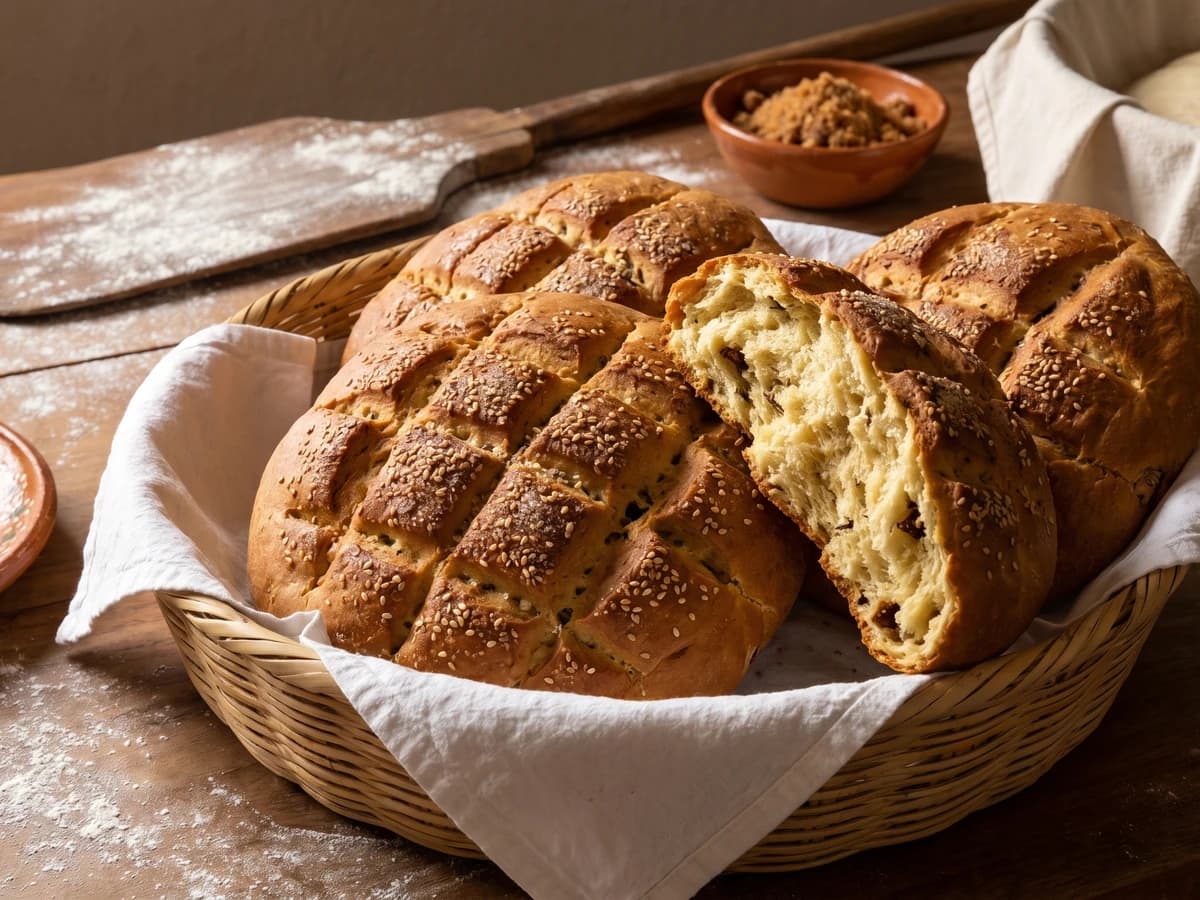
Chef Lupita
From Ajijic on Lake Chapala, Pan Tachihual is a lightly sweet wedding loaf built with harina de trigo, harina de maiz, piloncillo, manteca, anise, and the old Guadalajara pata.

Chef Lupita
Comitán's pan de yema shaped into little pigs, birds, and rabbits, a Chiapas bakery bread rich with egg yolks, manteca de cerdo, and anís, baked golden on hoja de plátano.