
Chef Lupita
Acambaritas de Acámbaro
Guanajuato's daily bread from Acámbaro, a small glazed roll built on pata, enriched with manteca de cerdo, and baked until the top shines lightly for merienda.
A cooking platform built around craft, culture, and the stories behind what we eat.
Created by
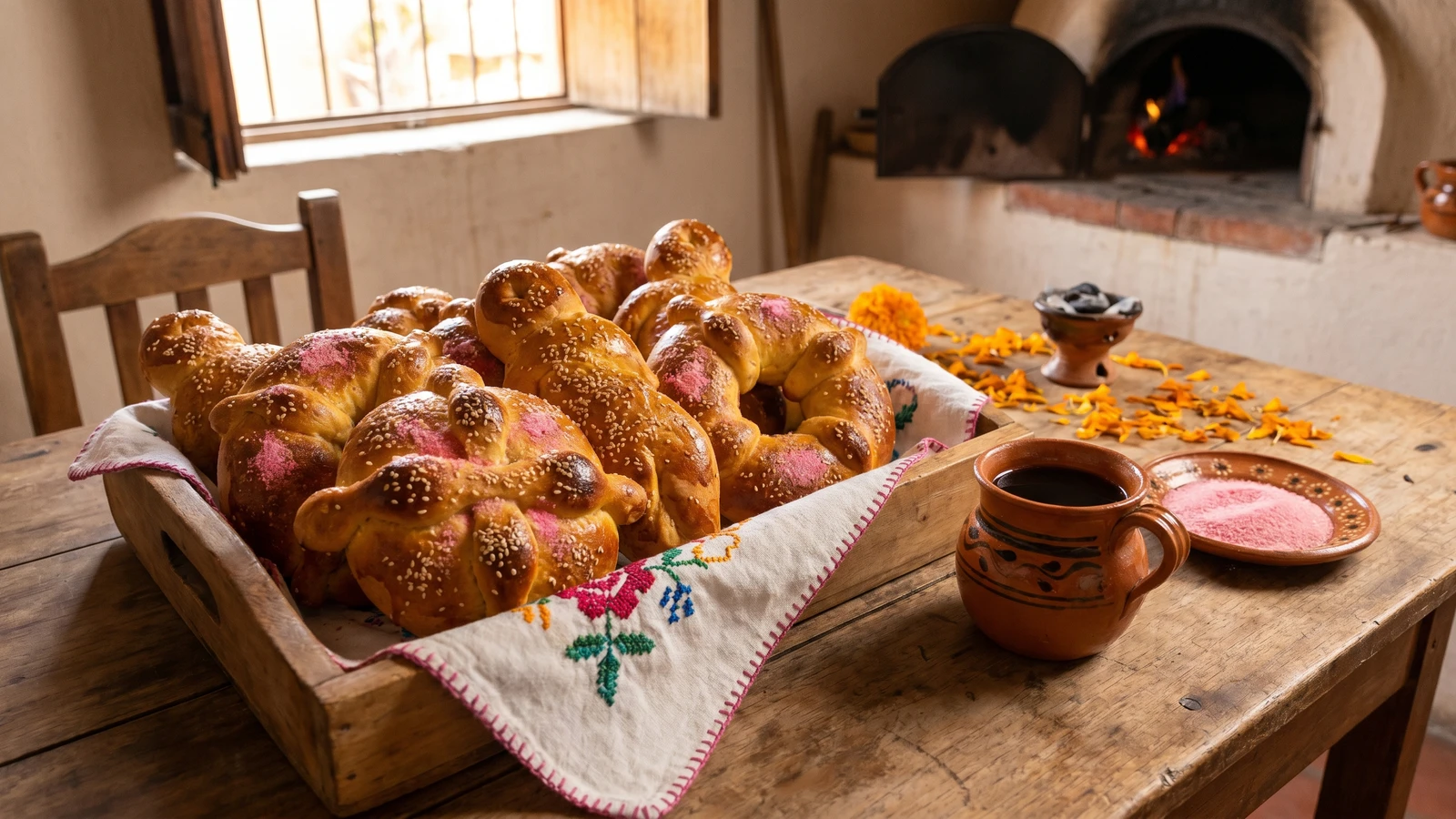
Guanajuato's altar bread from the Bajío, shaped into ánimas and rings, enriched with butter and manteca de cerdo, then marked with sesame and pink sugar for late October offerings.
Guanajuato, the Bajío, the old mining cities, that is where this pan de muerto lives. In Guanajuato capital, Valenciana, Silao, Irapuato, and the panaderías that still remember their hornos de bóveda, the bread for Día de Muertos is not only the round loaf with crossed bones that tourists recognize. There are ánimas, little souls shaped by hand, and rings stamped with sesame and azúcar rosa.
The dough is an enriched pan dulce dough, but the finish is what marks the region. Sesame gives a dry little snap under the teeth. Azúcar rosa catches the eye on the altar beside cempasúchil and copal. The fat is butter with manteca de cerdo, because the Bajío knows bread through work, mills, ovens, wheat fields, and bakers who learned by standing beside someone older. La cocina no es decoración, es trabajo.
I first wrote this version after watching a panadera near the Mercado Hidalgo shape figures faster than I could count them. She did not weigh each one. She knew the dough by touch. My mother used to say a dead person recognizes the food made with a living hand. That is the point here: not perfection, recognition. Cada estado, su propia cocina.
Pan de muerto grew from the colonial meeting of Spanish wheat breads, Catholic All Souls' Day observances, and older Indigenous offerings for the dead. Guanajuato's version belongs to the Bajío wheat-baking belt, shaped by mining wealth and panadería guild ovens from the 18th and 19th centuries, where altar breads often took the form of ánimas, rings, or figures rather than only the Mexico City round loaf. The use of pink sugar and sesame on some Guanajuato breads reflects local panadería display traditions, where color and texture help identify breads meant for late October offerings.
Quantity
4 cups
plus more for shaping
Quantity
1/2 cup
Quantity
2 1/4 teaspoons
Quantity
1 teaspoon
Quantity
1/2 teaspoon
Quantity
3/4 cup
lukewarm
Quantity
4
at room temperature
Quantity
1 tablespoon
Quantity
1 tablespoon
finely grated
Quantity
1 teaspoon
finely grated
Quantity
6 tablespoons
softened
Quantity
4 tablespoons
softened
Quantity
1 egg plus 1 tablespoon milk
for brushing
Quantity
1/3 cup
Quantity
1/2 cup
for azúcar rosa
Quantity
3 to 5 drops or 1 teaspoon
for azúcar rosa
Quantity
2 tablespoons
melted, for finishing
| Ingredient | Quantity |
|---|---|
| bread flourplus more for shaping | 4 cups |
| granulated sugar | 1/2 cup |
| active dry yeast | 2 1/4 teaspoons |
| fine sea salt | 1 teaspoon |
| ground canela | 1/2 teaspoon |
| whole milklukewarm | 3/4 cup |
| large eggsat room temperature | 4 |
| orange blossom water | 1 tablespoon |
| orange zestfinely grated | 1 tablespoon |
| lime zestfinely grated | 1 teaspoon |
| unsalted buttersoftened | 6 tablespoons |
| manteca de cerdosoftened | 4 tablespoons |
| large egg beaten with milkfor brushing | 1 egg plus 1 tablespoon milk |
| sesame seeds | 1/3 cup |
| granulated sugarfor azúcar rosa | 1/2 cup |
| red food coloring or beet powderfor azúcar rosa | 3 to 5 drops or 1 teaspoon |
| unsalted buttermelted, for finishing | 2 tablespoons |
In the bowl of a stand mixer, combine the bread flour, sugar, yeast, salt, and canela. Add the lukewarm milk, eggs, orange blossom water, orange zest, and lime zest. Mix on low until a rough dough forms. The dough will look sticky and stubborn at first. Good. Enriched bread needs time before it behaves.
Knead on medium-low for 8 minutes, then add the softened butter and manteca de cerdo in small pieces. Keep kneading another 10 to 12 minutes, until the dough pulls from the bowl in soft sheets and feels elastic. La manteca es el sabor. In this Bajío register, it gives the crumb tenderness without making the bread taste like cake.
Scrape the dough into a lightly greased bowl, cover, and let it rise in a warm kitchen for 2 to 2 1/2 hours, until doubled. If the room is cold, it will take longer. Watch the dough, not the clock. When you press it gently, the mark should remain for a moment before filling back in.
While the dough rises, rub the 1/2 cup sugar with red food coloring or beet powder until it turns a clear pink. Spread it on a plate and let it dry. This is azúcar rosa, not glitter, not frosting. It belongs on the altar bread because color matters in the offering.
Turn the dough onto a lightly floured table. Divide it into 10 to 12 pieces. Shape half into small human figures: an oval body, a pinched neck, and a rounded head. Shape the rest into rings, sealing the ends firmly so they do not open in the oven. These are not machine-perfect breads. A señora in Guanajuato will recognize the hand in the dough.
Set the breads on parchment-lined trays, leaving space between them. Brush lightly with the egg wash. Press sesame seeds onto the rings and across the bodies of the ánimas. Cover loosely and let rise 45 to 60 minutes, until puffy but still holding their shape. If they overproof, the figures lose their faces. No me vengas con atajos.
Heat the oven to 350F. Bake 20 to 25 minutes, rotating the trays once, until the breads are deep gold on top and browned at the edges. In a horno de bóveda the color comes faster and darker. In a home oven, give them the time they need. They should sound hollow when tapped underneath.
Brush the warm breads lightly with melted butter. Press some into the azúcar rosa and leave others plain with sesame, the way panaderías set out mixed charolas for Día de Muertos. Let them cool before placing them on the altar with cempasúchil, copal, candles, and a jarrito of café de olla. Saber cocinar es saber vivir.
1 serving (about 115g)
Culinary guides, cultural storytelling, and the editorial depth that makes cooking meaningful.
Discover Culinary ExplorerChef Lupita
Guanajuato's daily bread from Acámbaro, a small glazed roll built on pata, enriched with manteca de cerdo, and baked until the top shines lightly for merienda.

Chef Lupita
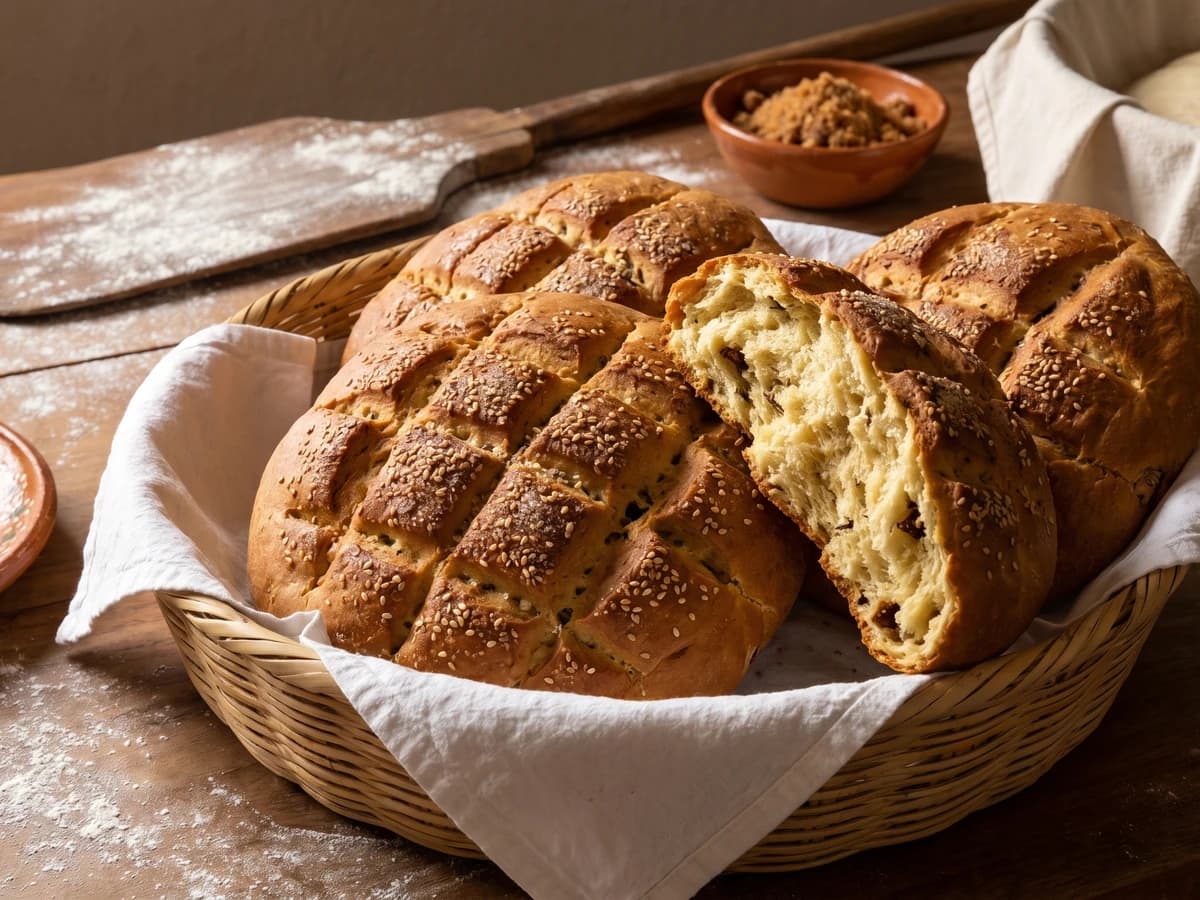
Michoacan's Tinguindin aguacatas are flat, leaf-scored sweet breads made with harina de trigo, piloncillo, anise, and manteca de cerdo, shaped by hand for the wood oven.
Chef Lupita
From Ajijic on Lake Chapala, Pan Tachihual is a lightly sweet wedding loaf built with harina de trigo, harina de maiz, piloncillo, manteca, anise, and the old Guadalajara pata.

Chef Lupita
Comitán's pan de yema shaped into little pigs, birds, and rabbits, a Chiapas bakery bread rich with egg yolks, manteca de cerdo, and anís, baked golden on hoja de plátano.