
Chef Lupita
Acambaritas de Acámbaro
Guanajuato's daily bread from Acámbaro, a small glazed roll built on pata, enriched with manteca de cerdo, and baked until the top shines lightly for merienda.
A cooking platform built around craft, culture, and the stories behind what we eat.

Created by
Oaxaca's corn-cake bread, fresh elote blended with eggs, condensed milk, butter, and manteca, baked into a tender square that anchors the merienda hour with a jícara of chocolate de agua on the side.
This is a Oaxacan bread. Pan de elote travels across Mexico, every state has a version, but the Oaxacan one is the one I am teaching you. The signature is the masa harina folded into the batter and the crema oaxaqueña spooned over the top at the table. Without those two, you are making someone else's pan de elote.
The corn matters more than anything else. In Oaxaca, the panaderas use the white field corn that comes down from the Sierra Norte and the Valles Centrales, maíz criollo grown for tortillas and atole, not the sugary yellow hybrid bred for the supermarket. That field corn carries starch instead of sugar, and starch is what gives this bread its body. If you use sweet corn, you will get a wet, candy-flavored cake. Hunt down white corn or a starchier yellow variety, the kind that releases milky liquid when you press a kernel. Saber cocinar es saber vivir.
My mother was from Jalisco and she made a different pan de elote, drier, sweeter, baked in a loaf pan. The Oaxacan version came into my notebook later, from a panadera named Doña Reyna at Mercado Alarii in Zaachila who let me sit in her kitchen for two mornings while she pulled trays out of a wood-fired oven. She told me three things and I am passing them on. Use the corn that is in season. Use both butter and manteca, never one alone. Pull the bread before you think it is done. The center keeps cooking once the pan is out of the oven, and an extra five minutes is the difference between tender and stale.
This is merienda food. Late afternoon, a few squares set out on a barro rojo plate, a clay jícara of chocolate de agua frothed with a molinillo, the family gathered around. Cada estado, su propia cocina, and this one belongs to the panaderas of the Valles Centrales.
Pan de elote sits at the intersection of Mexico's two great bread traditions: the pre-Columbian world of corn, where elote was eaten boiled, roasted, and ground into atoles and tamales, and the colonial panadería tradition introduced by the Spanish in the 16th century, which brought wheat flour, ovens, and dairy. The Oaxacan version emerged in the Valles Centrales, where the convergence of indigenous maíz criollo cultivation and the convent-bread traditions of colonial Antequera produced a hybrid bread that uses corn as its primary ingredient but borrows the structural logic of European cake. The use of masa harina rather than only fresh kernels is a Oaxacan signature that ties the bread to the broader nixtamal culture of the state, distinguishing it from the lighter, more cake-like pan de elote of central Mexico.
Quantity
6 large ears
husked (about 5 cups of kernels)
Quantity
1 can (14 ounces)
Quantity
1/2 cup
Quantity
4 large
at room temperature
Quantity
1/2 cup
melted and cooled
Quantity
1/4 cup
melted and cooled
Quantity
1/2 cup
Quantity
1/3 cup
Quantity
2 teaspoons
Quantity
1/2 teaspoon
Quantity
1 teaspoon
Quantity
from 1 lime
Quantity
2 tablespoons
softened
Quantity
2 tablespoons
Quantity
for serving
Quantity
for serving
crumbled
| Ingredient | Quantity |
|---|---|
| fresh elotehusked (about 5 cups of kernels) | 6 large ears |
| sweetened condensed milk (lechera) | 1 can (14 ounces) |
| whole milk | 1/2 cup |
| eggsat room temperature | 4 large |
| unsalted buttermelted and cooled | 1/2 cup |
| manteca de cerdomelted and cooled | 1/4 cup |
| masa harina | 1/2 cup |
| all-purpose flour | 1/3 cup |
| baking powder | 2 teaspoons |
| kosher salt | 1/2 teaspoon |
| Mexican vanilla extract | 1 teaspoon |
| lime zest | from 1 lime |
| unsalted butter for the pansoftened | 2 tablespoons |
| granulated sugar for the pan | 2 tablespoons |
| crema oaxaqueña (optional) | for serving |
| queso fresco (optional)crumbled | for serving |
Use fresh elote, the white or pale yellow corn from the mercado, not the bright yellow sweet corn from the supermarket. The Oaxacan version of this bread depends on maíz criollo or a starchy field corn, not the candy corn that sweet hybrids give you. The kernels should feel firm under your thumbnail and release a milky liquid when you press them. If they squirt clear water, the corn is too young. If they feel hard and dry, it is too old. Both will ruin the texture of the bread.
Heat the oven to 350F. Rub the softened butter generously across the inside of a 9-by-13-inch baking dish, getting into every corner. Dust the buttered surface with the granulated sugar and tap out the excess. The sugar caramelizes against the wall of the pan and gives the pan de elote that thin amber crust around the edge that the women in Zaachila are known for. Skip the sugar coating and you have a softer, paler bread. Worth doing, no me vengas con atajos.
Stand each ear of elote upright in a wide bowl. With a sharp knife, slice down the length of the cob to release the kernels. After you have stripped each ear, run the back of the knife down the bare cob, scraping the milky residue and the small bits of kernel still attached. That milk is half the flavor. The senoras at Mercado Sánchez Pascuas in Oaxaca do not waste it and neither should you.
Place the kernels and any reserved corn milk in a blender. Add the condensed milk, whole milk, eggs, melted butter, melted manteca, vanilla, and lime zest. Blend on high for about a minute, until the mixture is mostly smooth but still carries some texture from the kernels. You are not making a puree. You want the bread to taste like corn, not like custard. Small flecks of yellow throughout the batter are what you are after.
In a separate bowl, whisk together the masa harina, all-purpose flour, baking powder, and salt. The masa harina is what makes this bread Oaxacan and not the gringo corn pudding it is often mistaken for. Pour the dry mixture into the blender and pulse just until incorporated, three or four short pulses. Overblending tightens the crumb. The batter should be loose, the consistency of a thick crepe batter, with visible specks of corn.
Pour the batter into the prepared pan. Tap it once on the counter to release any large air pockets. Bake for 45 to 55 minutes. The top should be deep golden, the edges pulled away from the sides of the pan, and the center should jiggle only slightly when you nudge the dish. A toothpick inserted in the middle should come out with moist crumbs, not wet batter. La cocina no es decoracion, es trabajo. Pull it before it goes dry. An overbaked pan de elote is sad for everybody.
Let the pan de elote rest for at least 20 minutes in the pan. It needs to finish setting as it cools. Cut into generous squares and serve warm or at room temperature with a spoonful of crema oaxaqueña and a scatter of crumbled queso fresco on top. In Oaxaca this is merienda food, the late-afternoon meal that bridges comida and cena, served with a jícara of chocolate de agua frothed with a molinillo. Asi se hace y punto.
1 serving (about 195g)
Culinary guides, cultural storytelling, and the editorial depth that makes cooking meaningful.
Discover Culinary ExplorerChef Lupita
Guanajuato's daily bread from Acámbaro, a small glazed roll built on pata, enriched with manteca de cerdo, and baked until the top shines lightly for merienda.

Chef Lupita
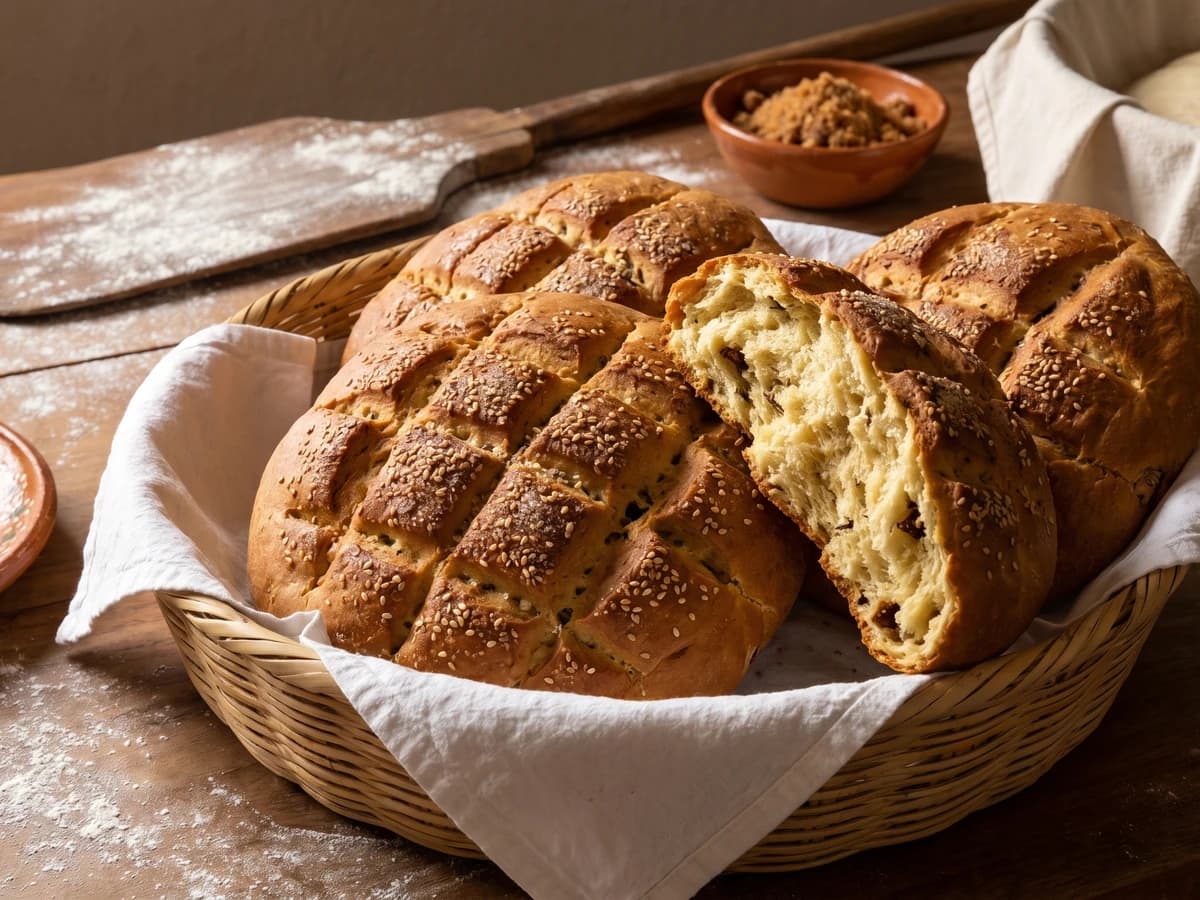
Michoacan's Tinguindin aguacatas are flat, leaf-scored sweet breads made with harina de trigo, piloncillo, anise, and manteca de cerdo, shaped by hand for the wood oven.
Chef Lupita
From Ajijic on Lake Chapala, Pan Tachihual is a lightly sweet wedding loaf built with harina de trigo, harina de maiz, piloncillo, manteca, anise, and the old Guadalajara pata.

Chef Lupita
Comitán's pan de yema shaped into little pigs, birds, and rabbits, a Chiapas bakery bread rich with egg yolks, manteca de cerdo, and anís, baked golden on hoja de plátano.