
Chef Lupita
Acambaritas de Acámbaro
Guanajuato's daily bread from Acámbaro, a small glazed roll built on pata, enriched with manteca de cerdo, and baked until the top shines lightly for merienda.
A cooking platform built around craft, culture, and the stories behind what we eat.
Created by
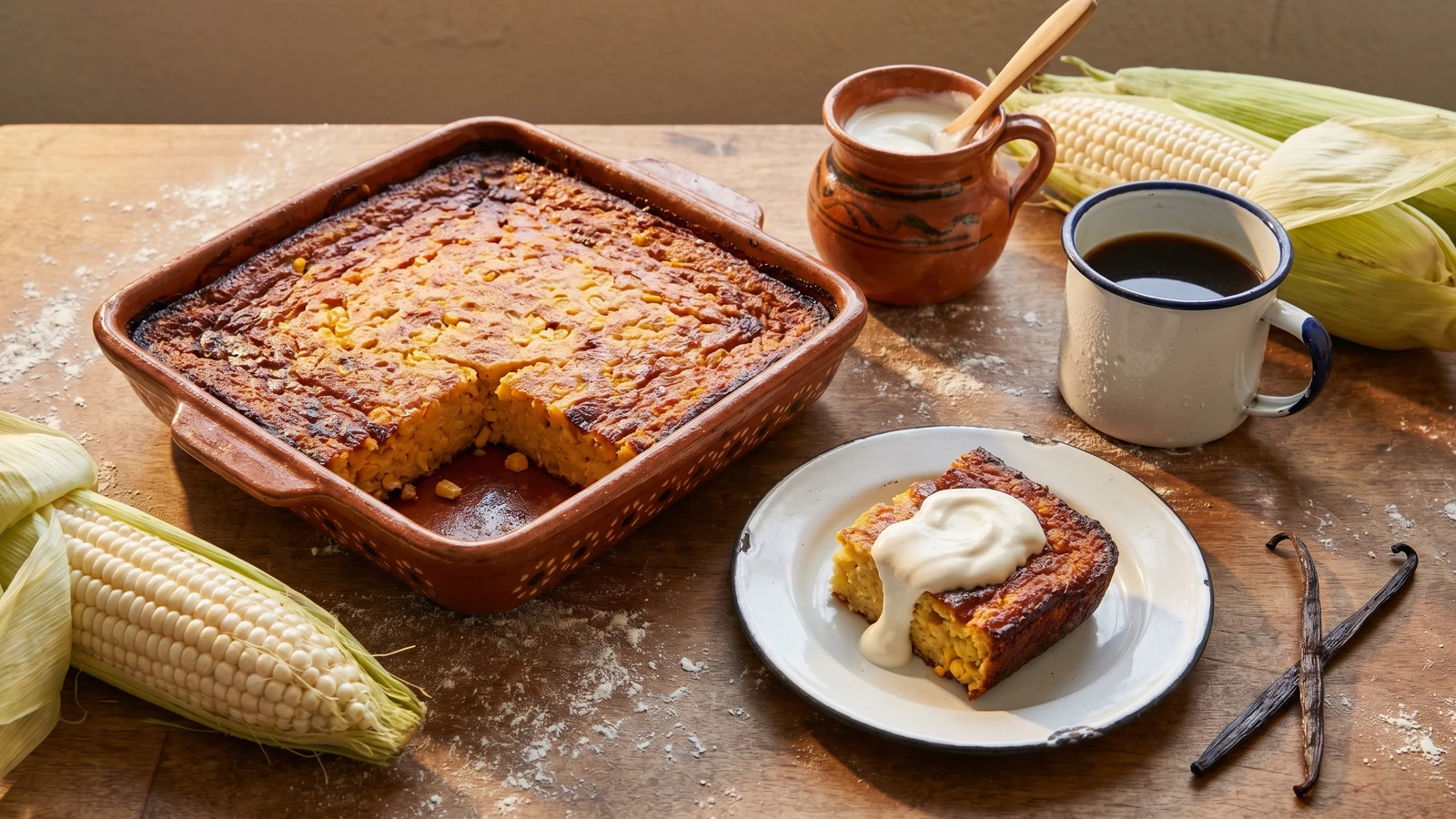
Sonora's quick corn bread, dense and custard-like, built on fresh elote blended with condensed milk and butter. The merienda bread of ranch kitchens in Hermosillo and Ures, served warm with crema fresca and a cup of cafe de talega.
Sonora is wheat country. That is the first thing to know. The north grows wheat, eats flour tortillas the size of dinner plates, and bakes more than the rest of Mexico will admit. But Sonora also grows corn, and in the late-summer harvest, when the ears are heavy and the kernels are still milky, the ranch kitchens turn that elote into a bread that sits somewhere between cake and custard. This is pan de elote a la sonorense.
The corn matters more than anything else in this recipe. Use fresh white field corn from the mercado in season, the kind with starchy kernels and milky cobs. Sweet corn from the supermarket will give you a bread that tastes like a dessert from a chain restaurant. Field corn gives you a bread that tastes like Sonora. If the mercado does not have it, wait. Mexican grandmothers cook with what is in front of them, not what is on a Pinterest board.
The condensed milk is not a shortcut. Lechera in pan de elote is the Sonoran way and has been since the cans started arriving in northern Mexico in the early 20th century. The dairy industry of Sonora is one of the largest in the country, and cooks here build with butter, cream, and condensed milk the way cooks in Oaxaca build with chiles. Use real butter, not vegetable shortening. Use Mexican vanilla, not imitation. La calidad del ingrediente es la receta.
My mother was from Jalisco, not Sonora, but she had a page in her notebook copied from a senora she met on a trip to Hermosillo in 1985, written in pencil with a note in the margin that said 'no batir mucho, queda como flan.' Do not overbeat, it turns out like flan. She was right. The senora was right. Recetas probadas y garantizadas.
Pan de elote in its current form is a 20th-century dish, made possible by the arrival of sweetened condensed milk to northern Mexico in the late 1800s and the spread of home ovens through the ranch economy of Sonora and Sinaloa in the 1920s and 1930s. The dish draws on a much older mesoamerican tradition of fresh-corn preparations, including tamales de elote and atole de elote, but the addition of wheat flour and dairy products reflects the distinct cultural geography of the Noroeste, where Yaqui and Mayo corn agriculture met Spanish and later Mormon and Mennonite wheat traditions. Sonora's recognition as a UNESCO Creative City of Gastronomy in 2015 cited the state's wheat-flour panaderias and its dairy heritage, both of which converge in this bread.
Quantity
6 cups
cut from about 6 to 8 ears
Quantity
1 can (14 ounces)
Quantity
1 cup
melted and cooled slightly
Quantity
5
at room temperature
Quantity
1/2 cup
Quantity
2 tablespoons
Quantity
2 teaspoons
Quantity
1/2 teaspoon
Quantity
1 teaspoon
Quantity
2 tablespoons
softened
Quantity
for serving
Quantity
for serving
| Ingredient | Quantity |
|---|---|
| fresh white field corn kernels (elote)cut from about 6 to 8 ears | 6 cups |
| sweetened condensed milk | 1 can (14 ounces) |
| unsalted buttermelted and cooled slightly | 1 cup |
| large eggsat room temperature | 5 |
| all-purpose wheat flour | 1/2 cup |
| fine yellow cornmeal or harina para tamal | 2 tablespoons |
| baking powder | 2 teaspoons |
| fine sea salt | 1/2 teaspoon |
| Mexican vanilla extract | 1 teaspoon |
| unsalted butter for the pansoftened | 2 tablespoons |
| crema fresca (optional) | for serving |
| cafe de talega or cafe de olla (optional) | for serving |
Heat the oven to 350F. Rub the softened butter generously across the bottom and sides of a 9 by 13 inch baking dish, glass or ceramic, never aluminum for this. The slow heat of glass gives you the custard set in the middle and the caramelized edge along the wall of the pan. That edge is the part Sonorenses fight over.
Stand each ear on its wide end in a deep bowl. Run a sharp knife down the cob in long strokes, releasing the kernels. After all the kernels are off, run the back of the knife down the bare cob to scrape out the milky liquid left behind. That liquid is what gives this bread its custard pull. Save every drop and add it to the kernels in the bowl. Esto es lo que hace el pan.
Transfer the corn kernels and their milky scrapings to a blender. Add the condensed milk, the melted butter, the eggs, the vanilla, and the salt. Blend on medium for about 45 seconds. You want a coarse puree, not a smooth one. Specks of kernel should still be visible. A smooth blend gives you flan. A coarse blend gives you pan de elote. There is a difference and it matters.
Whisk the flour, cornmeal, and baking powder together in a small bowl. Pour the corn mixture from the blender into a larger mixing bowl, then sift the dry ingredients over the top. Fold with a spatula until just combined. Do not overmix. The wheat flour is here for structure, not for chew. Stop the moment the streaks of flour disappear.
Pour the batter into the buttered pan. It should come a little more than halfway up the sides. Bake on the middle rack for 50 to 60 minutes. The top will turn deep golden, the edges will pull away from the pan, and the center will give the slightest jiggle when you nudge the pan. A wooden toothpick should come out with a few moist crumbs, never wet batter, never bone dry. Bone dry is overbaked and the custard texture is gone. No me vengas con atajos en el horno.
Let the pan de elote rest in its pan on the counter for at least 20 minutes before cutting. The center continues to set as it cools and a hot cut will collapse the structure. Cut into generous squares with a serrated knife. Serve warm with a spoonful of crema fresca on each piece and a cup of cafe de talega beside it. Asi se come en Sonora.
1 serving (about 175g)
Culinary guides, cultural storytelling, and the editorial depth that makes cooking meaningful.
Discover Culinary ExplorerChef Lupita
Guanajuato's daily bread from Acámbaro, a small glazed roll built on pata, enriched with manteca de cerdo, and baked until the top shines lightly for merienda.

Chef Lupita
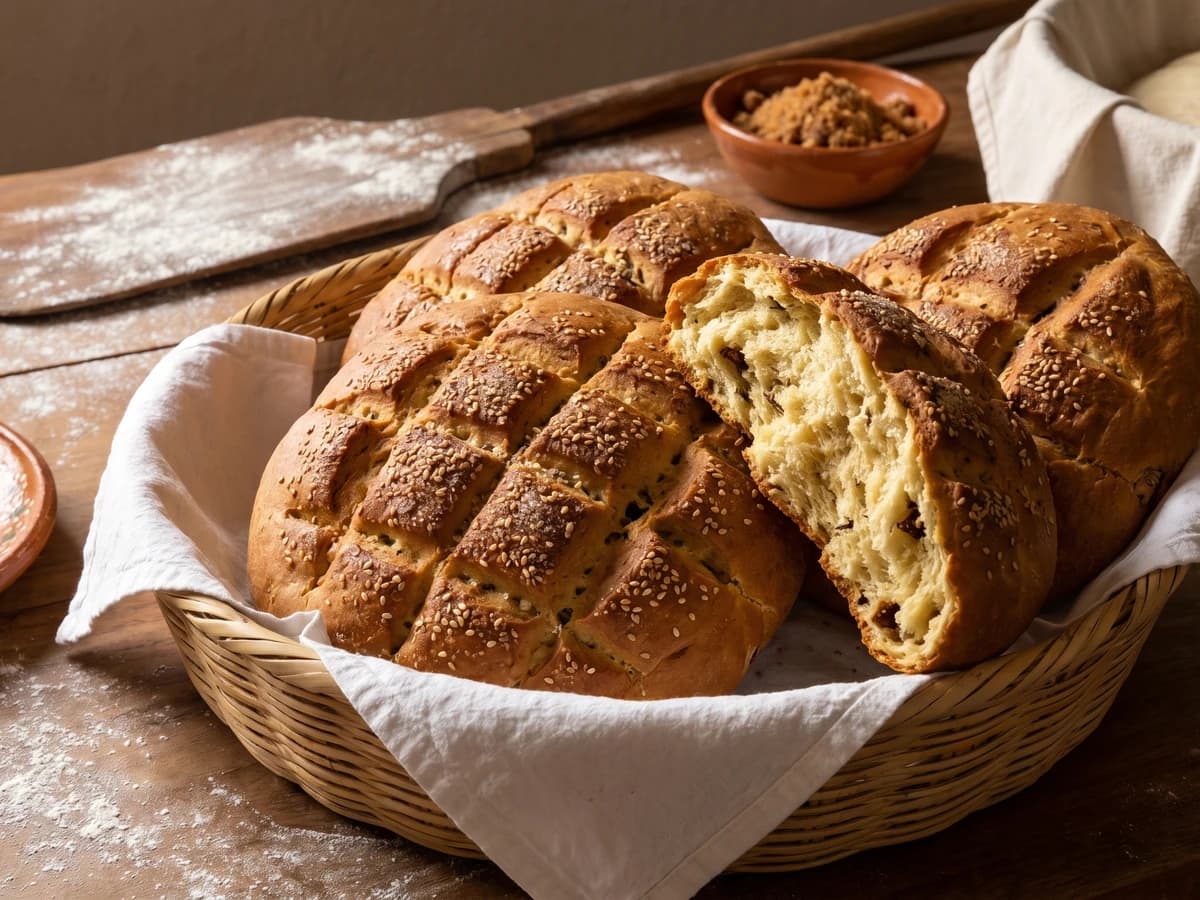
Michoacan's Tinguindin aguacatas are flat, leaf-scored sweet breads made with harina de trigo, piloncillo, anise, and manteca de cerdo, shaped by hand for the wood oven.
Chef Lupita
From Ajijic on Lake Chapala, Pan Tachihual is a lightly sweet wedding loaf built with harina de trigo, harina de maiz, piloncillo, manteca, anise, and the old Guadalajara pata.

Chef Lupita
Comitán's pan de yema shaped into little pigs, birds, and rabbits, a Chiapas bakery bread rich with egg yolks, manteca de cerdo, and anís, baked golden on hoja de plátano.