Chef Fai
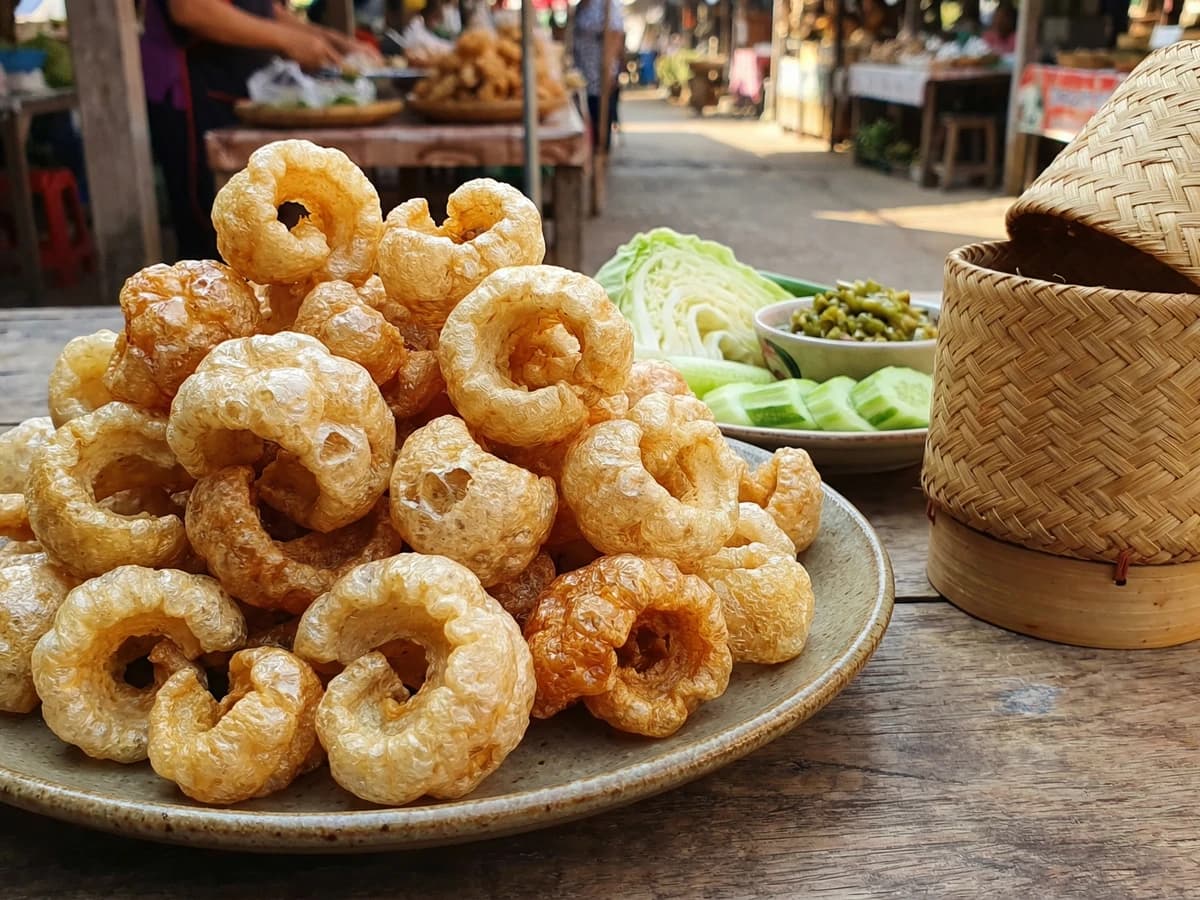
Northern Pork Rinds (Kab Moo)
Sun-dried pork skin fried until it shatters into golden shards. In the Lanna meal, kab moo isn't the star. It's the vehicle that carries nam prik and sticky rice to your mouth. Texture with purpose.
A cooking platform built around craft, culture, and the stories behind what we eat.

Created by
No paste. No protein. Just vegetables, garlic, a screaming-hot wok, and the same governing principles that run through every Thai dish: fish sauce for salt, oyster sauce for body, sugar for balance. The simplest stir-fry proves the system works.
This is the dish nobody puts on a menu board and everybody eats. Pad phak ruam mit. Mixed vegetable stir-fry. No paste, no protein, no glamour. Just whatever vegetables you have, garlic, oil, fish sauce, oyster sauce, and a wok hot enough to scar metal.
Ajarn always said: "The principles don't care about the dish. The dish follows the principles." Pad phak ruam mit is the proof. There's no kreung tam here. No pounded paste foundation. But the four-pillar framework still governs every decision you make. Fish sauce is the salt. A pinch of sugar balances the sauce. The wok provides the heat that transforms raw vegetables into something with char and sweetness and life. Even without lime and chili, the system holds. Not every dish needs all four pillars. The principles are flexible. Recipes aren't.
Here's what separates the street vendor's pad phak from the sad stir-fry you make at home: order of operations and temperature. Dense vegetables go in first. Leafy ones go in last. Garlic hits the oil before anything else, always. And the wok must be so hot that each vegetable sears on contact instead of steaming in its own moisture. If your vegetables are sitting in a puddle of water, your wok wasn't hot enough. That puddle is the difference between stir-frying and boiling.
I teach this dish at every Fai Thai workshop as the very first wok exercise. Not pad kra pao. Not pad see ew. This. Because if you can stir-fry vegetables correctly, with proper heat, proper timing, proper seasoning, you can stir-fry anything. The technique is the lesson. The vegetables are just the classroom.
Pad phak ruam mit is not a single codified recipe but a Central Thai home-cooking method, the default weeknight stir-fry in Bangkok households since the widespread adoption of the Chinese-style steel wok in the early 20th century. The technique arrived with Teochew Chinese immigrants who brought wok cooking to Siam, and Thai cooks adapted it by replacing soy sauce with fish sauce as the primary seasoning. Oyster sauce, another Chinese contribution, became a staple in Thai wok cooking by the 1960s and is now as fundamental to a Thai pantry as nam pla itself.
Quantity
2 tablespoons
Quantity
5 cloves
smashed and roughly chopped
Quantity
100g
cut into 2-inch pieces, stems and leaves separated
Quantity
100g
halved lengthwise
Quantity
80g
cut into wide strips
Quantity
1 small
sliced on the bias, 1/8 inch thick
Quantity
5
halved
Quantity
50g
strings removed
Quantity
1 1/2 tablespoons
Quantity
1 tablespoon
Quantity
1 teaspoon
Quantity
1 teaspoon
Quantity
2 tablespoons
Quantity
pinch
Quantity
for serving
| Ingredient | Quantity |
|---|---|
| vegetable oil | 2 tablespoons |
| garlicsmashed and roughly chopped | 5 cloves |
| Chinese broccoli (khana)cut into 2-inch pieces, stems and leaves separated | 100g |
| baby corn (khao phot on)halved lengthwise | 100g |
| napa cabbagecut into wide strips | 80g |
| carrotsliced on the bias, 1/8 inch thick | 1 small |
| straw mushrooms or oyster mushroomshalved | 5 |
| snow peas or sugar snap peasstrings removed | 50g |
| oyster sauce | 1 1/2 tablespoons |
| fish sauce (nam pla) | 1 tablespoon |
| granulated sugar | 1 teaspoon |
| light soy sauce (si ew khao) | 1 teaspoon |
| chicken stock or water | 2 tablespoons |
| white pepper | pinch |
| steamed jasmine rice | for serving |
Cut and separate everything before the wok gets hot. Chinese broccoli stems in one pile, leaves in another. Carrots and baby corn together because they cook at the same speed. Mushrooms alone. Snow peas and napa cabbage together because they need the least time. Mix the oyster sauce, fish sauce, sugar, light soy sauce, and stock in a small bowl. This is your sauce. Once the wok is hot, you don't stop to measure anything.
Set your wok over the highest heat your stove can produce. Wait. Keep waiting. When the steel starts to shimmer and a drop of water vaporizes on contact, add the oil and swirl it around the sides. The oil should smoke within three seconds. That's your signal. If it sits there calmly, the wok isn't ready.
Drop the garlic into the smoking oil. It should sizzle violently. Toss it once, twice. You want the edges golden, the center still white. Five seconds. Maybe eight. The aroma should punch you in the face. That's the foundation of every Thai stir-fry: garlic hitting screaming-hot oil. If the garlic doesn't sizzle on contact, pull it out, get the wok hotter, start again.
Add the carrots, baby corn, mushrooms, and Chinese broccoli stems immediately after the garlic. Toss hard. Press the vegetables against the wok surface to get sear marks. You want to hear the hiss of contact. Keep them moving but let them sit for a moment between tosses so the wok can recover its heat. About 60 seconds. The stems should still have backbone. If they're floppy, you've gone too far.
Throw in the napa cabbage, snow peas, and Chinese broccoli leaves. Toss once. Pour the sauce mixture down the side of the wok, not directly onto the vegetables. Hitting the hot metal concentrates and caramelizes the sauce before it touches the food. That sizzle and hiss is flavor building. Toss everything together for 30 seconds. The cabbage and leaves should wilt but still have color. The sauce should coat every piece with a glossy sheen, not pool at the bottom. If there's liquid sitting in the wok, your heat was too low.
Hit it with a pinch of white pepper. One final toss. Plate immediately over jasmine rice. The vegetables should be glossy, still vibrant in color, with visible char marks on the stems and baby corn. Each piece should be distinct, not collapsed into mush. The whole process from garlic to plate should take under three minutes of active wok time. That's it. That's the dish. No garnish, no fuss. Principles, not decoration.
1 serving (about 390g)
Culinary guides, cultural storytelling, and the editorial depth that makes cooking meaningful.
Discover Culinary ExplorerChef Fai
Sun-dried pork skin fried until it shatters into golden shards. In the Lanna meal, kab moo isn't the star. It's the vehicle that carries nam prik and sticky rice to your mouth. Texture with purpose.
Chef Fai
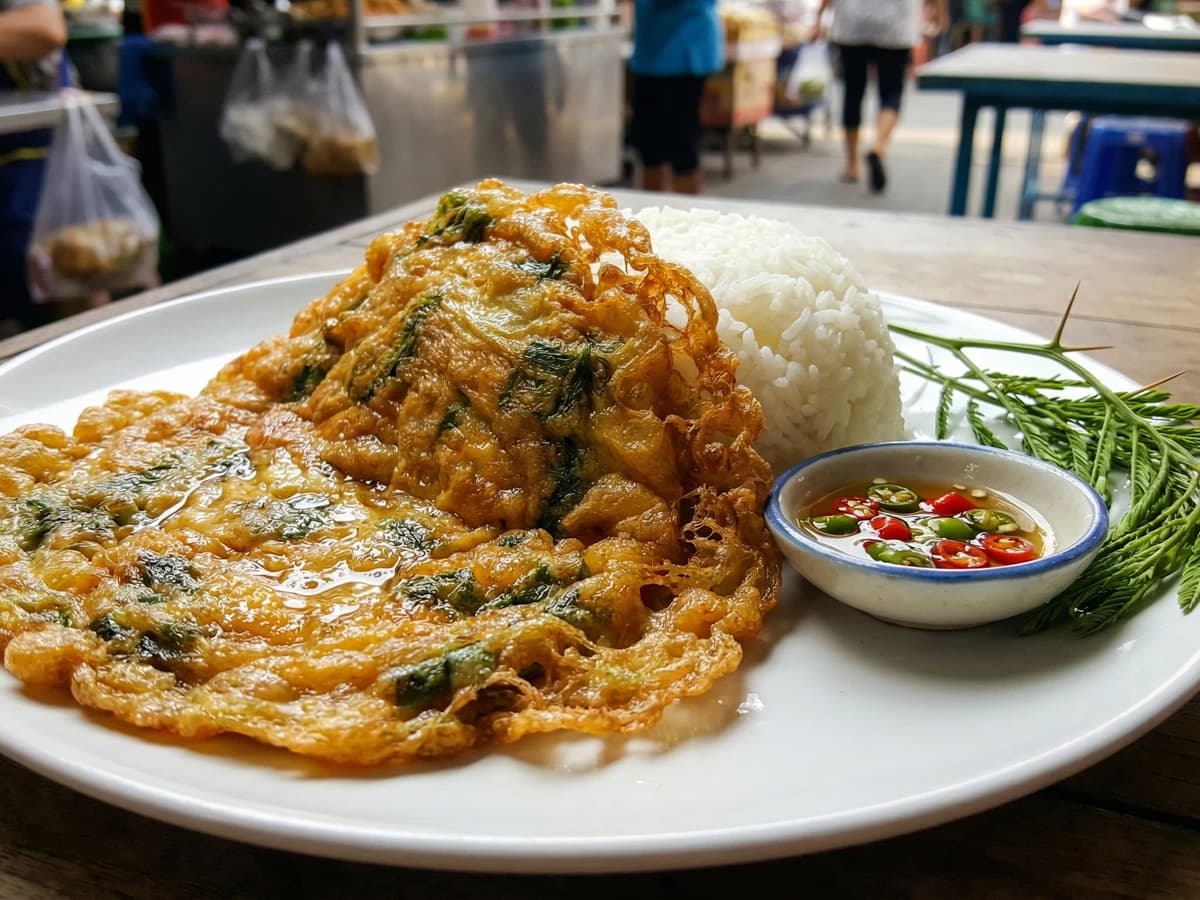
Three ingredients, one principle: fish sauce seasons the eggs, not salt. Hot oil fries the omelet into a golden, lacy puff. Cha-om's bitter punch makes this Southern Thai, not Central Thai. Over rice. Done.
Chef Fai
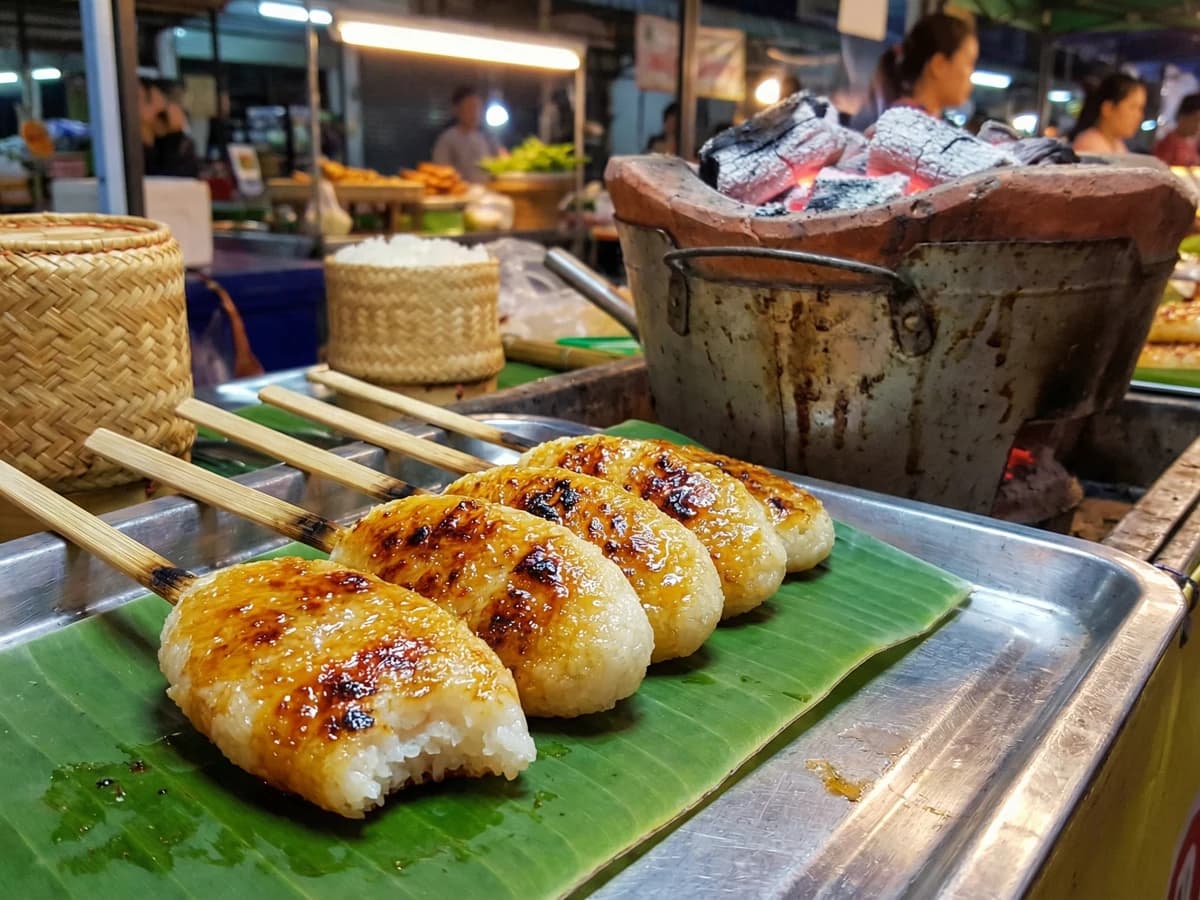
Sticky rice pressed onto bamboo skewers, brushed with egg and palm sugar, charred over low coals until golden and crackly outside, soft and chewy inside. Even the starch gets the fire treatment in Isan.

Chef Fai
Pork blood binds soaked sticky rice into dense, iron-rich slabs, steamed in banana leaf, cooled, sliced, and grilled over charcoal until the edges crisp. Morning market food from the Lanna highlands. Nothing wasted, nothing precious.