Chef Fai
Northern Pork Rinds (Kab Moo)
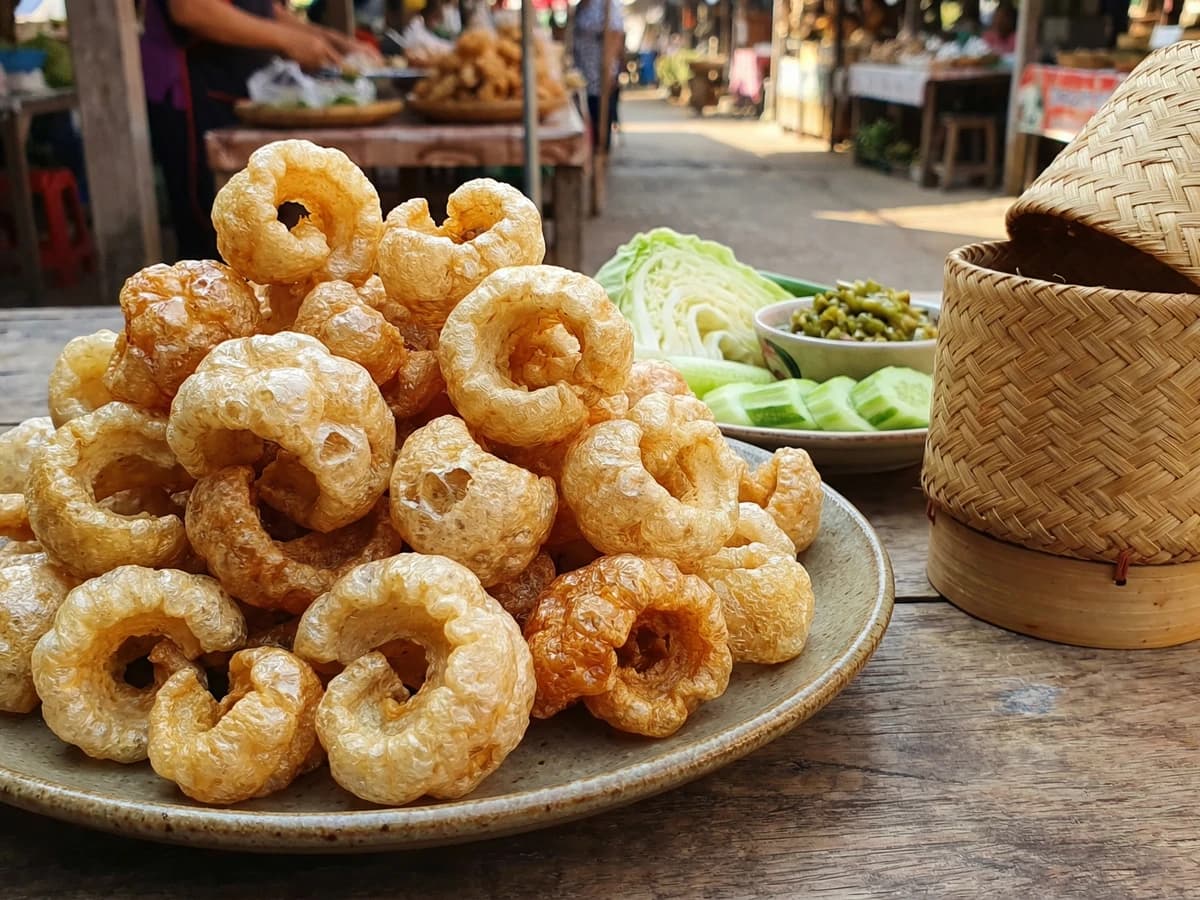
Sun-dried pork skin fried until it shatters into golden shards. In the Lanna meal, kab moo isn't the star. It's the vehicle that carries nam prik and sticky rice to your mouth. Texture with purpose.
A cooking platform built around craft, culture, and the stories behind what we eat.

Created by
Pork blood binds soaked sticky rice into dense, iron-rich slabs, steamed in banana leaf, cooled, sliced, and grilled over charcoal until the edges crisp. Morning market food from the Lanna highlands. Nothing wasted, nothing precious.
Northern Thai cooking wastes nothing. Blood is not a byproduct. It's an ingredient. In Lanna, when a pig is slaughtered, the blood goes straight into the kitchen. Khao kan jin is what happens when that blood meets sticky rice: a dense, mineral-rich slab that feeds families and market customers all morning. If that makes you uncomfortable, consider that the squeamishness is modern. The technique is ancient. And the food is extraordinary.
The science is simple and brilliant. Fresh pork blood is liquid protein. When you mix it with soaked raw sticky rice, wrap it in banana leaf, and steam it, the blood does two things simultaneously. It provides the moisture that cooks the rice. And as the proteins coagulate with heat (the same chemistry that turns a raw egg firm), they bind every grain into a cohesive mass you can slice like a loaf. No binder added. No starch trick. The blood IS the binder. Centuries of Lanna cooks figured this out without a food science degree.
The kreung tam here is stripped to its essence: garlic pounded with white pepper and salt. That's it. No lemongrass, no galangal, no twelve-ingredient paste. Ajarn always said the kreung tam is everything, but he also taught me that "everything" means the right paste for the right dish. Khao kan jin doesn't need complexity. The blood and rice do the heavy lifting. The garlic paste seasons. Pounding it releases the allicin, that sharp burn you smell when garlic cells rupture. A knife can't do that. Krok ก่อน.
Every morning market in Chiang Mai has a vendor with dark mahogany slabs sitting on banana leaf, a knife, and a small charcoal grill. You point, she slices, she grills. The edges crisp and caramelize while the inside stays dense and chewy. You dip it in jaew, that Northern Thai chili sauce roasted dark and pounded rough, and you eat it with your hands. This is how Lanna starts its day. Not with congee, not with toast. With blood rice off a charcoal grill. Sticky rice is the only starch in the North. Khao niew. And khao kan jin is proof that the North treats its staple grain with more creativity and respect than most people realize.
Khao kan jin (ข้าวกั้นจิ้น) is a Lanna preparation with roots in the pig-centric food culture of Northern Thailand, where nearly every part of the animal is consumed. The word "jin" (จิ้น) is Kam Muang (Northern Thai dialect) for meat, distinguishing it from the Central Thai "neua." The dish functions as portable sustenance: once steamed and cooled, blood rice keeps well without refrigeration and was traditionally carried by farmers and laborers into the fields. It remains a morning market staple across Chiang Mai, Chiang Rai, Lamphun, and Lampang, sold alongside sai oua and sticky rice baskets before dawn.
Quantity
500g
soaked overnight, drained
Quantity
400ml
strained through fine mesh
Quantity
150g
cut into small 1cm dice
Quantity
10 cloves
Quantity
1 teaspoon
Quantity
2 tablespoons
Quantity
1 teaspoon
Quantity
as needed
cut into large squares for wrapping
Quantity
as needed
Quantity
5
for the jaew
Quantity
4
unpeeled, for the jaew
Quantity
4 cloves
unpeeled, for the jaew
Quantity
2 tablespoons
for the jaew
Quantity
1 tablespoon
for the jaew
Quantity
1 teaspoon
for the jaew
Quantity
for serving
| Ingredient | Quantity |
|---|---|
| sticky rice (khao niew)soaked overnight, drained | 500g |
| fresh pork blood (lueaat moo)strained through fine mesh | 400ml |
| pork bellycut into small 1cm dice | 150g |
| garlic (kratiam) | 10 cloves |
| salt | 1 teaspoon |
| fish sauce (nam pla) | 2 tablespoons |
| ground white pepper (prik thai khao) | 1 teaspoon |
| banana leaves (bai tong)cut into large squares for wrapping | as needed |
| kitchen twine | as needed |
| dried red chilies (prik haeng)for the jaew | 5 |
| shallots (hom daeng)unpeeled, for the jaew | 4 |
| garlic (kratiam)unpeeled, for the jaew | 4 cloves |
| fish sauce (nam pla)for the jaew | 2 tablespoons |
| lime juice (nam manao)for the jaew | 1 tablespoon |
| palm sugar (nam tan pip)for the jaew | 1 teaspoon |
| fresh cilantro sprigs (pak chi) (optional) | for serving |
Peel the 10 garlic cloves and drop them into a granite mortar (krok hin) with the salt and white pepper. Pound to a rough paste. Not smooth, not minced. Pounded. You want the cell walls ruptured so the allicin releases, that sharp, almost burning aroma that hits your nose. That's how you know you've done it right. A knife can't do this. A garlic press can't do this. Only the krok.
Strain the fresh pork blood through a fine mesh sieve into a large mixing bowl. You're removing any clots or fibrous strands. What you want is smooth, liquid blood with a deep, dark red color. Add the pounded garlic paste and the fish sauce. Stir to combine. The mixture should smell sharp from the garlic and mineral-rich from the blood. That iron smell is the point. Don't shy away from it.
Add the drained sticky rice and diced pork belly to the blood mixture. Mix thoroughly with your hands. Every grain needs to be coated. The mixture will look dark and wet, almost like a thick porridge. This is correct. The blood is the cooking liquid. As it steams, the blood proteins will coagulate and bind the rice into a solid mass. No other binder needed. The blood does everything: moisture, structure, flavor, and color.
Soften the banana leaves by passing them briefly over a gas flame or dipping them in hot water. They should be pliable, not brittle. Lay a large square of banana leaf on your work surface, shiny side up. Spoon about a cup of the blood-rice mixture onto the center. Fold the sides over to form a flat rectangular parcel about 2cm thick. Tie with kitchen twine to hold the shape. Repeat until all the mixture is wrapped. You should get 4 to 6 parcels depending on size.
Arrange the parcels in a steamer basket, seam side down, leaving a little space between each for steam circulation. Steam over high heat for one hour. The banana leaf will darken to olive green. When you press a parcel gently, it should feel firm and solid, not squishy. If it still gives, steam for another 15 minutes. The blood proteins need full coagulation to bind properly. Undercooking means the block crumbles when you slice it.
Remove the parcels from the steamer and let them cool completely at room temperature, at least 30 minutes. This rest period matters. As the blood-rice mixture cools, the proteins set further and the block firms up. Unwrap a parcel. The inside should be uniformly dark mahogany, dense, and cohesive. Slice into pieces about 1cm thick. They should hold their shape cleanly. If they crumble, the mixture was too dry or understeamed.
Light your charcoal grill and wait until the coals are white-hot with no visible flame. Lay the slices directly on the grate. Grill for 3 to 4 minutes per side. You want the surface to crisp and caramelize, developing a thin crust while the inside stays dense and chewy. The edges will darken further and develop a slightly smoky, almost nutty aroma. That's the sugars in the blood caramelizing. Don't rush it. Low, steady charcoal heat. No gas grill, no broiler. Charcoal is the flavor.
While the parcels cool, make the jaew. Set the dried chilies, unpeeled shallots, and unpeeled garlic directly on the charcoal grate (or in a dry pan over high heat). Roast until the skins blacken and the chilies darken, turning them occasionally. The shallots should be soft when pressed, about 8 to 10 minutes. The garlic, about the same. Peel the shallots and garlic. Pound everything together in the mortar: chilies first, then garlic, then shallots. Rough, not smooth. Add the fish sauce, lime juice, and palm sugar. Pound and stir to combine. Taste. It should be smoky, salty, sour, with a low burn from the roasted chilies. This is the counterpoint to the rice. The jaew brings the acidity and heat that the khao kan jin doesn't have on its own.
Arrange the grilled slices on a fresh piece of banana leaf. Set the jaew in a small bowl alongside. Eat with your hands. Tear a piece, dip it, eat it. No fork, no spoon. This is Lanna morning market food. The khao kan jin provides salt, mineral depth, and the dense chew of sticky rice bound by blood. The jaew provides sour, smoky heat. Together they balance. The four pillars distributed across the plate, not crammed into a single dish. That's the Northern Thai way.
1 serving (about 200g)
Culinary guides, cultural storytelling, and the editorial depth that makes cooking meaningful.
Discover Culinary ExplorerChef Fai
Sun-dried pork skin fried until it shatters into golden shards. In the Lanna meal, kab moo isn't the star. It's the vehicle that carries nam prik and sticky rice to your mouth. Texture with purpose.
Chef Fai
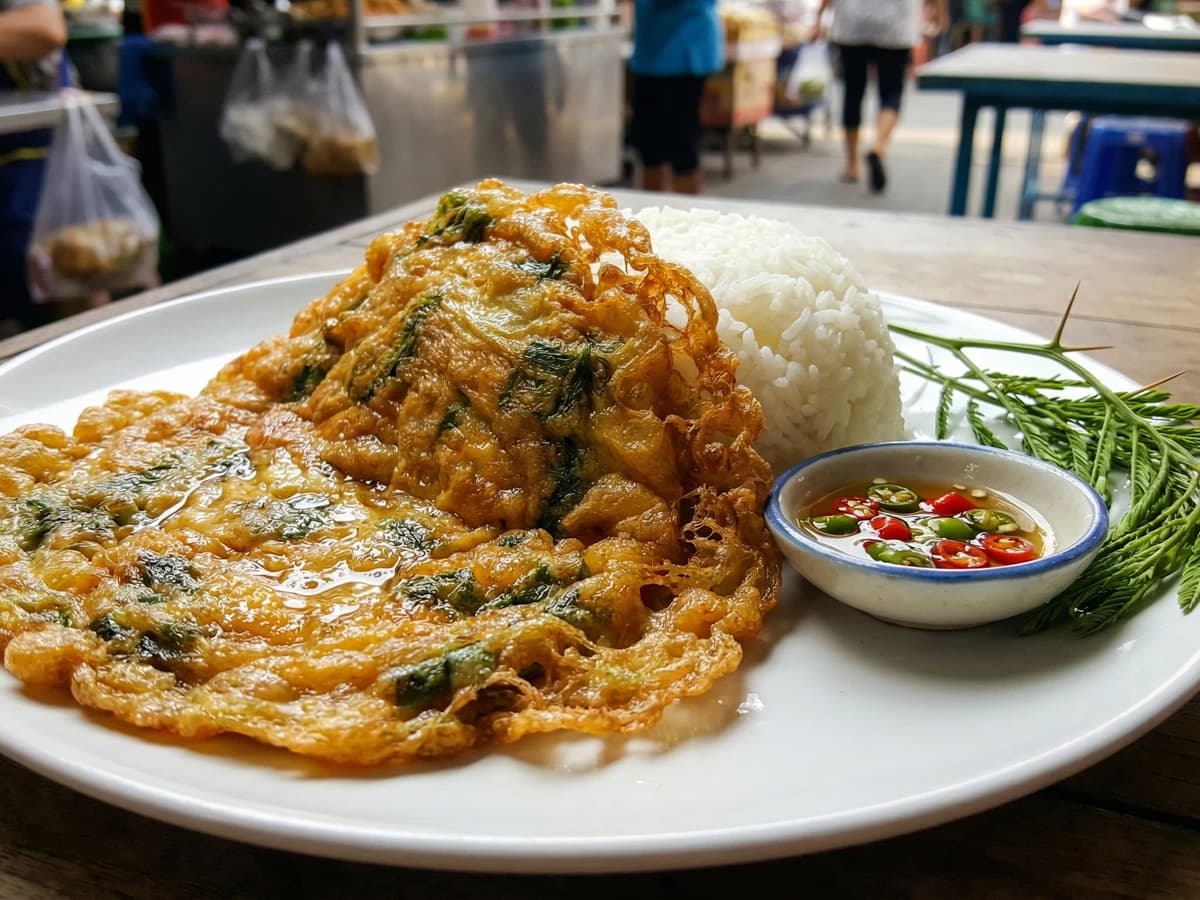
Three ingredients, one principle: fish sauce seasons the eggs, not salt. Hot oil fries the omelet into a golden, lacy puff. Cha-om's bitter punch makes this Southern Thai, not Central Thai. Over rice. Done.
Chef Fai
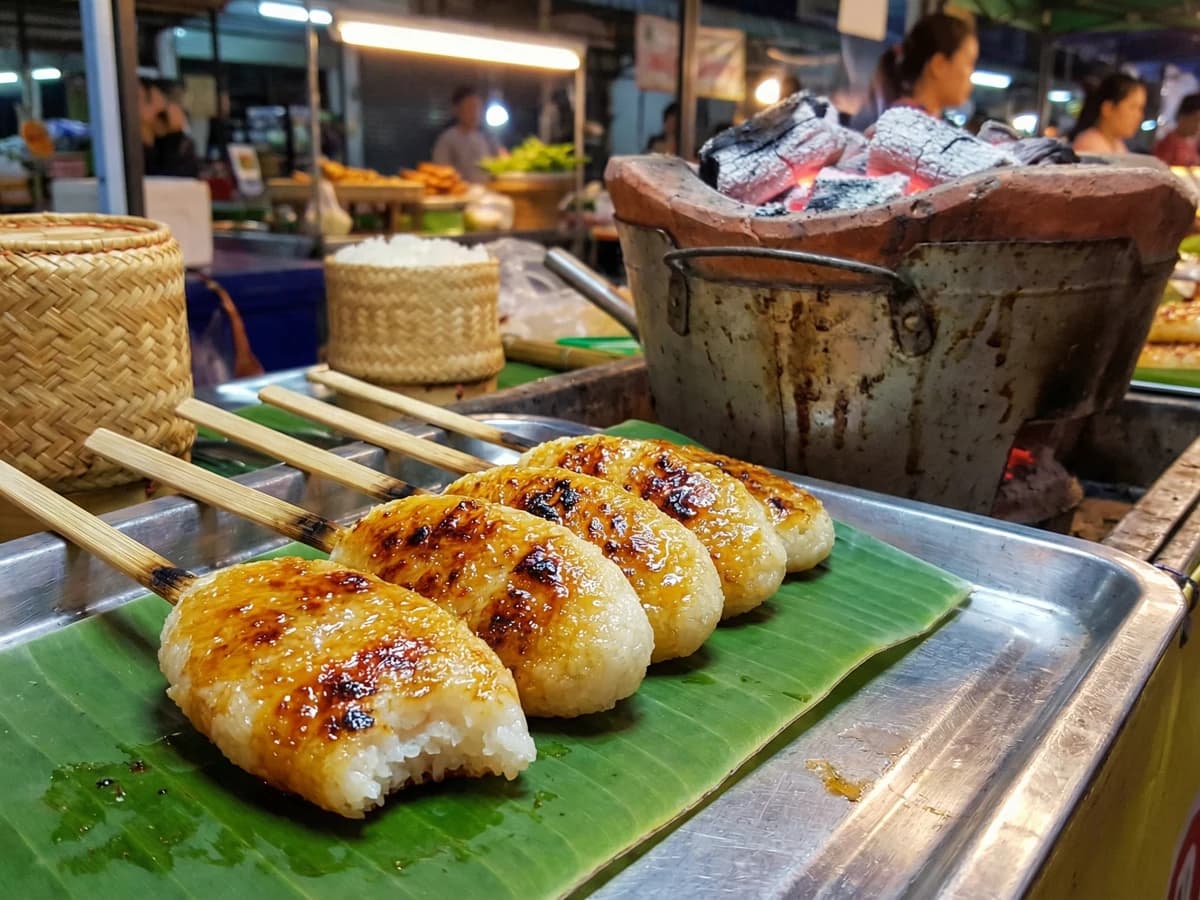
Sticky rice pressed onto bamboo skewers, brushed with egg and palm sugar, charred over low coals until golden and crackly outside, soft and chewy inside. Even the starch gets the fire treatment in Isan.

Chef Fai
Fresh turmeric root pounded and cooked into every grain with coconut milk and whole spices. The golden rice of Thailand's deep south, where Malay-Muslim kitchens stain their hands yellow and call it tradition.