Chef Fai
Northern Pork Rinds (Kab Moo)
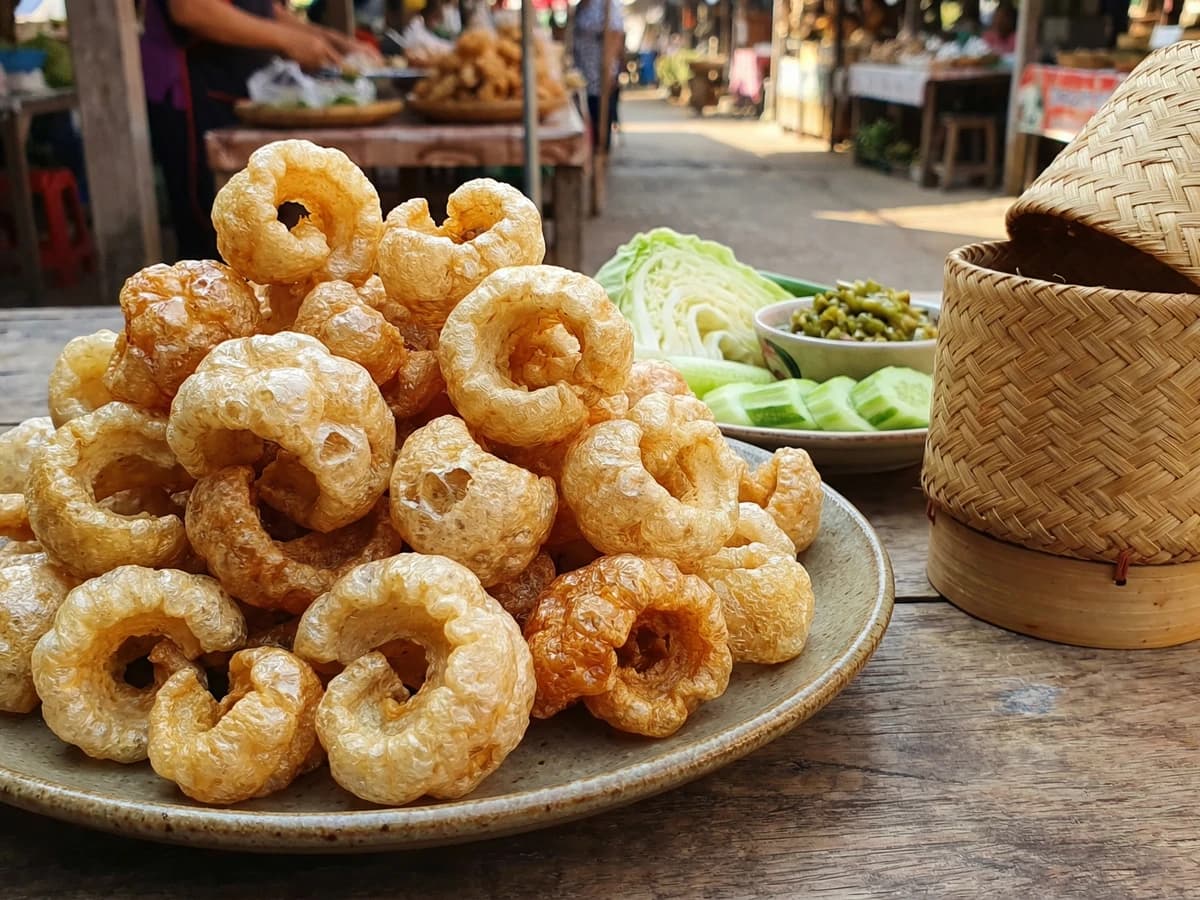
Sun-dried pork skin fried until it shatters into golden shards. In the Lanna meal, kab moo isn't the star. It's the vehicle that carries nam prik and sticky rice to your mouth. Texture with purpose.
A cooking platform built around craft, culture, and the stories behind what we eat.
Created by
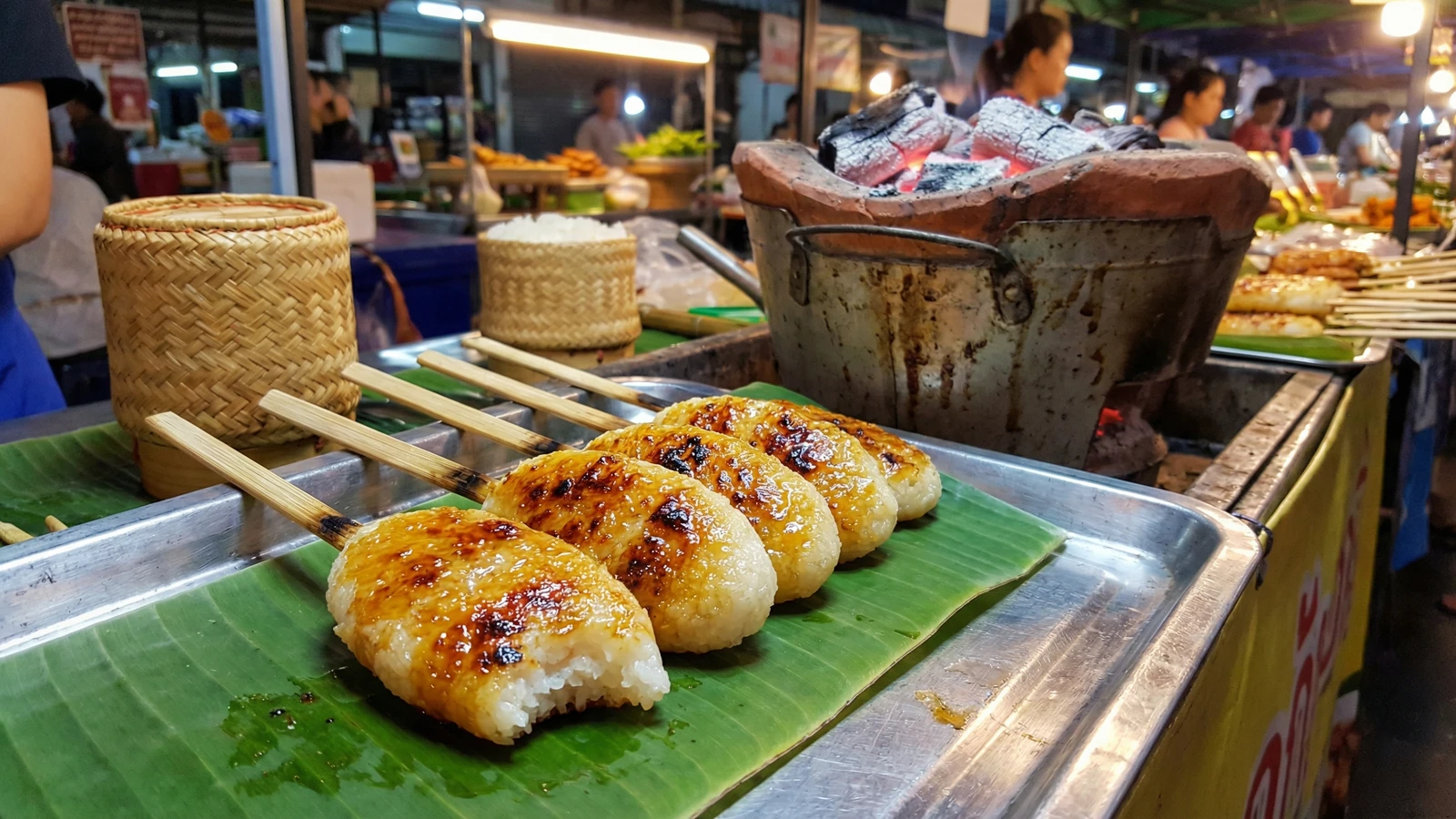
Sticky rice pressed onto bamboo skewers, brushed with egg and palm sugar, charred over low coals until golden and crackly outside, soft and chewy inside. Even the starch gets the fire treatment in Isan.
In Isan, sticky rice isn't a side dish. It's the center of the table. Everything else, the gai yang, the som tam, the jaew, those orbit around the rice. The rice is the meal. So when you have leftover khao niew from this morning's steaming and a charcoal grill already burning from the chicken, what do you do? You grill the rice too.
Khao jee is Isan's simplest trick: take cooked sticky rice, press it flat onto a bamboo stick, brush it with a mix of beaten egg and palm sugar, and hold it over low coals until the outside turns golden and crackly and the inside stays dense and chewy. Three ingredients on top of rice. No kreung tam, no paste, no complex seasoning. This is the dish that shows the range of the Isan system. Not everything needs a mortar. Some things just need fire and patience.
The egg and palm sugar do something specific on the grill. The sugar caramelizes, the egg proteins set and brown, and together they form a shell. That shell is where all the flavor lives: smoky, sweet, slightly savory from the egg. The contrast with the plain, chewy rice inside is the whole point. You bite through the crisp into the soft. That texture shift is the design. It's the same principle behind any good grilled food: transform the surface while keeping the interior true to what it is.
Ajarn always said you can judge a cook by how they treat rice. Anyone can steam it. But pressing it flat, glazing it, grilling it over dying coals with patience, that's respect for the ingredient. Khao jee is what happens when you treat the simplest food in your kitchen like it deserves your full attention. The highway vendors selling these on bamboo sticks outside Khon Kaen, they understand that. A three-baht snack made with the same care as a thirty-course dinner. Principles, not price tags.
Khao jee (ข้าวจี่) is a Lao and Isan tradition born from practicality: leftover sticky rice from the morning's steaming gets a second life on the charcoal grill. The word "jee" (จี่) means to grill or roast over direct heat, and the technique appears across the Mekong region from Vientiane to Udon Thani. Roadside vendors along Isan's highways sell khao jee alongside gai yang and som tam, making it one of the defining snacks of Thailand's northeast. Some older Isan variations stuff the rice with sweetened mung bean paste (thua khiew) before grilling, a version that still surfaces at temple fairs and rural markets but has mostly disappeared from the roadsides.
Quantity
3 cups
warm
Quantity
2 large
Quantity
3 tablespoons
grated or softened
Quantity
1/4 teaspoon
Quantity
8
soaked in water for 30 minutes
Quantity
for brushing the grill
| Ingredient | Quantity |
|---|---|
| cooked sticky rice (khao niew)warm | 3 cups |
| eggs | 2 large |
| palm sugar (nam tan pip)grated or softened | 3 tablespoons |
| salt | 1/4 teaspoon |
| bamboo skewerssoaked in water for 30 minutes | 8 |
| vegetable oil | for brushing the grill |
Beat the eggs in a bowl. Add the grated palm sugar and salt. Whisk until the sugar dissolves into a smooth, slightly thick mixture. This is your glaze: sweet from the palm sugar, savory from the egg, and ready to caramelize the moment it hits the heat. That's all. Set it aside.
The rice should be warm. Not hot, not cold. Warm. Hot rice sticks to everything and burns your hands. Cold rice is too stiff to mold. Wet your hands lightly with water to prevent sticking. Take about a third of a cup of sticky rice and press it firmly around the top third of a bamboo skewer, forming a flat oval shape about half an inch thick and three inches long. Press hard. Compact it. Squeeze. The rice needs to hold together over the coals, and loose rice falls through the grate and into the fire. Repeat with the remaining rice and skewers. You should get eight.
You want low, steady coals. Not high heat. Not flames. The charcoal should be white-ashed and glowing, past the aggressive stage. If you're using a Thai clay stove (tao), even better. Brush the grill grate lightly with oil to prevent sticking. Khao jee needs patience. High heat burns the egg glaze to bitter carbon before the rice warms through. If you're grilling gai yang or kor moo yang on the same fire, use the cooler edge for the khao jee. Let the chicken get the hot spot.
Place the rice skewers on the grill over the low coals. Let them toast for 2 to 3 minutes on the first side without touching them. You'll hear a faint crackle as the surface dries and firms up. Flip once. Now brush the egg-sugar glaze generously over the top side with a pastry brush. Flip again after 2 minutes and brush the other side. Repeat the glazing and flipping two or three more times, building layers. Each pass of glaze adds to the crust. The finished khao jee should be deep golden to amber, with darker spots of caramelization where the sugar caught the most heat. Tap the surface with your finger. It should feel firm, crackly, almost like a thin shell.
Pull the skewers off the grill and let them sit for one minute. The glaze sets as it cools slightly, firming the crust. Then eat. Bite through the crispy, sweet, smoky shell into the chewy, plain rice inside. That contrast is the design. Khao jee waits for nobody. Once they cool completely, the shell softens and you lose the texture. Eat them warm, standing by the grill, the way they're meant to be eaten.
1 serving (about 85g)
Culinary guides, cultural storytelling, and the editorial depth that makes cooking meaningful.
Discover Culinary ExplorerChef Fai
Sun-dried pork skin fried until it shatters into golden shards. In the Lanna meal, kab moo isn't the star. It's the vehicle that carries nam prik and sticky rice to your mouth. Texture with purpose.
Chef Fai
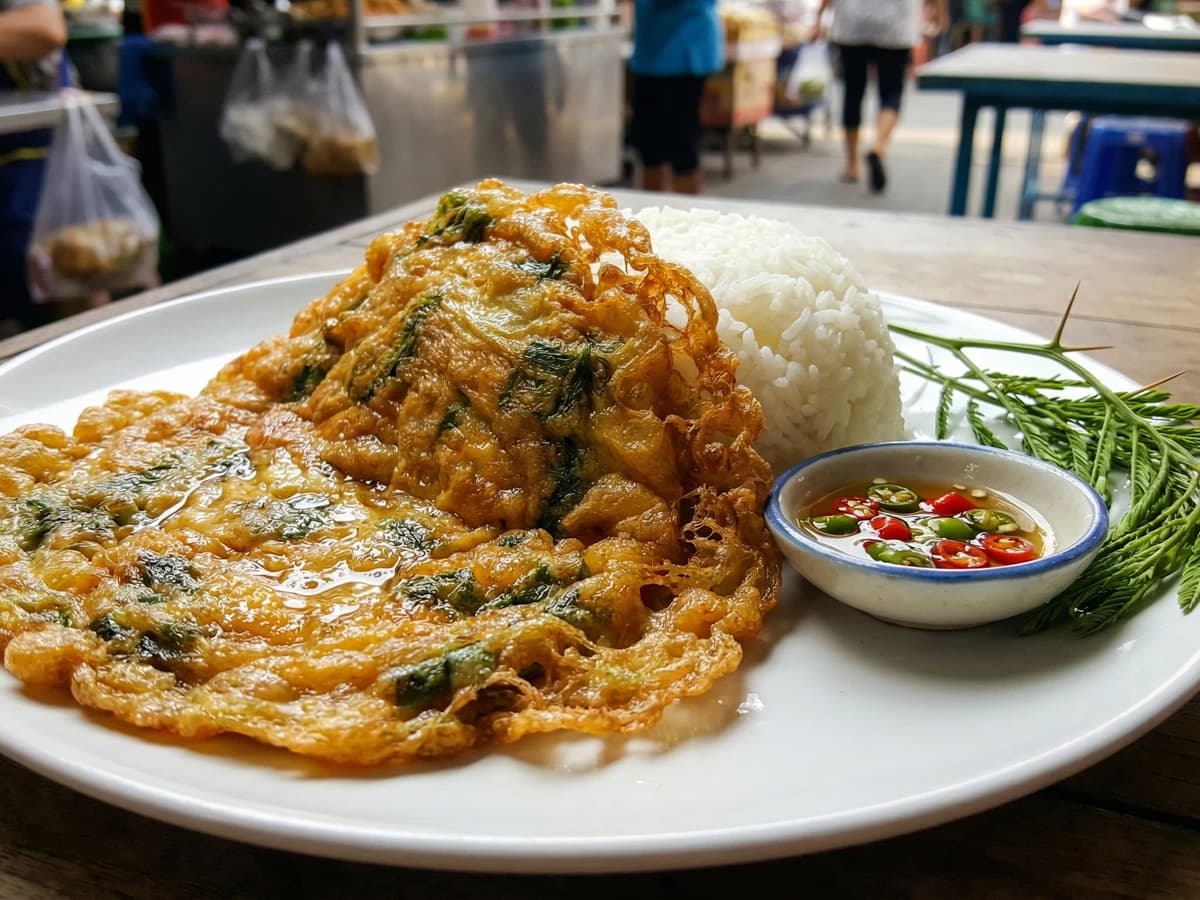
Three ingredients, one principle: fish sauce seasons the eggs, not salt. Hot oil fries the omelet into a golden, lacy puff. Cha-om's bitter punch makes this Southern Thai, not Central Thai. Over rice. Done.

Chef Fai
Pork blood binds soaked sticky rice into dense, iron-rich slabs, steamed in banana leaf, cooled, sliced, and grilled over charcoal until the edges crisp. Morning market food from the Lanna highlands. Nothing wasted, nothing precious.

Chef Fai
Fresh turmeric root pounded and cooked into every grain with coconut milk and whole spices. The golden rice of Thailand's deep south, where Malay-Muslim kitchens stain their hands yellow and call it tradition.