Chef Fai
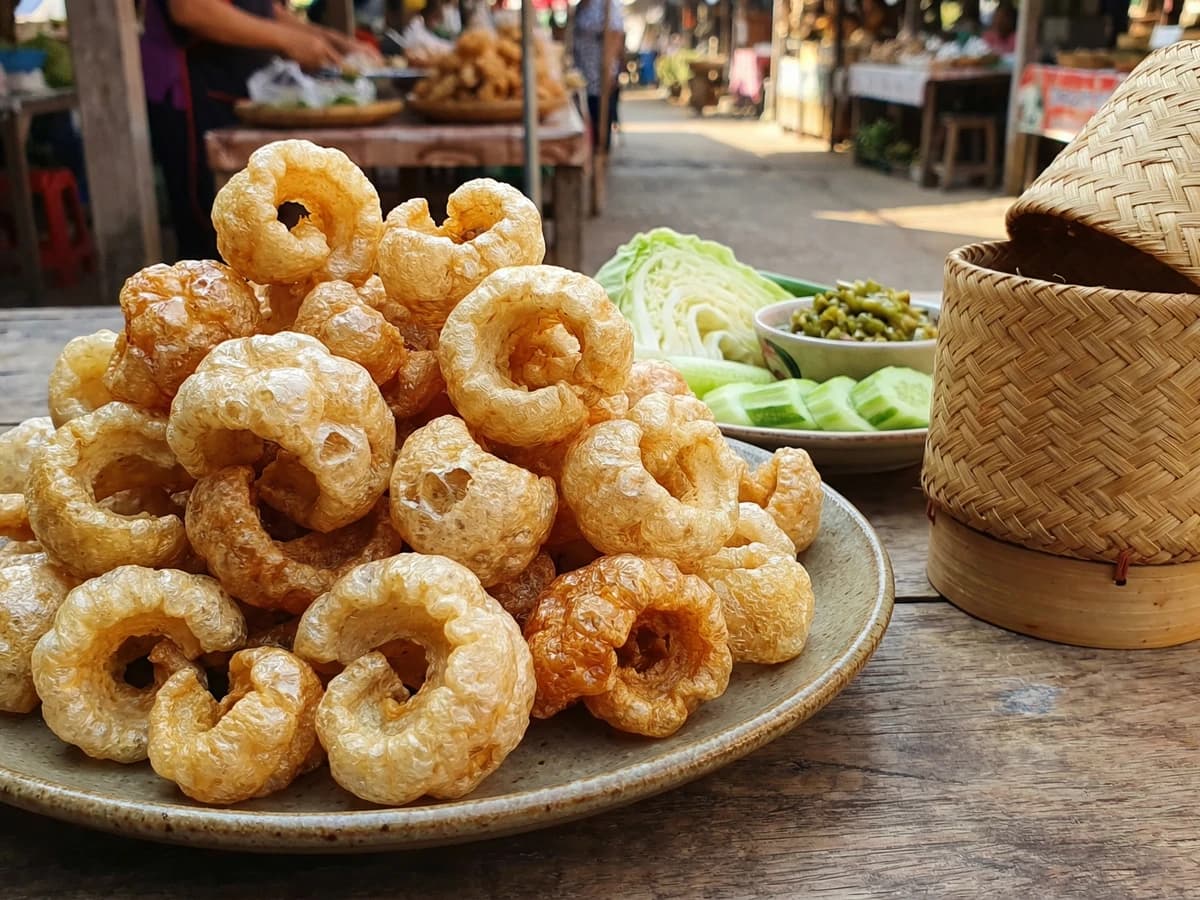
Northern Pork Rinds (Kab Moo)
Sun-dried pork skin fried until it shatters into golden shards. In the Lanna meal, kab moo isn't the star. It's the vehicle that carries nam prik and sticky rice to your mouth. Texture with purpose.
A cooking platform built around craft, culture, and the stories behind what we eat.

Created by
Wok hei is not a technique. It's a temperature. Morning glory hits screaming steel and open flame for sixty seconds, dressed in tao jiao, garlic, and chili. The fire itself is the ingredient.
This dish is the purest test of your wok. No paste. No coconut cream. No layered curry. Just fire, steel, and sixty seconds. If you can't make pad pak boong fai daeng correctly, nothing else in this chapter will save you.
Ajarn always said the wok is the second most important tool in Thai cooking after the mortar. The mortar builds your foundation. The wok delivers it. And this dish is the wok stripped bare, nothing to hide behind. Your heat has to be violent. Your timing has to be ruthless. The morning glory goes in crisp and raw. It comes out charred at the edges, still bright green in the center, coated in a sauce that tastes like the flame touched it. Because it did.
The sauce here breaks from the usual stir-fry formula. Instead of fish sauce carrying the load alone, tao jiao (fermented soybean paste) steps in as the backbone. Salty, funky, with a depth that straight nam pla doesn't have. Fish sauce still appears, because it always does. Oyster sauce for body and gloss. A pinch of sugar to balance. Garlic and chilies hit the oil first, always. The four pillars are here: salt from the fermented beans and fish sauce, sweet from the sugar, heat from the chilies. Sour sits this one out. Not every dish needs all four. The system is flexible. Principles, not recipes.
The "fai daeng" in the name means red fire. On a Bangkok street, the vendor's jet burner shoots a column of flame a foot above the wok rim. She tosses the morning glory through it. The greens arc through open fire before landing back in the pan. It's theater, sure. But it's also technique. That momentary contact with direct flame gives the vegetable a smoky char that no amount of pan heat can replicate. At home, you get as close as you can. Highest heat. Wok smoking. No hesitation.
Pad pak boong fai daeng became a Bangkok street food icon in the late 20th century, closely tied to the rise of made-to-order stir-fry stalls (ร้านตามสั่ง) equipped with high-powered jet burners. The theatrical flame toss, where vendors launch the morning glory through a column of fire, originated as a practical technique to achieve maximum wok hei on tough greens and evolved into a spectacle that drew crowds. Tao jiao (fermented soybean paste), the dish's defining sauce, traces its origins to Chinese fermentation traditions absorbed into Central Thai cooking centuries ago, making this dish a quiet record of Sino-Thai culinary exchange.
Quantity
1 large bunch (about 300g)
cut into 3-inch pieces, stems and leaves separated
Quantity
6 cloves
smashed and roughly chopped
Quantity
5
bruised
Quantity
1 tablespoon
Quantity
1 tablespoon
Quantity
1 tablespoon
Quantity
1 teaspoon
Quantity
2 tablespoons
Quantity
for serving
| Ingredient | Quantity |
|---|---|
| morning glory (pak boong)cut into 3-inch pieces, stems and leaves separated | 1 large bunch (about 300g) |
| garlic (kratiam)smashed and roughly chopped | 6 cloves |
| bird's eye chilies (prik khi nu)bruised | 5 |
| fermented soybean paste (tao jiao) | 1 tablespoon |
| fish sauce (nam pla) | 1 tablespoon |
| oyster sauce (nam man hoi) | 1 tablespoon |
| granulated sugar | 1 teaspoon |
| vegetable oil | 2 tablespoons |
| steamed jasmine rice | for serving |
Wash the morning glory and shake it dry. Cut into 3-inch pieces. Separate the thick hollow stems from the leafy tops. The stems take a few seconds longer to cook, so they go in first. That's it. This is the entire prep. If you spend more than five minutes here, you're overthinking it.
In a small bowl, combine the tao jiao (fermented soybean paste), fish sauce, oyster sauce, and sugar. Stir to dissolve the sugar. This sauce goes into the wok in one fast pour. You will not have time to measure individual splashes once the fire is going. Everything ready, everything within arm's reach. This is a sixty-second dish. Hesitation is failure.
Set your wok over the highest heat your stove can produce. Wait. Wait longer. The steel should be faintly smoking before you add anything. Hold your hand a foot above the wok. If the heat pushes you back, you're close. A home burner won't match a Bangkok street vendor's jet flame, but this is where you make up the difference: patience at the start, violence during the cook. Add the oil. It should shimmer and start to smoke within three seconds. If it doesn't, the wok isn't hot enough. Pull it off, heat it longer.
Slam the smashed garlic and bruised chilies into the smoking oil. The sizzle should be instant and aggressive. Toss once. The garlic turns golden at the edges in about three seconds. That's your window. The aroma should hit you like a wall: sharp, roasted, alive. If the garlic isn't sizzling the moment it touches the oil, everything downstream will be wrong. Start over.
Add the morning glory stems first. Toss them hard in the wok, flipping and pressing them against the hot surface. You want the stems to blister and char slightly. Ten seconds. No more. The hollow stems cook faster than you think. They should be bright green with scattered brown spots from the wok's heat.
Throw in the leafy tops and immediately pour the pre-mixed sauce over everything. Now toss. Hard. If you have a gas burner and the wok tilts enough to catch flame, let it. That brief contact with open fire is the fai daeng, the red fire that gives this dish its name and its soul. The leaves wilt in seconds. The sauce coats every piece. The whole thing should smell like garlic, smoke, and fermented beans. Total time from stems hitting the wok to plating: forty-five to sixty seconds.
Slide the morning glory onto a plate immediately. Don't let it sit in the wok. Residual heat will turn bright greens into army-green mush in seconds. The morning glory should be glossy with sauce, charred at the edges, still vibrant in color, with visible pieces of garlic and chili throughout. Serve next to jasmine rice. This is a side dish, not a main. It sits on the table alongside whatever protein you've cooked. In Bangkok, it shows up next to pad kra pao, grilled pork, or fried fish. That's the Thai table: shared dishes, rice in the center, everyone eating together.
1 serving (about 150g)
Culinary guides, cultural storytelling, and the editorial depth that makes cooking meaningful.
Discover Culinary ExplorerChef Fai
Sun-dried pork skin fried until it shatters into golden shards. In the Lanna meal, kab moo isn't the star. It's the vehicle that carries nam prik and sticky rice to your mouth. Texture with purpose.
Chef Fai
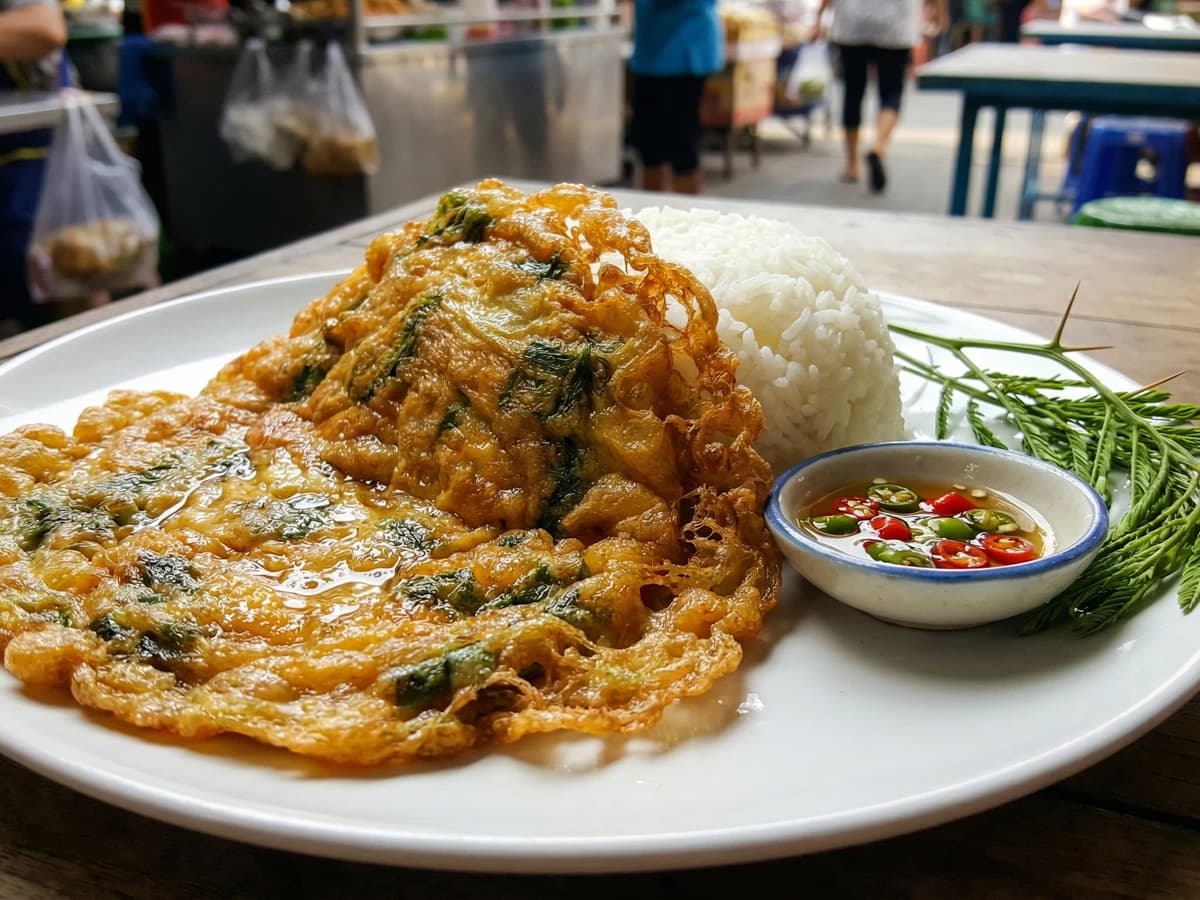
Three ingredients, one principle: fish sauce seasons the eggs, not salt. Hot oil fries the omelet into a golden, lacy puff. Cha-om's bitter punch makes this Southern Thai, not Central Thai. Over rice. Done.
Chef Fai
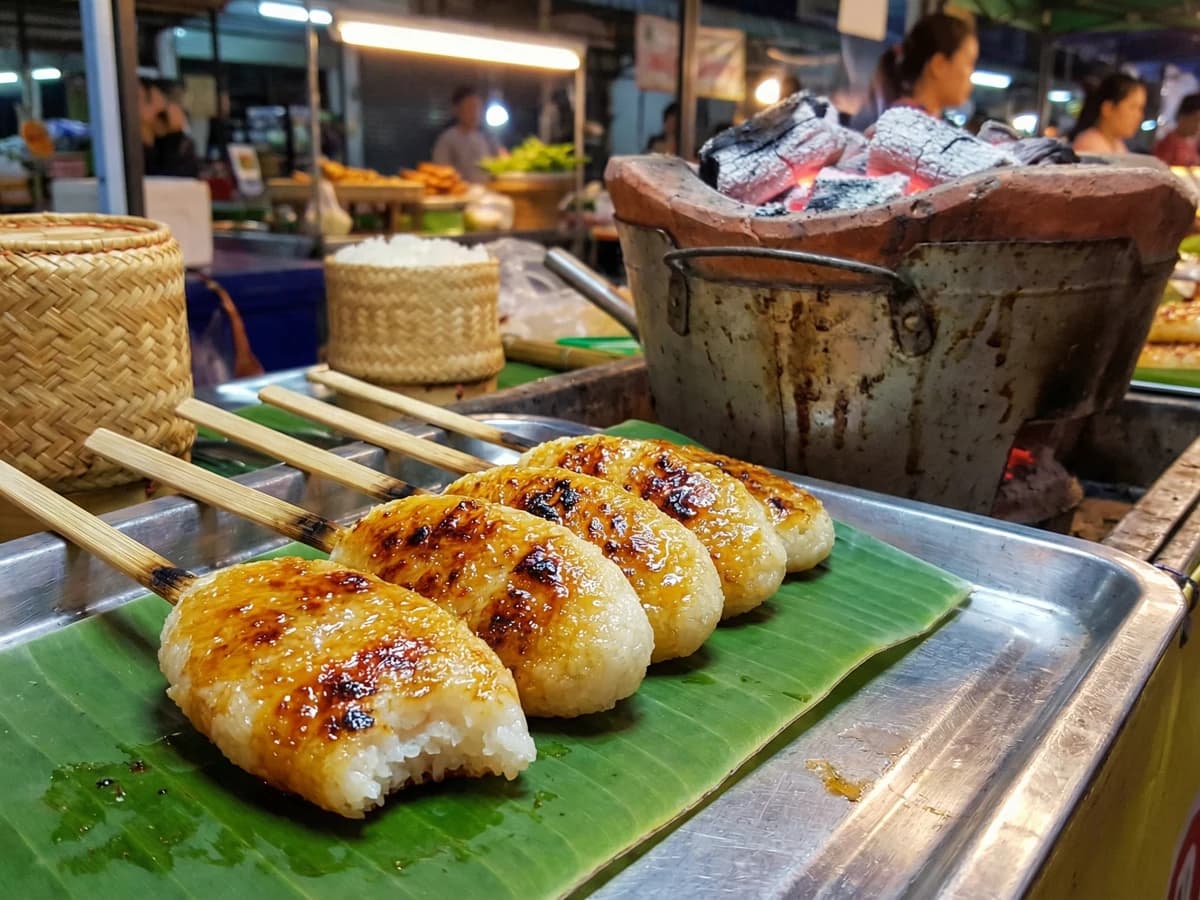
Sticky rice pressed onto bamboo skewers, brushed with egg and palm sugar, charred over low coals until golden and crackly outside, soft and chewy inside. Even the starch gets the fire treatment in Isan.

Chef Fai
Pork blood binds soaked sticky rice into dense, iron-rich slabs, steamed in banana leaf, cooled, sliced, and grilled over charcoal until the edges crisp. Morning market food from the Lanna highlands. Nothing wasted, nothing precious.